Kenya's premier rhino sanctuary — where the alkaline lake glows pink with flamingos, Africa's rarest rhinos roam freely, and the Rift Valley escarpment frames one of East Africa's greatest landscapes.
Set within the dramatic folds of the Great Rift Valley, Lake Nakuru National Park is one of Kenya's most rewarding and accessible safari destinations. Its compact 188 km² makes wildlife sightings dense, consistent, and easy — making it exceptional for first-time visitors, families, day trips from Nairobi, and anyone building a multi-park Kenya circuit.
Key Facts
Location
Nakuru County, Great Rift Valley — approximately 160 km northwest of Nairobi
Size
188 km² — one of Kenya's most compact and wildlife-dense national parks
From Nairobi
~160 km · 2.5–3 hours via the B3 highway through the Rift Valley
Ecosystem
Alkaline soda lake, acacia woodland, open grassland, Rift Valley escarpment
Conservation Status
Kenya's premier fenced rhino sanctuary — purpose-enclosed for black and white rhino protection
Key Viewpoints
Baboon Cliff and Lion Hill — among Kenya's most photographed landscape panoramas
Managed By
Kenya Wildlife Service (KWS)
Open
Year-round — rewarding in all seasons
Why Lake Nakuru Is Kenya's Most Accessible Major Safari
Lake Nakuru punches well above its weight in wildlife density relative to its size. Unlike the vast open systems of the Masai Mara (1,510 km²) or Tsavo East (13,747 km²), Nakuru's compact, fully fenced 188 km² concentrates its wildlife in predictable zones — meaning a single game drive regularly delivers what takes multiple days in larger parks.
The park is Kenya's only national park purpose-fenced for rhino conservation, giving it the highest rhino encounter rates of any park in the country. It was this status that earned it the formal designation as a rhino sanctuary, and the success of that programme is visible on every game drive. Both black and white rhino are present, the only park in Kenya where you can reliably see both species in a single visit.
Above the lake, the Rift Valley escarpment creates a backdrop that few parks anywhere in Africa can match. The views from Baboon Cliff — across the full alkaline lake to the escarpment wall beyond — are among Kenya's great landscape moments. They reward the extra hour of drive time to reach them, and they are often where a Lake Nakuru safari produces its most memorable photographs.
Lake Nakuru National Park — Kenya's premier rhino sanctuary within the Great Rift Valley, 160 km from NairobiWildlife & Big 5
Wildlife in Lake Nakuru National Park
Dense wildlife in a compact, fenced ecosystem makes Nakuru one of Kenya's most productive parks for game drives. These are the species you can reliably expect — and what makes each encounter here specifically different from the Mara or Amboseli.
Black & White Rhinos — Kenya's Best Sighting Rates
Lake Nakuru is Kenya's premier rhino sanctuary — the only park in the country where you can reliably see both black and white rhinos in a single visit. The park was purpose-fenced specifically for rhino conservation, and the programme has been one of Kenya's most successful wildlife recovery stories. Both species are actively monitored by KWS rangers, and encounter rates here are significantly higher than any unfenced park in East Africa. For Big Five completionists, Nakuru is often the park that closes the checklist on rhinos.
The critically endangered black rhino is smaller and more solitary, typically found in the denser woodland areas. The larger white rhino grazes in open grassland and is generally easier to observe. Both are most active in the early morning and late afternoon — a further argument for staying overnight rather than day-tripping.
Flamingos & Over 400 Bird Species
The alkaline chemistry of Lake Nakuru supports blue-green algae that sustains enormous concentrations of lesser flamingos. When water levels and algae conditions align, the lake shore turns pink in one of Africa's most extraordinary natural spectacles. Numbers are not guaranteed — flamingo populations move seasonally between East Africa's alkaline lakes — but significant flocks are present in most months. Regardless of flamingo numbers, the park supports over 400 bird species year-round including great white pelicans in large colonies, African fish eagles, Goliath herons, yellow-billed storks, crowned cranes, and the African finfoot in the papyrus margins.
Both rhino species
Kenya's only reliable park for viewing both black and white rhino in a single visit. The fenced sanctuary produces the country's highest encounter rates.
Rothschild's giraffe
One of the world's most endangered giraffes — reintroduced to Nakuru as part of a broader conservation programme and now thriving in the park.
Lions & leopards
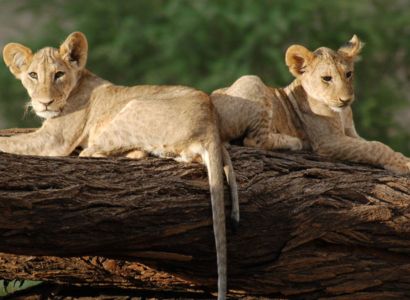
The fenced perimeter keeps prey species dense, supporting thriving lion populations and consistent leopard presence. Predator activity is reliably high year-round.
400+ bird species
Great white pelicans, African fish eagles, crowned cranes, and — when conditions align — thousands of flamingos. Among East Africa's top birding destinations.
Big Five completion note: Lake Nakuru is where many Kenya travelers complete their Big Five — all five species are present here, and the rhino encounter rates are the best in the country. Elephants and buffalo are also easily found. For travelers who have already visited the Mara or Amboseli, Nakuru typically adds the rhino that those parks cannot reliably deliver.
Safari Experiences
Top Things to Do in Lake Nakuru National Park
Beyond the standard game drive, Nakuru offers a set of experiences specific to its unique ecosystem — from dedicated rhino tracking to the panoramic Rift Valley viewpoints that make it one of Kenya's most photographed parks.
Morning & Evening Game Drives
Custom 4×4 game drives across Nakuru's diverse habitats — lakeshore, acacia woodland, and open grassland — guided by KWS-licensed naturalists. Morning drives consistently deliver the best rhino and predator sightings in the cool early hours. Evening drives with the escarpment catching last light are among the most atmospheric in all of Kenya.
Rhino Tracking Drives
Dedicated drives in the protected zones where both black and white rhinos are reliably located. Beyond the Plains Safaris guides maintain knowledge of current rhino ranging areas within the park, significantly improving encounter rates compared to standard game drives on a fixed circuit. The most sought-after experience for first-time Nakuru visitors.
Baboon Cliff Viewpoint
Perched on the western escarpment with panoramic views across the full lake to the Rift Valley walls beyond — one of Kenya's most dramatic landscape panoramas and among the country's most photographed viewpoints. Best visited at mid-morning when the lake reflects ambient light and flamingo concentrations are most visible from above.
Lion Hill Viewpoint
The eastern escarpment counterpart to Baboon Cliff, offering a different perspective on the lake and open grassland below. The descent from Lion Hill into the western lakeshore circuit passes through prime Rothschild's giraffe territory and flamingo-viewing areas — making it a productive drive in its own right, not just a scenic stop.
Flamingo & Wetland Birding
Lakeside birding with species-specific guidance covering all 400+ recorded species. The pelican colonies on the lake islands are among the largest in East Africa. African fish eagle calling from dead acacia trees along the shore is one of the most reliably photographed scenes in Kenyan safari photography. Best in early morning before wind disturbs the lake surface.
Night Game Drives
After-dark drives available from select lodges inside the park reveal the nocturnal world that most day visitors never see — leopards, servals, civets, and genets are all active at night in Nakuru. A spotlight-equipped vehicle and guide familiar with the park's night circuits transforms the experience entirely. Ask your planner to arrange this when booking overnight stays.
Local tip: Combine Lake Nakuru with the Masai Mara or Amboseli for a complete Kenya safari circuit. Nakuru is perfectly positioned between Nairobi and the Mara on the B3 highway, making it a natural overnight stop that adds rhinos and flamingos to a Mara-focused itinerary without significant extra driving. Beyond the Plains Safaris builds these multi-park circuits as a single integrated itinerary.
Getting There
How to Get to Lake Nakuru National Park
Lake Nakuru is one of Kenya's most accessible major parks — 160 km and 2.5 hours from Nairobi, closer than the Masai Mara, Amboseli, or Samburu. Two access options exist, with the road route being the most common for day trips and the charter flight preferred for luxury multi-park circuits.
By Road from Nairobi (Most Common)
The drive from Nairobi takes approximately 2.5 to 3 hours via the B3 highway through the Rift Valley. The route descends dramatically through the escarpment — the landscape transition from Nairobi's highlands to the Rift Valley floor is itself one of Kenya's most striking drive experiences, with expansive views opening across the valley on the descent toward Naivasha and Nakuru. All road transfers are in comfortable 4×4 safari vehicles with experienced drivers. Beyond the Plains Safaris handles all logistics.
By Charter Flight from Wilson Airport
Short charter flights from Nairobi's Wilson Airport reach airstrips near Nakuru in approximately 30–40 minutes. Charter options are particularly useful for travelers building a multi-park Kenya circuit — flying Nakuru–Mara or Nakuru–Samburu removes long road transfer days and is the preferred option for luxury itineraries. Scheduled services also operate on certain routes in the Nakuru area.
By Road
~160 km from Nairobi; 2.5–3 hours via B3 highway through the Rift Valley. 4×4 safari vehicle transfer arranged by Beyond the Plains Safaris.
By Air
~30–40 minutes from Wilson Airport, Nairobi. Charter to airstrips near Nakuru. Best for multi-park circuits and luxury itineraries.
Main Gates
Lanet Gate (main, eastern approach) and Nderit Gate (western, lakeshore). KWS electronic payment only — no cash.
Position on Kenya Circuit
Nakuru sits naturally between Nairobi and the Masai Mara on the B3 highway — an ideal overnight stop when combining both parks without backtracking.
Lake Nakuru park entry fees are set by Kenya Wildlife Service (KWS) and categorised by residency status. Understanding what the park charges versus what a complete safari package costs prevents confusion when comparing quotes from different operators.
Park Entry Fees (KWS)
Entry fees are charged per person, per day across three categories: non-resident adults (most international visitors), East African residents, and Kenyan citizens. Children pay reduced rates within each category. KWS does not accept cash at any park gate — payment is electronic only (credit/debit card). Ensure your card is activated for international transactions before departure.
Important: KWS fees are quoted in USD but billed in Kenyan shillings at the prevailing rate on the day of entry. Fees are periodically revised by KWS — always confirm current amounts with your operator at time of booking. All fees are included and itemised in Beyond the Plains Safaris quoted prices — no surprises at the gate.
What a Full Lake Nakuru Safari Costs
BudgetFrom $200/day
Day Trip or Shared Safari
Transport, expert guide, park fees, picnic lunch. Shared vehicle option available. Same wildlife access — different comfort level.
Mid-Range$350–$550/day
Private Safari with Overnight
Private 4×4 vehicle and dedicated guide, mid-range lodge or tented camp, full-board meals, park fees, and all transfers.
Luxury$700+/day
Exclusive Lodge Safari
Premium lodge with escarpment or lakeshore views, private vehicle, gourmet dining, spa, and bespoke programming end-to-end.
What affects your total cost: Time of year (dry season rates are higher), accommodation tier, private vs. shared vehicle, number of nights, charter flight vs. road transfer, and any multi-park extensions. Beyond the Plains Safaris provides fully itemised, personalised quotes for every enquiry — no generic pricing. Request your quote →
When to Visit
Best Time to Visit Lake Nakuru National Park
Lake Nakuru rewards visitors in every season — the fully fenced park with year-round water access means wildlife is always present and active. The choice of timing is about optimising for specific experiences: flamingo concentrations, rhino tracking, birding, or value.
June to October — Long Dry Season
Peak Wildlife Viewing & Rhino Activity ⭐
The most popular window for Lake Nakuru safaris. Vegetation thins across the acacia woodland, animals concentrate predictably around the lake and remaining water, and rhino sightings are at their most reliable. Lion prides are most visible on the open grasslands. Flamingo concentrations depend on lake chemistry and water level — check with your operator for current conditions. July–October aligns with the Masai Mara Migration, making this the ideal window for a Nakuru–Mara combined circuit. Book lodges in advance — this is Kenya's peak safari season and properties fill quickly.
January to February — Short Dry Season
Strong Value, Thinner Crowds
Excellent game viewing with noticeably fewer tourists than the long dry season peak. High predator activity as big cats target calving prey in the early weeks of the year. Flamingo numbers can be spectacular when lake levels are stable. Lodge rates are typically 15–25% lower than peak season, making this a smart window for value-conscious travelers who do not want to compromise on wildlife quality.
November to December — Short Rains
Green Season Value & Exceptional Birding
Brief afternoon showers transform the park's landscape to vivid green. Lower lodge rates, fewer vehicles on game drives, and outstanding photographic conditions as dramatic clouds build over the escarpment backdrop. Migratory bird species arrive in large numbers, making this the richest birding window of the year. Tracks can become muddy after heavy rain but are generally manageable in a properly equipped 4×4.
March to May — Long Rains
Green Season — Budget & Solitude
The long rains bring lush, intensely green landscapes and rates up to 40% lower than peak season. Wildlife remains active — the fenced park retains all its wildlife regardless of rainfall — but visibility is reduced as vegetation grows thicker and animals disperse from the water. Birding is exceptional. Best suited to budget-conscious travelers, photographers who prioritise landscape conditions, and those who specifically want to experience Nakuru without other vehicles. Not recommended for travelers whose primary objective is flamingo spectacle or rhino tracking.
For combining with Masai Mara: The June–October window is the only period when a Nakuru–Mara circuit delivers both parks at their best simultaneously. Rhino sightings peak at Nakuru in the dry season, and the Mara Migration (July–October) is at its most dramatic. Build 1–2 nights at Nakuru into the Nairobi–Mara drive for a natural and highly productive addition to any Mara-focused itinerary.
Where to Stay
Lake Nakuru National Park Accommodation
Nakuru's accommodation ranges from lodges inside the park with direct lakeshore or escarpment access to mid-range tented camps and budget options in Nakuru town. Positioning — particularly proximity to the main rhino areas and Baboon Cliff — significantly affects the quality of your game drive experience.
Luxury Lodges
Several premium lodge properties inside or immediately adjacent to the park offer escarpment and lakeshore views from rooms, exclusive game drive vehicles, spa services, fine dining, and infinity pools overlooking the Rift Valley. Staying inside the park at this tier eliminates gate transit time entirely — morning game drives depart directly from your accommodation into wildlife territory. Beyond the Plains Safaris partners with hand-selected luxury properties that consistently deliver strong guide quality and rhino encounter rates. Private vehicle and dedicated naturalist guide are standard at this tier.
Mid-Range Camps & Lodges
A selection of comfortable mid-range properties — both inside the park and in areas immediately adjacent — offer full-board accommodation, good guide quality, and private or shared game drive options at accessible rates. This tier suits most independent travelers, couples, and families seeking a quality Lake Nakuru safari experience without luxury pricing. The quality gap between mid-range and luxury at Nakuru is narrower than at some other Kenya parks — Beyond the Plains Safaris vets every property for guide quality and vehicle condition before recommending it.
Budget & Nakuru Town
Affordable camps and Nakuru town hotels provide practical base options for day-trip combinations and budget safaris. Staying in Nakuru town (outside the park) means entering through the gate each morning — adding 20–30 minutes of transit in each direction, which affects how early you can reach rhino areas for morning drives. For solo travelers, backpackers, and small groups maximising time and minimising cost, this tier provides the same wildlife access as higher tiers at significantly lower accommodation rates.
Positioning guidance: For rhino tracking — the primary objective for most visitors — staying inside the park or immediately adjacent is strongly recommended. The Lanet Gate area in the east and the escarpment zone in the west both give rapid morning access to prime rhino territory. Properties in Nakuru town add a gate transit overhead to every drive. Beyond the Plains Safaris will recommend the right property based on your priorities.
Safari Packages & Sample Itinerary
Lake Nakuru Safari Packages
All packages are fully customisable to your travel dates, budget, and priorities. These starting points reflect our most popular Nakuru configurations — from a single-day escape from Nairobi to a complete Kenya circuit.
1 Day from Nairobi
Lake Nakuru Day Safari
Kenya's most popular day-trip safari. A full day of game drives with an expert guide, returning to Nairobi by evening.
Early morning pickup from Nairobi hotel
Full day game drives — rhinos, flamingos, predators
Pickup from your Nairobi hotel. Depart in a comfortable 4×4 safari vehicle with your guide. Drive through the Rift Valley on the B3 highway.
08:30 AM
Enter via Lanet Gate. Begin morning game drive in the prime rhino and predator zones — the coolest hours of the day deliver the best sightings and the clearest photography light.
10:30 AM
Drive to Baboon Cliff viewpoint. Panoramic photography across the full lake and escarpment — one of Kenya's great landscape moments. Spot flamingo concentrations from above.
01:00 PM
Picnic lunch at a designated scenic area inside the park. Lakeshore birdwatching — pelicans, herons, and fish eagles active at midday along the water's edge.
02:00 PM
Afternoon drive via Lion Hill viewpoint and the western lakeshore circuit — prime Rothschild's giraffe territory and the best flamingo-viewing positions along the western shore.
04:30 PM
Exit through the park gate. Afternoon light on exit is excellent for final photography. Begin drive back toward Nairobi.
07:00 PM
Drop-off at your Nairobi hotel. Overnight extension to lodge available — ask your planner when enquiring.
Direct answers to the questions our clients ask most often. Our team responds to all enquiries within 24 hours.
Lake Nakuru National Park is best known as Kenya's premier rhino sanctuary — the only park in Kenya where you can reliably see both black and white rhinos in a single visit. It is equally celebrated for its alkaline lake flamingo gatherings (when conditions are right, the lake shore turns pink with thousands of lesser flamingos), over 400 bird species, all Big 5 wildlife, the endangered Rothschild's giraffe (reintroduced here), and dramatic Rift Valley escarpment viewpoints at Baboon Cliff and Lion Hill that are among Kenya's most photographed landscapes.
Lake Nakuru National Park is approximately 160 km northwest of Nairobi in the Great Rift Valley — a 2.5 to 3-hour drive along the B3 highway. It is one of Kenya's closest major parks to Nairobi and significantly more accessible than the Masai Mara (5–6 hours) or Samburu (6–7 hours). Charter flights from Wilson Airport reach nearby airstrips in 30–40 minutes.
Yes — Lake Nakuru is famous for its flamingo gatherings, particularly lesser flamingos that feed on the alkaline lake's blue-green algae. Numbers vary significantly depending on lake water level and algae conditions. When conditions align, the lake shore turns pink in one of Africa's most extraordinary wildlife spectacles. Flamingo populations move seasonally between East Africa's alkaline lakes — your operator can advise on current conditions before your visit. Birdlife across all 400+ species remains abundant year-round regardless of flamingo numbers.
Yes — a 1-day Lake Nakuru safari from Nairobi is one of Beyond the Plains Safaris' most popular offerings. An early 5:30 AM departure allows a full morning and afternoon game drive with a picnic lunch inside the park and return to Nairobi by 7 PM. For a more complete experience — particularly for rhino tracking, which is most productive in early morning — an overnight stay inside or adjacent to the park is strongly recommended. At minimum, a 2-day/1-night itinerary delivers significantly better value and wildlife encounter rates.
All Big 5 are present: both black and white rhino (Kenya's best encounter rates for either species), lion, leopard, elephant, and Cape buffalo. The park also hosts the endangered Rothschild's giraffe (reintroduced), Burchell's zebra, common waterbuck, impala, warthog, hippo, and Nile crocodile. Over 400 bird species are recorded, including lesser and greater flamingos, great white pelicans (in large colonies), African fish eagles, Goliath herons, yellow-billed storks, and crowned cranes.
Lake Nakuru is a year-round destination — the fully fenced park retains its wildlife in all seasons. The long dry season (June–October) delivers the best rhino sightings, clearest vegetation, and aligns with the Masai Mara Migration for combined circuit planning. The short dry season (January–February) offers strong wildlife with thinner crowds. The green season (November–May) delivers excellent birding, lush landscapes, and rates up to 40% lower than peak. Early morning is consistently the best time for game drives in all seasons.
A 1-day Lake Nakuru safari from Nairobi starts from approximately USD 200–300 per person including transport, guide, park fees, and picnic lunch. Overnight packages with mid-range lodges run USD 350–550 per person per night all-inclusive. Luxury lodge experiences cost USD 700+ per person per night. Beyond the Plains Safaris provides fully itemised, personalised quotes for every enquiry — no hidden charges. Request your quote →
Lake Nakuru is perfectly positioned at the heart of Kenya's safari circuit — within easy reach of the Mara, Amboseli, and the conservancies north of Nairobi.
Peak season camps book in advance — expert-led Lake Nakuru safaris, fully itemised pricing, no hidden fees
Plan Your Lake Nakuru Safari with Beyond the Plains
Kenya's premier rhino sanctuary is waiting — with expert local guides, tailor-made itineraries, transparent pricing, and seamless logistics from first enquiry to final transfer. Tell us your travel dates and priorities and we respond within 24 hours.
Arrive in Kigali and journey into Volcanoes National Park for an intimate encounter with mountain gorillas — one of the world's most extraordinary wildlife experiences.
An unforgettable two-week journey through Kenya's finest parks, from the rhino sanctuary of Ol Pejeta and the flamingos of Nakuru to the Mara plains and the white sands of Zanzibar.
Create unforgettable memories with a customized Kenya and/or Tanzania safari. At Beyond the Plains Safaris, we help you plan your dream trip —
whether you’re exploring options or just need expert advice. Our team offers obligation-free guidance and curated safari experiences tailored to your schedule, budget, and preferences.