


Kenya vs Tanzania Safari – At a Glance: Both Kenya and Tanzania offer world-class wildlife. Kenya’s parks (Masai Mara, Amboseli, Nakuru, etc.) pack high wildlife density into a smaller area, making them ideal for shorter trips and first-time visitors. Tanzania’s reserves (Serengeti, Ngorongoro, Ruaha, etc.) are vastly larger and wilder, suiting photographers and travelers seeking solitude. Each country has Big Five and hosts the Great Migration (Kenya Aug–Oct Mara crossings; Tanzania Jan–Mar Serengeti calving). Kenya tends to be more budget-friendly with better roads and more flights, while Tanzania usually costs more (longer flights between parks, higher fees). Both offer everything from rustic tented camps to ultra-luxe lodges; Kenya has more private conservancies (allowing night drives, walking safaris), whereas Tanzania’s high-end camps offer exclusive, immersive experiences. In summary, Kenya is often best for shorter, easier safaris and budget travelers, while Tanzania appeals to those wanting vast landscapes, wildlife immersion and luxury.
Safari travelers often debate Kenya safari versus Tanzania safari. Both East African countries share the Serengeti–Mara ecosystem and legendary wildlife events, but each offers a distinct experience. This comparison covers key factors – wildlife, scenery, timing, cost, access, lodging and crowds – to help you decide. Whether you’re planning an African safari trip for the first time or you’re a seasoned photographer, this guide (courtesy of safari experts at Beyond the Plains Kenya Safaris) will highlight the strengths of each destination. Ultimately, both Kenya and Tanzania deliver unforgettable adventures, and our team can craft a custom safari itinerary tailored to your interests.
Wildlife Experiences
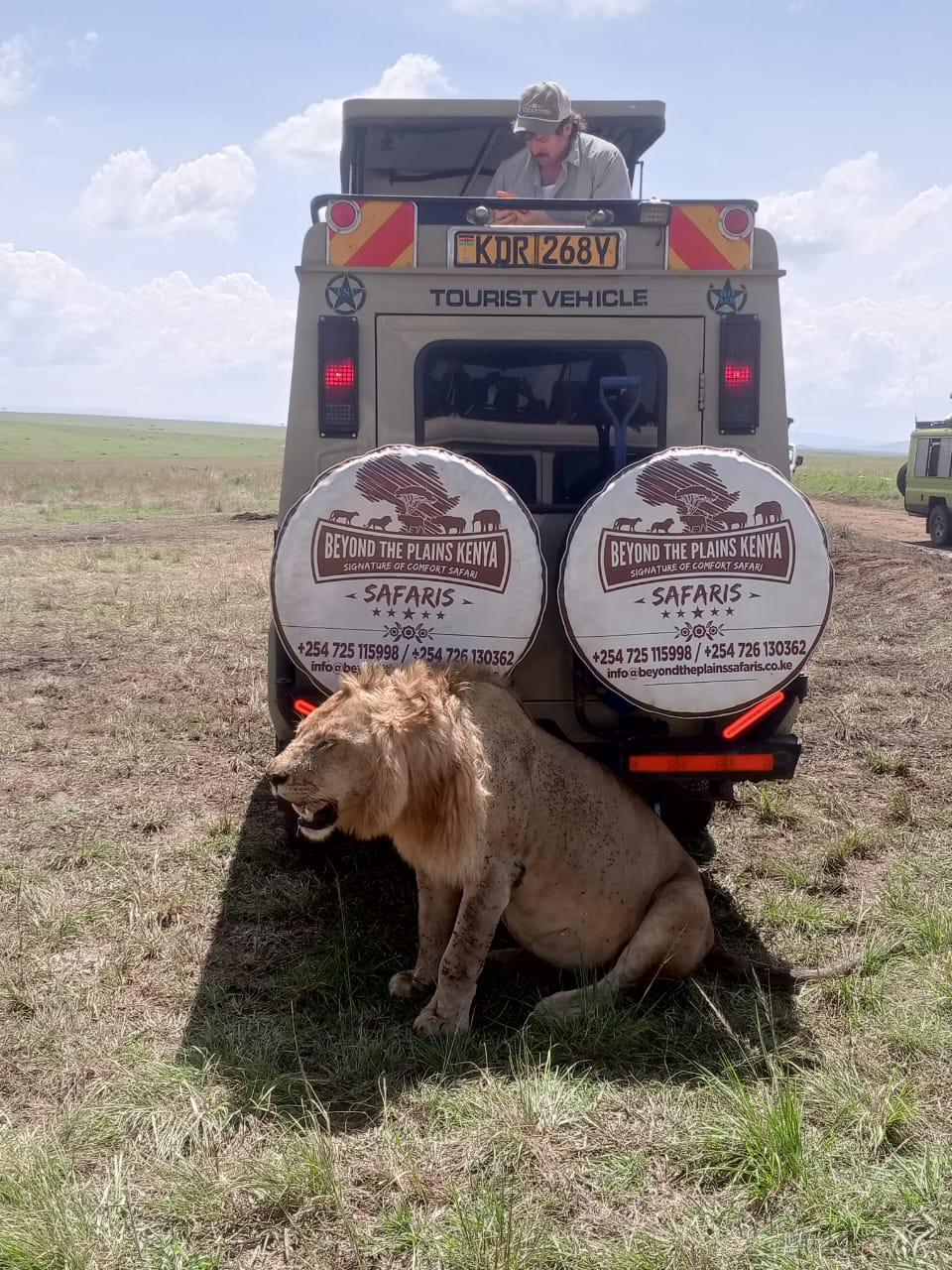
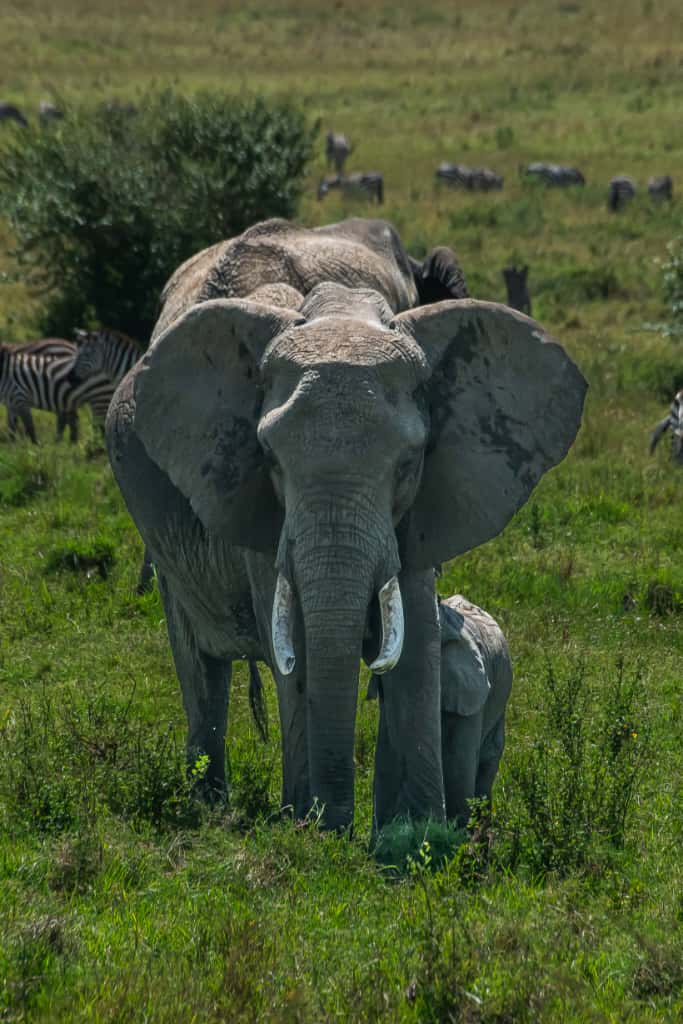
Both Kenya and Tanzania are premier wildlife destinations. They each harbor Africa’s iconic Big Five – lion, elephant, buffalo, leopard and rhino – but sightings can vary by park. Kenya’s parks tend to be smaller and more accessible, so game is often packed tightly in areas. For example, a morning drive in the Masai Mara can yield prides of lion, cheetahs on the hunt, and elephant herds within hours. Amboseli National Park in Kenya is famous for massive elephant herds with snow‑capped Mount Kilimanjaro looming overhead. Lake Nakuru teems with rhinos and flamingos, offering close-up animal encounters. In short, Kenya excels at high-density wildlife viewing: “rich in wildlife, perfect for […] excellent sightings in a short time”.
Baobab trees lining a dirt road in Tanzania’s Ruaha National Park. The stark silhouettes illustrate Tanzania’s open-country scenery. Tanzania, in contrast, is known for sweeping, untamed wilderness. The Serengeti spans about 15,000 km² – roughly ten times larger than the Masai Mara – hosting enormous herds of wildebeest, zebra and antelope. The landscape feels boundless: you can gaze 360° and always see animals on the plains. Ngorongoro Crater (Tanzania) is a collapsed volcano with one of the world’s densest wildlife concentrations (around 30,000 animals in the caldera), making it a big-five hotspot. Farther south, Ruaha, Mikumi and the vast Selous (Nyerere) preserve offer “uncrowded, more intimate game viewing” with pristine scenery. These parks are larger and less visited, ideal for seeing wildlife without many other vehicles.
In both countries you’ll find unique species. Northern Kenya’s Samburu and Laikipia regions (drier scrublands) harbor endemic species like the reticulated giraffe, Grevy’s zebra and gerenuk. Southern Tanzania’s Mahale Mountains and Gombe Stream forests are home to chimpanzees (rarely seen in Kenya) and other forest creatures. In summary, Kenya provides concentrated wildlife encounters and a bit of everything (from elephants under Kili to flamingos at Lake Nakuru), while Tanzania offers vast expanses and the chance to combine diverse habitats (plains, crater, forests) for a very immersive experience.
The Great Migration
A centerpiece of East Africa safari comparison is the Great Wildebeest Migration. This annual spectacle moves some 1.5–2 million wildebeest (plus zebras and gazelles) across the Serengeti–Mara ecosystem. Timing is key. In Tanzania, calving season occurs in the southern Serengeti from ~January to March, when hundreds of thousands of wildebeest give birth and predators abound. By mid-year the herds graze northward, reaching the Serengeti’s western corridor around June. In Kenya, the herds begin arriving in the Masai Mara Reserve around July, leading to the famous Mara River crossings (July–October). Watching wildebeest charge across crocodile-infested rivers in Mara is a highlight for many travelers (and wildlife photographers). Tanzania still sees migration in August–October, but per the experts, “Kenya’s dry season Jun–Oct is ideal for migration river crossings” while “Tanzania allows year-round safaris” (with Serengeti calving Feb–Mar).
Since the migration is cyclical, the best location depends on season. If your trip is in late summer (Aug–Sep), head to Kenya for the Mara crossings. If you travel in early year (Jan–Mar), Tanzania’s southern Serengeti/Ndutu is best for calving. Off-peak (April–May rains, November rains) both countries see fewer tourists and still plenty of game. Wildlife like lion, elephant, giraffe and antelope can be seen year-round in either place, but the great migration itself “reveals a different chapter of the story” in each country.
Landscape & Scenery
Kenya and Tanzania share classic savannah scenery, yet each has unique sights. Both have sweeping grasslands dotted with acacia and kopjes (rock outcrops), as immortalized in Out of Africa. A key difference is scale: Tanzania’s parks are simply much larger. As one safari guide notes, “Serengeti covers roughly ten times the area of the Masai Mara”, which means the Serengeti feels more endless, while the Mara feels more “concentrated intensity”. In the Serengeti you may look in any direction and see game for miles, whereas the Mara’s lush plains give denser viewing on a compact reserve.
Both countries also offer dramatic non‑savannah landscapes. In Kenya, visitors may glimpse Mount Kilimanjaro from Amboseli (a remarkable panorama of elephants with Kili’s snowcap). Kenya’s Rift Valley hosts sparkling lakes (Naivasha, Nakuru) and a green highlands backdrop. In Tanzania, sights range from the flaming red-hued Ngorongoro Crater rim to forested mountains. The baobab-lined roads of Ruaha (as seen above) are iconic of Tanzania’s wild heart. Forested peaks like Mahale Mountains provide lush contrast to the plains. Coastal Kenya has Mombasa’s palm-fringed beaches, while Tanzania boasts the Indian Ocean’s turquoise waters and spice-scented islands (Zanzibar). In short, Kenya has a mix of savannah, wetlands and a snow-capped peak; Tanzania has vast open plains, an extraordinary crater, dense forests and islands – both equally photogenic in different ways.
Best Time to Visit
Both countries lie close to the equator and share similar seasons. There are two rainy seasons: long rains (~March–May) and short rains (~November–December). The dry season (roughly late June to October) is generally prime safari time in both Kenya and Tanzania – vegetation thins out and animals congregate by water sources. Wildlife, including predators and migrating herds, is often easiest to spot then.
However, timing your trip depends on your goals. For migration viewing in Kenya, plan for August–October. For Serengeti calving in Tanzania, February–March is best. For birders or green scenery, the shoulder rains (Nov or May) can be good, and many lodges run low‑season specials then. Note that in Tanzania the long rains (Mar–May) can close some camps, whereas Kenya’s camps often stay open through lighter short rains. In general, if you have flexibility, consider two peak seasons in Tanzania (Feb calving; Jun–Oct migration), vs one peak in Kenya (Jun–Oct).
Booking early is wise. Peak-season lodges fill quickly, especially during the Mara river crossings. Experts recommend planning migration trips 12 months in advance to secure the best camps and game drivers.
Cost (Budget to Luxury)
Safari prices can vary widely in both countries. Overall, Kenya tends to be more budget-friendly. It has more flights, more lodging options and more competition, which drives down prices for mid-range travelers. By contrast, Tanzania is generally pricier: parks are farther apart (often requiring internal flights), and Tanzania imposes higher park fees, levies and even a city tax on Zanzibar. For example, Go2Africa’s guide lists average per-person nightly rates (mid-range, sharing) of about $375–450 in Kenya versus $500–675 in Tanzania for “4-star comfort” camps. Luxury camps in Tanzania (such as Singita Sasakwa or Four Seasons Serengeti) can be extremely expensive, reflecting ultra-exclusive service. Kenya also has luxury tented lodges, but you can more easily find mid-range safari camps (like Ashnil Mara) that balance comfort and cost.
In Kenya, a strict budget traveler can find deals especially outside high season: simple tented camps or group tours can drop prices significantly. In Tanzania, even budget lodges often feel pricier due to transport costs. Keep in mind park fees (subject to change) add to the budget; Kenya recently raised its fees by up to 50%, but Tanzania’s fees and taxes are still generally higher.
Luxury safari budgets have no real upper limit in either country. Both Kenya and Tanzania boast world-class camps with private villas, pools, and private vehicles. If splurging, you might choose Tanzania for camps like Singita Grumeti or the mobile “fly-camping” experiences in remote reserves. If keeping cost in check, Kenya’s competition and road options (driving is cheaper than flights) often give better value.
Accessibility & Transport
Kenya generally wins on accessibility. Nairobi’s Jomo Kenyatta International Airport is East Africa’s main hub, with frequent direct flights from the US, Europe and Asia. Kenya actually has six international airports (including Nairobi, Kisumu and Eldoret), offering more routing options and competitive airfares. Tanzania’s main tourism gateway is Kilimanjaro Airport (near Arusha) and Dar es Salaam’s airport; it has three international airports in total. Flights to Kilimanjaro or Dar are often cheaper from some regions, but fewer carriers fly there than to Nairobi. In fact, visitors traveling to Tanzania from certain countries often connect via Nairobi anyway.
Once in-country, Kenya’s tourism infrastructure is more developed. Roads between Nairobi and Kenya’s parks are generally in good condition (the drive to Amboseli is ~3 hours; to Masai Mara ~5–6 hours). Domestic flights to reserves like the Mara or Samburu are short. Tanzania’s parks are larger and more remote, so travel often involves internal flights. For instance, driving from Arusha to southern Serengeti or Ruaha could take 10+ hours, whereas a charter flight cuts it to 1–2 hours. Small “airstrip” flights are common to hop between parks in Tanzania.
“Kenya is a significantly wealthier nation… with better transport and tourism infrastructure,” notes one guide. In Kenya it’s easier to find accommodations in towns en route (Nakuru, Eldoret) and to exchange currency. Meanwhile, Tanzania’s rural roads outside the north can be rough. However, reputable operators handle all logistics either way. If you plan a self-drive, Kenya’s network of roads and multiple airstrips is more forgiving. For most travelers using guided safaris, either country is workable – but expect more domestic flying in a Tanzania safari.
Lodges and Safari Styles
Accommodation styles are similar in both countries, ranging from basic bush camps to ultra-luxury lodges. You’ll find tented camps, permanent lodges, mobile camps, even jungle-treehouses in Kenya (e.g. Treehouses in Kakamega Forest) and high-tech “bubble” suites in Tanzania. Kenya tends to offer more choices in camp size and style. There are very few large hotels anywhere – most camps have 10–20 tents. Notably, Kenya has many private conservancies (e.g. Mara Naboisho, Ol Pejeta, Lewa) that operate alongside national parks. These conservancies often impose visitor limits and allow activities not permitted in parks. For example, conservancies permit off-road driving, night game drives and guided bush walks. As one safari expert notes, “The Maasai Mara’s standout feature is its conservancy system. Private conservancies bordering the reserve offer… night drives, walking safaris, and off-road access”.
Guides on a walking safari in Tanzania’s Serengeti. In Kenya’s private reserves (and a few Tanzanian concessions), guided bush walks and night drives bring you closer to wildlife. Safari styles can include game drives, guided nature walks, hot-air balloon rides, and cultural visits with Maasai or Hadza tribes. In Tanzania, classic balloon safaris over the Serengeti at dawn are popular. Both countries offer it. Both also emphasize eco-friendly practices and community involvement. For example, many Kenyan camps in Maasai villages contribute to local schools, and Tanzanian lodges work with villages around Serengeti and Ngorongoro.
Who does what: family-friendly lodges exist everywhere. Kenya’s Meru-style tents (thatched roofs) are cozy and good for kids. Tanzania’s luxury camps (e.g. Singita Grumeti, Sand Rivers Selous) often feature adults-only verandas and private guides. Honeymooners may seek cliff-top suites (Angama Mara, Kenya) or beach extensions (Zanzibar, Tanzania). The key is that Beyond the Plains Safaris can arrange any combination. They specialize in coordinating Kenya safaris, Tanzania safaris, or combined trips for individuals, couples, families and groups, selecting the perfect lodges to match your taste.
Crowd Levels & Exclusivity
Both countries draw international safari-goers, but crowding depends on when and where you go. The single busiest time is during the Great Migration crossings (July–Oct). Even then, traffic on the Mara riverbanks can be heavy (though still far less than a city road). Outside migration season, most parks in Kenya are quiet. In fact, Kenya’s tourism marketing and flight availability mean more people do go, but with more camps and routes available, you rarely feel packed. One guide notes that off-peak, “visiting Amboseli and Tsavo will feel like you have the whole continent to yourself”.
Tanzania’s crowds are also focused on the north in peak season. Ngorongoro (one entrance, one exit) can get very busy year-round, since it’s always popular. But beyond the famous parks, Tanzania has enormous under-visited areas. The vast Ruaha or Selous may see only a handful of vehicles on a game drive. Even in the Serengeti, the northern/river areas get more 4×4 traffic in Aug–Sept, while the southern and eastern plains remain relatively empty.
For exclusivity: Kenya’s private conservancies allow a more secluded experience. Many luxury camps in Mara Conservancies have just 10–12 tents, and often only one safari vehicle per campsite. Tanzania’s top lodges also offer exclusivity, but they are usually in the main parks. To avoid crowds, consider visiting in shoulder season or choosing a private game reserve in Kenya (e.g. Ol Pejeta, where rhinos roam with minimal disturbance).
In short, expect higher crowds during migration anywhere in East Africa. Otherwise, both Kenya and Tanzania can be surprisingly quiet. Kenya’s bigger tourist market means a bit more traffic overall, but it also offers more off-the-beaten-track options (like north Kenya and private conservancies). Tanzania compensates with sheer space: you can drive all day in Ruaha and not see a single other car.
Conclusion: Which Safari Is Right for You?
Ultimately, neither country is inherently “better” – it depends on your priorities. Here’s a quick recap:
- Kenya Safari: Best for shorter trips, first-time or family travelers, and those on a tighter budget. Kenya’s parks offer high game density and are easier to combine (e.g. Lake Nakuru + Mara + Amboseli in one trip). Nairobi’s hub status and good roads make logistics simpler. Families and honeymooners will appreciate Kenya’s range of lodging (from family tents to cliff-top suites) and the opportunity to mix cultural visits (Maasai villages) with wildlife. If seeing wildlife without long drives or flights is important, Kenya “is perfect for […] accessibility and high wildlife density”. Also, Kenya safaris tend to be cheaper overall.
- Tanzania Safari: Best for experienced safari-goers, wildlife photographers and travelers seeking wide-open wilderness. Tanzania’s larger parks (Serengeti, Ngorongoro) and remote southern reserves offer dramatic scale and exclusivity. If budget is no object, Tanzania’s luxury camps in iconic areas can provide ultra-premium experiences. Photographers often favor Tanzania’s vast landscapes and the southern migration (wildlife spread out against the horizon). It’s also ideal if you want to extend to Zanzibar or other islands for pristine beaches after your safari. In short, if your goal is an immersive, once-in-a-lifetime wilderness adventure and you don’t mind higher costs or more flights, Tanzania is the choice “for vast landscapes, exclusivity and immersive experiences”.
Choosing either Kenya or Tanzania – or combining both – guarantees lifelong memories. As one expert summary puts it: “Kenya and Tanzania are best combined… If you only have time for one, decide on your priority: cost or experience”. If budget is the main concern, Kenya wins. If ultimate wildlife spectacle and adventure are the goal, consider Tanzania.
Plan Your Safari with Experts: No matter which you choose, expert guidance can make the trip seamless. The team at Beyond the Plains Kenya Safaris is ready to help you design the perfect Kenya safari, Tanzania safari, or combined East Africa itinerary. They specialize in crafting custom bush-and-beach tours for individuals, couples, families and groups. With local insight on wildlife seasons, camps and logistics, they’ll ensure you see the best of Kenya and Tanzania. Contact Beyond the Plains Safaris today to start planning your dream African safari vacation










Comments (1)
Leave a Comment
Excellent article! This kind of information is very helpful for people planning wildlife safaris.
Thank you so much for your kind words — we really appreciate it!
We’re glad you found the article helpful. Choosing between a Kenya and Tanzania safari can be a tough decision, and as highlighted in the guide, both destinations offer incredible wildlife, iconic parks, and unique experiences — from the Masai Mara and Amboseli in Kenya to the Serengeti and Ngorongoro Crater in Tanzania.
Ultimately, it comes down to travel style, budget, and what kind of experience you’re looking for — whether it’s accessibility and variety in Kenya or vast, remote landscapes in Tanzania.
If you’re planning a safari and need personalized recommendations, feel free to reach out — we’d be happy to help you design the perfect itinerary!