

The Ultimate Big Five Safari Kenya Guide: Best Parks and Expert Tips for Seeing Every Animal
By Linet Wanjiru, Safari Specialist at Beyond the Plains Safaris
You've probably heard the term "Big Five" and assumed it simply means the five most iconic African animals — and that's close, but the real story is more interesting, and far more useful for planning your safari. Most travellers visit Kenya hoping to tick all five off a list without knowing which parks actually give them the best odds for each species, or that rhino and leopard require an entirely different strategy to lion and elephant. This guide gives you a species-by-species breakdown of Kenya's Big Five — where to find each one, which parks to prioritise, and the field tips that separate a lucky sighting from a near-guaranteed one.
Key Takeaways
- The Big Five — lion, leopard, elephant, African buffalo, and rhinoceros — were originally named by big-game hunters to identify the five most dangerous African animals to hunt on foot, not the five largest or most impressive.
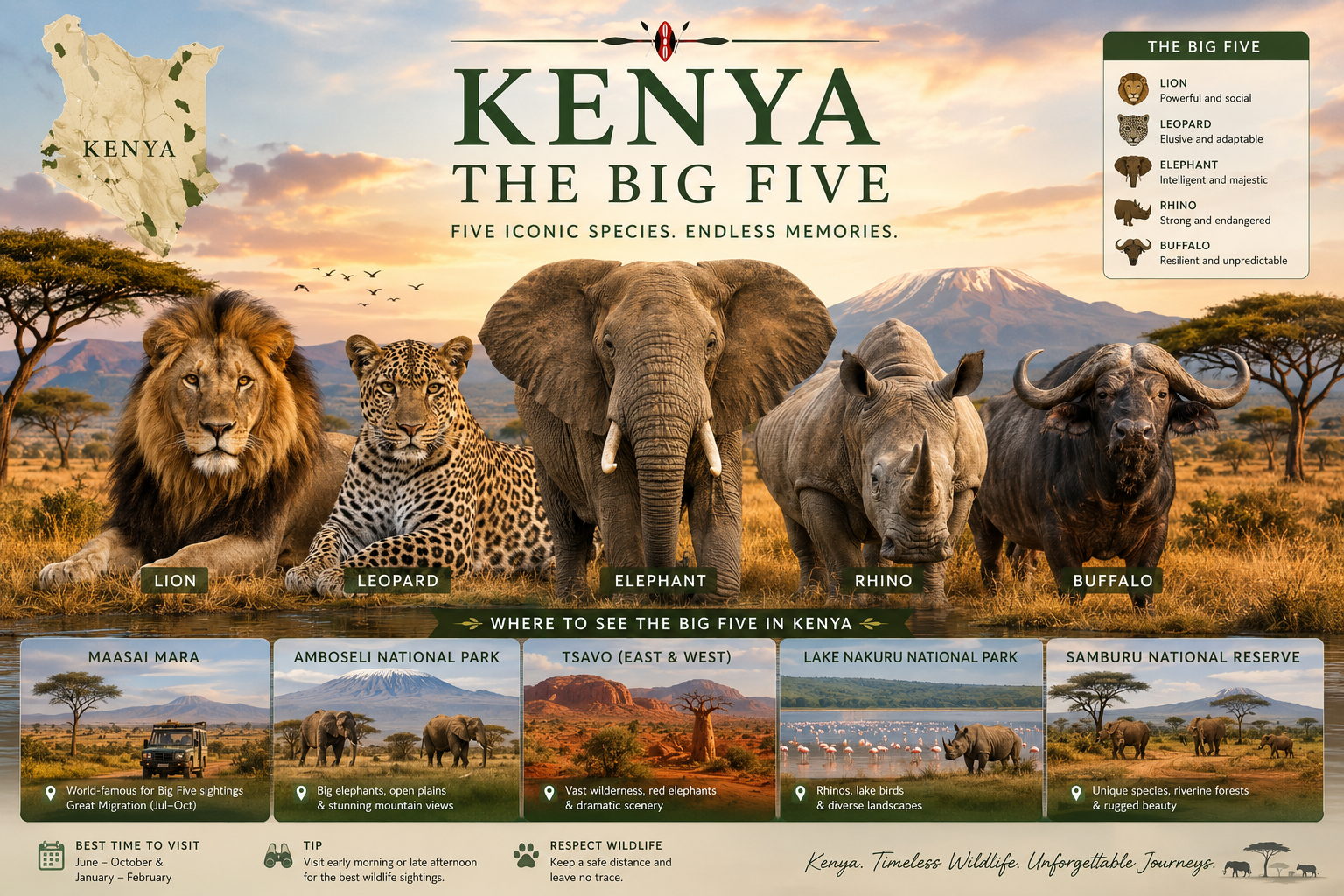
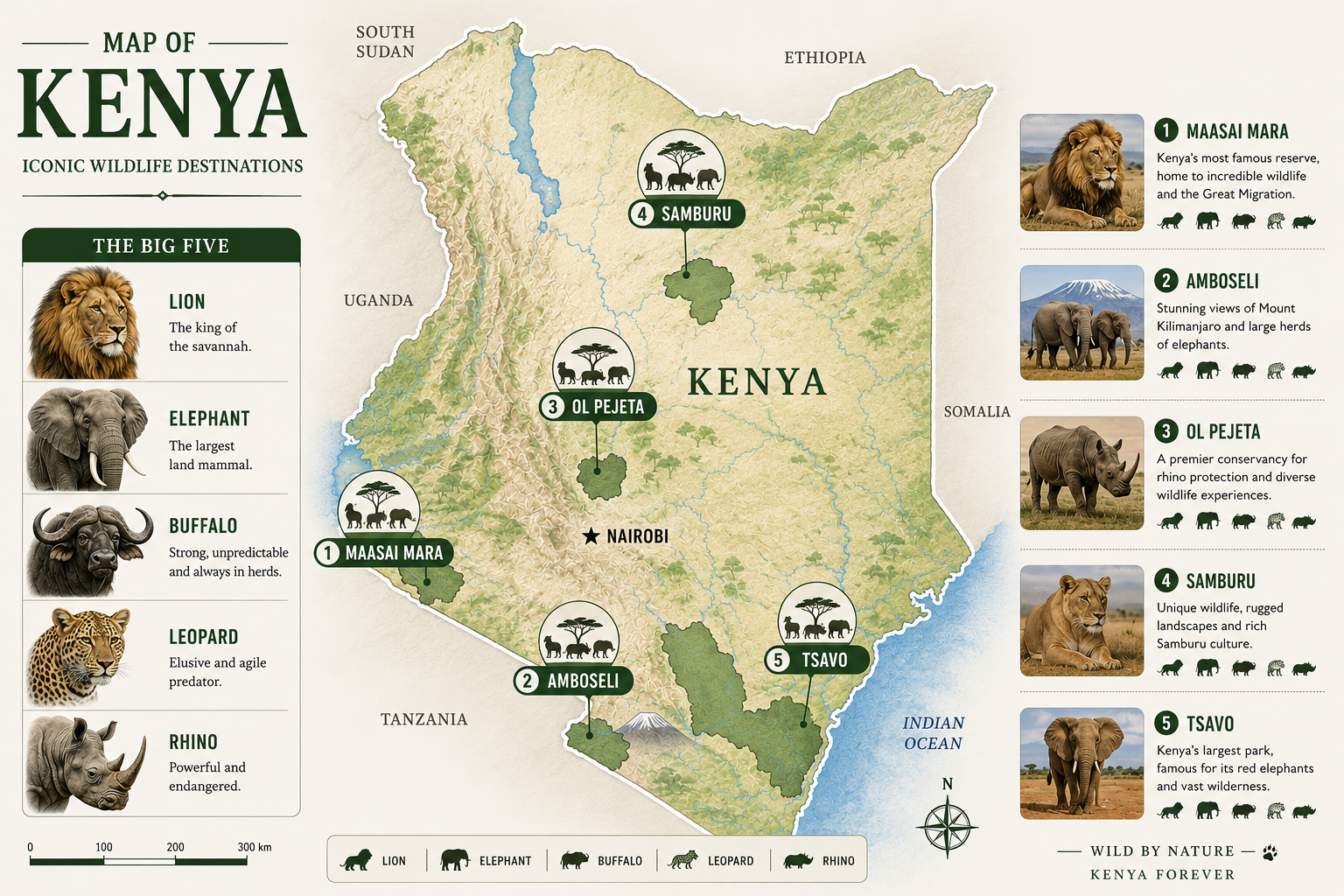
- Kenya is one of the best countries in the world to see all Big Five animals in a single trip, with parks including the Maasai Mara, Amboseli, Ol Pejeta, and Tsavo hosting complete or near-complete Big Five populations.
- Rhino is the hardest Big Five animal to see in Kenya; Ol Pejeta Conservancy in Laikipia offers the highest sighting probability, as it protects the largest population of both black and white rhinos in East Africa.
- Leopard sightings in Kenya are most reliable in Samburu Game Reserve, where individuals are unusually habituated to safari vehicles, and in the Maasai Mara, where guides use established territory knowledge to locate individuals.
- Time of day is the single biggest factor in Big Five sighting success — lions, leopards, and rhinos are most active in the first two hours after sunrise and the final hour before sunset, making early game drives non-negotiable.
- A 7–10 day itinerary combining the Maasai Mara and Amboseli gives travellers the highest statistical probability of completing the full Big Five, with Ol Pejeta added for dedicated rhino and cheetah seekers.
- Private conservancies bordering the Maasai Mara — including Mara North, Olare Motorogi, and Naboisho — offer off-road driving and night game drives not permitted inside the national reserve, dramatically improving sightings of elusive species.
What Are the Big Five Animals and Why Are They Called the Big Five?
The Big Five — lion, leopard, elephant, African buffalo, and rhinoceros — were named by big-game hunters to identify the five most dangerous African animals to track and hunt on foot, a designation based on unpredictability and aggression rather than size. The term originated in the late 19th century during the era of colonial big-game hunting in Africa, when professional hunters ranked animals by the threat they posed to a hunter on the ground. A wounded buffalo charges without warning. A leopard vanishes and reappears behind you. A black rhino can reverse direction and accelerate to 55 km/h with no notice. Size was never the criterion — danger was.
Today, the term has been entirely reclaimed by conservation and wildlife tourism. The Big Five now represent Africa's most sought-after wildlife encounters, and Kenya has built its safari reputation around the remarkable density and accessibility of all five species across its national parks and conservancies. Kenya's wildlife authority (KWS) estimates the country's elephant population at approximately 36,280 individuals — one of the healthiest on the continent — Source: Kenya Wildlife Service, 2023. For first-time safari travellers, seeing all five in a single trip is not just possible in Kenya; with the right itinerary, it is highly probable.
Why Kenya Is One of the Best Countries to See the Big Five
Kenya delivers a combination of ecosystem diversity, wildlife density, and guiding quality that few countries on Earth can match for Big Five safari experiences. Unlike single-biome destinations, Kenya spans savannah grasslands (Maasai Mara), semi-arid scrub (Samburu, Tsavo), highland forest (Aberdare), and volcanic lakeshores (Nakuru) — meaning different species thrive in different corners of the country, and a well-designed itinerary can chase optimal conditions for each. No other East African destination concentrates so many complete Big Five ecosystems within domestic flight range of each other.
Moreover, Kenya's wildlife is exceptionally habituated to safari vehicles. Decades of non-consumptive tourism have produced animals — particularly lions, elephants, and leopards in the Mara — that treat Land Cruisers as neutral furniture, allowing photography and observation at distances that would be impossible in less-visited parks. Kenya also benefits from a world-class safari guiding tradition; Kenyan Professional Safari Guides (KPSGs) undergo rigorous training and multi-year apprenticeships, meaning your guide's knowledge of individual animal territories, behaviour patterns, and seasonal movements is a genuine competitive advantage. Our Kenya safari tour packages pair every guest with guides who know their specific ecosystem intimately.
The Big Five Animals of Kenya: A Species-by-Species Field Guide
Each of Kenya's Big Five requires a different viewing strategy, park selection, and time-of-day approach — and understanding these differences is the single biggest upgrade you can make to your safari planning. Let's explore each animal in depth.
Where Is the Best Place to See Lions in Kenya?
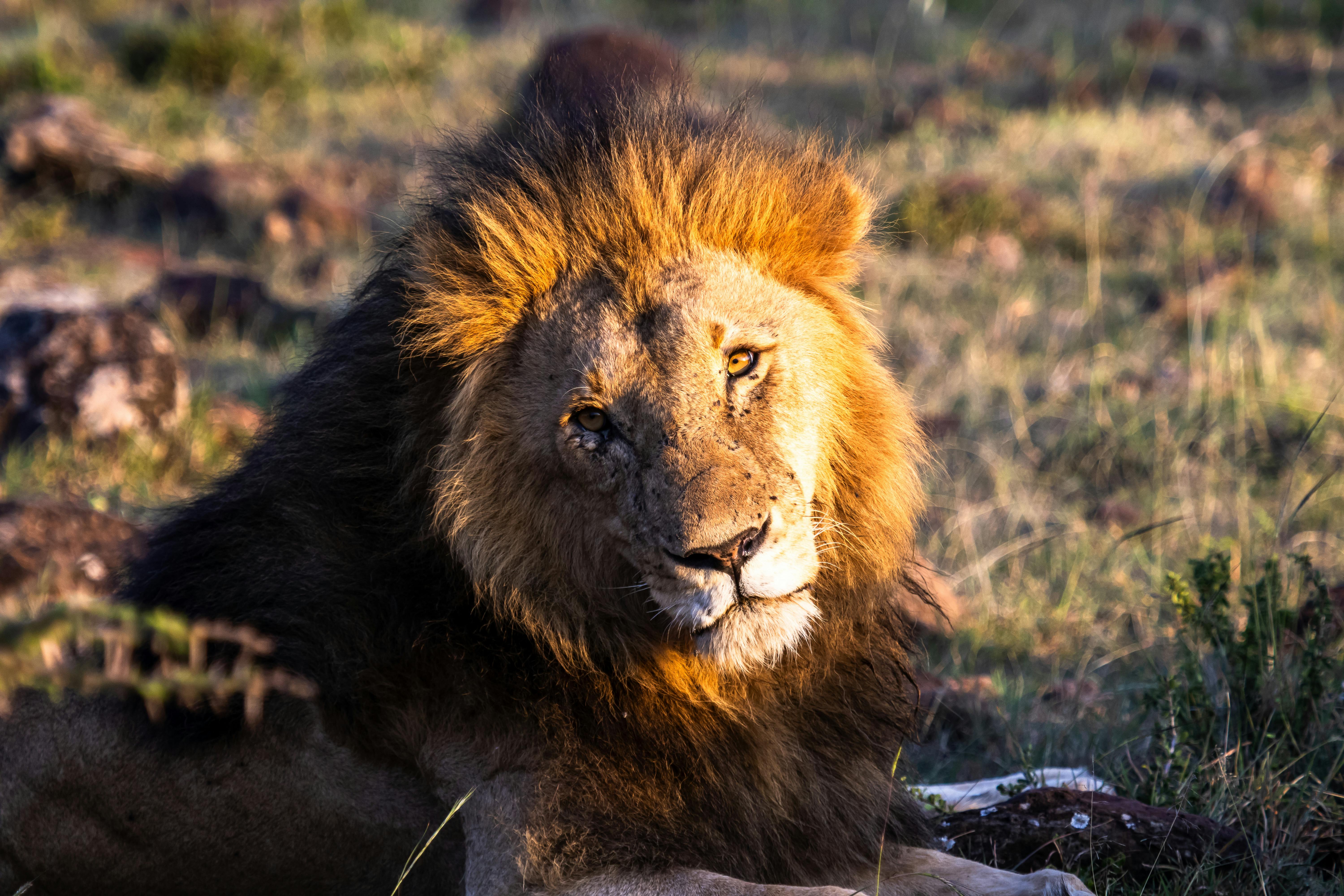
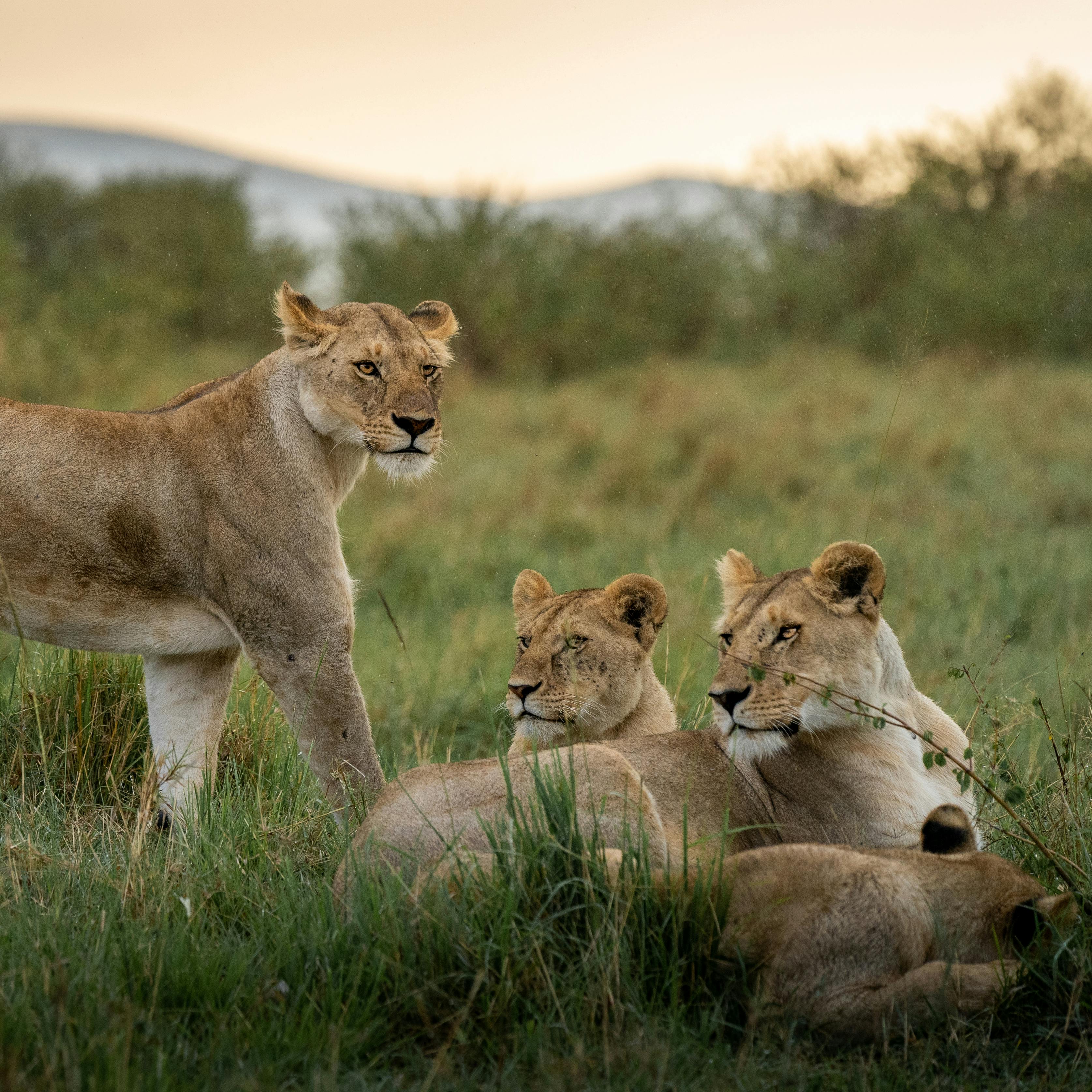
Lions are Kenya's most reliably sighted Big Five animal, classified as easy in difficulty across most major parks. Sighting difficulty: Easy. Kenya's lion population is estimated at approximately 2,000 individuals, with the Maasai Mara ecosystem supporting the highest concentration — Source: Lion Recovery Fund, 2022. Lions spend up to 20 hours per day resting, which means they're almost always visible once located; the challenge is finding the pride, not approaching them.
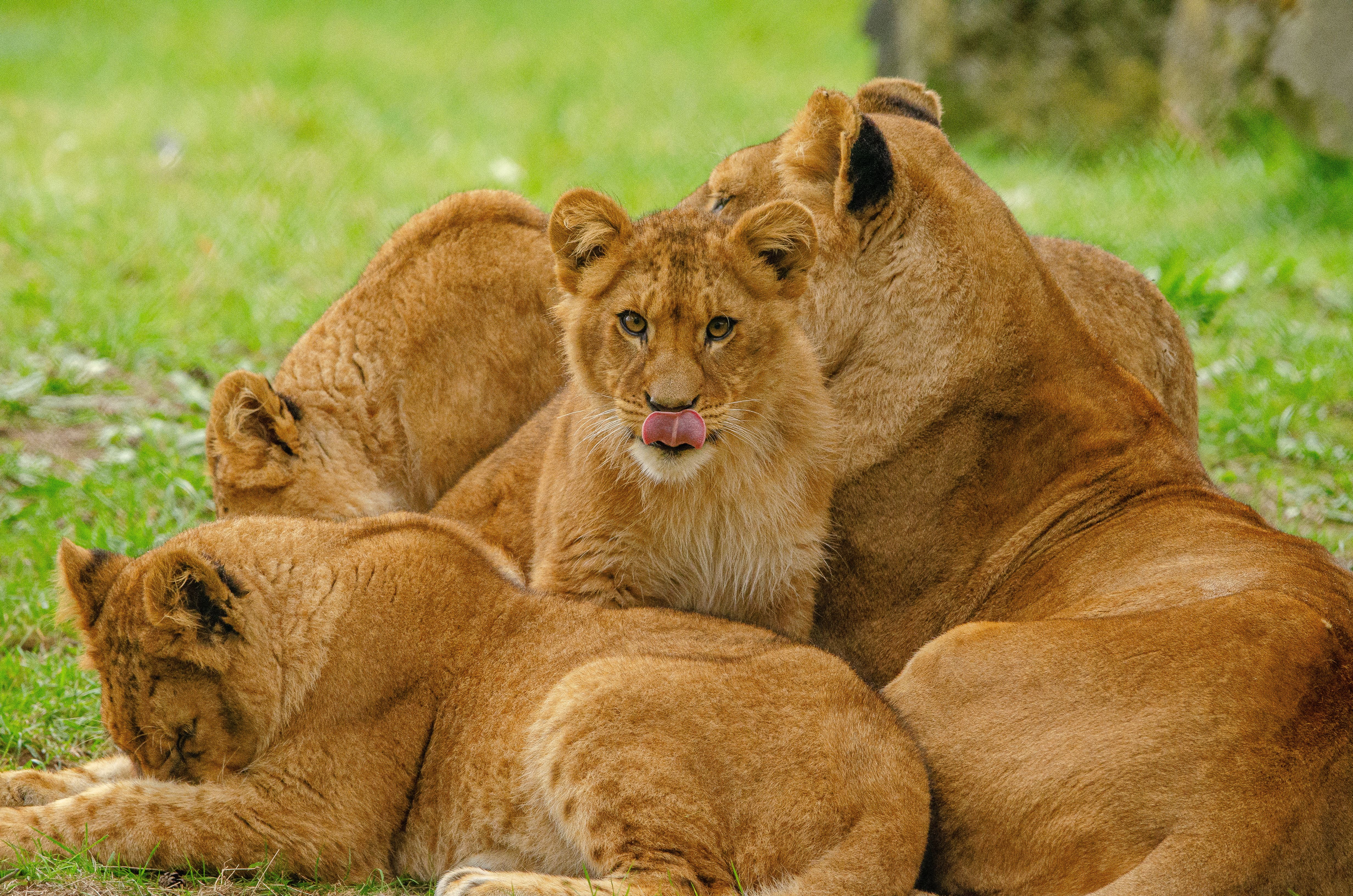
The Maasai Mara National Reserve is Kenya's premier lion destination. The Mara's resident prides — including the famous Marsh Pride, documented by BBC's Big Cat Diary — are so habituated that they'll sleep within metres of your vehicle without a flicker of interest. Best parks for lion: Maasai Mara (exceptional), Amboseli, Tsavo East, Samburu. Best time of year: Year-round in the Mara; January–February in Amboseli when prey concentration is highest. Field tip: Ask your guide to locate a pride at sunrise. Lions are most active — playing, grooming, and sometimes hunting — in the cool early morning. By 9 AM they are flat out in the shade and won't move until late afternoon.
Photographer's note: The Mara's open plains give you unobstructed full-body shots at ground level from your vehicle window. Use a 400mm lens for close fills and a 70–200mm for environmental context shots showing the pride against the landscape.
Where Can You See Leopards in Kenya on Safari?
Leopard is Kenya's most challenging mainstream Big Five sighting, classified as moderate to hard depending on the park — but Kenya offers conditions that make leopard encounters far more reliable than anywhere else in East Africa. Sighting difficulty: Moderate. Leopards are solitary, nocturnal, and expert at concealment; a leopard can be invisible in a tree 10 metres from your vehicle. However, two Kenyan ecosystems change this calculus dramatically.
Leopards in Kenya's Samburu Game Reserve are among the most vehicle-habituated individuals on the continent, offering some of Africa's most reliable and relaxed leopard sighting experiences outside of South Africa's private reserves. Samburu's open riverine woodland means leopards are visible in trees and on rocks without dense undergrowth to hide them. In the Maasai Mara, experienced guides maintain mental maps of individual leopard territories and check their known fig trees, luggas (seasonal streams), and rocky outcrops systematically. Best parks for leopard: Samburu (highest reliability), Maasai Mara, Tsavo West. Best time of year: June–September in Samburu; year-round in the Mara. Field tip: If your guide locates a leopard in a tree, be patient and stay quiet. Leopards will often descend and move at dawn if undisturbed — producing the most dramatic sighting of your entire trip.
Photographer's note: Leopards in trees photograph beautifully at golden hour. Position your vehicle so the light falls on the animal's face, not its back.
Which Kenya Parks Have the Highest Elephant Populations?
African elephants are Kenya's most emotionally powerful Big Five encounter and, conveniently, one of the easiest to achieve consistently. Sighting difficulty: Easy. Kenya's elephant population of approximately 36,280 — Source: Kenya Wildlife Service, 2023 — is distributed across multiple parks, but two destinations are in a class of their own for sheer spectacle.
Amboseli National Park is the undisputed capital of Kenya's elephant experience. Amboseli's swamp-fed ecosystem supports elephant herds of 200–400 individuals that have been studied continuously since the 1970s by the Amboseli Elephant Research Project — the world's longest-running elephant study. Individual animals here have names, documented family histories, and personalities known to local guides. Best parks for elephant: Amboseli (exceptional), Tsavo East (largest herds by volume), Ol Pejeta Conservancy. Best time of year: December–March in Amboseli for Kilimanjaro backdrop; July–October in Tsavo for waterhole congregation. Field tip: In Amboseli, position your vehicle near the swamp edge at dawn. Herds move from their overnight bush positions toward the water as the sun rises — crossing open ground in single file for some of the most iconic safari photography in Africa.
Photographer's note: Amboseli's flat terrain and short grass give you full elephant silhouettes with Kilimanjaro in the background on clear mornings (typically December–March). This is one of the most photographed images in wildlife photography — and it lives up to every frame.
Where Is the Best Place to See Rhinos in Kenya?
Rhinoceros is the hardest Big Five animal to see in Kenya, classified as hard — not because they're rare in Kenya relative to the continent, but because their populations are small, concentrated, and heavily protected. Sighting difficulty: Hard. Africa's total wild rhino population stands at approximately 23,000 individuals — a fraction of over 500,000 a century ago — Source: Save the Rhino International, 2024. Kenya is actually a continental leader in rhino conservation, hosting both black and white rhino populations across several protected areas.
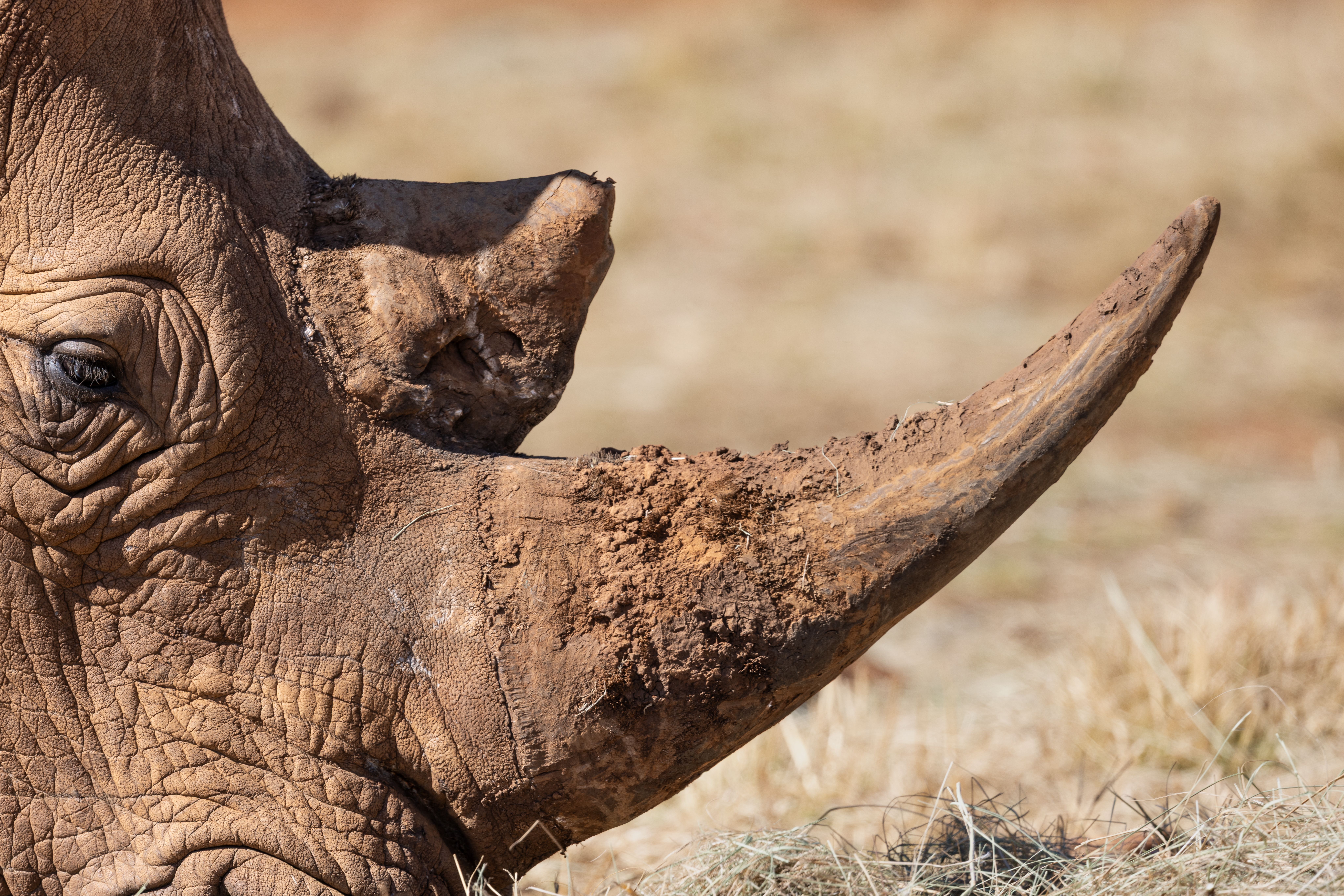
Ol Pejeta Conservancy in Kenya's Laikipia region protects the largest population of black rhinos in East Africa and is home to the world's last two northern white rhinos, making it the single best location in Kenya for rhino sightings. Ol Pejeta's security infrastructure — 24-hour armed ranger patrols, tracking collars, and fenced perimeters — means rhinos can be located with precision that no open national park can match. Lake Nakuru National Park also holds a significant black rhino population within a fenced sanctuary and is the most accessible option for travellers on shorter itineraries. Best parks for rhino: Ol Pejeta (highest reliability for black and white rhino), Lake Nakuru (accessible), Meru National Park. Best time of year: Ol Pejeta is productive year-round; Lake Nakuru is best in the dry season (July–October) when vegetation thins. Field tip: At Ol Pejeta, request a dedicated rhino tracking session with a ranger — these walks bring you on foot to within safe viewing distance of black rhino individuals, an experience unavailable in any national park.
Which Kenya Parks Are Best for Seeing African Buffalo?
African buffalo are the most underrated member of the Big Five — and the most statistically dangerous, responsible for more hunting fatalities historically than any other Big Five species. Sighting difficulty: Easy to Moderate. Buffalo are found in large herds across most of Kenya's major parks, but their behaviour — and the drama they create — varies significantly by location and season.
In the Maasai Mara, buffalo herds of 500–1,000 individuals are common during the dry season (July–October), and these mega-herds attract concentrated lion activity, producing some of the most dramatic predator-prey interactions in Africa. Tsavo East National Park hosts particularly large buffalo populations along the Galana River corridor. Best parks for buffalo: Maasai Mara (largest herds, best predator interaction), Tsavo East, Amboseli. Best time of year: Dry season (July–October) everywhere — herd consolidation around water creates maximum density. Field tip: Don't dismiss a buffalo sighting as "just buffalo." Watch the herd edges for lions testing for weaknesses. Some of Kenya's most spectacular wildlife interactions begin with a lone lion probing a buffalo herd's flanks.
Best Kenya Safari Parks for Big Five: How They Compare
Choosing the right Kenya park for Big Five viewing requires matching your priorities — species completeness, crowd tolerance, budget, and season — to each park's strengths. No single park delivers a perfect Big Five experience in isolation, but several combinations reliably complete the full set.
| Park | Lion | Leopard | Elephant | Buffalo | Rhino | Big Five Complete? | Best Season |
|---|---|---|---|---|---|---|---|
| Maasai Mara | ★★★★★ | ★★★★ | ★★★ | ★★★★★ | ✗ | Near-complete | Jul–Oct |
| Amboseli | ★★★★ | ★★ | ★★★★★ | ★★★ | ✗ | Near-complete | Dec–Mar |
| Ol Pejeta | ★★★ | ★★★ | ★★★ | ★★★ | ★★★★★ | Complete | Year-round |
| Tsavo East | ★★★ | ★★★ | ★★★★ | ★★★★ | ✗ | Near-complete | Jul–Oct |
| Samburu | ★★★ | ★★★★★ | ★★★ | ★★ | ✗ | Partial | Jun–Sep |
| Lake Nakuru | ★★★ | ★★ | ★★ | ★★★ | ★★★★ | Partial | Jul–Oct |
The optimal Big Five safari itinerary in Kenya combines the Maasai Mara — for lion, leopard, elephant, and buffalo — with Ol Pejeta Conservancy for rhino, completing the full set within a 7–10 day trip. This two-park combination is our most popular framework at Beyond the Plains Safaris and consistently produces complete Big Five results for first-time visitors.
Practical Tips for Maximising Your Big Five Sightings in Kenya
Maximising Big Five sightings in Kenya requires strategy, not luck — and the travellers who see all five consistently follow the same set of field principles that professional guides use every day.
What Time of Day Are You Most Likely to See the Big Five?
Time of day is the single most controllable factor in Big Five sighting success. Lions, leopards, and rhinos are most active in the first two hours after sunrise (6–8 AM) and the final hour before sunset (5–7 PM). During midday heat (10 AM–3 PM), predators are almost entirely sedentary, hidden in shade, and minimally rewarding to observe. Never skip an early morning game drive. The guests who maximise sightings are in the vehicle by 6 AM, not 8 AM. Those two hours contain more wildlife activity than the rest of the day combined.
Do You Need a Private Conservancy to See All Big Five in Kenya?
Private conservancies bordering the Maasai Mara offer capabilities the national reserve cannot provide — specifically off-road driving and night game drives, both of which transform sighting success for elusive species. In the Maasai Mara national reserve, vehicles must stay on designated tracks; in neighbouring private conservancies (Mara North, Olare Motorogi, Naboisho), guides can follow animals off-road directly to their location. For leopard and rhino especially, this off-road access makes encounters far more likely. Night game drives reveal nocturnal behaviour — including active leopard hunts and rhino movement — invisible to day-only visitors. Our East Africa safaris page details conservancy options for every budget.
How Does Your Guide Make or Break Your Big Five Experience?
Your guide's knowledge is your most valuable safari asset — more valuable than your lodge, your camera, or your timing. An experienced Kenyan guide maintains mental maps of individual animal territories, tracks predator kill cycles (a pride that fed yesterday is more likely to be mobile today), reads bird behaviour (alarm calls from guinea fowl often signal a nearby predator), and communicates via radio with other guides across the ecosystem. Always ask your operator about guide qualifications. At Beyond the Plains Safaris, every guide holds a Kenya Professional Safari Guide (KPSG) certification and has a minimum of five years field experience in their primary ecosystem. Schedule a consultation to discuss guide-to-guest ratios and field experience for your specific itinerary.
What's Next: How to Build Your Big Five Kenya Safari Itinerary
Building a Kenya Big Five itinerary is a question of matching your available days and primary priorities to the right park combination. Here's the framework we use at Beyond the Plains Safaris:
7-day Big Five itinerary (recommended minimum):
- Days 1–4: Maasai Mara (lion, leopard, elephant, buffalo — near-complete Big Five)
- Days 5–7: Amboseli (elephants + Kilimanjaro, reliable lion, occasional leopard)
- Rhino gap: Add 2 nights at Ol Pejeta if rhino is a priority
10-day Complete Big Five itinerary:
- Days 1–4: Maasai Mara / private conservancy
- Days 5–6: Ol Pejeta Conservancy (rhino focus + cheetah)
- Days 7–10: Amboseli (elephants + landscape)
For travellers considering a cross-border extension, our Kenya and Tanzania safari packages combine the Mara's Big Five with the Serengeti's Migration for a comprehensive East Africa experience. If you're planning travel between July and October, refer to our best time to visit Kenya for a safari guide to align your park choices with peak conditions for each species.
Regarding when to travel for Big Five: July–October is peak season for the Maasai Mara (migration, high predator activity, dry-season concentration). January–February is optimal for Amboseli (elephant herds, clear Kilimanjaro views, excellent predators). Ol Pejeta for rhino is productive year-round. Book Mara camps 9–12 months in advance for July and August — get a free quote now to check current availability.
Conclusion: Your Kenya Big Five Safari Starts with the Right Plan
Kenya is one of the few countries on Earth where seeing all five Big Five animals in a single trip is not just possible — it is the expected outcome of a well-designed itinerary. The lion will find you in the Mara. The elephants will greet you at Amboseli's swamp edge. The buffalo herds will materialize from the dust. The leopard will test your patience before rewarding it spectacularly. And the rhino — Kenya's most precious and carefully protected Big Five member — will make you understand exactly why conservation matters.
The difference between a traveller who completes the Big Five and one who misses one or two comes down to three things: the right park combination, an expert guide, and an early alarm clock. Everything else is detail. At Beyond the Plains Safaris, we've designed hundreds of Big Five itineraries built around real-time wildlife conditions, not fixed templates — because the bush doesn't follow a script, and your itinerary shouldn't either.
Start planning your Big Five safari today →
Or explore our Masai Mara safari tour package and Ol Pejeta Conservancy tours to see current availability and itinerary options.
Written by Linet Wanjiru Safari Specialist, Beyond the Plains Safaris. Linet has planned and guided Big Five safaris across Kenya and Tanzania for over eight years, with specialist knowledge of the Maasai Mara ecosystem, Amboseli elephant behaviour, and private conservancy operations in Laikipia.
Beyond the Plains Safaris is a KATO-registered Kenya and Tanzania safari operator rated 4.9 on TripAdvisor and recipient of the 2025 Tourism Excellence Award. Learn more about our team →
Disclaimer: This article was initially drafted using AI assistance. However, the content has undergone thorough revisions, editing, and fact-checking by human editors and subject matter experts to ensure accuracy.










Comments (0)
Leave a Comment
No comments yet. Be the first to comment!