

Most travellers planning a Kenya safari know they should visit "during the dry season", and they're not wrong. But choosing the single best month for your trip depends on factors most generic guides never explain: which park you're visiting, whether you're chasing the Great Migration or the Big Five, and what you're willing to trade off between crowds, cost, and conditions. This month-by-month guide breaks down exactly what Kenya offers across all 12 months so you can match your travel window to the experience you actually want.
Key Takeaways
- Kenya's peak safari season runs from July to October, when the Great Wildebeest Migration enters the Maasai Mara and dry conditions concentrate wildlife around water sources, making game viewing exceptional.
- January and February form a second, quieter dry season with excellent predator sightings, fewer crowds, and lower lodge prices than the July–October peak.
- The long rains (March–May) bring lush landscapes and newborn animals but can make dirt roads impassable, best suited for budget travellers and birdwatchers willing to trade convenience for price.
- Kenya's wildlife calendar is park-specific: Amboseli peaks December–March for elephant herds and Kilimanjaro views, while Samburu's unique northern species are most accessible in the dry months of June–September.
- River crossing sightings in the Maasai Mara are not guaranteed on any fixed date, the migration follows rainfall patterns, and August through early October offers the highest probability of witnessing a crossing.
- Green season travel (November and April–May) can offer 30–50% savings on accommodations and near-empty game drives, making it ideal for repeat visitors or photography enthusiasts who prefer dramatic skies and fewer vehicles.
- Booking peak-season accommodation 9–12 months in advance is strongly recommended, as top camps in the Mara sell out entirely, particularly for August river-crossing positions.
- June to October and mid-December are also Kenya's best windows for a safari-and-beach combination, when dry-season game viewing pairs naturally with a few finishing days at the coast.
What Is the Best Time to Visit Kenya for a Safari?
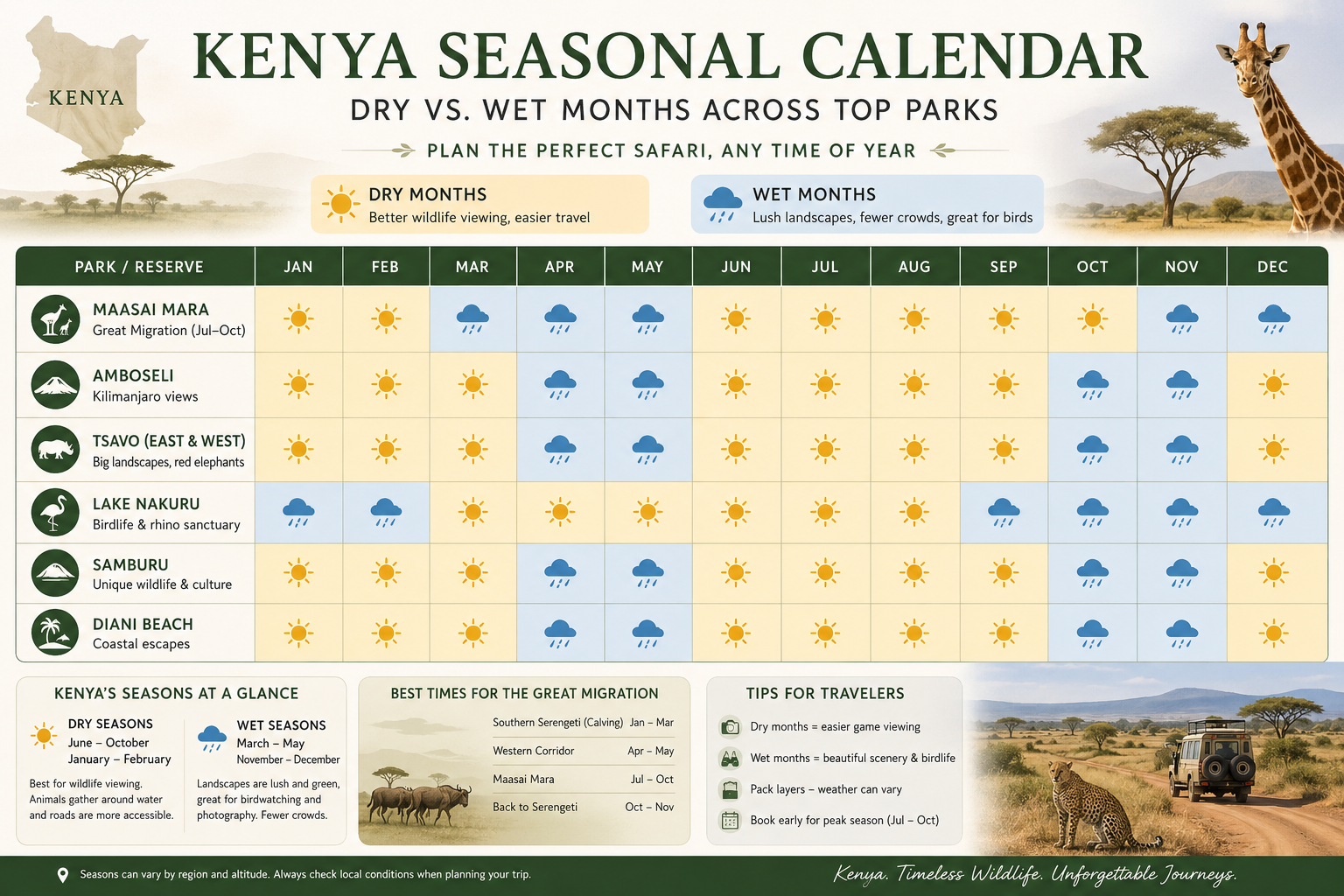
The best time to visit Kenya for a safari is the primary dry season, which runs from July to October, but the honest answer is that "best" depends entirely on what you want to see and how much you're willing to spend. Kenya experiences two dry seasons and two wet seasons annually, each with distinct advantages for different types of travellers. The peak dry season (July–October) delivers the Great Wildebeest Migration, concentrated game around waterholes, and the best general Big Five viewing. The short dry season (January–February) offers excellent predator activity, thinner crowds, and lower prices. The green seasons (March–May and November) suit birders, honeymoon couples seeking private bush, and budget-conscious first-timers willing to accept some rainfall in exchange for dramatic landscapes.
Kenya experiences two dry seasons: a primary dry season from July to October and a shorter dry season from January to mid-February, both offering excellent game viewing with reduced vegetation and concentrated wildlife. Understanding this framework before diving into monthly detail is the single most important step in planning your itinerary.
Why Kenya's Seasons Matter More Than You Think
Kenya's position straddling the equator creates two distinct annual rainfall cycles that directly control vegetation density, wildlife movement, road accessibility, and lodge pricing, making seasonal timing the single biggest variable in your safari experience. Unlike temperate destinations where seasons shift slowly, Kenya's transition from wet to dry can happen within weeks. When the rains arrive, grasslands transform from golden dust bowls into thick green canopies. Predators become harder to spot. Dirt roads in parks like Tsavo East and Samburu can flood and close entirely.
Conversely, as the dry season tightens its grip, water becomes scarce. Animals that had dispersed across hundreds of square kilometres during the rains are now funnelled to permanent rivers and springs. A single waterhole in Amboseli can host elephants, buffalo, zebra, and a resident pride of lions within the same hour. This concentration effect, invisible to travellers who visit only in the green season, is what defines a "wow" safari moment. The Maasai Mara National Reserve is the most dramatic example: from July onward, over 1.5 million wildebeest pour across the Tanzanian border into the Mara, supported by the same dry-season logic, following the grass.
Seasonal timing also drives price swings of 40–60% between peak and low season at the same lodge.
Kenya's Four Safari Seasons Explained
Kenya's year divides into four distinct safari seasons, each with a different character, crowd level, price point, and wildlife experience. Here's the framework every planner needs before reading the monthly breakdown.
| Season | Months | Crowd Level | Price Range | Wildlife Visibility | Best For |
|---|---|---|---|---|---|
| Peak Dry Season | July – October | High | High | Excellent | Migration, Big Five, river crossings |
| Short Dry Season | January – February | Medium | Medium | Very Good | Predators, budget peak, fewer tourists |
| Long Rains | March – May | Low | Low | Good (lush) | Birding, budget travel, photography |
| Short Rains | November – December | Low–Medium | Medium | Good | Value travel, landscapes, post-migration |
Peak Dry Season (July – October)
The peak dry season is Kenya's most popular safari window, driven primarily by the Great Wildebeest Migration and universally excellent game viewing across all parks. Vegetation is low, rivers are reduced to predictable crossing points, and wildlife concentrations reach their annual maximum. Expect to pay premium rates, top camps at Masai Mara safari packages sell out 9–12 months in advance. Book early. The trade-off is dust, heat in lower-altitude parks, and crowded game drive vehicles competing for the same crossing sightings.
Short Dry Season (January – February)
January and February offer Kenya's best value for quality safari experiences. The rains have ended, vegetation is receding, and wildlife behaviour, particularly among predators, is highly active, as this is calving season in the southern Serengeti ecosystem that ripples northward. Tourist numbers are a fraction of July–October levels, and many lodges offer shoulder-season pricing. For couples and solo travellers who want excellent game without the convoy of vehicles, this is Kenya's hidden sweet spot.
Long Rains (March – May)
The long rains transform Kenya's landscape into something extraordinary, but they also test your patience. April is Kenya's wettest month, and roads in parks like Tsavo West can close for days. That said, this period produces the most dramatic skies, carpets of wildflowers, and newborn animals at every turn. Over 400 species of migratory birds arrive from Europe and Asia, making this peak season for birdwatchers. Prices can drop 30–50% from peak rates, and you'll often have entire game drives to yourself.
Short Rains (November – December)
The short rains (November–December) are the most underrated season in Kenya. Showers typically arrive in the afternoon or evening, leaving mornings crisp and clear for game drives. The landscape is freshly green. Migrant birds from the northern hemisphere have arrived. Christmas and New Year bring a spike in visitors and prices, but the first two weeks of November remain genuinely quiet. This is also an excellent time for a Kenya and Tanzania combined safari, as the migration has returned south into Tanzania and multi-country itineraries align beautifully.
Kenya Safari Month-by-Month Guide: What to Expect Year-Round
Kenya delivers rewarding safari experiences in every calendar month, but what you experience varies dramatically depending on when you go. The following breakdown gives you a weather snapshot, wildlife highlights, recommended parks, crowd level, and a verdict for each month.
January
January is one of Kenya's finest months for an affordable, high-quality safari. The short rains have ended, skies are clear, and vegetation is still green enough for beautiful landscapes without obscuring wildlife. Predator activity is exceptional, lions, cheetahs, and leopards are all highly visible as prey animals congregate around receding water sources. Amboseli National Park reaches peak form this month, with massive elephant herds moving between swamps against crystal-clear views of Mount Kilimanjaro. Crowds are moderate; prices sit 20–30% below peak season.
Best parks: Amboseli, Ol Pejeta Conservancy, Lake Nakuru Verdict: Excellent value month, one of our top recommendations for couples and first-timers.
February
February continues January's excellent conditions with the added bonus of calving season pushing into the southern Mara ecosystem. Wildebeest calves are born in massive numbers in Tanzania's Serengeti, and predator pressure, particularly from cheetahs and wild dogs, is at its annual peak. In northern Kenya, Samburu Game Reserve offers exceptional viewing of its unique "Samburu Special Five": Grevy's zebra, reticulated giraffe, Beisa oryx, Somali ostrich, and gerenuk. Expect warm days (28–32°C) and cool evenings.
Best parks: Amboseli, Samburu, Meru National Park
Verdict: Arguably Kenya's most underrated safari month, excellent game, low crowds, fair prices.
March
March marks the beginning of Kenya's long rains, and conditions shift noticeably from mid-month onward. Early March retains much of February's quality before the rains arrive in earnest. Some of the best lodges offer transitional pricing. This is an excellent month for Aberdare National Park, where tree lodges offer night game viewing regardless of daytime rain. Photography opportunities, particularly wide-angle landscape shots with building storm clouds, are outstanding.
Best parks: Aberdare, Hells Gate, Ol Pejeta
Verdict: Early March is good; late March is for adventurous travellers only.
April
April is Kenya's wettest month and the lowest point of tourist traffic, which makes it simultaneously the cheapest and most exclusive safari experience available. The Maasai Mara in April feels like a different planet: empty roads, no vehicle convoys, and grass so green it almost doesn't look real. Many camps close for maintenance; those that stay open discount aggressively. Over 200 species of Palearctic migrants are present, making this peak birdwatching season. Budget safaris to Tsavo East remain viable, as Tsavo's red laterite soil drains faster than Mara black cotton soil.
Best parks: Tsavo East, Lake Nakuru, Aberdare
Verdict: For birders and budget travellers only, not recommended for first-time Big Five seekers.
May
May is similar to April but begins improving in the second half as the long rains taper off. Wildlife in the Mara has dispersed widely and is harder to find. However, Amboseli and Samburu, which receive less rainfall than the western Rift, often remain accessible. The green season discount (30–50% off peak rates) remains fully in effect. For photographers, May's combination of lush green backdrops and dramatic cloud formations creates imagery that peak-season dust simply can't match.
Best parks: Amboseli, Samburu, Lake Nakuru
Verdict: Green season value with improving conditions by month's end.
June
June is Kenya's shoulder month, one of the year's most strategically smart times to travel. The rains have ended, the landscape is still beautifully green, and the annual dry-season concentration of wildlife is beginning. The Great Migration is gathering at the Tanzania–Kenya border, preparing to cross north. Lodges in the Mara have re-opened after maintenance, and prices haven't yet hit their July peak. For a Mara and Serengeti combined safari, June is ideal, the herds are visible in both ecosystems simultaneously.
Best parks: Maasai Mara, Samburu, Tsavo East
Verdict: Excellent month, green landscapes, improving game, pre-peak pricing.
July
July marks the beginning of Kenya's peak safari season and the arrival of the Great Wildebeest Migration into the Maasai Mara. Over 1.5 million wildebeest, accompanied by hundreds of thousands of zebra and gazelle, cross the Mara River in scenes that rival any wildlife spectacle on Earth. The dry season is now well established: grass is short, visibility is exceptional, and predator activity across the Mara ecosystem surges. Demand for camps spikes sharply, top properties are often fully booked. Book Mara camps 9–12 months ahead for July travel, Source: Kenya Association of Tour Operators (KATO), 2024.
Best parks: Maasai Mara (priority), Samburu, Amboseli
Verdict: World-class safari month, book far in advance and budget for peak pricing.
August
August is statistically the most popular month for Kenya safaris, and for good reason: Mara River crossings reach their peak frequency, predator activity around the migrating herds is extraordinary, and the dry season is at its most intense. Cheetah sightings in the Mara's open plains are exceptional, the short grass means you can spot a cheetah from 2 kilometres away. That said, August is also the most congested month; popular crossing points can draw 30–50 vehicles. Choose a Beyond the Plains Safaris custom itinerary that positions you at private conservancy crossings to avoid the crowds. August is also a strong month to add a coastal extension, see the beach-and-safari section below.
Best parks: Maasai Mara, private Mara conservancies
Verdict: The best month for river crossings, but plan and book a full year ahead.
September
September delivers the same spectacular wildlife as August with slightly fewer crowds as European summer holidays wind down. The migration herds are still present in the Mara, crossings continue, and lion pride dynamics, including territorial battles and cub introductions, are fascinating to observe. Temperatures are comfortable (22–28°C). September is also outstanding for Ol Pejeta Conservancy, home to the world's last two northern white rhinos, as dry conditions concentrate animals around the Ewaso Ng'iro River.
Best parks: Maasai Mara, Ol Pejeta, Samburu
Verdict: Marginally better value than August with near-identical game viewing quality.
October
October is the final month of Kenya's peak season and the last reliable window for Migration river crossings. By late October, the herds begin their return south toward Tanzania as short rains approach. Game viewing remains excellent across all parks, and prices begin softening after the August–September peak. Tsavo East and West are particularly rewarding in October: elephant herds of 200–300 individuals gather at the Galana River, and the red-dust landscape turns photogenic gold in evening light. See our Tsavo East safari package for October itinerary options.
Best parks: Maasai Mara, Tsavo East, Amboseli
Verdict: Last chance for Migration crossings, and prices are beginning to ease.
November
November is Kenya's short rains month and one of the most undervalued travel windows of the year. Rain typically arrives in afternoon showers, leaving crisp, golden mornings ideal for game drives. The landscape greens rapidly. Migrant birds from Europe flood in, flamingo numbers at Lake Nakuru surge dramatically in November. Lodge occupancy drops sharply from October's peak, and many operators offer significant discounts. For travellers seeking the feeling of having Kenya to themselves, November delivers, without the full compromises of the long rains.
Best parks: Lake Nakuru, Amboseli, Aberdare
Verdict: Excellent for birders and value-seekers, one of our personal favourites.
December
December offers a split personality: the first three weeks are green season at its best, while Christmas–New Year brings a surge in demand and prices. Wildlife is excellent across Amboseli, elephant families reunite at the swamps, and Kilimanjaro views on clear December mornings are among the most photographed images in East Africa. Early December is genuinely quiet and affordable. If you're travelling over the festive period, book as early as July–August for December camps, as this brief window rivals peak season demand. December is also one of the best months to close a safari with a few days on the coast, see below.
Best parks: Amboseli, Maasai Mara, Lake Nakuru
Verdict: Early December is superb value; late December requires early booking and a higher budget.
The Great Wildebeest Migration in Kenya: When and Where to See It
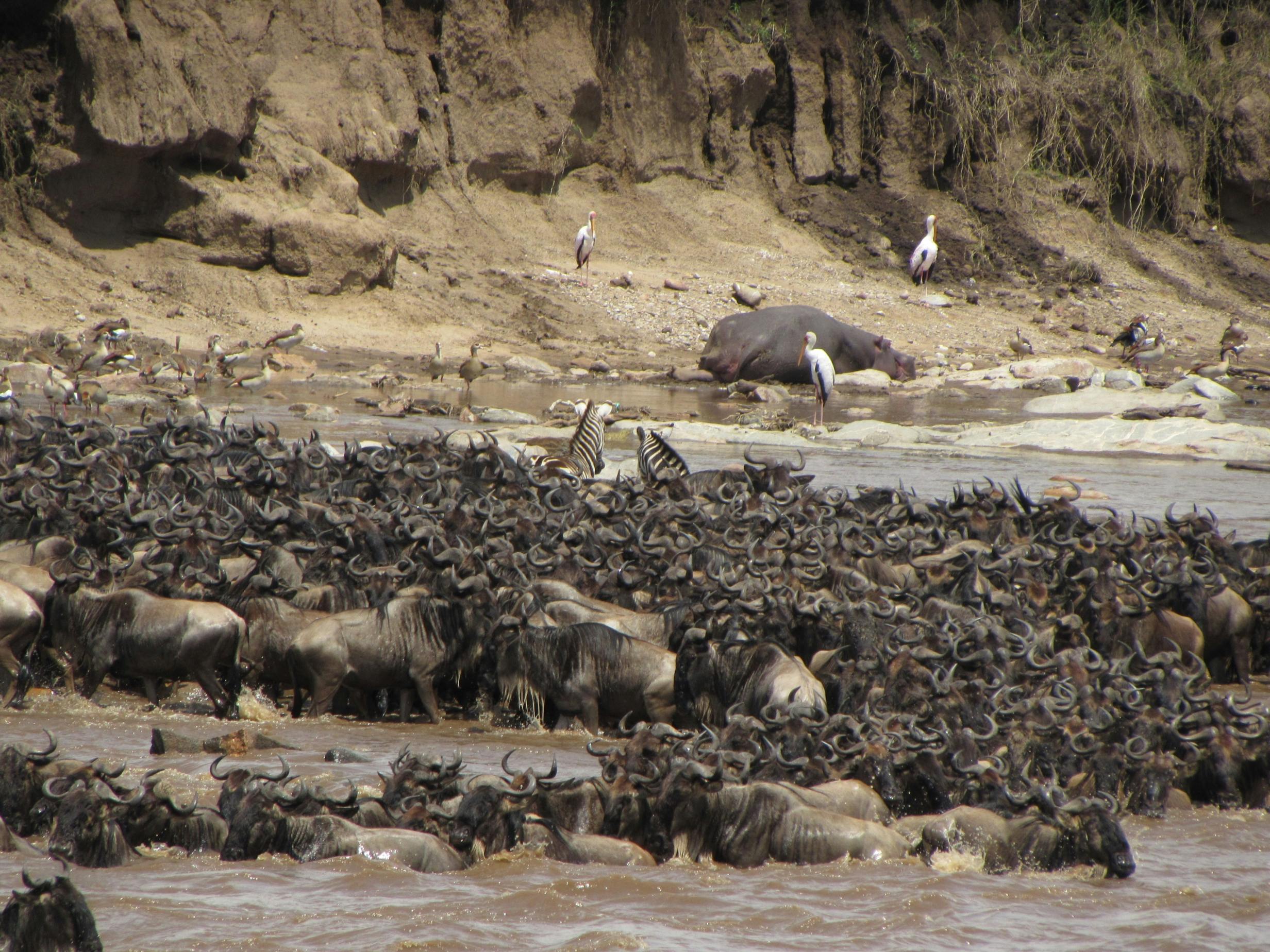
The Great Wildebeest Migration is the largest overland animal movement on Earth, involving approximately 1.5 million wildebeest, 400,000 zebra, and 200,000 Thomson's gazelle in a continuous circular journey across the Serengeti–Mara ecosystem, Source: WWF, 2023. The Wildebeest Migration's Mara River crossings, considered one of the greatest wildlife spectacles on Earth, typically occur between August and early October, though exact dates vary annually depending on rainfall patterns. Understanding the migration's Kenya timeline is essential for planning.
When the Migration Arrives in Kenya
The herds typically cross from Tanzania's Serengeti into Kenya's Maasai Mara starting in July, though the exact date shifts year to year based on rainfall driving grass growth. By mid-July, significant herds are usually present in the northern Mara. By August, the ecosystem supports its peak population of migrating animals. Our Maasai Mara National Reserve guide includes current-year migration updates based on our guides' on-the-ground reports.
The Mara River Crossings: August and September
Mara River crossings are the migration's defining spectacle, but they cannot be scheduled. Herds approach the river, hesitate for hours, sometimes days, and then charge across in explosive, chaotic waves. Crocodiles, already fat with prey, line the crossing points. Big cats follow the herds' movement on both banks. The highest crossing frequency occurs between mid-August and late September. Private conservancies bordering the Mara (Mara North, Olare Motorogi, Naboisho) offer uncrowded viewing of the same crossings, often with your guide and vehicle alone at the bank.
The Return South: October and November
From late October, the herds begin drifting south as the short rains green the Serengeti's plains again. Crossings at the Mara River continue into early October but become less predictable. By November, most of the wildebeest have re-entered Tanzania. This is an excellent time for a Kenya and Tanzania safari package that follows the herds south into the Serengeti.
Which Kenya Safari Parks Are Best for Birdwatching — and When?
Kenya is one of Africa's premier birdwatching destinations, with over 1,100 recorded species, more than the entire continental United States, and distinct seasonal patterns that determine when specific parks reach their birding peak. Source: Birds of East Africa, Stevenson & Fanshawe, 2020.
For birdwatching, the green season (April–May and November) is peak season, not a compromise. Lake Nakuru National Park peaks November–April when flamingo colonies paint the lake's edge pink. Aberdare National Park is excellent year-round for montane forest specialists. Samburu in the north hosts dry-country endemics best seen June–September. Meru National Park, one of Kenya's least-visited and most biodiverse parks, is outstanding for birding year-round, particularly along the Tana River. See our Meru National Park guide for species-specific itinerary recommendations.
Best Kenya Safari Parks by Season: Where to Go and When
Kenya's park network spans five distinct ecosystems, and each reaches its optimal viewing window at a different time of year. Booking the right park for your chosen month is as important as booking the right month for your chosen park.
| Park | Peak Season | Key Wildlife | Don't Miss |
|---|---|---|---|
| Maasai Mara | July – October | Big Five + Migration | Mara River crossings |
| Amboseli | December – March | Elephants, big cats | Kilimanjaro views |
| Samburu | June – September | Special Five, big cats | Ewaso Ng'iro River |
| Tsavo East & West | July – October | Elephants, lions, leopard | Galana River elephant herds |
| Lake Nakuru | Nov – April | Flamingos, rhinos | Flamingo flocks |
| Ol Pejeta | July – October | Rhinos, cheetah, lions | Northern white rhinos |
| Meru | July – October | Elephants, leopard | Remote wilderness |
| Aberdare | Year-round | Bongo, leopard, rhino | Night game drives |
Amboseli National Park reaches its peak from December through March, when elephant herds congregate around the swamps and clear skies offer unobstructed views of Mount Kilimanjaro across the border in Tanzania. For first-time visitors who want to combine the Mara's drama with Amboseli's elephants, a Kenya safari itinerary spanning 8–10 days can cover both parks in a single trip.
Combining Your Safari With Beach Time: When It Works Best
Kenya's dry season windows are also its best windows for a safari-and-beach combination, because the same clear, settled weather that improves game viewing inland also delivers calm seas and sunny days at the coast. Two periods work particularly well:
- June–October, when you can pair peak Migration season in the Maasai Mara with a few finishing days at Diani Beach or Watamu on the Indian Ocean.
- Mid-December to early January, when a safari through Amboseli or Tsavo pairs naturally with a festive-season beach stretch, though this window books up quickly, so plan both legs well ahead.
The logistics are straightforward: most itineraries fly from Nairobi or the Mara directly into Mombasa or Ukunda (Diani's airstrip), avoiding a long road transfer. If you're building a two-week trip, a common structure is 7–9 days inland followed by 4–6 days at the coast.
Practical Tips: Booking, Budgeting, and What to Pack for Kenya's Seasons
Planning a Kenya safari requires thinking about logistics, health, and packing through a seasonal lens, the same item that's essential in one month is deadweight in another.
How Far in Advance Should You Book?
Peak season (July–October) camps in the Maasai Mara require booking 9–12 months in advance for guaranteed availability at top properties, particularly for August, when demand for river-crossing positions is at its highest. Green season travel (April–May, November) can typically be arranged within 4–8 weeks with full availability. Christmas and New Year (late December) book up 6–8 months in advance despite the short rains. Schedule a consultation with our team to check current availability before setting your dates.
What to Pack by Season
Dry season packing (July–October, January–February): Pack lightweight, neutral-coloured clothing for hot days (28–34°C) and a fleece or light down jacket for cold early-morning game drives (8–14°C). Dust is significant, bring a buff or lightweight scarf for open-vehicle drives. Quality sunglasses and high-SPF sunscreen are essential.
Green season packing (March–May, November): A lightweight waterproof jacket is non-negotiable. Pack quick-dry fabrics. Waterproof boots are valuable for bush walks after rain. The upside: dust is gone, and colours are vivid, bring your best camera.
Malaria and Health Considerations
Kenya is a malaria-risk destination year-round, though risk varies by region and season. Malaria transmission peaks during and after the rainy seasons when mosquito populations surge. Consult a travel health clinic 4–6 weeks before departure for appropriate prophylaxis recommendations. All our guides carry comprehensive first-aid kits, and we brief every guest on bite prevention protocols at the start of each itinerary.
Frequently Asked Questions
When is the best time to visit Kenya for a safari?
The best overall time is during Kenya's dry seasons, January to March (short dry season, with some rain in early March) and June to October (long dry season and Great Migration). These periods offer the clearest game viewing and easiest road conditions.
What is the Great Migration, and when does it happen in Kenya?
The Great Migration is the annual circular movement of roughly 1.5 million wildebeest and hundreds of thousands of zebra and gazelle between Tanzania's Serengeti and Kenya's Maasai Mara. The herds are typically in Kenya from around July through October, with Mara River crossings most frequent between mid-August and late September.
Is it safe to visit Kenya for a safari?
Yes, Kenya's safari regions are visited by hundreds of thousands of tourists every year with an excellent safety record. As with any international trip, check current travel advisories and travel with a licensed, KATO-registered operator.
What should I pack for a Kenya safari?
Lightweight, neutral-coloured clothing, a warm layer for early-morning game drives, binoculars, sunscreen, insect repellent, and a dust-proof case for camera gear. Packing needs differ meaningfully between dry-season and green-season travel, see the packing section above.
Can I see the Big Five in Kenya year-round?
Yes. Lions, elephants, buffalo, leopards, and rhinos are resident in Kenya's major parks throughout the year. Dry-season months (June–October, January–February) make sightings easier because vegetation is thinner and animals concentrate around water.
Do I need a visa to visit Kenya?
Most visitors need to apply for a Kenya eTA (electronic travel authorisation) online before arrival. Requirements vary by nationality, see our Kenya eTA guide for safari travellers for current details.
Can I combine a Kenya safari with a beach holiday?
Yes, June through October and mid-December through early January are the best windows, since dry, settled weather covers both the parks and the coast at the same time. See the beach-and-safari section above for how to structure the trip.
What's Next: Planning Your Kenya Safari by Month
The clearest path to the right Kenya safari is matching your available travel window to your primary wildlife priority. Use this decision framework:
- Chasing the Great Migration and river crossings? Book July–September in the Maasai Mara. Prioritise private conservancy camps over the national reserve for exclusivity. Get a free quote for a Mara Migration itinerary.
- Want big cats and elephants without peak crowds? Travel in January or February, combine Amboseli with Samburu for a two-ecosystem itinerary.
- Travelling on a tighter budget? Consider November or early June, shoulder pricing, excellent conditions, dramatically fewer vehicles.
- Birdwatcher or repeat Kenya visitor? Plan for April–May. You'll see Kenya in a way that peak-season visitors never do, and prices make premium camps genuinely accessible.
- Combining Kenya and Tanzania? The October–November window is ideal, the Migration crosses back south, and a combined itinerary delivers both ecosystems in sequence. Explore our Kenya and Tanzania safari packages.
- Want to end your trip on the coast? Build a June–October or mid-December departure so your safari and beach days share the same dry, settled weather window.
Beyond the Plains Safaris builds every itinerary around real-time wildlife conditions, not fixed templates. Contact our team to build a route calibrated to your exact dates and priorities.
Conclusion: Choose Your Month, Then Plan the Rest
Kenya rewards every type of traveller who arrives with the right expectations for their chosen season. The dry-season visitor who witnesses a Mara River crossing will remember it for the rest of their life. The April birder who has the Mara plains entirely to themselves will find a quieter, just as powerful kind of magic. The January couple who finds a lion pride on a fresh kill at dawn in Amboseli, no other vehicles in sight, will wonder why everyone else was jostling for position in August.
The best month for your Kenya safari is the month that aligns your priorities, your budget, and your available time with what Kenya actually delivers on the ground. Use this guide as your starting point, then let a specialist help you build the specific route.
At Beyond the Plains Safaris, our itineraries are built around conditions, not calendars. We track rainfall reports, migration movements, and lodge availability in real time so your safari isn't planned from a desk, it's designed from the field.










Comments (0)
Leave a Comment
No comments yet. Be the first to comment!