

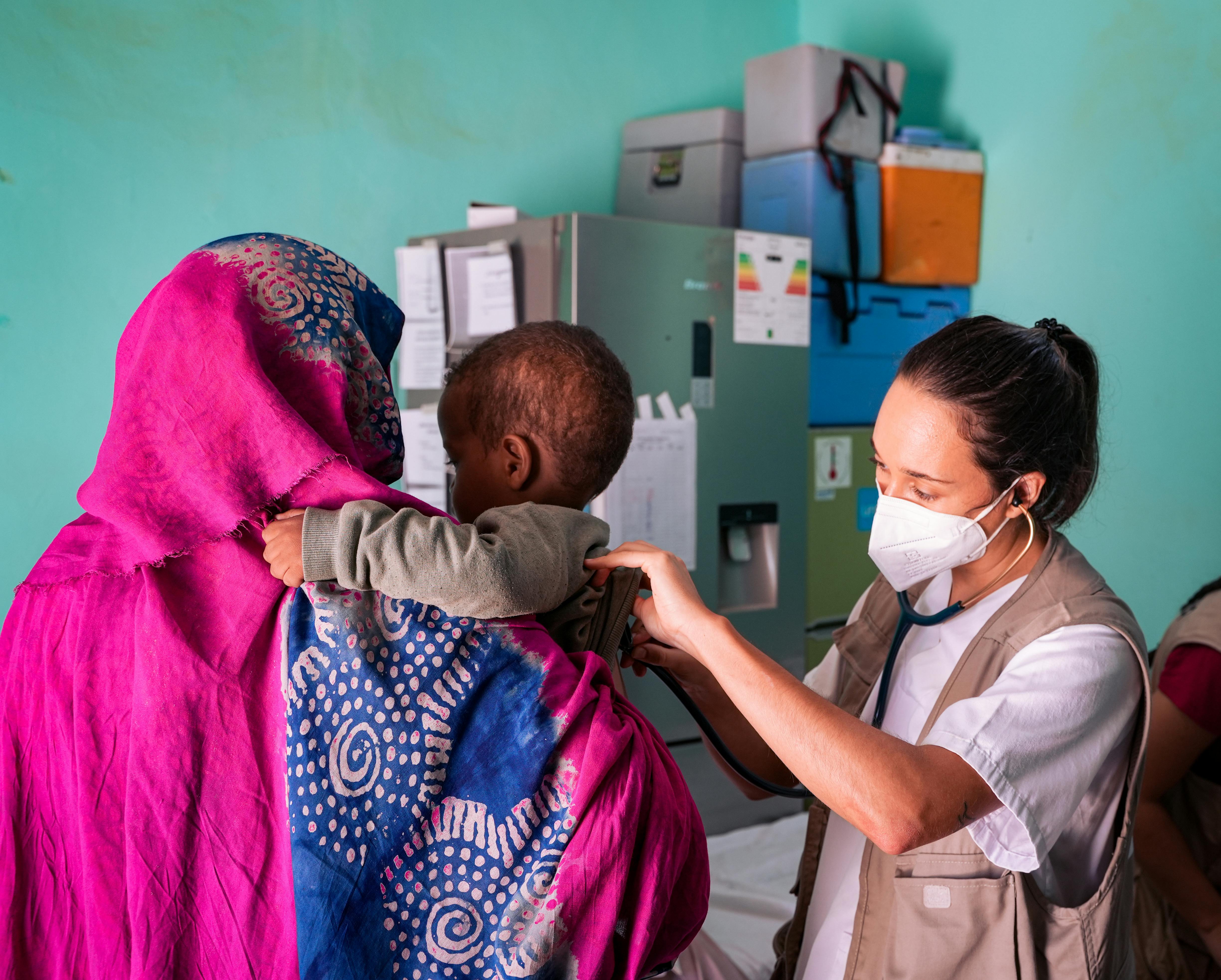
The Complete Guide to Combining Kenya Mission Work with a Safari: Purpose, Wonder, and Zero Guilt
You've felt the pull — the desire to do something meaningful in Kenya, to serve real communities, and also to witness the Maasai Mara at golden hour with a herd of elephants crossing the plain. Most people treat these as separate trips, even separate versions of themselves. This guide will show you exactly how to combine Kenya mission work with a safari in one transformative journey — without ethical compromise, logistical chaos, or a shred of guilt.
Key Takeaways
- A Kenya mission safari combines structured volunteer or faith-based community service with scheduled wildlife safari experiences in a single, intentional itinerary — neither activity diminishes the other.
- Most combined trips run 10–14 days, with mission work front-loaded in the first 7–9 days and safari experiences added at the end as a cultural and ecological extension of the journey.
- Kenya offers mission hubs across Nairobi, Western Kenya, and the Coast, all within reasonable driving or flying distance of world-class safari destinations like the Maasai Mara and Amboseli.
- Choosing an organization with strong local leadership, transparent finances, and ethical safari partnerships is the single most important planning decision for a combined trip.
- The safari component is not a reward or indulgence — it deepens a volunteer's understanding of Kenya's conservation challenges, indigenous communities, and the interconnectedness of human and ecological flourishing.
- Budgeting for a mission safari typically ranges from $3,000–$6,000 USD depending on safari tier, trip length, and organization fees — planning 12–18 months in advance is strongly recommended.
- Travelers who combine mission work with a safari consistently report higher long-term engagement with their host organizations than those who do service-only trips.
What Is a Kenya Mission Safari and Is It Ethical to Combine Both?
A Kenya mission safari is a purposefully designed trip that integrates short-term volunteer or faith-based community service with scheduled wildlife safari experiences, treating both as complementary expressions of cross-cultural engagement rather than competing priorities. It is not a compromise of either experience. It is a deliberate design — built around the understanding that Kenya's people and Kenya's landscapes are not separate realities, but deeply interconnected ones.
For decades, travelers have chosen between two versions of a Kenya trip: the service trip or the safari. The mission traveler flies into Nairobi, heads to a project site, serves hard for ten days, and flies home. The safari traveler lands, checks into a luxury camp, watches the Great Migration, and leaves. Both experiences are valid. But combining them intentionally creates something neither achieves alone — a whole-person encounter with one of the world's most complex and magnificent countries.
The ethical question deserves a direct answer. Is it self-serving to add a safari to a mission trip? Only if the safari is extractive, unaccountable, or designed without regard for local communities. A well-structured Kenya mission safari partners with community-owned conservancies, employs local guides, and treats the wildlife experience as an extension of cultural immersion — not a reward bolted onto a service itinerary as an afterthought. Working with an experienced, locally-rooted operator like Beyond the Plains Safaris ensures your safari component is planned with exactly that integrity.
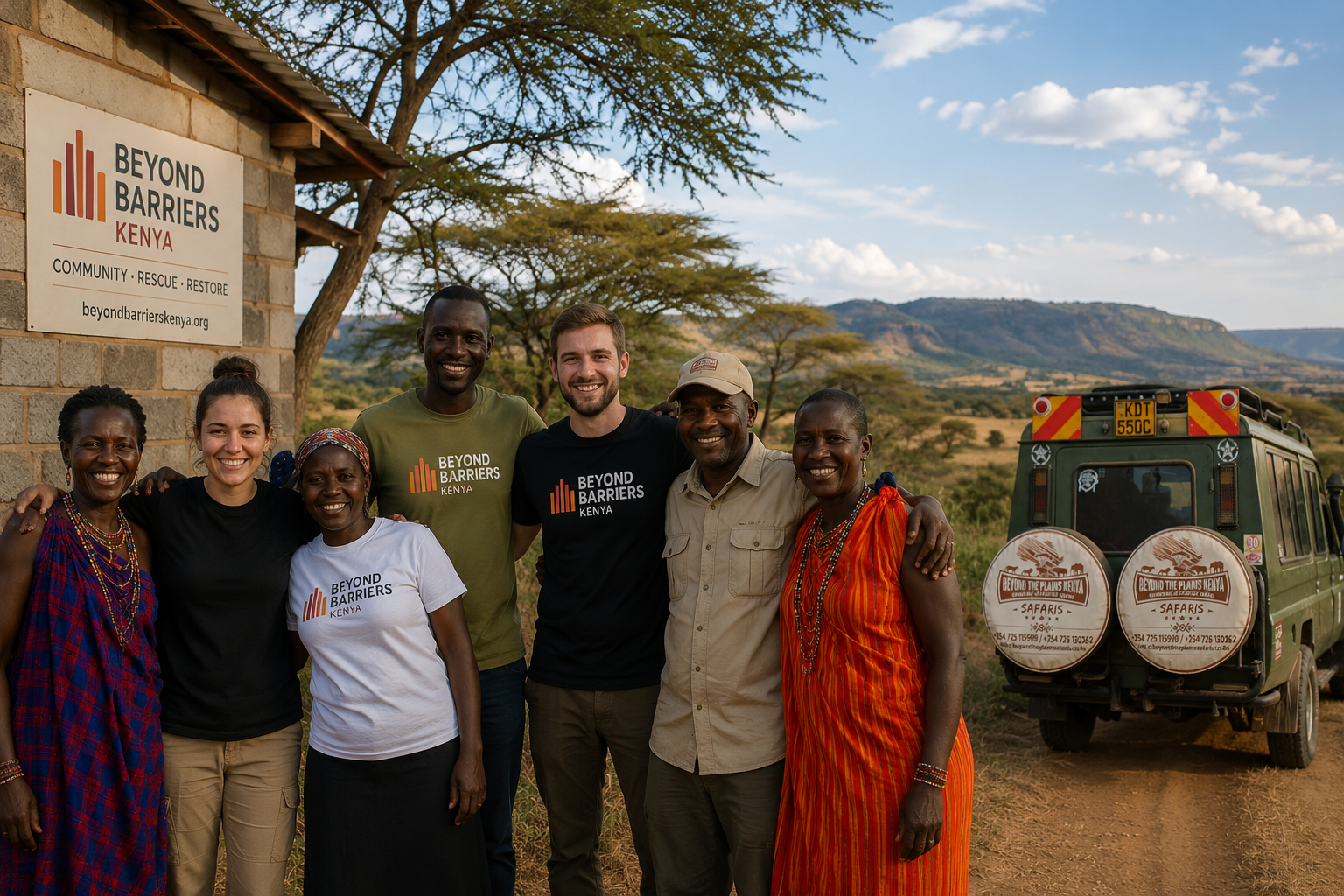
Why Combining Mission Work and a Safari in Kenya Makes Sense
Combining mission work with a Kenya safari is most effective when service activities are front-loaded in the itinerary, allowing the safari to function as a restorative and culturally enriching conclusion to the trip rather than a distraction from it. This structure is not accidental — it mirrors how effective organizations around the world design transformational travel.
First, consider the motivational case. Volunteer burnout is real. Short-term mission workers often arrive with enormous enthusiasm and leave emotionally depleted, particularly when working in communities facing acute poverty or health crises. Research on volunteer well-being consistently shows that structured decompression experiences — particularly those involving nature — significantly reduce post-trip burnout and increase the likelihood of long-term involvement. Adding a safari at the end of intensive mission work is not an indulgence; it is a recovery strategy.
Second, consider the cultural case. Kenya's conservation economy is inseparable from its communities. The Maasai people are the stewards of some of Kenya's most biodiverse landscapes. By visiting a community-owned conservancy, mission travelers encounter a dimension of Kenyan life — land rights, wildlife coexistence, indigenous ecological knowledge — that never appears in a children's home or a school building project. The safari, done right, deepens the mission.
Third, consider the economic case. Safari tourism is Kenya's largest foreign exchange earner, generating over $1.8 billion annually and supporting an estimated 11% of the country's workforce — Source: Kenya Tourism Board, 2023. When you book through ethical, community-partnered operators, your safari dollars flow directly into the same communities your mission work serves. You can explore the full range of Kenya safari packages designed around responsible, community-connected tourism.
How Many Days Do You Need to Combine Mission Work and a Safari in Kenya?
A well-balanced Kenya mission safari requires a minimum of 10 days, with 12–14 days being the ideal range for groups that want substantive service time and at least two full days on safari. Anything shorter forces uncomfortable compromises on both ends.
The Front-Load Model (Most Common)
This is the structure most organizations use, and for good reason. You arrive in Kenya, hit the ground running on mission work, serve hard for 7–9 days, and then transition to a safari experience at the end. The logic is simple: you earn the wonder. By the time you reach the Mara, you've already met the people, understood the context, and built the relationships that make the landscape meaningful rather than merely scenic.
A sample 12-day front-load itinerary looks like this:
| Day | Activity | Location |
|---|---|---|
| 1 | Arrival, orientation, cultural briefing | Nairobi |
| 2–3 | Community service (construction, education) | Kibera / Mathare |
| 4–5 | Outreach programs, medical clinics | Nairobi surrounds |
| 6 | Transfer to Western Kenya | Kisumu |
| 7–8 | Community health / school programs | Siaya County |
| 9 | Transfer day + debrief | Naivasha / Narok |
| 10–11 | Safari — game drives, bush walks | Maasai Mara |
| 12 | Return to Nairobi, debrief, departure | JKIA |
The Alternating Block Model (Less Common, Higher Logistics)
Some groups prefer to alternate: two days of service, one day of safari-adjacent cultural experience, back to service. This model requires more logistical precision and a guide who can manage shifting contexts. For groups with strong facilitation and experienced leaders, it can produce remarkable integration. For most first-time groups, however, the front-load model is far simpler to execute well. If you're leading a group for the first time, read our guide on how to plan a Kenya safari itinerary without backtracking before locking in your structure.
What Are the Best Regions in Kenya for Short-Term Mission Work?
Kenya's three primary mission hubs — Nairobi, Western Kenya, and the Coastal region — each offer distinct service contexts and are all accessible from major safari destinations within a single travel day. Understanding which region fits your team's skills and calling is the first step in building a coherent itinerary.
Nairobi: Urban Poverty, Children's Homes, and Healthcare
Nairobi is home to some of sub-Saharan Africa's largest urban informal settlements, including Kibera — frequently cited as one of the largest slums on the continent, with an estimated population of 250,000–1 million people — Source: UN-Habitat, 2022. Mission work in Nairobi typically involves children's homes, feeding programs, education support, construction projects, and vocational training for youth.
For groups with medical professionals, Nairobi-area clinics and community health programs consistently need nursing, pharmacy, and general medical support. For groups with educators or construction teams, school-building and renovation projects are abundant and well-coordinated. Nairobi also serves as the natural gateway to some of Kenya's most iconic destinations — including Amboseli National Park, just four hours by road, and Tsavo East and Tsavo West, which are among Kenya's largest and most underrated parks.
Western Kenya: Community Health, Education, and Agriculture
Western Kenya — particularly the Kisumu, Siaya, and Kakamega regions — is one of the most active areas for faith-based development work on the continent. Organizations here focus on community health education, HIV/AIDS support, clean water access, orphan care, and agricultural training.
This region is also logistically smart for a combined trip. From Kisumu, the Maasai Mara is approximately a 3–4 hour drive — making the transition from mission mode to safari mode seamless and time-efficient. The Maasai Mara National Reserve is Kenya's most celebrated wildlife destination and the natural endpoint for any Western Kenya mission itinerary.
Coastal Kenya: Church Planting and Youth Programs
The Mombasa and Malindi regions offer a different flavor of mission work — church planting, youth mentorship, and community development in a predominantly Muslim coastal context. Teams here need strong cultural sensitivity training and a willingness to engage across religious lines respectfully. Post-mission, the Coast offers access to Tsavo East National Park and Tsavo West National Park, two of Kenya's largest and most underrated national parks, both within comfortable driving distance.
Which Kenya Safari Destinations Are Closest to Major Mission Hubs?
Kenya's best-known safari parks are all within accessible range of major mission regions, making the logistical integration of service and safari feasible without cross-country travel days that drain both time and budget. Here is a practical proximity guide.
Maasai Mara — The Flagship Experience
The Maasai Mara National Reserve is Kenya's most celebrated safari destination, home to the annual Great Migration — an event involving over 1.5 million wildebeest crossing the Mara River between July and October — Source: Kenya Wildlife Service, 2023. For detailed advice on timing your visit around the Migration, read our guide on the best time for a Kenya safari.
The Mara is approximately 5–6 hours by road from Nairobi or 3–4 hours from Kisumu, making it the natural safari endpoint for teams based in either region. Budget for at least two full days to do it justice — one is never enough.
Amboseli — Elephants and Kilimanjaro
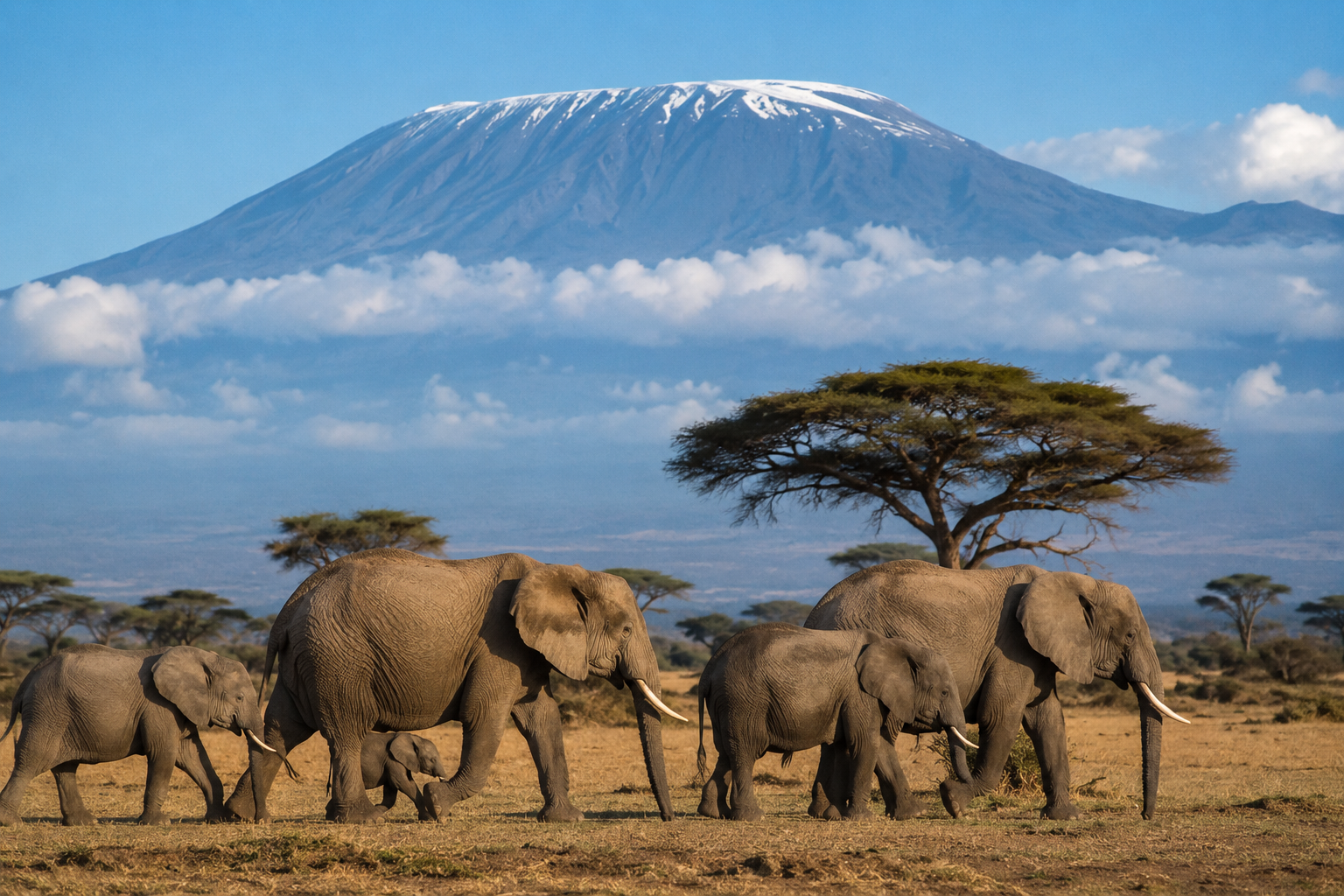
Amboseli National Park sits at the foot of Mount Kilimanjaro and is Kenya's best destination for elephant sightings, with herds regularly exceeding 1,000 individuals. It is 4 hours from Nairobi by road — an excellent choice for teams whose mission work is Nairobi-based, since it adds only a short detour before departure. The iconic backdrop of Kilimanjaro rising above elephant herds is one of the most photographed scenes in all of Africa, and it never loses its power.
Samburu and Ol Pejeta — Northern Kenya's Hidden Gems
Samburu Game Reserve in northern Kenya offers unique northern species — the reticulated giraffe, Grevy's zebra, and Somali ostrich — not found in southern parks. Ol Pejeta Conservancy in Laikipia is home to the world's last two northern white rhinos and operates a transparent community revenue-sharing model that makes it an ideal ethical safari choice for mission-minded travelers. For groups wanting to combine multiple parks in a single efficient route, explore our 9-day Kenya safari covering Amboseli, Maasai Mara, Lake Nakuru, and Ol Pejeta.
How Do You Choose a Reputable Organization for a Combined Mission-Safari Trip?
Ethical combined trips are distinguished by local organizational leadership, transparent financial accountability, and safari partnerships with community-owned conservancies — ensuring that both the service and leisure components generate direct benefit for Kenyan communities. Choosing the right organization is not just a logistical decision; it is a moral one.
First, assess leadership. Any reputable mission organization working in Kenya should be led or co-led by Kenyan nationals. If the primary decision-makers are all Western, that is a significant red flag. Local leadership ensures cultural appropriateness, community accountability, and sustainable programming beyond any single team's visit.
Second, examine financial transparency. Ask for a clear breakdown of where your trip fees go. Reputable organizations publish annual reports and can tell you exactly what percentage of your fee reaches in-country programming versus covering administrative overhead. A healthy ratio is at least 70% reaching in-country impact.
Third, vet the safari partnership. Ask whether their safari operator works with community-owned conservancies, employs local Maasai or Samburu guides, and reinvests a portion of revenue into conservation education. Community conservancies now cover over 9 million acres across Kenya — Source: African Wildlife Foundation, 2023 — and collectively represent the most ethical and ecologically effective safari model available. Beyond the Plains Safaris is a KATO-registered Kenya safari operator with a 4.9 TripAdvisor rating and the 2025 Tourism Excellence Award — a credible partner for the safari leg of any mission trip.
Red flags to watch for include: no published financials, excessive volunteer-to-community ratios (large groups doing work that could be done by local labor), no pre-trip cultural training, and safari operators with no stated community benefit model. For a full breakdown of what your safari investment should include, see our Kenya safari packages and their transparent inclusions list.
How Much Does It Cost to Combine a Kenya Mission Trip with a Safari?
A combined Kenya mission safari typically costs between $3,000 and $6,000 USD per person, depending on safari tier, trip length, and the organizational fees of your mission partner — not including international airfare, which adds $900–$1,500 from most North American and European departure cities.
Here is a realistic cost breakdown for a 12-day combined trip:
| Cost Category | Budget Range (USD) |
|---|---|
| International airfare (roundtrip) | $900–$1,500 |
| Mission trip program fee | $800–$1,500 |
| Safari (2 nights, mid-range camp) | $600–$1,200 |
| Safari (2 nights, luxury tented camp) | $1,500–$3,000 |
| In-country transport | $150–$300 |
| Travel insurance | $80–$150 |
| Visa (Kenya e-visa) | $51 |
| Vaccinations (if not current) | $100–$300 |
| Total (mid-range estimate) | $3,000–$4,500 |
Planning 12–18 months in advance is strongly recommended, both to secure mid-range safari camps during peak season (July–October) and to allow adequate fundraising time if your trip is donor-supported. To get a custom quote for the safari portion of your trip, contact Beyond the Plains Safaris — all quotes are obligation-free and built around your specific dates and group size.
What Vaccinations and Visa Requirements Do You Need for Kenya?
Kenya requires most international visitors to obtain an e-visa prior to arrival, and travelers are strongly advised to complete a standard set of vaccinations — including yellow fever, typhoid, and hepatitis A — at least 4–6 weeks before departure.
The Kenya e-visa is available online and costs $51 USD for most nationalities. For a clear breakdown of current requirements, visit the Kenya visa requirements page on the Beyond the Plains Safaris website. Processing typically takes 3–5 business days, though applying 2–3 weeks early is advisable.
For health preparation, the key requirements and recommendations are:
- Yellow fever vaccination — required if arriving from a yellow fever-endemic country; strongly recommended for all travelers
- Typhoid — highly recommended for travelers doing community work
- Hepatitis A and B — recommended for all volunteers
- Malaria prophylaxis — essential; consult your physician about chloroquine-resistant strains in western Kenya
- Routine vaccinations — MMR, tetanus, polio should be up to date
For packing, the mission-safari combination creates a dual-context challenge. Bring modest, practical work clothes (no camouflage, which is illegal to wear in Kenya) for mission days, and neutral-toned safari wear (khaki, olive, tan) for game drives. Pack layers — Nairobi evenings are cool, the Mara can be cold at dawn, and coastal Kenya is humid. For a complete packing reference, see our detailed guide on what to pack for a Kenya safari, which covers both safari and general East Africa travel essentials.
How Can Your Kenya Safari Experience Deepen Your Mission Impact?
The safari experience, when framed intentionally, functions as a form of contextual education that deepens a volunteer's understanding of the ecological, cultural, and economic systems their mission work operates within. This is the insight that transforms a safari from a guilty pleasure into a purposeful component of the trip.
For example, spending two days in the Maasai Mara with a Maasai guide exposes mission travelers to the complex land rights history of the Maasai people, their relationship with conservation authorities, and the tension between traditional pastoralism and modern wildlife tourism. This is directly relevant to any mission organization working in rural Kenya. The traveler who has sat with a Maasai elder at dawn and heard how his community negotiated land use with the national park system is a more informed, more empathetic advocate when they return home.
Moreover, the natural environment itself has a documented restorative effect on volunteers. Studies in environmental psychology consistently show that time in nature reduces cortisol levels, improves mood, and increases prosocial behavior — Source: Journal of Environmental Psychology, 2019. After days of emotionally demanding service work, the Mara's wide horizon and unhurried rhythms do something that a debriefing session alone cannot. For a sense of what that field experience looks like, explore the Beyond the Plains Safaris gallery from the Maasai Mara and Samburu.
How Do You Sustain Impact After Your Kenya Mission Safari Trip?
Long-term impact from a short-term mission trip depends on the systems put in place before, during, and after the trip — not on the intensity of the experience alone. The safari, counterintuitively, plays a role here too. Travelers who come home with both a compelling service story and a visually stunning safari experience are far more effective advocates and fundraisers for their host organizations.
First, stay financially connected. Set up a recurring monthly gift to your host organization before you board your return flight. Even $25/month, sustained over three years, is worth more than any one-time donation made in the emotional high of the trip.
Second, tell both stories. The image of a child you served and the image of a lion at sunrise — both are true, both matter, and together they communicate a more complete picture of Kenya than either alone. Share both publicly and without apology.
Third, return as a leader. The most transformational mission travelers are those who come back a second time — not as a participant, but as a trip leader. Organizations consistently report that returned volunteers who become trip leaders generate 3–5x more in-country impact than those who serve once and move on. When you're ready to plan that second trip, the Beyond the Plains Safaris consultation team can help you design a custom itinerary around your group's specific timeline and service context.
Finally, let the safari renew your capacity for wonder — because sustained compassion requires it. Volunteers who lose their sense of awe burn out. The travelers who serve Kenya longest are often those who never stopped being amazed by it. For inspiration, explore our East Africa safari tours and the stories of travelers who return year after year.
Conclusion: You Don't Have to Choose Between Purpose and Wonder
Kenya does not ask you to choose between its people and its landscapes. It asks you to hold both — with the same reverence, the same attention, and the same willingness to be changed.
A well-designed Kenya mission safari is not a compromise. It is an act of integration — bringing your whole self to one of the world's most extraordinary countries and letting both its human and ecological dimensions reshape you. The mission work gives the safari meaning. The safari gives the mission worker resilience. Together, they produce something neither achieves alone: a traveler who comes home not just moved, but committed.
Start planning early. Choose your organization carefully. Arrive with open hands and open eyes. And don't be surprised if the two weeks you spend combining Kenya mission work with a safari turn out to be the most purposeful — and the most beautiful — of your life. When you're ready to plan the safari portion, get a free custom quote from Beyond the Plains Safaris — Kenya's 2025 Tourism Excellence Award winner.
Frequently Asked Questions: Combining Kenya Mission Work with a Safari
Q1: Can I add a safari to an existing short-term mission trip to Kenya?
Yes — adding a safari to an existing short-term mission trip to Kenya is entirely feasible and is increasingly common among faith-based travel groups. The most practical approach is to extend your trip by 2–4 days at the end of your service commitment and use that time for a dedicated safari in the Maasai Mara, Amboseli, or Tsavo. A reputable safari operator can build a standalone 2–3 day safari extension that connects directly to your mission team's existing Nairobi arrival or departure logistics. The key is communicating your travel dates, group size, and departure airport to your safari partner at least 6–12 months in advance to secure availability at quality camps during peak season.
Q2: Is it disrespectful to the communities you're serving to add a safari to a mission trip?
No — combining a safari with mission work is not inherently disrespectful to Kenyan communities, provided the safari is booked through operators who employ local guides, partner with community-owned conservancies, and reinvest revenue into conservation and community programs. In fact, ethical safari tourism is one of Kenya's most important economic pillars, supporting employment and land conservation in many of the same communities that mission organizations serve. The key distinction is intent and structure: a safari that is thoughtfully integrated into the trip as a cultural and ecological extension of service is categorically different from a safari that treats Kenya's wildlife as a backdrop to a holiday with charitable branding.
Q3: What is the best Kenya safari destination for a mission group visiting for the first time?
The Maasai Mara National Reserve is the most recommended safari destination for first-time mission groups combining service with a safari, for three reasons: it offers the highest density of Big Five wildlife in Kenya, it is accessible from both Nairobi (5–6 hours) and Western Kenya's mission hubs around Kisumu (3–4 hours), and it provides a deep cultural encounter with the Maasai people whose community conservancies border the reserve. For groups departing from Nairobi, Amboseli National Park is an excellent alternative — closer, less expensive to reach, and offering iconic elephant and Kilimanjaro views that require no prior safari experience to appreciate fully.
Q4: How do I find a safari operator that understands the needs of a mission travel group?
Finding a safari operator experienced with mission and faith-based travel groups requires asking specific questions during your selection process. Ask whether the operator has worked with church groups or nonprofit volunteers before. Ask how they handle group dynamics, mixed packing needs (work clothes and safari gear), and flexible itinerary structures that accommodate service scheduling. Ask about their community partnership model and whether their guides are drawn from local Maasai, Samburu, or Kikuyu communities. A KATO-registered operator with verifiable reviews from group travelers — such as Beyond the Plains Safaris, which holds a 4.9 TripAdvisor rating across 107+ reviews — is a reliable starting point for groups combining mission work with an East Africa safari.
Q5: How far in advance should a mission group book their Kenya safari component?
Mission groups should book the safari component of their Kenya trip at least 12–18 months in advance, particularly if traveling during the Great Migration window of July to October, when quality camps in the Maasai Mara reach full capacity well ahead of the season. Groups traveling during Kenya's green season (April–May or November) have more flexibility and will often find better rates with shorter lead times of 6–9 months. Regardless of season, early booking allows your safari operator to secure the right vehicle configuration for your group size, arrange custom cultural experiences with local Maasai guides, and coordinate logistics seamlessly with your mission organization's departure schedule.
Disclaimer: This article was initially drafted using AI assistance. However, the content has undergone thorough revisions, editing, and fact-checking by human editors and subject matter experts to ensure accuracy.










Comments (0)
Leave a Comment
No comments yet. Be the first to comment!