
Kenya Conservancy Safari vs National Reserve: Which Gives Better Wildlife Sightings in 2026? (The Definitive Field Guide)
You've seen the highlight reels — a leopard draped over an acacia branch, a cheetah sprinting across open savanna, a river churning with crossing wildebeest. What most Kenya safari guides won't tell you is that where you stay determines whether you watch that leopard alone or surrounded by fourteen other vehicles. In this guide, you'll get an honest, field-level comparison of Kenya conservancies vs. national reserves — covering wildlife sighting quality, crowd density, permitted activities, real costs, and exactly which option belongs in your 2026 itinerary.
Key Takeaways
- Kenya conservancies are privately or community-managed lands where vehicle numbers per sighting are strictly capped — typically 3–6 vehicles — resulting in more exclusive and undisturbed wildlife encounters than open-access national reserves.
- National reserves like the Maasai Mara offer unmatched spectacles, including the Great Migration river crossings, making them essential for first-time safari travelers seeking high-volume wildlife density.
- Conservancies permit night drives, bush walks, and fly camping — activities prohibited inside most national reserves and parks under Kenya Wildlife Service regulations.
- A conservancy stay costs roughly 30–60% more per day than a comparable reserve-based lodge, but the premium typically reflects genuine exclusivity in sighting quality rather than amenity alone.
- During peak season, the Maasai Mara National Reserve can see 20–40 vehicles surrounding a single big cat sighting; in adjacent conservancies like Naboisho or Olare Motorogi, this is contractually limited to as few as 3–6 vehicles.
- The ideal Kenya safari itinerary in 2026 strategically combines both: a conservancy stay for intimate predator encounters and a reserve visit for migration spectacle and broader biodiversity.
- Community conservancies — a rapidly growing model in Kenya — offer a third hybrid option that delivers conservancy-level exclusivity while directly channeling tourism revenue to local Maasai and Samburu communities.
What Is a Kenya Wildlife Conservancy and How Does It Differ from a National Reserve?
A Kenya wildlife conservancy is a privately or community-owned tract of land managed exclusively for conservation and low-density tourism, where the number of safari vehicles permitted at any single wildlife sighting is contractually capped — typically between 3 and 6 vehicles — to minimize disturbance to animals and other guests. This is the foundational distinction most safari planning articles gloss over, and it changes everything about your on-the-ground experience.
Conservancies operate under two broad models. Private conservancies are lodge-owned or investor-managed parcels, often carved out of former cattle land adjacent to national reserves. Community conservancies, such as those managed by the Northern Rangelands Trust, are owned by indigenous communities — Maasai, Samburu, Borana — who partner with safari operators to generate conservation-linked revenue while retaining land ownership and governance rights.
Named Examples of Kenya Conservancies
Here are five conservancies that consistently produce the best wildlife sighting conditions in Kenya:
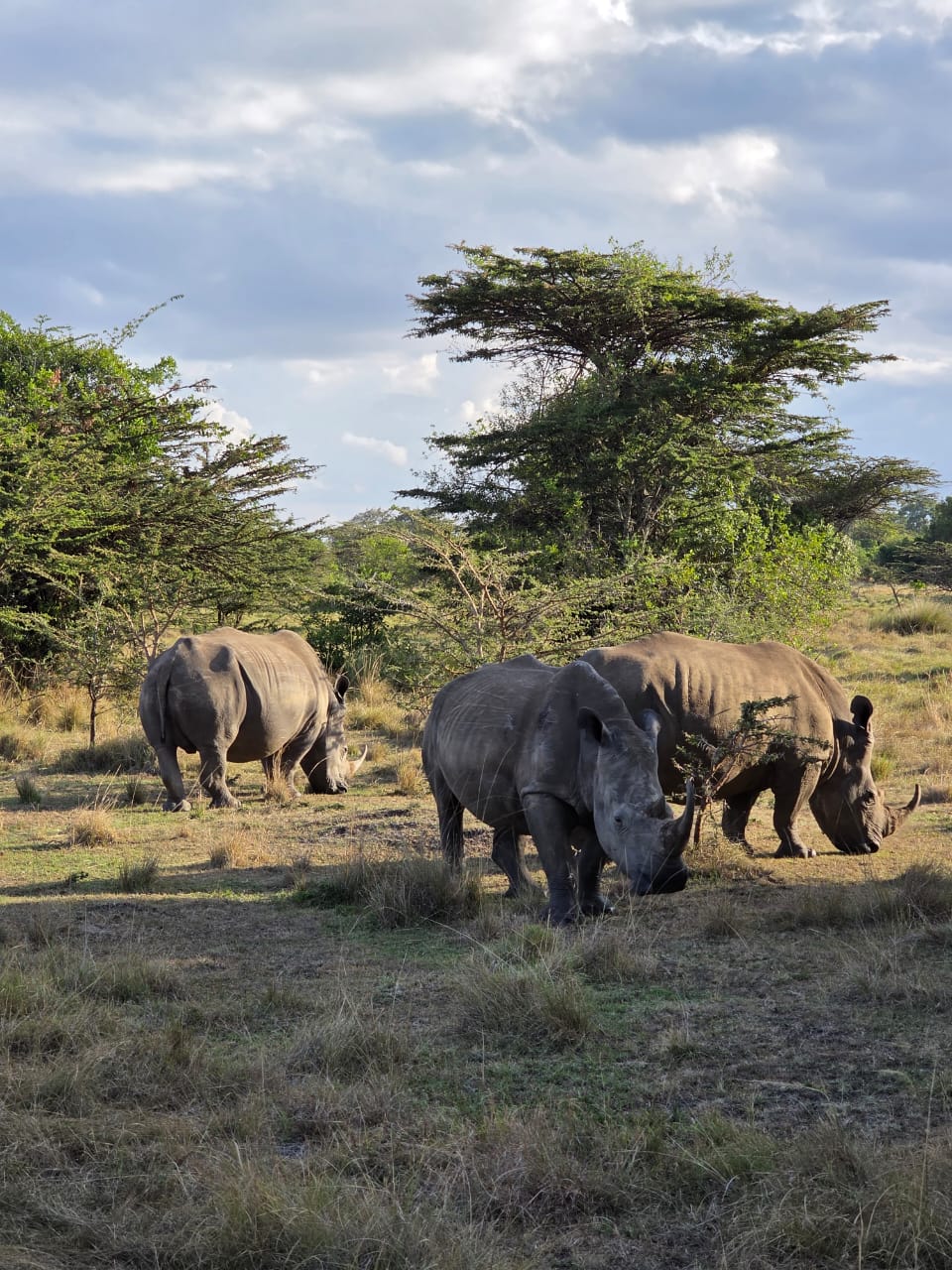
- Ol Pejeta Conservancy (Laikipia Plateau) — Home to East Africa's largest black rhino population and the last two northern white rhinos on earth. [Internal link: "Ol Pejeta Conservancy wildlife guide" → Ol Pejeta destination guide]
- Lewa Wildlife Conservancy (Laikipia) — A UNESCO World Heritage Site and one of Kenya's oldest private conservancies, with exceptional elephant and Grevy's zebra densities.
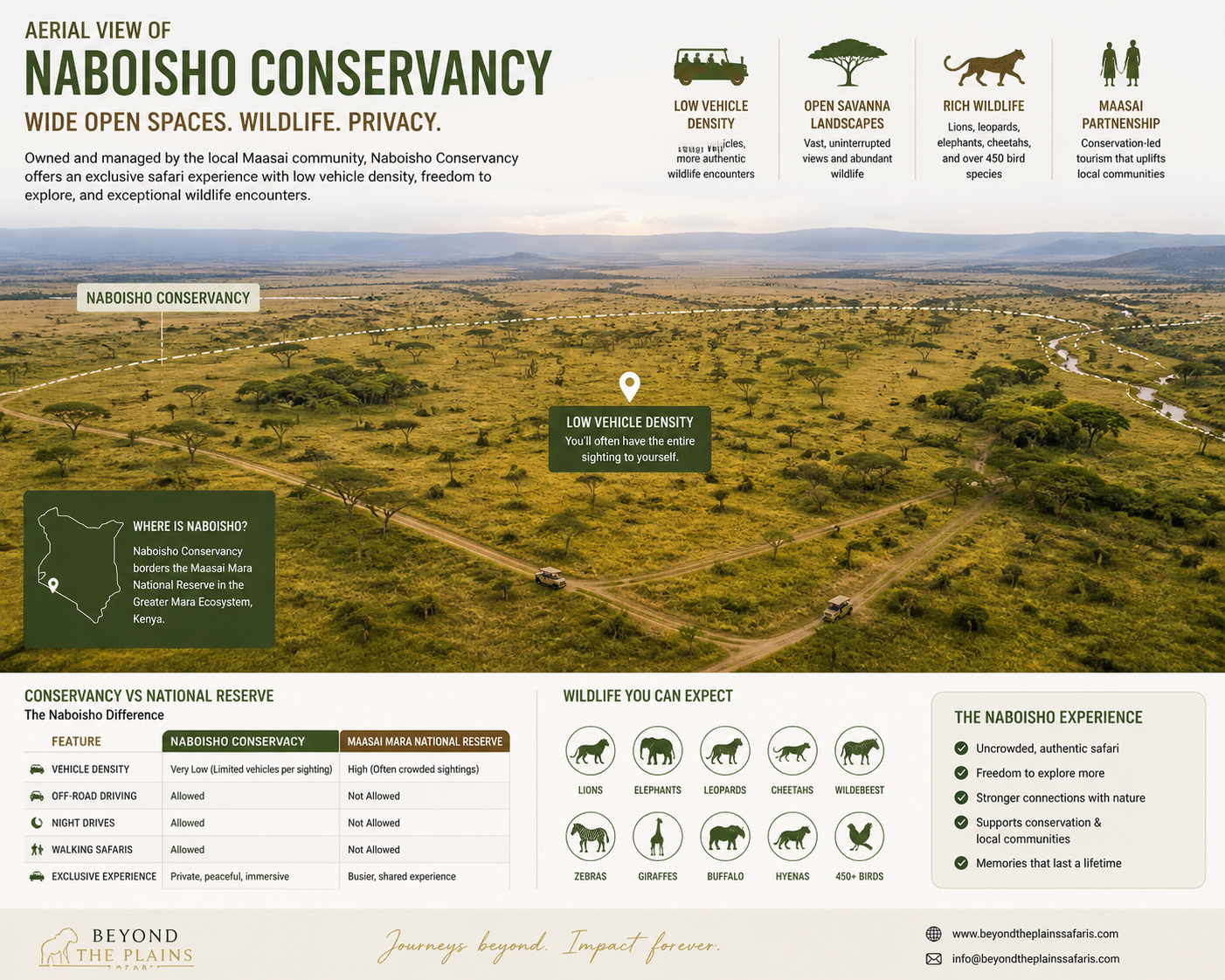
- Naboisho Conservancy (Greater Mara Ecosystem) — A community-owned conservancy bordering the Maasai Mara NR, with some of the highest lion-to-area ratios in Africa.
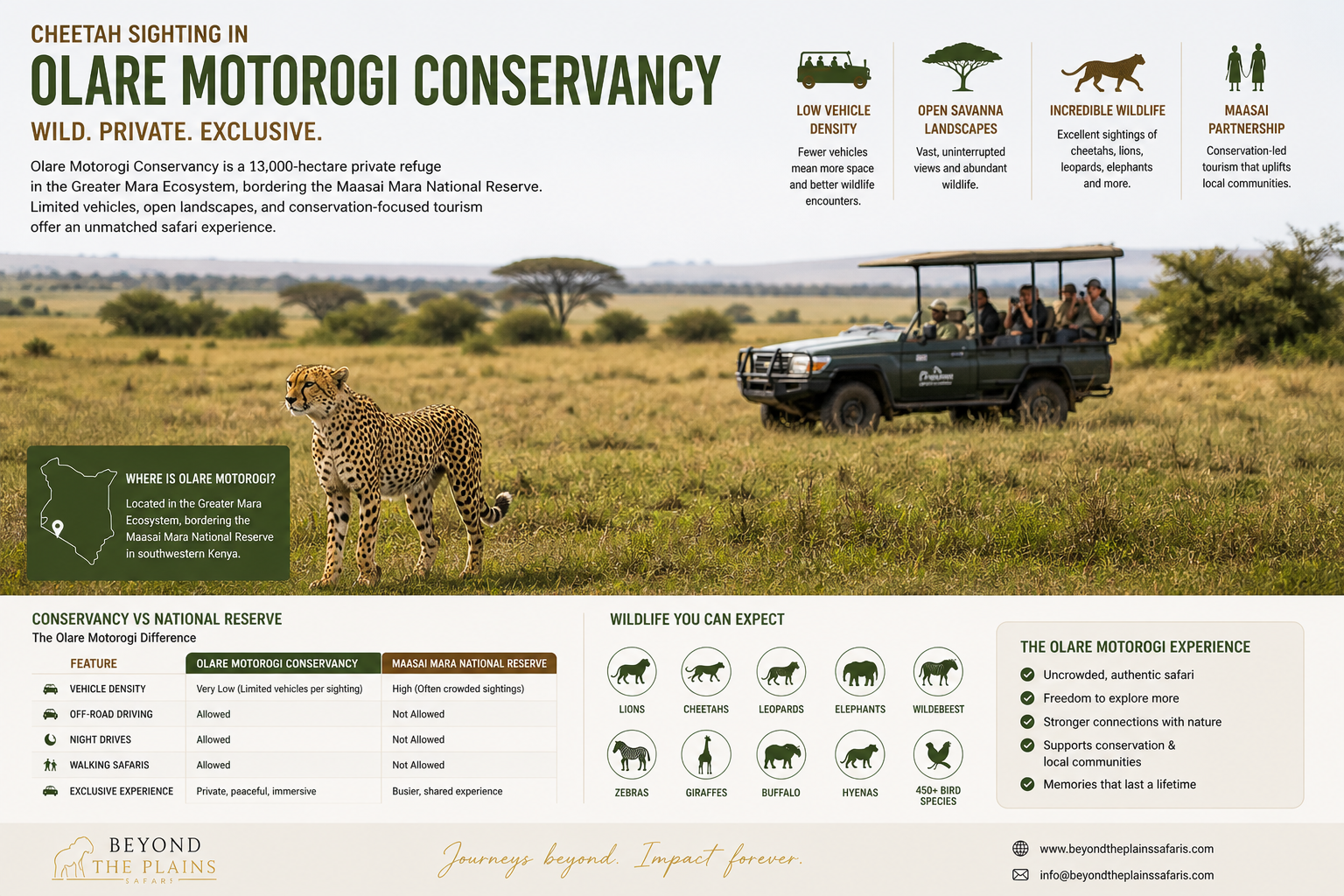
- Olare Motorogi Conservancy (Greater Mara Ecosystem) — Adjacent to Naboisho, it enforces the same strict vehicle limits and hosts some of the Mara's most reliable cheetah sightings.
- Ol Kinyei Conservancy (Greater Mara Ecosystem) — Smaller and quieter, offering genuine solitude with exceptional predator activity throughout the year.
What Is a Kenya National Reserve, and Who Should Visit One?
Kenya national reserves are government-protected areas administered by county councils rather than the Kenya Wildlife Service (KWS), which means they permit human habitation within their boundaries and are generally accessible to higher visitor volumes than national parks or private conservancies. This administrative distinction — county council vs. KWS — is one the most experienced safari travelers still get wrong, and it explains why reserves have different fee structures, different rules, and a fundamentally different atmosphere.
Unlike national parks (like Amboseli National Park or Nairobi National Park), national reserves allow Maasai pastoralists and local communities to live and graze livestock within reserve boundaries. This creates a mosaic landscape that actually enhances wildlife dispersal in some areas — animals move freely between reserve and surrounding community land — but it also means infrastructure, management, and enforcement can vary considerably.
Named Examples of Kenya National Reserves
- Maasai Mara National Reserve (Narok County) — Kenya's most visited wildlife destination, covering 1,510 km² and forming the northern extension of Tanzania's Serengeti ecosystem.
- Samburu National Reserve (Samburu County) — Famous for the "Special Five" species found nowhere else in Kenya: Grevy's zebra, reticulated giraffe, Beisa oryx, Somali ostrich, and gerenuk.
- Buffalo Springs National Reserve (Samburu County) — Shares an unfenced border with Samburu, effectively doubling the ecosystem for wildlife movement.
- Shaba National Reserve (Isiolo County) — Remote, rarely crowded, and exceptional for dry-country wildlife and authentic bush atmosphere.
- Bisanadi National Reserve (Meru County) — A buffer zone for Meru National Park, excellent for off-the-beaten-path safaris with almost no vehicle pressure.
Why the Conservancy vs. Reserve Distinction Matters for Your Safari in 2026
The conservancy vs. reserve distinction directly determines the quality of your wildlife encounters — not just the frequency, but the intimacy, duration, and emotional depth of each sighting. This is the central question every Kenya safari traveler should ask before booking, yet most comparison guides treat it as a footnote.
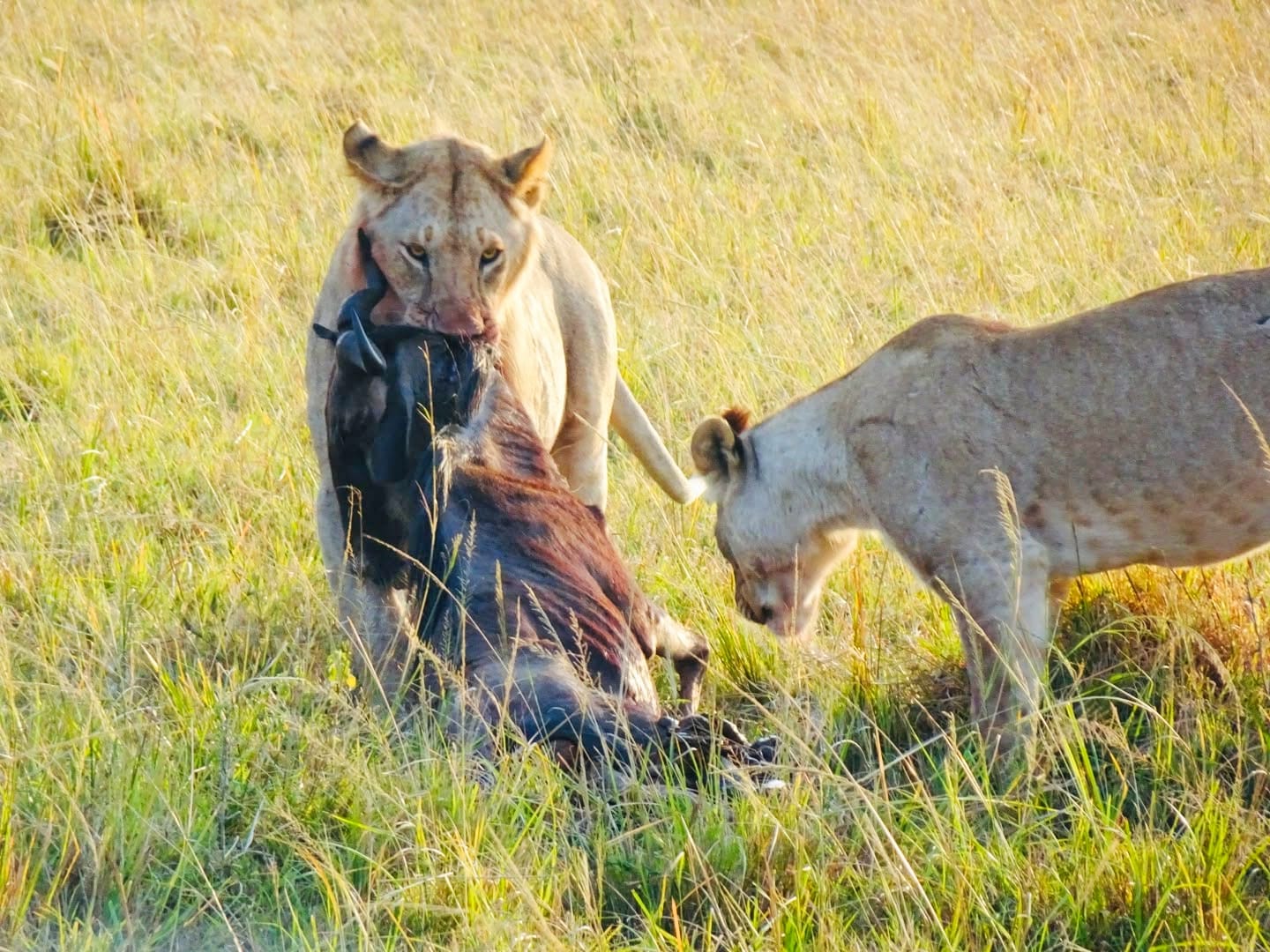
Consider a single scenario: a pride of lions has made a kill at dawn in the Maasai Mara ecosystem. Inside the Maasai Mara National Reserve, that kill can attract 30 or more vehicles within 45 minutes — engines idling, dust rising, tourist chatter competing with the sounds of feeding. In an adjacent conservancy like Naboisho, the same kill might be witnessed by three vehicles maximum, allowing guides to switch off engines, let silence settle over the scene, and observe natural behavior that stress-altered animals would never display in a crowd.
Moreover, in a conservancy, your guide can legally take you on a night drive after dinner — following a leopard on her nocturnal hunting circuit, spotting servals, civets, and aardvarks in the torch beam. Inside the reserve, that drive ends at sunset. The activity gap between conservancy and reserve is not a marginal difference. It's the difference between a standard safari and a transformative one.
Wildlife Sightings Compared: Conservancy vs. Reserve — 5 Dimensions
The core difference between conservancy and reserve wildlife sightings comes down to exclusivity, activity access, and crowd management, not raw animal numbers. Let's examine each dimension in detail.
Dimension 1: Sighting Quality and Exclusivity
Conservancies enforce vehicle limits per sighting — a policy with no equivalent inside national reserves. Naboisho and Olare Motorogi cap sightings at 3–6 vehicles. This limit keeps animals calm, allows natural behavior to unfold, and means your guide can position the vehicle precisely for optimal viewing rather than jostling for position among dozens of competitors.
National reserves offer no such cap. During Kenya's peak safari season (July–October), the Maasai Mara National Reserve can see upward of 500 registered safari vehicles operating simultaneously — Source: Kenya Association of Tour Operators estimates, 2024. Popular kill sites and river crossing points can accumulate vehicle clusters that feel less like wildlife watching and more like a traffic jam with elephants nearby.
Dimension 2: Predator Activity — Lions, Leopards, Cheetahs
Conservancy areas within the Greater Mara Ecosystem consistently produce higher per-hour sighting rates for cheetah and leopard than the open reserve, primarily because low vehicle pressure means these animals are less stressed and range more openly. Cheetahs, in particular, are sensitive to disturbance — a female with cubs will abandon a hunt if surrounded by vehicles. In a conservancy, she won't be.
Lions are abundant in both settings. The Mara ecosystem as a whole — reserve plus conservancies — holds one of the highest lion densities in Africa. However, the quality of a lion sighting in a conservancy is categorically different: closer approach distances, longer observation windows, and the ability to follow a pride on foot (with an armed guide) during a bush walk.
Dimension 3: Crowd and Vehicle Density
The numbers speak clearly here. Peak-season crowd levels inside the Maasai Mara National Reserve can see 20–40 vehicles surrounding a single big cat sighting; in adjacent conservancies like Naboisho or Olare Motorogi, this is contractually limited to as few as 3–6 vehicles.
| Metric | Maasai Mara NR (Peak Season) | Naboisho / Olare Motorogi Conservancy |
|---|---|---|
| Max vehicles per sighting | Unlimited | 3–6 (contractually enforced) |
| Daily vehicle count in ecosystem | 500+ | 20–40 |
| Off-road driving permitted | No | Yes (in designated conservancies) |
| Night drives permitted | No | Yes |
| Walking safaris permitted | No | Yes (with armed guide) |
| Average cost per night | $150–$500 | $500–$1,500+ |
Dimension 4: Activities Permitted
Night game drives — one of the most sought-after safari experiences for observing nocturnal predators like leopards, genets, and aardvarks — are permitted in Kenya conservancies but are prohibited inside national reserves and national parks under Kenya Wildlife Service regulations. This is a hard rule, not a suggestion, and it represents one of the most significant experiential gaps between the two destination types.
Beyond night drives, conservancies typically permit:
- Bush walks with an armed, Kenya Professional Safari Guides Association (KPSGA) certified guide
- Fly camping — sleeping in a lightweight fly camp in the bush for a genuine immersive experience
- Off-road driving to follow animals across open terrain (prohibited in reserves, where vehicles must stay on designated tracks)
- Sundowner stops at scenic points outside the vehicle
Also Read: Kenya safari activities guide
Dimension 5: Cost Per Day
Conservancy stays typically cost 30–60% more per night than comparable reserve-based lodges, but that premium includes conservancy fees, all meals, all game drives, and specialist guiding. A mid-range tented camp inside the Maasai Mara National Reserve runs $150–$400 per person per night; a comparable conservancy property in Naboisho or Olare Motorogi ranges from $500–$1,200+ per person per night. At the ultra-luxury end, conservancy camps like Mara Plains or Ol Seki can exceed $1,500 per person per night.
For a full breakdown of what drives these costs, Check out: Kenya safari Cost
When Should You Choose a Kenya Conservancy? Traveler Profiles and Scenarios
A Kenya conservancy is the right choice when exclusivity, activity variety, and intimate wildlife encounters matter more than budget or the sheer spectacle of large animal numbers. These are the traveler profiles where a conservancy stay delivers disproportionate value.
Wildlife Photographers
Photographers who need clean backgrounds, precise vehicle positioning, and extended time with a subject without competing vehicles will find conservancies transformative. The ability to drive off-road, follow an animal at distance without disruption, and stay at a sighting past the reserve's closing time changes what's photographically possible.
Explore Our: Kenya safari photography tips
Honeymooners and Couples Seeking Privacy
Conservancy camps are intentionally small — most operate 8–20 beds total. Dinner under the stars with no other guests in earshot, a private game drive at 5 AM, a sundowner with a personal guide — these are conservancy experiences, not reserve ones.
Repeat Safari Travelers
If you've done the Mara reserve, Amboseli, or Samburu before and want to go deeper, a conservancy stay resets your safari experience entirely. The bush walk dimension alone — tracking lion on foot, reading spoor with a guide who grew up in this landscape — opens a layer of understanding that a vehicle-based reserve safari can't replicate.
Off-Peak Travelers Wanting Guaranteed Density
During Kenya's green season (November–June), animal numbers in the reserve disperse across a wider landscape. Conservancies, with their smaller footprint and intensive management, tend to maintain higher sighting rates per game drive even when migration animals are absent.
When Should You Choose a Kenya National Reserve? Traveler Profiles and Scenarios
A Kenya national reserve is the right choice when budget, scale of spectacle, or first-time safari experience are the primary considerations. National reserves are not a compromise — they're the appropriate choice for specific traveler types who will be better served by their unique attributes.
First-Time Safari Travelers
The Maasai Mara National Reserve is the optimal first Kenya safari destination for most travelers. Animal diversity and density are extraordinary, infrastructure is well-developed, and the range of lodge price points is wide. Check out : Kenya safari beginner's guide
Great Migration Watchers
The Great Migration river crossings — wildebeest and zebra crossing the Mara River between Tanzania and Kenya — occur primarily within or adjacent to the Maasai Mara National Reserve. While conservancies like Naboisho also sit within the migration corridor, the most dramatic river crossing points (Crossing Points 1, 6, and 12 on the Mara River) are inside or border the reserve. For this specific spectacle, the reserve is the correct choice.
Read: Best time to visit Kenya for the Great Migration
Families and Large Groups
Reserve-based camps and lodges accommodate larger groups more easily and at lower per-person cost. The reserve's track network also means more vehicle options and more ground covered per day — important when traveling with children who may not sustain focus through slow, patient bush walks.
Budget-Conscious Travelers
Well-run reserve-based camps in the $150–$350 per night range deliver genuine wildlife quality. Not every traveler needs or can justify the conservancy premium, and a well-guided reserve safari remains one of the finest wildlife experiences on earth.
Are Community Conservancies in Kenya Worth Visiting for Wildlife in 2026?
Community conservancies in Kenya represent a third category of protected land where indigenous communities retain land ownership while partnering with safari operators to generate conservation-linked tourism revenue — and they are increasingly worth serious consideration for 2026 travelers.
The Northern Rangelands Trust (NRT) network currently supports 43 community conservancies across northern Kenya, covering over 42,000 km² — Source: Northern Rangelands Trust, 2024. These conservancies protect wildlife corridors between national parks and reserves that would otherwise be lost to agricultural encroachment, and they direct a meaningful portion of tourism revenue directly to Maasai, Samburu, and Borana community members.
From a wildlife perspective, community conservancies in the Laikipia Plateau — including Il Ngwesi, Lewa, and Sera — offer exceptional sightings of rhino, elephant, and Grevy's zebra in landscapes that feel genuinely wild. The guiding quality is also distinctive: many guides are community members with decades of intimate knowledge of the local ecosystem.
Check out: Community conservancy safari Kenya
The 2026 Factor: What's Changed in Kenya's Safari Landscape
Kenya's safari landscape has shifted meaningfully since 2022, with several developments that directly affect which destination type delivers best value in 2026.
First, conservancy expansion has accelerated. New conservancies in the Chyulu Hills, Amboseli ecosystem, and Laikipia have added high-quality, low-density alternatives to the established Mara conservancy belt. Travelers in 2026 have more conservancy options than ever before — including properties under $400 per person per night that still enforce vehicle limits.
Second, the Maasai Mara National Reserve fees increased significantly in 2023 for non-resident visitors, narrowing the cost gap between reserve and conservancy stays at the lower-mid market level. The reserve daily fee for non-residents now stands at $200 per adult per day — Source: Narok County Government, 2024 — which, combined with park accommodation, begins to approach entry-level conservancy pricing.
Third, community conservancy models have matured. Properties like Saruni Samburu, Sasaab, and Lewa Safari Camp now deliver conservancy-level wildlife quality with community benefit models that are transparent, audited, and increasingly demanded by discerning travelers.
Best Conservancies and Reserves in Kenya for Wildlife Sightings in 2026
The following conservancies and reserves deliver the highest wildlife sighting quality in Kenya in 2026, matched to specific traveler priorities.
Best Kenya Conservancies by Wildlife Priority
- Best for cheetah sightings: Olare Motorogi Conservancy — consistently high cheetah density with strict vehicle limits for undisturbed viewing
- Best for rhino sightings: Ol Pejeta Conservancy — East Africa's largest black rhino population; also the only place to see northern white rhinos
- Best for lion and leopard: Naboisho Conservancy — exceptional predator density within the Greater Mara Ecosystem with low guest numbers year-round
- Best for elephant: Lewa Wildlife Conservancy — year-round elephant families in a UNESCO World Heritage landscape
- Best for community experience: Il Ngwesi Conservancy (Laikipia) — 100% community-owned and operated, with intimate wildlife and direct Maasai cultural engagement
Best Kenya National Reserves by Traveler Type
- Best for first-timers: Maasai Mara National Reserve — highest wildlife diversity, most developed infrastructure, best guide availability
- Best for the Great Migration: Maasai Mara National Reserve — river crossings concentrated near the reserve's northern and western boundaries
- Best for dry-country wildlife: Samburu National Reserve — unique northern species unavailable in the Mara ecosystem, less seasonal crowd pressure [Internal link: "Samburu National Reserve wildlife guide" → Samburu destination article]
- Best for off-the-beaten-path: Shaba National Reserve — minimal vehicles, beautiful semi-arid landscape, underrated predator sightings
What Travelers Are Actually Saying: Firsthand Perspectives
Beyond the logistics and data, it's worth hearing from travelers who've done both. Reviews of Beyond the Plains Safaris on TripAdvisor consistently highlight one theme: the difference between a conservancy day and a reserve day is felt immediately, not just in retrospect. Reviewers describe the conservancy experience as "intimate," "unhurried," and "unlike anything we'd experienced in other African parks" — language that rarely appears in reviews of reserve-only itineraries.
On Reddit's r/safari community, experienced travelers frequently advise first-time Kenya visitors to "budget for at least two nights in a conservancy even if the reserve is the anchor of your trip" — a consensus that reflects the growing recognition that conservancy time is not a luxury upgrade, it's a qualitative shift in the nature of the experience.
John Dante, owner and lead guide at Beyond the Plains Safaris, has guided extensively in both settings and summarizes the distinction directly: the reserve gives you the scale and the drama; the conservancy gives you the story behind it.
How to Combine Both in One Kenya Safari Itinerary
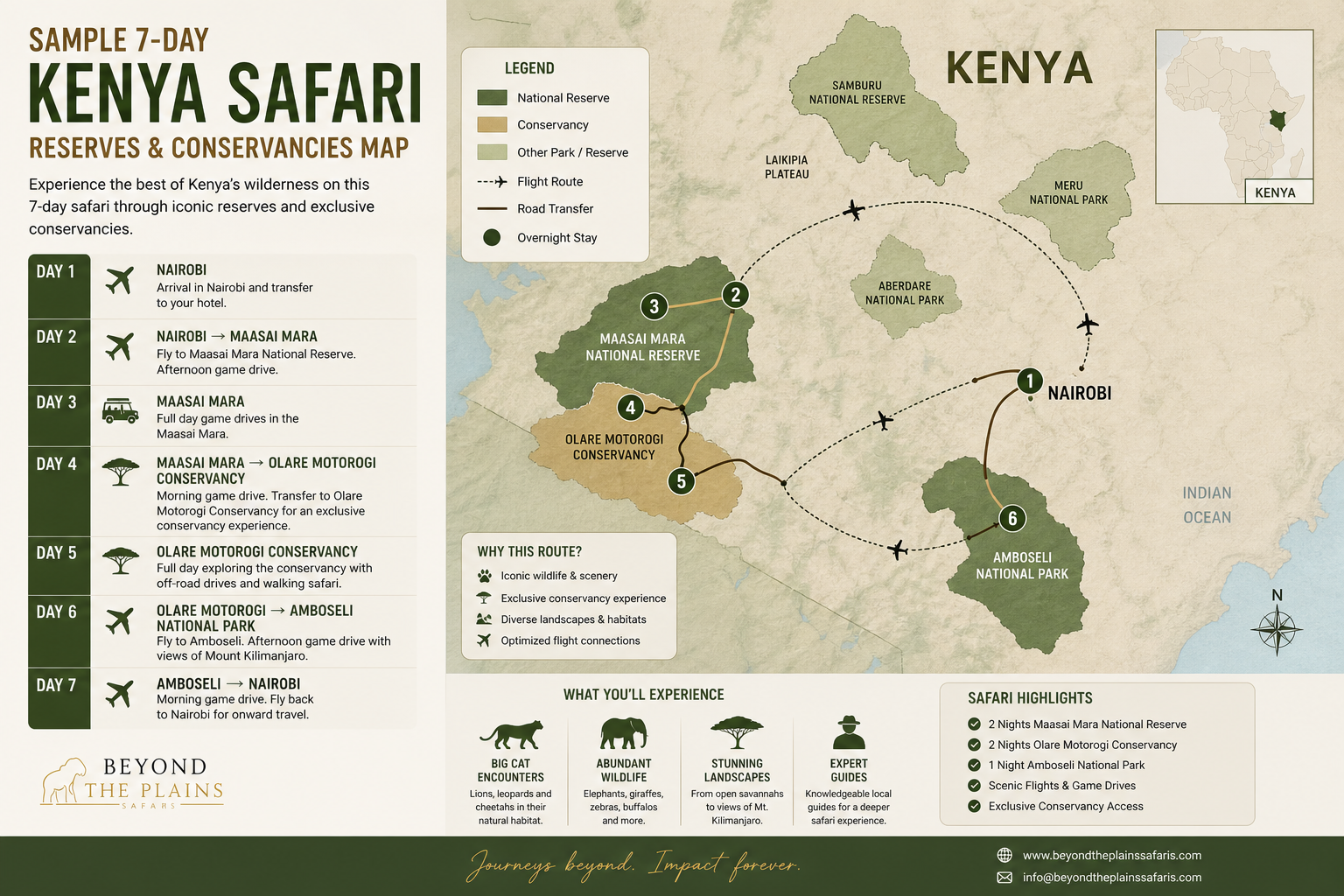
The smartest Kenya safari in 2026 combines a conservancy stay with a national reserve visit, using each destination type for what it does best. Here is a proven 7–10 day framework:
Days 1–2: Nairobi arrival and acclimatization Domestic flight or road transfer to your first destination. Use Nairobi to visit the David Sheldrick Wildlife Trust (elephant orphans) and the Giraffe Centre.
Days 3–5: Maasai Mara National Reserve (3 nights) Begin with the reserve to orient yourself to Kenya's scale of wildlife. Morning and afternoon game drives, Mara River access for migration viewing (July–October). Mid-range or luxury reserve lodge recommended.
Days 6–8: Naboisho or Olare Motorogi Conservancy (2–3 nights) Transfer 45–60 minutes by road or light aircraft. Immediately notice the silence, the absence of competing vehicles, the guide's ability to follow animals off-track. Night drive on Day 6 evening. Bush walk on Day 7 morning.
Days 9–10: Optional extension — Laikipia or Samburu For rhino, Grevy's zebra, and northern Kenya's unique species, add 2 nights at Lewa, Ol Pejeta, or Sasaab in Samburu.
Conclusion: The Smartest Kenya Safari in 2026 Uses Both
The conservancy vs. reserve debate is not a binary choice — it's a sequencing decision. The Maasai Mara National Reserve delivers the scale, the drama, and the migration crossings that define Kenya's global safari reputation. The Maasai Mara conservancies — Naboisho, Olare Motorogi, Ol Kinyei — deliver the intimacy, the night drives, and the undisturbed predator encounters that make a Kenya safari genuinely unforgettable. Used together, they produce an itinerary that covers every dimension of what Kenya's extraordinary ecosystem offers.
The fact that you're comparing these two options already puts you ahead of most safari planners, who book based on name recognition alone. Now the next step is turning this comparison into a specific itinerary built around your travel dates, wildlife priorities, and budget. That's where the real planning begins.
Ready to build your 2026 Kenya safari itinerary? Start by mapping your travel dates against Kenya's seasonal calendar, then work with a specialist guide who knows both the reserve and the conservancies from the ground up.
Written by John Dante, Owner and Lead Guide, Beyond the Plains Safaris. John has guided clients across Kenya's major wildlife ecosystems for over a decade, with deep field experience in the Maasai Mara ecosystem, Laikipia Plateau, and Samburu region.
Reviewed by Beyond the Plains Safaris Editorial Team — a team of experienced Kenya safari specialists and wildlife conservationists.
Disclaimer: This article was initially drafted using AI assistance. However, the content has undergone thorough revisions, editing, and fact-checking by human editors and subject matter experts to ensure accuracy.










Comments (0)
Leave a Comment
No comments yet. Be the first to comment!