Samburu National Reserve is known for the Samburu Special Five, five species adapted to the semi-arid conditions of northern Kenya. Grevy's zebra, reticulated giraffe, gerenuk, Somali ostrich, and Beisa oryx give this reserve a distinct wildlife character, while the Ewaso Nyiro River and dry-country scenery add variety to each game drive.
Here are 10 things to know about the Samburu Special Five and the safari experience built around them.
Key Takeaways
- The Samburu Special Five are Grevy's zebra, reticulated giraffe, gerenuk, Somali ostrich, and Beisa oryx.
- Samburu's semi-arid habitat suits these northern species, while the Ewaso Nyiro River supports greener riverine woodland.
- Game drives can also include elephants, lions, leopards, and buffalo, alongside the Special Five.
- Wildlife sightings vary, so allow time to explore different habitats and consider seasonal conditions when planning a visit.
1. The Samburu Special Five Are the Reserve's Signature Wildlife
The Samburu Special Five, also called the Special 5, include Grevy's zebra, reticulated giraffe, and Somali ostrich, plus two other species adapted to Samburu's arid habitat. These animals are less often seen in Kenya's southern parks, so many travelers plan time in the north to look for them.
The list is sometimes written with the broader term "oryx," while safari descriptions often specify Beisa oryx. Both refer to the same member of the group in this context. See the Samburu Special Five species list for a concise overview.
2. Grevy's Zebra Has Narrow, Closely Spaced Stripes
Grevy's zebra is the largest wild zebra species, and its narrow stripes distinguish it from the plains zebra many travelers may have seen elsewhere. Look carefully at the pattern across the body and legs when a herd is in view; those fine markings are one of the clearest ways to recognize this northern species.
A patient game drive helps. Zebras may be moving across open scrub or standing among other wildlife, so a guide can help you identify what you're seeing and give the herd space.
The species is endangered, and conservation efforts help protect its remaining populations.
3. Reticulated Giraffes Have a Distinctive Coat Pattern
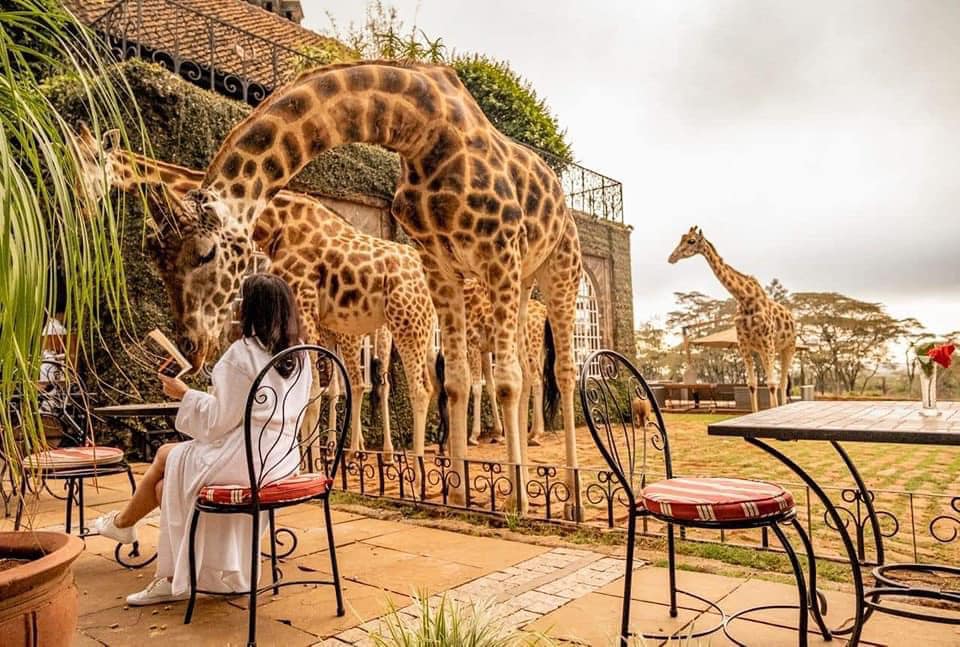
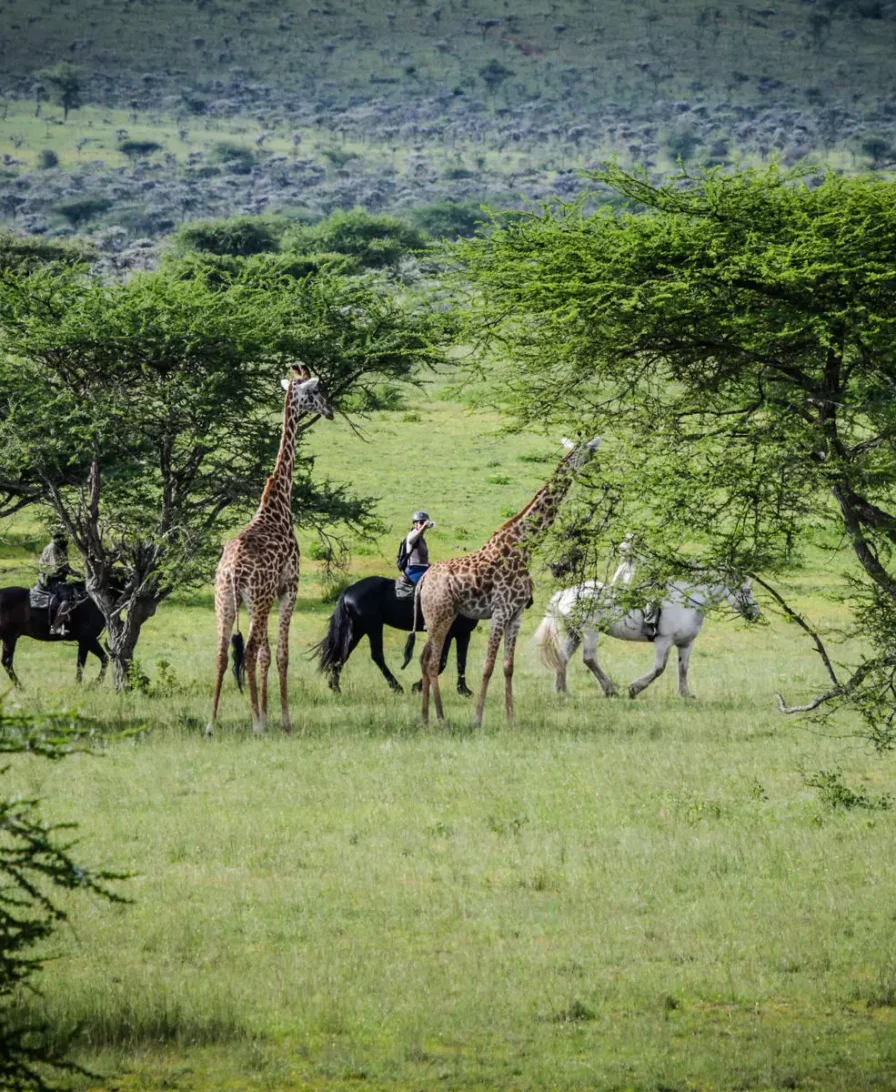
The reticulated giraffe is recognized by its bold, geometric coat markings, which form a striking contrast against the dry-country vegetation. Its patterned coat makes it a memorable sight in open areas, where the animal's height can make it visible above shrubs and smaller trees.
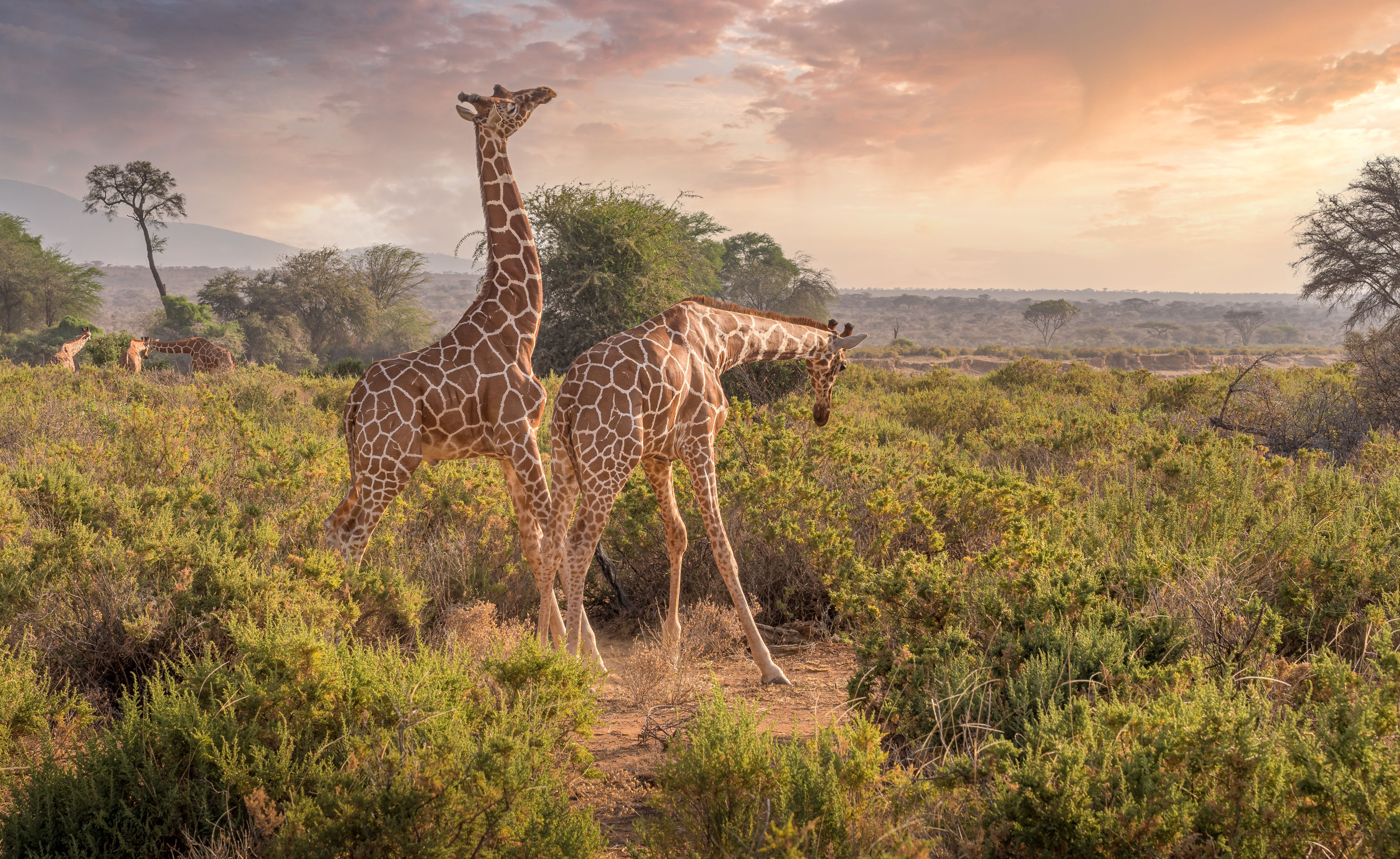
For photography, pay attention to the background as well as the giraffe. The reserve's open scrubland and riverine woodland offer different compositions, and a clear view of the animal's coat can help distinguish it from other giraffe species.
4. Gerenuks Browse While Standing Upright
The gerenuk is often called the "giraffe gazelle" because of its long neck and slender build. It can rise onto its hind legs to reach leaves on shrubs, an unusual feeding posture that makes this antelope one of the most distinctive members of the Special Five.
When you spot a gerenuk, watch for its browsing behavior rather than focusing only on a quick photograph. A guide may be able to explain what it is feeding on and help you observe without approaching too closely.
5. Somali Ostriches Look Different from Common Ostriches
The male Somali ostrich has blue-gray skin on its neck and thighs, a feature that distinguishes it from the more familiar common ostrich. Its large size and open-country habitat make it easier to notice at a distance than some of the smaller Special Five species.
If you see an ostrich on the plains, take time to identify its coloring before assuming it is the common species. That close look can turn a familiar-looking sighting into a more specific Samburu wildlife encounter.
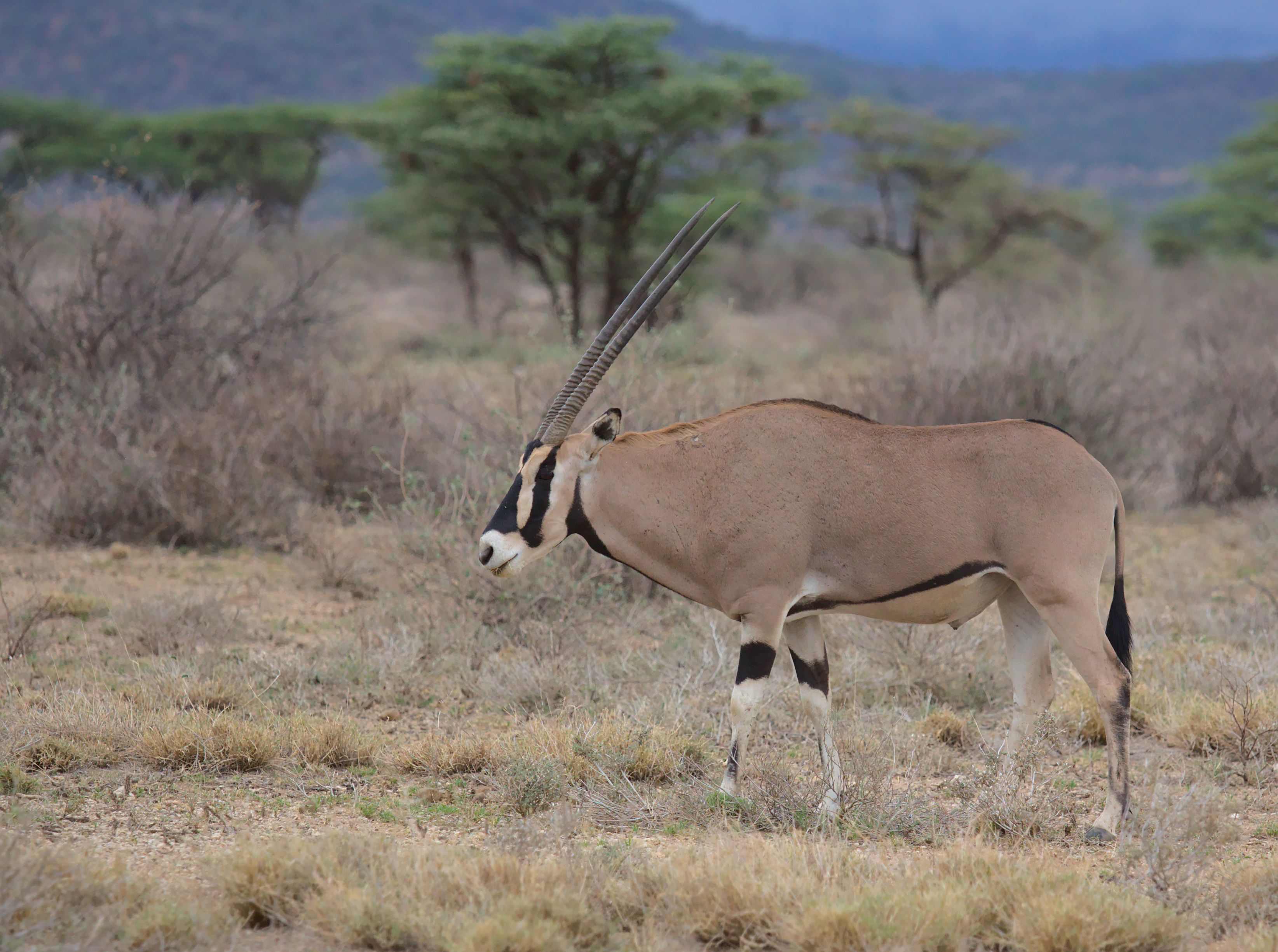
6. Beisa Oryx Is Built for Dry-Country Conditions
The Beisa oryx is an antelope adapted to arid environments, with long, straight horns and a sturdy frame. Its presence reflects northern Kenya's dry conditions, where wildlife uses a landscape unlike the greener habitats in some southern parks. Even this dry-country specialist cannot survive without water, so water sources can be useful places to watch.
Oryx are often easiest to recognize when you have a clear view of their shape and horns. Keep binoculars ready, especially when animals are farther off across open ground.
7. The Ewaso Nyiro River Brings a Different View of Samburu
The Ewaso Nyiro River, also spelled Ewaso Ng'iro River, runs through Samburu. It supports a belt of greener riverine woodland against the surrounding dry country. This contrast gives game drives a change in habitat, with opportunities to look for wildlife near the water and along the riverbanks.
The river corridor is also associated with leopard sightings, which our Samburu Special Five fly-in safari describes as unusually reliable. Wildlife sightings are never guaranteed, but time along the river gives you a chance to look for animals that use this habitat.
8. The Special Five Are Part of a Broader Wildlife Experience
The Special 5 are a regional group, distinct from Kenya's broader Big Five. Elephants, lions, leopards, and buffalo also feature in Samburu's wildlife mix, so a game drive can bring sightings beyond the animals that draw many visitors north.
That variety matters when planning your expectations. The Special Five give a Samburu safari its identity, while other wildlife and changing habitats keep drives engaging even when one particular species isn't in view.
9. Dry-Country Scenery Sets Samburu Apart
Samburu's semi-arid setting looks different from the open grasslands many travelers associate with Kenya safaris. Dry scrub, acacia scrub, riverine vegetation, and wide views create a distinct backdrop for photography, especially compared with the Masai Mara or Amboseli.
This landscape is part of the reason the Special Five are associated with the reserve. Their adaptations make sense in a habitat where water and vegetation are distributed differently than in wetter ecosystems.
10. Build Enough Time for Wildlife Viewing and Cultural Context
A Samburu visit can combine game drives with an optional community visit, if arranged as part of the safari. A visit offers context about the Samburu people and life in the region. Arrange it respectfully with a local guide who can explain the setting.
Conditions are generally drier in January and February, and from June through October. Rains often affect access and vegetation during the intervening periods, though conditions vary from year to year.
For a closer look at timing, wildlife, and route planning, read our complete Samburu National Reserve safari guide. Travelers combining northern Kenya with other destinations can also consider a Samburu and Ol Pejeta wildlife itinerary.
Frequently Asked Questions
What are the Samburu Special Five?
They are Grevy's zebra, reticulated giraffe, gerenuk, Somali ostrich, and Beisa oryx. Some descriptions use the broader term "oryx" for Beisa oryx.
Where can you see the Samburu Special Five?
The five species are associated with Samburu National Reserve in northern Kenya. Game drives cover dry scrub and the Ewaso Nyiro River corridor, where habitats and wildlife sightings vary.
What makes Grevy's zebra easy to identify?
Grevy's zebra is the largest wild zebra species and has narrow, closely spaced stripes. Its markings distinguish it from the plains zebra.
When is Samburu generally drier?
Conditions are generally drier in January and February, and from June through October. Rains often affect access and vegetation during the intervening periods, though conditions vary from year to year.
Conclusion: Plan Around the Species, Then Enjoy the Whole Reserve
The Samburu Special Five are a defining wildlife draw, with Grevy's zebra and reticulated giraffe among their highlights. Give game drives time to cover the open dry country and Ewaso Nyiro River corridor.
Wildlife sightings vary, so keep the wider experience in view. The river, other large mammals, and the reserve's distinctive scenery add substance to a Samburu safari beyond the five species.









Comments (0)
Leave a Comment
No comments yet. Be the first to comment!