

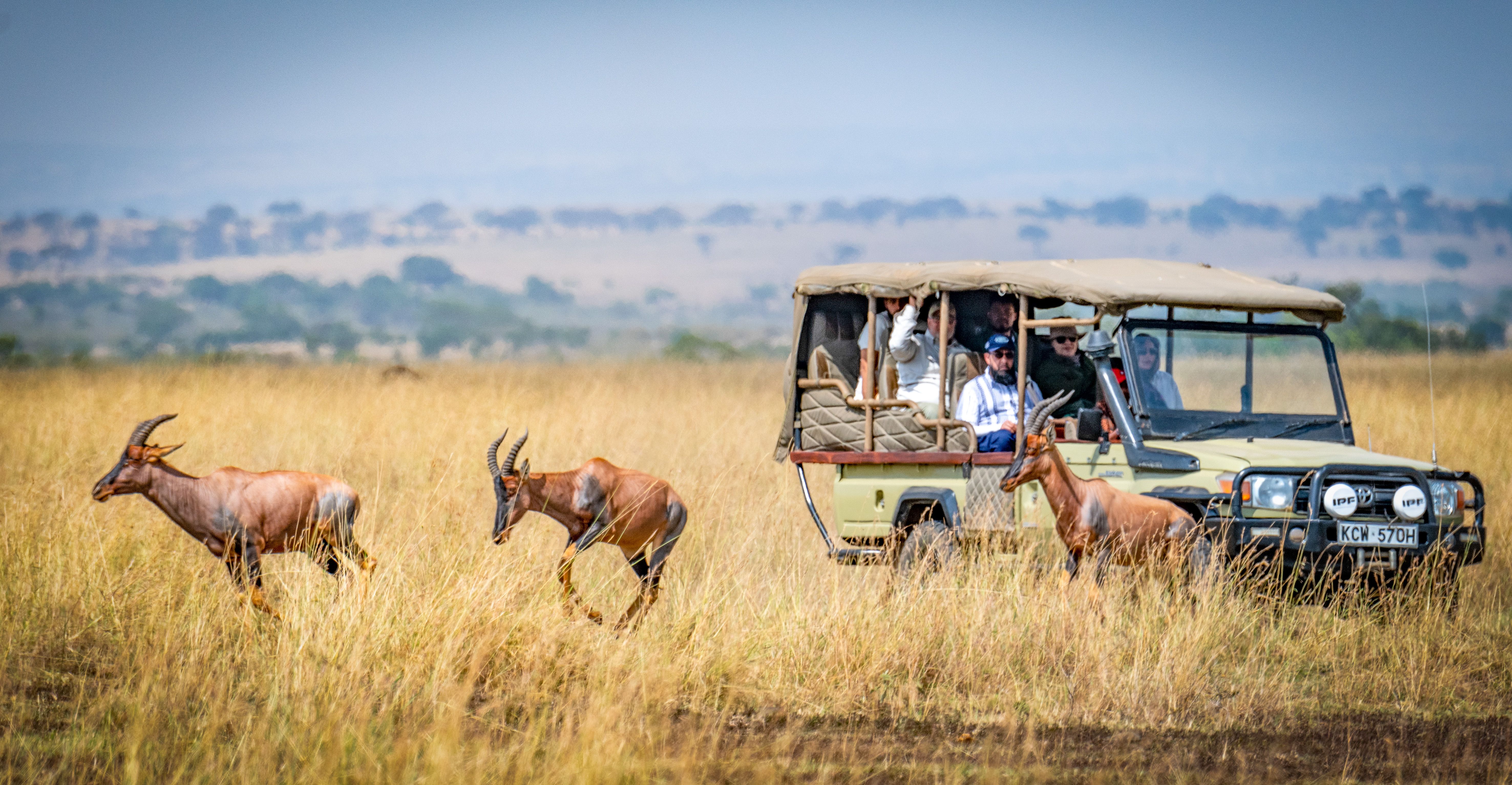
You already know Kenya sells itself in brochures, and your clients keep asking about safaris, beaches, and the Great Migration. But brochures cannot tell you which lodges deliver, which guides stand out, or how to plan a smooth itinerary, and that gap is what separates a generalist from a Kenya specialist. This guide explains what a Kenya FAM trip is, who qualifies, what it includes, and how to turn it into bookings.
Key Takeaways
- A Kenya FAM trip is a hosted or subsidized familiarization tour that gives travel agents, tour operators, and media first-hand experience of Kenyan destinations and suppliers.
- First-hand product knowledge helps travel professionals sell Kenya more confidently, design better itineraries, and answer client questions accurately.
- Common Kenya FAM formats include agent FAMs, tour operator product tours, media and influencer trips, and MICE site inspections.
- A typical Kenya FAM combines Nairobi, one or more safari regions such as the Maasai Mara or Amboseli, and often a coastal extension.
- Eligibility usually depends on being an active travel trade professional with a verifiable business and sales record.
- Hosts commonly cover on-ground costs, while participants typically pay for international flights, insurance, and personal expenses.
- The return on a FAM trip depends on follow-up: scoring each property, updating product sheets, and launching Kenya packages soon after the trip.
What Is a Kenya FAM Trip and How Does It Work?
A Kenya FAM trip is a hosted or subsidized familiarization tour that allows travel agents, tour operators, and media to experience Kenyan destinations, lodges, and activities first-hand before selling or promoting them. The word "FAM" is short for familiarization, and the model is decades old in the wider travel industry — a supplier, tourism board, or ground handler absorbs part or all of the on-the-ground cost so that the people who sell the destination actually know it. A FAM trip involves visiting multiple properties and experiences on a structured itinerary so travel professionals can assess quality, logistics, and client suitability, rather than relying on a supplier's marketing photos.
What makes a Kenya FAM trip distinct from a generic educational tour is the breadth of product packed into a single week. Kenya combines savanna safari, the Great Migration, a rift valley lake system, and an Indian Ocean coastline inside one country, so a single FAM circuit can plausibly cover big-game viewing, birding, cultural encounters with Maasai communities, and a beach stay in the same itinerary. That range is precisely why Kenya FAM trips are structured differently from, say, a single-property hotel FAM in the Caribbean: they are built around movement between ecosystems, not a single base.
Kenya FAM trips are typically hosted by one of four kinds of organizations, sometimes in partnership. The Kenya Tourism Board runs trade familiarization trips tied to its Magical Kenya Travel Specialist Program, a free e-learning platform that has already trained more than 6,900 travel agents worldwide and offers invite-only FAM trips to advisors who reach its Gold and Platinum certification tiers. Destination management companies (DMCs) and ground handlers — the on-the-ground operators who run logistics for international agents — also host their own FAMs, usually for advisors who already send them client business or show credible potential to. Lodge groups and airlines sponsor FAMs too, generally tied to a new route, a new property opening, or a seasonal push. Beyond the Plains Safaris, a Nairobi-based DMC and Kenya safari packages operator, runs its own trade FAM program for partner agents through its travel agent and DMC portal, pairing site inspections with net-rate access and a dedicated safari planner.
How a Kenya FAM Differs From a Press Trip
A press trip and a FAM trip share a structure — hosted travel, a curated itinerary, and an expectation of coverage — but they serve different audiences and different outcomes. A FAM trip is aimed at travel agents and tour operators whose job is to sell bookable itineraries directly to consumers, so the itinerary is built to answer commercial questions: What does this lodge cost at net rate? Is the transfer time workable for a family group? A press trip is aimed at journalists, editors, and influencers whose job is to produce published content — an article, a video, a social series — so the itinerary is built around story angles and shareable moments. In practice, Kenya hosts blend the two: a media contingent and a trade contingent often travel on the same circuit, but their debrief obligations differ, with agents expected to file supplier feedback and journalists expected to file copy.
Why Are FAM Trips Important for Selling Kenya Safaris?
FAM trips matter because advisors who have experienced a destination first-hand sell it with more confidence and more accuracy than advisors working from a brochure alone. This is not just an industry truism — it shows up directly in survey data. In a November 2025 survey of 500 U.S. travel advisors by TravelAge West's Need to Know research series, 73% said they began seeing bookings related to a FAM trip within six months of returning, and the top reported benefits were improved product and destination knowledge, increased client trust and credibility, and stronger supplier relationships — Source: TravelAge West Need to Know Research, November 2025.
That translation from experience to sales matters more for Kenya than for many single-product destinations, because Kenya is not one experience — it is several. First, an agent who has personally sat in a game vehicle at a Mara River crossing can describe the wait, the dust, and the moment of the plunge in a way no supplier deck replicates, and that specificity is what closes a hesitant client. Second, an agent who has stayed in both a mid-range tented camp and a private conservancy villa can match a client's budget to the right tier instantly, instead of guessing from a rate sheet. Third, meeting a DMC's guides and operations team in person builds the kind of trust that lets an agent commit a high-value client to a ground partner they have not previously used.
Kenya's underlying tourism numbers reinforce why this destination rewards specialization right now. The country recorded 2,652,540 international arrivals in 2025, an all-time high and its fifth consecutive year of growth following the pandemic-era collapse — Source: Kenya Ministry of Tourism and Wildlife, Kenya Tourism Sector Performance Report 2025. Africa supplied 47% of those arrivals, Europe 25%, and the Americas 14%, which means the North American and European source markets that most FAM-eligible agents serve are already Kenya's fastest-growing segments outside the continent. As arrivals climb, so does competition among advisors to be the trusted Kenya specialist in their agency or market — and a FAM trip is the fastest credential-building step available.
Beyond individual sales, FAM trips let an agent design better itineraries because they have walked the transfer routes and felt the pacing. An agent who has never driven from Nairobi to the Mara cannot reliably judge whether a client should fly or drive; an agent who has done both trips can advise with authority. That kind of ground-truth knowledge is exactly what separates advisors who merely resell a destination from those clients treat as Kenya destination management company partners in their own right.
What Types of Kenya FAM Trips Exist?
Kenya FAM trips are not one uniform product; hosts design different trip formats depending on who they are trying to reach and what commercial outcome they want.
Travel agent FAMs are the most common format and are built for retail advisors and independent contractors who sell directly to consumers. These trips prioritize breadth — enough variety in lodge tier and destination that an advisor can speak to multiple client budgets and interests after one trip.
Tour operator and product FAMs target wholesalers and tour operators who build packaged itineraries at scale rather than selling one client at a time. These trips go deeper on logistics: group vehicle capacity, seat-in-vehicle versus private departures, and how many nights a circuit realistically needs without rushing.
Media and influencer trips are built around content generation rather than direct sales. Hosts typically expect a defined deliverable — a published article, a video series, or a social media content package — in exchange for the hosted experience, and itineraries lean toward visually striking moments: hot-air-balloon safaris, golden-hour game drives, and cultural encounters that photograph well.
MICE and incentive site inspections serve meetings, incentives, conferences, and exhibitions planners scouting Kenya for corporate retreats or incentive travel. Kenya's MICE segment is a meaningful part of its inbound tourism mix, with the Tourism Research Institute recording 643,068 arrivals for business and conference travel in 2025 — about 24% of that year's total international arrivals — Source: Kenya Tourism Research Institute, 2025. Planners on these trips evaluate conference venues, private conservancy buyouts, and team-building activity options rather than consumer-style leisure stays. For advisors working this niche, Beyond the Plains Safaris' guidance on Kenya MICE and incentive travel covers what a corporate site inspection should cover in more depth.
Niche FAM trips target advisors who specialize in a particular client segment — luxury, honeymoon and romance, family travel, birding, or cultural immersion. A honeymoon-focused FAM, for instance, weights the itinerary toward private conservancies and beach extensions rather than group-friendly lodges, because the specialist advisor's client base has different priorities than a generalist's.
| FAM Trip Type | Primary Audience | Typical Focus | Usual Length |
|---|---|---|---|
| Travel Agent FAM | Retail advisors, ICs | Broad product knowledge across tiers | 5–8 days |
| Tour Operator / Product FAM | Wholesalers, product managers | Group logistics, transfer times, capacity | 6–10 days |
| Media / Influencer Trip | Journalists, content creators | Story angles, visual moments | 4–7 days |
| MICE / Incentive Inspection | Corporate and incentive planners | Venues, conservancy buyouts, team activities | 3–5 days |
| Niche FAM (luxury, honeymoon, family, birding) | Specialist advisors | Segment-specific properties and pacing | 5–9 days |
Where Do Kenya FAM Trips Go? A Sample 7-Day Itinerary
Kenya FAM trips typically combine Nairobi with one or two safari circuits and, when time allows, a short coastal extension, because that combination lets agents evaluate the destination's full commercial range in a single trip. Here is a realistic seven-day structure that mirrors what hosts such as Kenya Tourism Board partners and Kenya-based DMCs actually run.
Day 1 — Arrival in Nairobi. Advisors typically fly into Jomo Kenyatta International Airport, where a host's ground team handles the meet-and-greet — the same airport-transfer standard that international agents should expect from any credible Kenya destination management company. Evenings are usually reserved for a briefing dinner where the host outlines the week's evaluation goals.
Day 2 — Nairobi city and orientation. A typical FAM morning covers Nairobi National Park, the only national park bordering a capital city, where lions, giraffes, and rhino graze with Nairobi's skyline in the background inside a 117-square-kilometer reserve gazetted in 1946 as Kenya's first national park — Source: Kenya Wildlife Service. Afternoons often add the Giraffe Centre and the Karen Blixen Museum, both quick city-based stops that agents can recommend to clients with a short Nairobi layover.
Days 3–4 — Maasai Mara National Reserve. The Maasai Mara safari guide portion of most Kenya FAMs is non-negotiable, since the Mara is Kenya's signature product and the site of the Great Migration's river crossings. Agents on FAM trips should evaluate lodge tiers side by side here — a mid-range tented camp against a private-conservancy option — because clients across every budget ask about the Mara.
Day 5 — Amboseli National Park. Amboseli National Park offers a different visual signature: large elephant herds photographed against Mount Kilimanjaro's silhouette. Agents evaluating Amboseli should note transfer time from the Mara (a flight, in most itineraries) and how the park's flatter terrain changes the game-viewing pace compared with the Mara's denser bush.
Day 6 — Lake Naivasha or Lake Nakuru. Many Kenya FAM circuits add a Rift Valley lake stop, where flamingos, rhino, and boating activities give agents a lower-tempo product to recommend for family groups or shorter trips.
Day 7 — Coastal extension or departure. Where the itinerary allows, hosts add a short stay in Diani Beach, Watamu, or Lamu on Kenya's Indian Ocean coast, letting agents pitch a safari-plus-beach combination — one of Kenya's clearest differentiators against inland-only safari destinations. Where time is tighter, the trip closes with a return flight to Nairobi and departure.
At every stop, agents on a well-run FAM should be evaluating the same five things: lodge and camp quality, guide expertise, transfer logistics, value relative to rate card, and fit for their own client base — the same framework covered in the evaluation scorecard below.
Who Can Join a Kenya FAM Trip, and How Do You Apply?
Eligibility for a Kenya FAM trip typically requires being an active, verifiable travel trade professional with a documented sales record, not simply an interest in travel. Hosts vet applicants because a FAM trip is a real cost to them — lodging, park fees, guiding, and internal transfers for a week are not trivial — so they select participants likely to convert the experience into bookings.
Most hosts look for some combination of the following: an active travel agency or IC affiliation, membership in a recognized trade body (ASTA, IATA, ABTA, or an equivalent national association), a documented history of booking similar destinations, and in some cases a Kenya-specific credential such as Magical Kenya's Gold Certified Travel Specialist status, which the Kenya Tourism Board's e-learning platform awards on course completion and which comes with FAM trip eligibility, peer-to-peer learning access, and in-market program invitations — Source: Kenya Tourism Board, Magical Kenya Travel Specialist Program.
How to apply. The most direct path is to register as a trade partner with a Kenya-based DMC or ground handler and request FAM trip consideration through that relationship. Beyond the Plains Safaris, for instance, takes FAM enquiries through its travel agent portal, where advisors first establish a trade partnership — a step that typically starts with a 30-to-45-minute discovery call covering client profile, volume expectations, and preferred destinations — before requesting a site inspection slot. A second path runs through the Kenya Tourism Board's Magical Kenya Travel Specialist Program, where completing certification tiers unlocks invite-only FAM opportunities. A third path is through trade events: the Magical Kenya Travel Expo (MKTE), Kenya's flagship trade fair, is scheduled to run October 6–8, 2026 at Uhuru Gardens in Nairobi and is expected to draw more than 10,000 delegates from over 40 countries — up roughly 30% from the 7,691 delegates recorded at MKTE 2025 — Source: Kenya Tourism Board, MKTE 2026 launch announcement. Registering as a hosted buyer at MKTE is itself a form of FAM trip, since qualifying international buyers typically receive subsidized travel and accommodation to attend.
What hosts expect in return. Reputable hosts are transparent that a FAM trip is an investment, not a gift. Most expect a debrief covering supplier feedback, a commitment to introduce the destination into the advisor's own marketing and client conversations, and — where a formal trade agreement is in place — continued booking volume through that host's ground operations. Advisors who complete a FAM without any follow-through will find it harder to secure a second invitation from the same host.
What Is Included in a Kenya FAM Trip, and What Isn't?
Hosts typically cover on-ground costs during a Kenya FAM trip, while participants are usually responsible for their own international airfare and personal expenses. Understanding this split before you apply prevents budget surprises and helps you evaluate whether a specific FAM invitation is worth the time away from your business.
Typically hosted by the FAM organizer:
- Accommodation at the featured lodges and camps
- Internal transport, including 4x4 game-drive vehicles and, where the itinerary requires it, domestic flights between circuits
- National park and reserve entry fees
- Guided game drives and scheduled activities on the itinerary
- Meals during the structured program
Typically paid by the participant:
- International airfare to and from Kenya
- Kenya's electronic Travel Authorization (eTA) fee
- Travel insurance
- Personal expenses, tips for guides and camp staff, and any off-itinerary extras
- In some programs, a partial contribution toward accommodation, particularly on trips that include ultra-luxury properties
Costs vary meaningfully by host type. A tourism-board-affiliated FAM tied to a certification program is often the most heavily subsidized, sometimes covering airfare for top-tier certified advisors. A DMC-hosted FAM for an established trade partner typically covers all on-ground costs as a relationship investment. A lodge-group or airline-sponsored FAM tied to a new property or route may ask participants to cover a portion of accommodation in exchange for a steep discount. Whichever the arrangement, ask for a written breakdown before confirming, so there is no ambiguity about what your out-of-pocket cost will actually be.
How to Prepare: Best Time, Entry Requirements, Health, and Safety
When Is the Best Time to Go on a Kenya FAM Trip?
The best time for a Kenya FAM trip depends on what the host wants agents to see, since Kenya's wildlife calendar shifts meaningfully by month. If the goal is to showcase the Great Migration's river crossings — the single most requested experience among safari clients — hosts typically schedule FAMs between July and October, when the wildebeest migration reaches the Maasai Mara from Tanzania's Serengeti and river crossings peak, with the highest crossing frequency generally falling in August and September. The calving season, when large numbers of wildebeest give birth on the southern Serengeti plains, runs roughly January through March and is a different but equally sellable story for agents building a shoulder-season pitch. Kenya's long rains typically fall March through May, and short rains October through December, so hosts scheduling logistics-heavy FAMs (multiple internal flights, tight connections) often avoid the heaviest rain windows.
What Do You Need to Enter Kenya for a FAM Trip?
Most visitors to Kenya must obtain an electronic Travel Authorization (eTA) before travel, since Kenya abolished traditional visa requirements for foreign visitors from January 1, 2024, and replaced them with the eTA system — Source: Government of Kenya, Directorate of Immigration Services, etakenya.go.ke. Applications can be submitted online at the official portal and should be filed at least a few days before travel to allow processing time; citizens of East African Community member states and a short list of exempted nationalities do not need one. Because eTA rules and fees are periodically updated, confirm current requirements on the official government portal rather than a third-party summary before departure — see Beyond the Plains Safaris' own Kenya eTA guide for safari travelers for a plain-language walkthrough alongside the official source.
On health, the U.S. Centers for Disease Control and Prevention recommends that travelers to certain areas of Kenya take prescription medicine to prevent malaria, and recommends yellow fever vaccination for most travelers aged nine months and older, except for itineraries limited to Nairobi city, the counties of the former North Eastern Province, or most of the former Coast Province — Source: CDC Yellow Book, Kenya destination page, updated April 2025. A yellow fever vaccination certificate is required for travelers arriving from a country with risk of yellow fever transmission, so agents connecting through another African country en route to Kenya should confirm this before departure. Because FAM trips often move quickly between ecosystems — savanna, highland forest, and coast in one week — build in the CDC's suggested four-to-six-week lead time for any multi-dose vaccine series, and always carry proof of travel insurance, since most hosts require it as a condition of participation.
Tools and Practical Applications for Kenya FAM Trips
Attending a Kenya FAM trip is only half the work; the other half is capturing what you learned in a form your agency can actually use. These three tools structure that process.
FAM Evaluation Scorecard. Score every property and experience on a consistent 1–5 scale across five categories immediately after each visit, while details are fresh — not at the end of the trip.
| Category | What to Evaluate | Score (1–5) |
|---|---|---|
| Lodge/Camp Quality | Room condition, food, service standard, tent or room privacy | |
| Guiding | Wildlife knowledge, English fluency, client-handling skill | |
| Logistics | Transfer times, vehicle condition, punctuality | |
| Value | Rate versus experience delivered, net rate transparency | |
| Client Suitability | Best-fit client segment (luxury, family, honeymoon, budget) |
Post-Trip Follow-Up Email Template. Send this within 48 hours of return, while the host's team still associates your name with the trip.
Site-Inspection-to-Product-Sheet Checklist. Before the trip fades from memory, convert your notes into a sellable asset: confirm net rates and commission for each evaluated property, draft a one-page "Kenya Specialist" product sheet naming two to three properties per client segment, update your agency website or CRM tags to flag yourself as Kenya-experienced, and schedule a team briefing to share findings with colleagues who did not attend.
How Do You Turn a Kenya FAM Trip Into Real Bookings?
Converting a FAM trip into revenue depends on speed and specificity, not just enthusiasm. First, build genuinely Kenya-specific packages using the exact properties you scored highest, rather than generic "African safari" itineraries — a client responds differently to "the tented camp on the Mara River where I watched a crossing from my deck" than to a stock description pulled from a supplier's website. Second, update your marketing immediately: a social post, a newsletter feature, or a website update within the first two weeks after the trip captures the moment while your enthusiasm and photos are freshest, and it directly supports the kind of content-sharing behavior that 77% of advisors in the TravelAge West survey said they already do after a FAM — sharing their experience with clients via social media — Source: TravelAge West Need to Know Research, November 2025.
Third, brief your sales team or colleagues on what you learned, since a single advisor's FAM knowledge should not stay siloed in one person's head if the agency wants to sell Kenya at scale. Fourth, stay in touch with your host. The advisors who get invited back, and who get priority access to net rates and allocation during peak Mara season, are the ones who treat the DMC or tourism board relationship as ongoing rather than transactional. If you have not yet started that relationship, apply for a Kenya FAM trip through a licensed ground partner, or register interest through the Magical Kenya Travel Specialist Program to begin building toward invite eligibility.
Conclusion
A Kenya FAM trip is the fastest, most credible way to convert general destination knowledge into the kind of specific, first-hand expertise that turns a browsing client into a booked one. You now know what a Kenya FAM trip involves, who typically qualifies, what it costs, what a realistic itinerary looks like, and — critically — what to do in the weeks after you land back home, because the trip itself is only the starting point. Kenya's tourism sector is growing, its trade programs are actively recruiting new specialist advisors, and the agents who move first on building that relationship will be the ones their clients turn to when the next safari conversation starts. If you're ready to take that step, explore Beyond the Plains Safaris' Kenya trade partnership program and start the conversation toward your own Kenya site inspection.










Comments (0)
Leave a Comment
No comments yet. Be the first to comment!