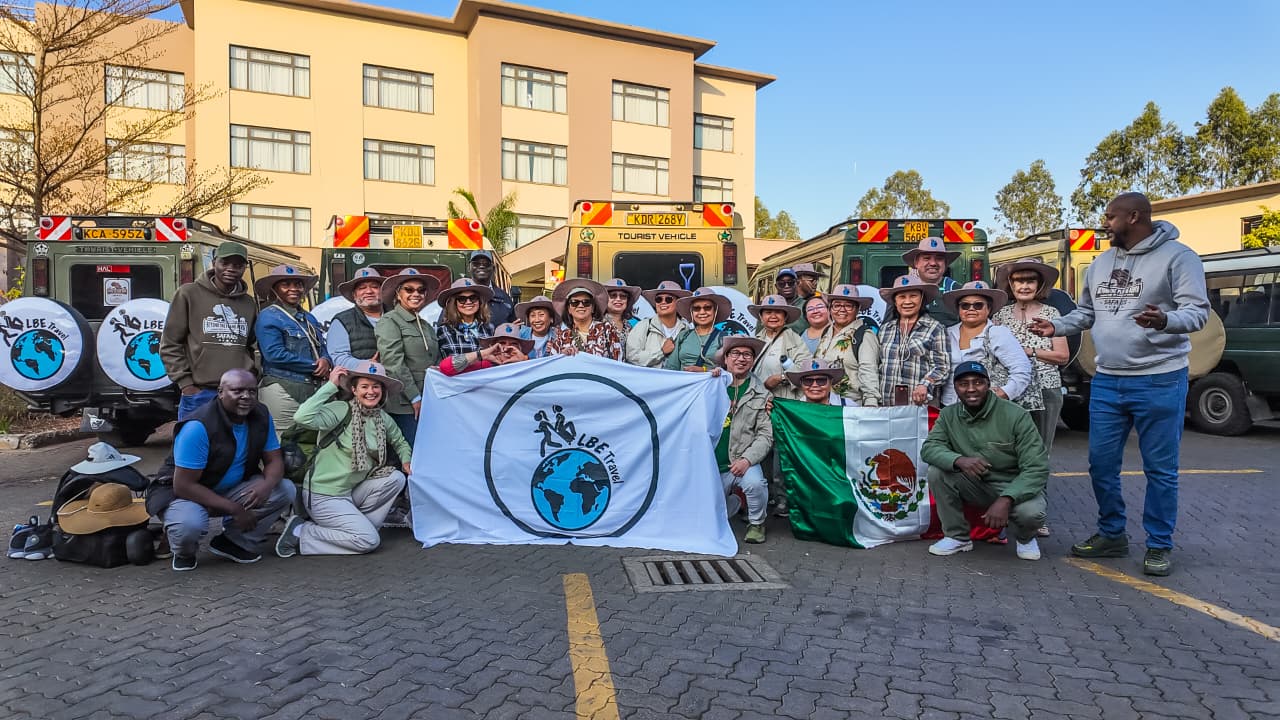
You already know that a great corporate retreat can reset morale, sharpen collaboration, and reward your top performers. But most HR directors and travel managers have never had to coordinate visas, game-drive vehicles, and malaria guidance for 40 people at once — and that gap between "great idea" and "flawless execution" is exactly where first-time safari retreats go wrong. In this guide, we'll walk you through exactly how to plan a corporate safari, from choosing a destination to structuring an itinerary your whole team will still be talking about next year.
Key Takeaways
- Corporate incentive travel to a safari destination combines reward-based travel with immersive, shared wildlife experiences designed to boost morale and strengthen team bonds.
- Group size directly determines destination choice, since most safari lodges and game-drive vehicles cap capacity between 6 and 20 guests per unit.
- Budgeting for a corporate safari typically requires 20–30% more planning lead time than a standard retreat, due to visa, vaccination, and flight coordination needs.
- Kenya and Tanzania are the most popular corporate safari destinations, thanks to direct flight access and established large-group infrastructure.
- A well-designed itinerary balances structured team activities with unstructured game-drive time to avoid burnout and maximize engagement.
- Working with a specialized DMC reduces logistical risk by consolidating permits, transport, and lodging into a single coordinated booking.
- Health and safety planning — including malaria prophylaxis guidance and travel insurance — is a non-negotiable step for any group safari itinerary.
What Is Corporate Incentive Travel to a Safari Destination?
Corporate incentive travel is a reward-based program in which companies fund employee trips, such as safaris, to recognize performance and build team cohesion. Unlike a standard offsite booked at a hotel conference room, a safari incentive trip uses shared wildlife experiences — game drives, bush dinners, sundowners overlooking the savannah — as the vehicle for connection. Employees earn the trip through sales targets, tenure milestones, or leadership performance, and the company treats it as both a reward and a retention tool.
This differs from a general "corporate retreat," which can happen anywhere and doesn't always require a performance trigger. A safari-based incentive program specifically leverages the emotional intensity of wildlife encounters — watching a lion pride at dawn, tracking elephants across the plains — to create memories that a beach resort or ski lodge rarely matches. A destination management company (DMC) consolidates permits, transport, and lodging into one coordinated booking for corporate safari groups, which is why most companies planning their first safari retreat work with one rather than building the trip vendor-by-vendor.
For companies weighing this format against other incentive destinations, our Kenya vs Tanzania safari comparison is a useful starting reference, since destination choice shapes almost every other planning decision that follows.
Why Do Safaris Work So Well for Corporate Retreats and Incentive Programs?
Safaris work well for corporate retreats because they force genuine, screen-free interaction in a setting that no one on the team has fully experienced before. That shared novelty — sitting in a vehicle together at sunrise, waiting for a leopard to appear — resets social dynamics faster than a traditional agenda of breakout sessions and slide decks.
First, the shared unpredictability of wildlife sightings creates natural conversation and bonding that scripted team-building exercises can't replicate. Second, safaris remove the usual status signals of office life — job titles matter less when everyone is equally amazed by a herd of elephants crossing the road. Third, the physical separation from email and daily operations allows leadership and staff to interact more informally, which strengthens trust across hierarchy levels.
According to the Incentive Research Foundation, incentive travel programs deliver measurably higher performance lift than cash rewards of equivalent value — Source: Incentive Research Foundation, 2024. Companies increasingly report that experiential rewards, including safaris, outperform monetary bonuses in employee retention surveys — Source: SITE (Society for Incentive Travel Excellence), 2024. For a deeper look at how experiential rewards translate into measurable outcomes, review your team's incentive program goals before finalizing a destination, since the "why" behind the trip should shape the itinerary design covered later in this guide.
Which Safari Destination Is Best for a Large Corporate Group?
The best safari destination for a large corporate group depends on group size, flight access, and how much wilderness-versus-comfort balance your team wants. Kenya, Tanzania, South Africa, and Botswana each offer distinct advantages for corporate travel, and no single destination is objectively "best" — the right choice depends on your group's profile.
Kenya offers the strongest infrastructure for large corporate groups, with direct international flights into Nairobi, a dense concentration of lodges near the Maasai Mara National Reserve, and operators experienced in coordinating 20–100+ person itineraries. Tanzania delivers a more remote, expansive wilderness feel through parks like the Serengeti National Park and Ngorongoro Crater, though its infrastructure favors mid-sized groups over very large ones. South Africa works well for groups wanting to combine a safari with a city conference, since Cape Town and Johannesburg offer established convention facilities alongside nearby game reserves. Botswana suits smaller, premium executive groups seeking exclusivity, but its low-density tourism model makes it a poor fit for groups above roughly 20 people.
| Destination | Best Group Size | Flight Access | Corporate Infrastructure | Ideal Use Case |
|---|---|---|---|---|
| Kenya | 15–100+ | Direct flights to Nairobi from major hubs | Extensive; large-group lodges and DMCs | Incentive trips, large retreats, sales kickoffs |
| Tanzania | 10–40 | Connections via Nairobi or Amsterdam/Dubai | Strong but more spread out | Leadership retreats, mid-sized incentive groups |
| South Africa | 20–150+ | Direct flights to Johannesburg/Cape Town | Excellent; conference + safari combos | Conference-safari hybrids |
| Botswana | 6–20 | Limited; regional connections needed | Boutique, low-density | Executive/VIP small groups |
For companies still deciding between the two most-booked options, our detailed Kenya vs Tanzania safari comparison breaks down cost, wildlife density, and logistics side by side. Many corporate planners also review specific parks directly, such as Amboseli National Park for its Kilimanjaro backdrop or Tsavo East National Park for its accessibility from the coast.
How Do You Plan Logistics for a Large Group Safari?
Planning logistics for a large group safari involves coordinating accommodation capacity, vehicle limits, visas, and health requirements for a set number of travelers. This is the stage where most first-time corporate planners get surprised, because safari logistics don't scale the same way a hotel conference room does.
How Many People Can Realistically Go on a Group Safari?
Most safari game-drive vehicles hold between 6 and 9 guests, which directly shapes how large corporate groups are split into travel units. A group of 40 employees, for example, typically needs five to seven vehicles running in convoy, plus a matching number of lodge rooms or tented camps with availability on the same nights. Understanding safari vehicle seating and capacity early in the planning process prevents the common mistake of booking a destination before confirming it can actually absorb your group size.
It also helps to understand how crowded specific parks get during peak season. Our breakdown of how crowded the Maasai Mara gets and how vehicle numbers are managed is worth reading before locking in dates, since a 60-person group arriving during the July–September migration period will compete for sightings with independent travelers unless the itinerary is built around less-trafficked conservancies.
What Visa and Health Requirements Apply to Group Safari Travel?
Group safari travel usually requires each traveler to secure individual visas or electronic travel authorizations, plus proof of yellow fever vaccination depending on their country of departure. Kenya, for instance, uses an Electronic Travel Authorization (ETA) system that every traveler must apply for individually — batch processing isn't available, so this step needs to start weeks before departure. Review Kenya's visa requirements and the Kenya eTA guide for safari travelers early, and assign one internal coordinator to track each employee's application status.
For example, a 50-person sales incentive group flying from the United States would each need an approved Kenya ETA, a valid passport with at least six months' remaining validity, and — depending on prior travel history — proof of yellow fever vaccination if arriving from a country with risk of transmission. Missing even a handful of these approvals can delay boarding for the entire group, so building in a two-to-three-week buffer before departure is standard practice among experienced corporate travel managers.
What Timing and Flight Considerations Matter for a Corporate Group?
Timing matters because safari flights, particularly domestic and charter connections, have limited seat inventory that fills quickly for large blocks. Booking a group of 30 or more onto the same domestic flight into a bush airstrip often requires reserving a private charter rather than relying on scheduled flights, since scheduled aircraft rarely have that many open seats on one route. Reviewing the best time to visit Kenya for a safari alongside your company's internal calendar helps avoid conflicts with peak wildlife migration pricing and availability crunches.
How Much Does a Corporate Safari Retreat Cost Per Person?
A corporate safari retreat typically costs between $350 and $900 per person, per night, depending on lodge tier, group size, and season. This range covers accommodation, meals, park fees, game drives, and ground transport, but usually excludes international flights and travel insurance, which companies often budget separately.
Budgeting for a corporate safari typically requires 20–30% more planning lead time than a standard retreat due to visa, vaccination, and flight coordination needs. That extra lead time also affects cost, since last-minute large-group bookings during peak season (July–October) can carry a premium of 15–25% over off-peak rates. For a full breakdown of what drives per-person pricing, our complete Kenya safari cost breakdown walks through lodge tiers, park fees, and seasonal pricing swings in detail.
As a planning benchmark, companies budgeting a five-night mid-range corporate safari for 40 employees should expect a total program cost — excluding international airfare — in the range of $70,000 to $140,000, before adding team-building facilitators, branded materials, or private charter flights. Getting a detailed, itemized quote from a specialized operator early in the process — rather than working from rough per-night estimates — prevents budget surprises once flights, park fees, and conservation levies are added.
How Do You Structure a Safari Itinerary for Team Building?
Structuring a safari itinerary for team building involves balancing scheduled group activities with unstructured game-drive time so employees don't experience the trip as another packed corporate agenda. The most successful corporate safari itineraries treat wildlife viewing as the centerpiece, not a side activity squeezed between meetings.
How Should You Balance Structured Activities and Free Time?
A well-designed itinerary balances structured team activities with unstructured game-drive time to avoid burnout and maximize engagement. For example, a five-day itinerary might open with a welcome dinner and light team-building icebreaker on arrival night, follow with two full days of game drives and a facilitated leadership session during the midday rest period, and close with a bush breakfast and closing address from company leadership on the final morning.
That being said, over-scheduling is the most common mistake corporate planners make. Employees are traveling specifically to escape their usual routine, so cramming the itinerary with mandatory workshops undercuts the very restorative effect the trip is meant to deliver. As such, most experienced planners recommend no more than one formal group session per day, leaving mornings and late afternoons free for game drives and personal downtime.
Should You Plan for a Single Destination or a Multi-Park Itinerary?
Single-destination itineraries work better for most corporate groups because they reduce transit time and keep the whole team together for the entire trip. Multi-park itineraries — moving between, say, the Maasai Mara and Lake Nakuru National Park — offer more varied scenery and wildlife but add flight transfers and packing-up-and-moving logistics that eat into group cohesion time.
Companies choosing between these formats often also weigh whether to run the trip as one large group or split into smaller private vehicles. Our guide comparing group vs private safari experiences is a useful reference for deciding which format better fits your company culture — some teams prefer everyone mixed across shared vehicles to encourage cross-departmental bonding, while others prefer smaller, consistent groups for deeper connection.
What Safety, Health, and Inclusivity Measures Do You Need for a Large Safari Group?
Safety, health, and inclusivity planning for a large safari group means preparing for medical needs, mobility differences, and traveler comfort levels before departure rather than reacting on the ground. Health preparation for a corporate safari typically includes malaria prophylaxis consultation and comprehensive group travel insurance.
First, every traveler should consult a travel health clinic about malaria prevention at least four to six weeks before departure, since prophylaxis medications need lead time to take effect. Our Kenya safari vaccinations and health guide outlines the specific recommendations most travel clinics give for East African safari itineraries. Second, group travel insurance covering medical evacuation should be mandatory for corporate bookings, since standard travel insurance often excludes remote-area medical transport.
Inclusivity also matters more on a safari than on a typical retreat. For example, some lodges have limited wheelchair accessibility on uneven bush terrain, and dietary accommodations need to be communicated to camps well in advance since remote lodges can't always source specialty ingredients on short notice. Assigning one point person to collect dietary restrictions, mobility needs, and emergency contact information for every traveler — then sharing that list with your DMC — closes most of the gaps that catch first-time corporate planners off guard.
What Tools, Vendors, and DMCs Should You Use When Planning?
The right vendor for a corporate safari is typically a destination management company (DMC) with specific experience running large-group logistics, not a general travel agency booking individual leisure trips. A destination management company consolidates permits, transport, and lodging into one coordinated booking for corporate safari groups, which matters enormously once you're managing 30+ travelers across multiple vehicles and lodges.
Should You Hire a DMC or Plan a Corporate Safari In-House?
Most companies should hire a specialized DMC rather than plan a corporate safari in-house, because the logistics — vehicle allocation, lodge room blocks, visa tracking, charter flight coordination — require local relationships and real-time availability access that in-house teams rarely have. In-house planning can work for very small executive groups of six to ten people, but beyond that threshold, the coordination overhead usually outweighs any cost savings.
When evaluating a DMC, ask about their specific experience with corporate groups, not just leisure travelers — the two require different skill sets. Our ultimate guide to choosing a Kenya safari DMC covers the evaluation criteria worth asking about, and our piece on what makes a Kenya DMC trustworthy for travel advisors is a helpful companion resource if you're vetting multiple operators side by side.
What Free and Paid Tools Help With Corporate Safari Logistics?
Beyond the DMC relationship itself, a handful of tools make corporate safari coordination noticeably smoother. A shared spreadsheet or form (Google Forms works well and is free) to collect passport details, dietary needs, and emergency contacts keeps traveler data centralized in one place. Group messaging apps like WhatsApp are the de facto standard for real-time coordination once the group is on the ground in East Africa, since cellular data coverage near most lodges supports messaging even where broadband is limited.
For accommodation research, browsing Kenya lodges and Tanzania lodges directly gives planners a sense of room configurations and group capacity before requesting formal quotes. It's also worth checking packing guidance for a Kenyan safari or the more detailed safari packing list essentials to circulate to employees ahead of the trip, since weight restrictions on small charter aircraft are stricter than most travelers expect.
What Type of Accommodation Works Best for Corporate Groups?
The best accommodation type for a corporate safari group is a lodge or tented camp with enough contiguous rooms to house the whole group without splitting across multiple properties. Splitting a group between two lodges even a short drive apart sounds minor on paper, but it complicates shared meals, group activities, and the simple logistics of getting everyone into vehicles at the same time each morning.
Mid-range lodges with 20–40 rooms tend to suit groups of 30–80 people well, since they can often hold the entire group under one roof without displacing other guests. Larger incentive groups above 80 people sometimes need to book out a property entirely — known as a "buyout" — which also gives the company full control over branding, meal timing, and evening programming. Smaller boutique camps, by contrast, are better suited to executive groups under 20, where exclusivity and a more intimate setting matter more than scale.
For example, a 45-person sales incentive trip might book a full lodge buyout near the Maasai Mara, giving the group private use of the dining area, bar, and fire pit each evening — a setup that would be impossible to replicate if the same group were split across three smaller camps. Requesting availability for full-property buyouts early, ideally six months or more before travel, gives your DMC the best chance of securing exclusive use during peak season.
How Do You Coordinate Meals and Dietary Needs for a Large Group?
Coordinating meals for a large safari group starts with collecting dietary restrictions from every traveler well before the trip, since remote lodges have limited ability to source specialty ingredients on short notice. Most camps can accommodate vegetarian, vegan, gluten-free, and common allergy requirements if given at least two to three weeks' notice, but last-minute requests — communicated after arrival — are much harder to fulfill in areas without daily supply deliveries.
In addition, group meal service for corporate retreats typically shifts from an à la carte format to a set or buffet-style service once groups exceed roughly 15–20 people, simply because kitchens can't manage dozens of individual orders at once during a tight game-drive schedule. Confirming this with your DMC ahead of time helps set employee expectations, since a mid-range lodge's buffet dinner still delivers a high-quality experience — it just looks different from a typical restaurant menu.
Frequently Asked Questions About Corporate Safari Planning
How Far in Advance Should You Book a Corporate Safari?
Most corporate groups should begin planning six to nine months before travel, and even earlier for groups above 50 people or trips during the July–October peak migration season. This lead time allows enough room for visa processing, lodge availability holds, and charter flight bookings, all of which tighten significantly as the departure date approaches.
Can You Combine a Safari With a Business Conference?
Yes, many companies combine a short conference segment with a safari extension, typically running two to three days of formal sessions in Nairobi or Cape Town before or after the safari portion. This hybrid format works particularly well in South Africa, where conference facilities sit closer to major game reserves than in more remote parts of Kenya or Tanzania.
What Happens if an Employee Has a Medical Emergency on Safari?
Reputable safari operators maintain relationships with medical evacuation services, such as light-aircraft air ambulance providers, that can reach most lodges within hours in a genuine emergency. This is precisely why comprehensive group travel insurance with medical evacuation coverage is non-negotiable — standard travel insurance policies often exclude remote-area evacuation, leaving the company exposed to costs that can run into tens of thousands of dollars without it.
Is a Safari a Good Fit for Every Company Culture?
A safari fits best for companies whose employees are physically able to handle early-morning game drives, uneven terrain, and several consecutive days without reliable high-speed internet. Companies with a large proportion of employees who have mobility limitations, or whose culture prioritizes constant connectivity, may find a safari retreat harder to execute smoothly than a resort-based alternative — though most lodges can accommodate individual needs with enough advance notice.
What's Next: Steps to Start Planning Your Corporate Safari
Once you've decided a safari fits your incentive program or retreat goals, the next steps are straightforward but time-sensitive. First, confirm your group size and preferred travel dates internally, since both factors determine which destinations and lodges can realistically accommodate you. Second, request quotes from two or three DMCs with documented corporate group experience — comparing itemized quotes, not just headline per-person prices, since inclusions vary significantly between operators.
Third, build your internal timeline backward from departure: visa and ETA applications should close six to eight weeks out, health consultations four to six weeks out, and final headcount confirmations to the DMC no later than 30 days before travel for lodges to finalize room and vehicle allocations. Fourth, assign one internal point person to own traveler data collection — passports, dietary needs, mobility requirements — so your DMC receives a single, accurate list rather than scattered emails.
If you're ready to move from research to a real itinerary, browsing East Africa tours and safaris or exploring Kenya and Tanzania safari packages is a practical next step, and groups wanting to skip commercial-flight bottlenecks should also look at fly-in Kenya safaris, which use light aircraft to move large groups directly between lodges. For a Kenya-specific starting point, the Masai Mara safari tour package is one of the most frequently booked formats for corporate groups.
Conclusion
Planning a corporate safari is genuinely different from booking a standard retreat — visas, vehicle capacity, malaria prophylaxis, and charter flights all add layers of coordination that most first-time planners underestimate. But that complexity is also exactly why a well-executed safari retreat delivers a return that a hotel ballroom simply can't match: employees who shared a sunrise game drive together talk about it for years, not weeks. Start with your group size and dates, lean on a DMC with real corporate-group experience, and build your health and visa timeline early, and the logistics stop being a barrier and start being just the groundwork for an unforgettable trip. When you're ready to talk through dates, group size, and destinations, you can start a consultation or contact our safari team directly to get an itemized quote built around your company's goals.








Comments (0)
Leave a Comment
No comments yet. Be the first to comment!