
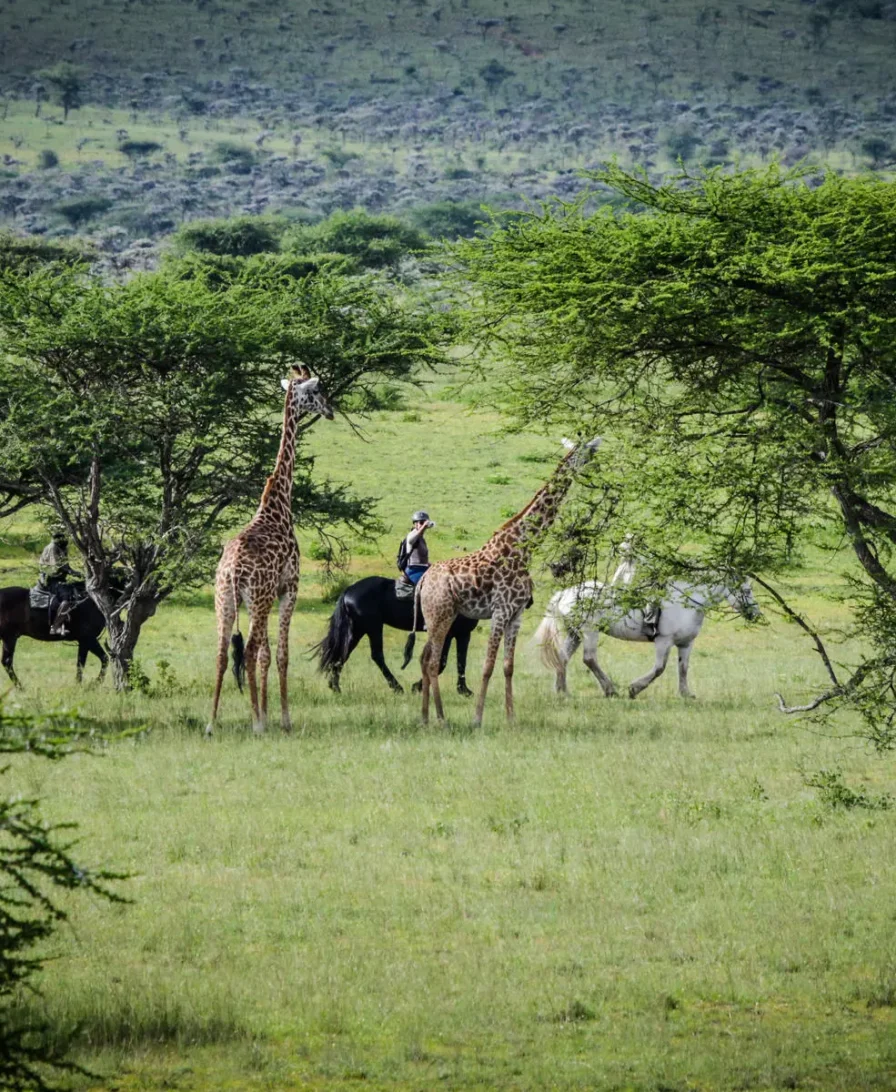
You already know a Kenyan safari means lions, elephants and the Great Migration, usually seen through the open roof of a Land Cruiser. What most travellers never experience is the silence of riding straight into a herd of zebra, with no engine and no window between you and the wild. In this guide, we explain where to ride, whether you're experienced enough, what it really costs in 2026/27, and how to choose the right operator for a horseback safari in Kenya.
Key Takeaways
- A horseback safari in Kenya is a guided wildlife experience on horseback. It ranges from two-hour taster rides to multi-day mobile camping expeditions through the Maasai Mara, Laikipia and the Chyulu Hills.
- Kenya is widely regarded as the birthplace of the horseback safari, with the concept dating back to the 1970s.
- Multi-day rides in Big Five areas are usually limited to confident intermediate or advanced riders. Short rides in places like Naivasha and some Mara conservancies welcome beginners.
- Most operators set a rider weight limit of 90–95 kg (about 197–210 lbs), and guests must state their weight accurately when booking.
- Multi-day riding safaris in the Maasai Mara cost about $9,000–$13,000 per person for 6–8 nights. Two-hour rides cost from roughly $55 in Naivasha to $250 in a Mara conservancy.
- The best time for a Kenyan horseback safari is the dry season, from June to October and from December to March. July to October also brings the chance to ride alongside the Great Migration.
- Riders should choose operators based on guide experience, horse welfare and safety protocols. Migration-season departures should be booked 9–12 months ahead because set dates sell out.
What Is a Horseback Safari in Kenya?
A horseback safari in Kenya is a guided wildlife-viewing journey on horseback through conservancies and wilderness areas such as the Maasai Mara, Laikipia and the Chyulu Hills, ranging from two-hour rides to week-long mobile camping expeditions. Instead of driving to the animals, you ride among them with a professional guide on well-schooled horses. Most rides happen in private and community conservancies, because the main national parks and reserves don't allow riding. For example, the Laikipia conservancies permit horseback, walking and night activities that are restricted inside national parks.
To begin with, Kenya has a real claim to inventing the experience. Kenya is considered the birthplace of the horseback safari, which began there in the 1970s, and it remains one of the best places in the world to see large herds of wildlife from the saddle — Source: In The Saddle, 2026. For example, Safaris Unlimited was founded in 1971 by Tony Church, and his son Gordie Church still leads its Mara rides today — Source: Nova Expedition Tours, 2026.
What Are the Two Main Types of Riding Safari in Kenya?
First, mobile tented riding safaris move camp every day or two as the group rides point to point. For example, the Safaris Unlimited Mara itinerary covers more than 200 km over eight nights, with the support crew driving ahead to pitch camp — Source: Safaris Unlimited, 2026. This style suits strong riders who want a true expedition and don't mind sleeping in a different spot most nights.
Second, lodge-based rides start and finish at the same lodge or ranch each day. For example, Ol Donyo Lodge in the Chyulu Hills runs daily rides of two to four hours, so you return to a pool and a proper bed every afternoon — Source: Great Plains Conservation, 2026. Taster rides of one or two hours are a shorter version of this format and are easy to add to a standard Maasai Mara safari guide itinerary.
Why Choose a Horseback Safari Over a Game Drive?
A horseback safari puts you closer to plains game, in near silence, with access to country no vehicle can reach. Zebra, giraffe, eland and wildebeest tend to read a horse and rider as another large grazing animal rather than a threat. As a result, herds often keep feeding while you walk your horse to within a few dozen metres. For example, riders at Ol Donyo regularly ride among giraffe, zebra and big-tusked elephants on open lava plains — Source: Great Plains Conservation, 2026.
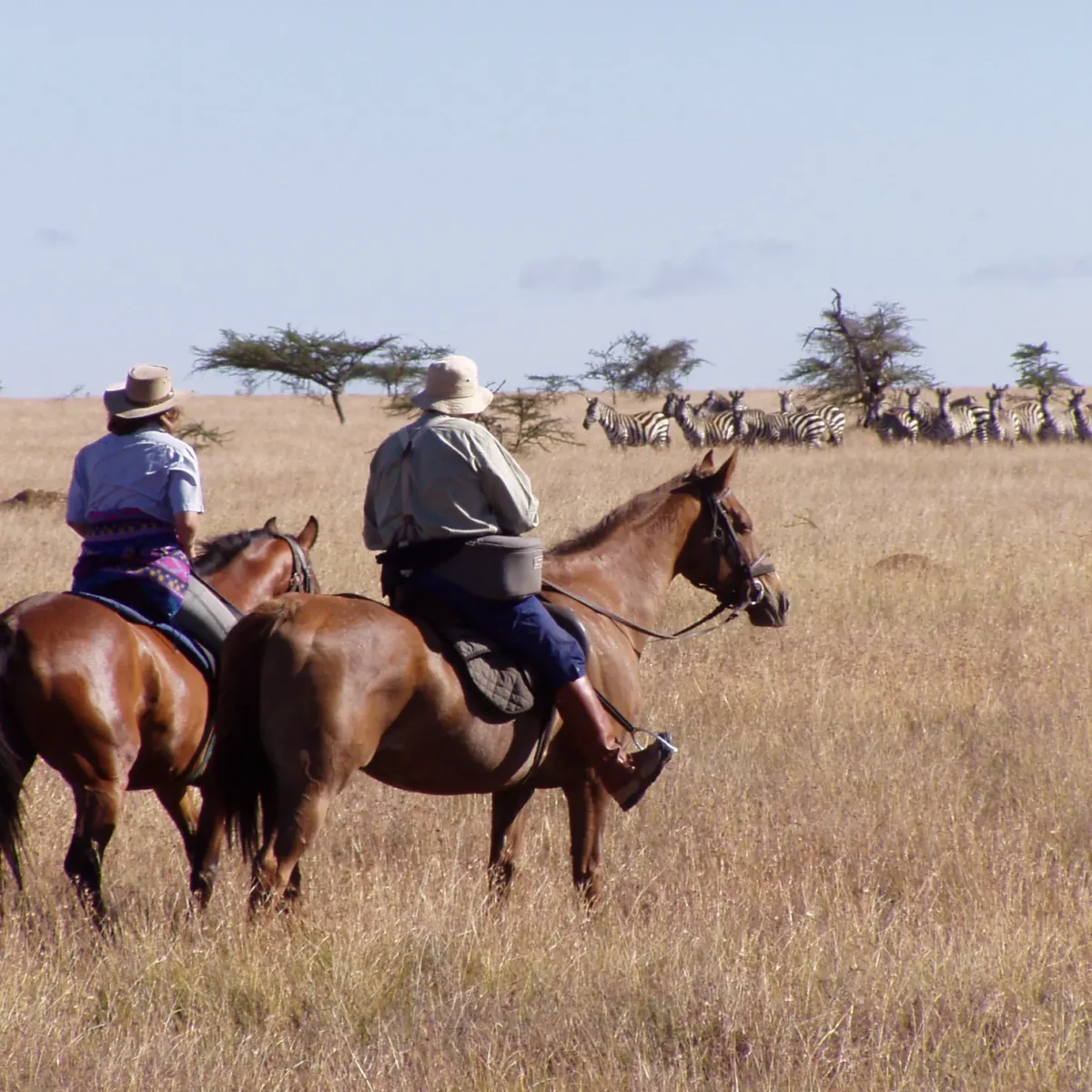
Moreover, the experience engages every sense in a way that a vehicle cannot. You hear oxpeckers, smell crushed wild sage under the hooves and feel your horse's ears swivel before you see a buffalo in the bush. On a good day, you will canter alongside running zebra with the herd's dust rising around you.
At the same time, riding has a lighter footprint than driving. Horses don't need roads, so they leave no track scars across fragile grassland. Many riding areas are community-owned conservancies, where your fees go directly to Maasai landowners (see our guide to community-owned conservancies in Kenya).
Horseback Safari vs. Vehicle Safari: How Do They Compare?
Let's take a look at how the two compare across the factors that matter most:
| Factor | Horseback safari | Vehicle game drive |
|---|---|---|
| Closeness to plains game | Very close; herds often keep grazing | Close, but engine noise moves some animals |
| Predator viewing | Kept at a deliberate distance | Best option for close lion and leopard viewing |
| Noise | Near silent | Engine and radio noise |
| Terrain access | Off-road, hills, river crossings | Mostly tracks and roads |
| Physical demand | 2–8 hours in the saddle per day | Low |
| Who can join | Riders who meet level and weight rules | Almost everyone |
| Typical cost | From $55 for 2 hours to $1,700+ per night | From about $150 to $1,500+ per person per day |
Plus, the two styles work best together. Most riders spend some time in a vehicle for close predator sightings, and many add a guided bush walk (see walking safaris in Kenya).
Where Are the Best Places for a Horseback Safari in Kenya?
The best places for a horseback safari in Kenya are the Maasai Mara conservancies, the Laikipia Plateau, the Chyulu Hills and Lake Naivasha. Each one suits a different kind of rider. Let's explore what makes each area distinct.
Is the Maasai Mara the Best Place to Ride With the Migration?
First, the Mara is the classic choice for a Maasai Mara horseback safari. Its rolling grasslands are made for long canters, and from July to October you may ride alongside the wildebeest migration. Rides take place in the conservancies around the reserve, such as Olare Motorogi, Naboisho and Mara North (see our Naboisho Conservancy safari guide and our Mara North Conservancy safari guide). For example, Offbeat Safaris, which was founded in 1989 by the late Tristan Voorspuy and his wife Lucinda and has been owned since 2023 by Simon and Rosy Kenyon, Jakob von Plessen and Daisy Soames, focuses its rides on the Mara region — Source: Offbeat Safaris, 2026.
Why Is Laikipia Good for a Horse Riding Safari?
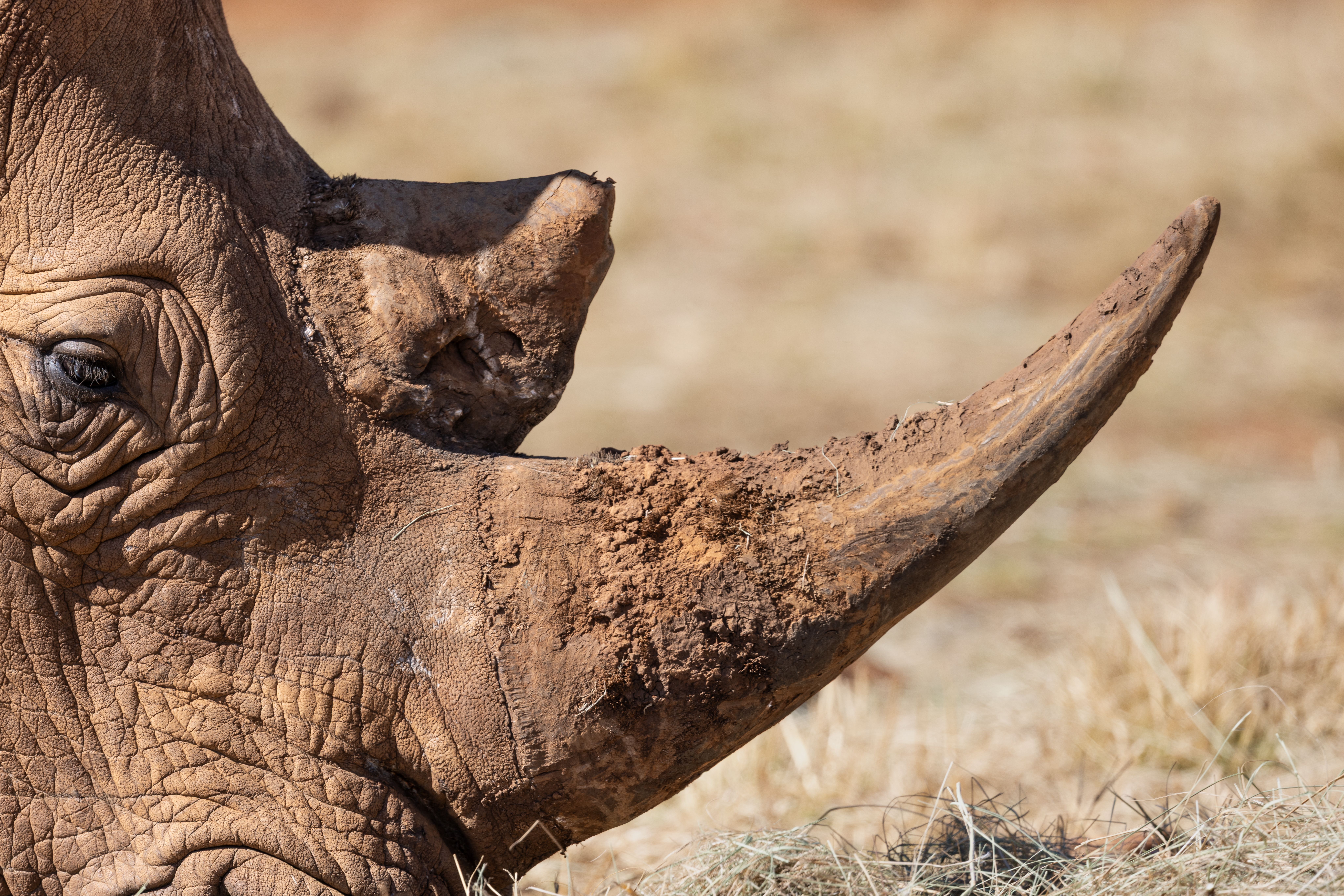
Second, a Laikipia horse riding safari gives you more varied country than the Mara. You ride through acacia valleys, kopjes and highland forest, with Mount Kenya on the horizon. Laikipia is a roughly 9,500 km² plateau of private and community conservancies and holds Kenya's largest black rhino population — Source: Beyond the Plains Safaris, 2026. For example, Borana Lodge and Lewa Wilderness both run lodge-based riding programmes for intermediate riders and above, and longer rides can be arranged on request.
What Makes the Chyulu Hills Horseback Safari Unique?
Third, a Chyulu Hills horseback safari offers Kilimanjaro on the skyline and elephant country under your stirrups. Ol Donyo Lodge, run by Great Plains Conservation, takes a maximum of six guests per ride with two guides. Riders cover medium to fast canters over volcanic terrain — Source: Great Plains Conservation, 2026. It pairs naturally with Amboseli National Park for close elephant viewing from a vehicle.
Where Can Beginners Go Horse Riding in Lake Naivasha?
Finally, Lake Naivasha horse riding is the most accessible option in Kenya. Sanctuary Farm charges KES 7,000 (about $55) for a two-hour ride across 450 acres among giraffe, zebra, wildebeest and buffalo, and it welcomes all levels and children aged 3 and up — Source: Sanctuary Farm Kenya, 2026. You can combine a morning ride with cycling through nearby Hell's Gate National Park.
Kenya Riding Destinations Compared
| Destination | Best for | Rider level | Ride style | Big Five? |
|---|---|---|---|---|
| Maasai Mara conservancies | Migration, long canters | Strong intermediate to advanced (multi-day); beginners on short rides | Mobile camps or taster rides | Yes |
| Laikipia (Borana, Lewa, Sosian, Ol Malo) | Rhino country, varied terrain | Intermediate and above | Lodge-based or lodge-to-lodge | Yes |
| Chyulu Hills (Ol Donyo) | Kilimanjaro views, elephants | Intermediate to experienced; age 12+ | Lodge-based, 2–4 hrs/day | Yes |
| Lake Naivasha (Sanctuary Farm, Soysambu) | First-timers, families | All levels; children 3+ at Sanctuary Farm | Short rides | No |
How Experienced Do You Need to Be for a Horseback Safari in Kenya?
Multi-day horseback safaris in the Maasai Mara are generally restricted to advanced riders because the rides take place in Big Five terrain, where riders must be able to control a horse at speed — Source: Safari Frank, 2025. In practical terms, you need an independent seat. You must hold a balanced rising trot for long stretches and stay in control during a fast canter over uneven ground. For example, Ol Donyo asks riders to manage a horse at all paces on rough terrain, and every guest aged 12 and over completes a riding assessment before heading out — Source: Great Plains Conservation, 2026.
Moreover, stamina matters as much as skill. Multi-day riders typically cover 25–35 km a day and spend four to seven hours in the saddle — Source: Equitours, 2026. Specialists recommend 8–12 weeks of cardio and core conditioning before departure — Source: Nova Expedition Tours, 2026.
"Am I Ready?" Self-Assessment Checklist
By answering these questions honestly, you can match yourself to the right ride:
- Can you ride walk, rising trot, sitting trot and canter on an unfamiliar horse?
- Have you ridden outside an arena, on hills and rough ground, in the past six months?
- Can you stop and turn a forward-going horse at a fast canter?
- Can you spend 4–6 hours in the saddle and ride again the next morning?
- Are you comfortable with English tack (stock saddles are not always available)?
- Are you under 90–95 kg, including riding clothes?
If you answered "yes" to all six, you are ready for a multi-day ride. If you answered "yes" to four or five, a lodge-based ride in Laikipia or the Chyulu Hills is the better fit. With three or fewer, book a taster ride in Naivasha or a Mara conservancy.
What Is the Weight Limit for a Horse Riding Safari in Kenya?
Most Kenyan horseback safari operators set a rider weight limit of 90–95 kg (197–210 lbs). For example, Safaris Unlimited caps riders at 90 kg, while Offbeat Safaris allows up to 95 kg — Source: In The Saddle, 2026. In our review of nine published Kenyan riding programmes for 2026, none set a standard limit above 95 kg. Four set the limit at 90 kg and five at 95 kg (or 210 lbs). For example, Ol Donyo will consider experienced riders above 95 kg on its advanced horses after a riding questionnaire — Source: Great Plains Conservation, 2026.
Can Beginners and Children Go on a Horse Riding Safari in Kenya?
Yes. A beginner horse riding safari in Kenya is possible on short, controlled rides. For example, rides at Olerai Conservancy in the Mara welcome beginners, take a maximum of four riders and include a lead guide and a backup guide — Source: African Spice Safaris, 2025. For families, Ol Donyo accepts riders from age 12 with a riding parent, and Naivasha takes much younger children. See our family safari in Kenya guide for more family-friendly lodges.
How Much Does a Horseback Safari in Kenya Cost?
A horseback safari in Kenya costs from about $55 for a two-hour ride in Naivasha to $9,000–$13,000 per person for a 6–8 night mobile riding safari in the Maasai Mara. Short rides in Mara conservancies run around $250 per person for two hours, while a 7-night riding safari costs about $11,950 per person — Source: African Spice Safaris, 2025; Equitours, 2026.
2026 Riding Safari Price Comparison (Original Analysis)
To show the real per-night cost, we compared seven published Maasai Mara riding departures for 2026:
| Operator / agent | Nights | Published price (pp sharing) | Approx. per night | Weight limit |
|---|---|---|---|---|
| Safaris Unlimited (short) | 6 | £7,518 | £1,253 | 90 kg |
| Safaris Unlimited (full) | 8 | £9,407 | £1,176 | 90 kg |
| Offbeat Safaris | 7 | from £9,030 | £1,290 | 95 kg |
| Equitours | 7 | $11,950 | $1,707 | 210 lbs |
| Globetrotting | 7 | $11,950 | $1,707 | 95 kg |
| Horse Riding Tours | 7 | $10,850 | $1,550 | Published |
| Safari Frank (incl. $1,750 conservancy fees) | 8 | $12,450 | $1,556 | 90 kg |
Sources: In The Saddle, 2026; Equitours, 2026; Globetrotting, 2026; Horse Riding Tours, 2026; Safari Frank, 2025.
As such, the USD-priced rides average about $1,630 per person per night, and the GBP-priced rides average about £1,240 per night. That works out to a mid-to-luxury lodge rate, but it includes horses, guides, all meals, mobile camps and usually park transfers.
What Is Included and What Costs Extra?
In addition to the headline price, check these four line items:
- Conservancy fees. These typically run $80–$130 per adult per night. Inside the main reserve, fees are $100 per day from January to June and $200 per day from July to December — Source: Beyond the Plains Safaris, 2026.
- Single supplements. For example, Safaris Unlimited charges £1,700 extra for a solo room on the 6-night ride. It waives that fee if you're willing to share. Read more in our guide to single supplements in Kenya.
- Internal flights. Equitours includes Nairobi–Mara flights, but many operators don't. See our fly-in Kenya safaris page.
- Tips and insurance. These usually add 5–10% to your total.
For a full trip estimate, try our free Kenya safari cost calculator. You can also read our Kenya safari cost breakdown.
When Is the Best Time to Go on a Horseback Safari in Kenya?
The best time for a horseback safari in Kenya is during the dry seasons, from June to October and from December to March, when ground is firm and grass is short. For example, Offbeat Safaris runs Mara rides only in June–October and December–March, while Safaris Unlimited's Mara departures run June–October — Source: In The Saddle, 2026. The long rains in April and May turn black cotton soil into slick mud, so most mobile rides stop.
Month-by-Month Riding Grid
| Month | Riding conditions | Highlights |
|---|---|---|
| Jan–Feb | Excellent | Dry, green plains, calving in the southern ecosystem |
| Mar | Good, rain risk late | Quieter, lower demand |
| Apr–May | Poor; most mobile rides closed | Long rains |
| Jun | Very good | Grass high, migration approaching |
| Jul–Oct | Excellent | Riding with the wildebeest migration; peak prices |
| Nov | Fair | Short rains; some lodge rides continue |
| Dec | Very good | Festive season; book early |
Can You Ride Alongside the Great Migration in the Maasai Mara?
Yes. Between July and October, riders in the northern and eastern Mara conservancies often meet the herds on open plains. Guides keep riders clear of the river crossings, where crocodiles and crowds of vehicles make it unsafe. For timing by month, see our guide to the Great Wildebeest Migration in Kenya. You can also check our best time to visit Kenya guide.
Is It Safe to Ride Horses Among Lions and Elephants?
Horseback safaris in Kenya are considered safe when run by experienced operators who follow strict wildlife protocols, though they carry more risk than a vehicle safari. Guides read wind direction, terrain and animal behaviour all day. They detour wide around known lion prides and give elephants and buffalo plenty of space. For example, Ol Donyo sends two guides with every group of up to six riders — Source: Great Plains Conservation, 2026.
That being said, the most important safety skill is yours. If a buffalo or elephant charges, the group may need to canter away quickly. This is why operators refuse riders who can't control a horse at speed. For example, Equus Journeys notes that a guide will move any rider who is not competent into a vehicle for the rest of the safari — Source: Equus Journeys, 2026.
What Insurance and Health Preparation Do You Need?
In addition to good riding, you need travel insurance that explicitly covers horse riding and emergency air evacuation. Many standard policies exclude riding, so read the fine print. For vaccinations and malaria advice, see our Kenya safari vaccinations and health guide. For wider security information, read Is Kenya safe for tourists?.
How Do You Judge Horse Welfare?
Plus, good operators treat horses as working partners. Look for these signs:
- Horses have rest days built into the schedule.
- Farriers and vets are available on site or on call.
- Weight limits are enforced, not waived.
- Horses are well-muscled, not ribby, and their tack fits without rubbing.
For example, Safaris Unlimited keeps a mixed stable of about 25–30 horses, including Boerperd, Thoroughbred and Arab crosses from 14hh to 17hh. This size of stable lets the team match each rider to a suitable horse — Source: Nova Expedition Tours, 2026.
What Should You Pack for a Kenya Riding Safari?
On top of our general Kenya safari packing list, riders need:
- A certified riding helmet. Some operators supply helmets, but your own fits better.
- Half-chaps and short boots, or long boots you have already broken in.
- Riding tights or jodhpurs, worn in.
- Neutral clothing in khaki, olive or brown, never white or bright colours.
- Gloves, a long-sleeved shirt and a wide brim or helmet visor for the equatorial sun.
- A soft duffel bag, usually 15 kg maximum, which fits light aircraft.
What Do Real Kenya Riding Itineraries Look Like?
A Kenya riding itinerary is usually built around one of four formats: a mobile Mara expedition, a Laikipia lodge-to-lodge ride, a taster ride added to a standard safari, or a split itinerary for riders and non-riders. Let's take a look at each one.
Sample 1: 7-Night Maasai Mara Mobile Ride (Advanced Riders)
- Day 1: Fly from Nairobi to the Mara and take an afternoon assessment ride.
- Days 2–6: Ride 25–35 km a day between fly camps, with picnic lunches under acacias and evening game drives.
- Day 7: Ride a final morning canter, then hold a sundowner on an escarpment.
- Day 8: Fly back to Nairobi.
- Indicative cost: $10,850–$12,450 per person.
Sample 2: 3-Night Laikipia Lodge-Based Ride (Intermediate Riders)
First, stay at Borana or Lewa and ride each morning for 2–4 hours through rhino country. Afternoons are for game drives, bush walks or rest. This ride costs from about $700–$1,500 per person per night, and it pairs well with a Laikipia conservancies itinerary.
Sample 3: Two-Hour Taster Ride on a Standard Safari (Beginners)
Second, add a morning ride at Olerai Conservancy (about $250) or Sanctuary Farm in Naivasha (about $55) to any classic Kenya itinerary. This takes the least commitment of all four formats and gives you the story to tell back home.
Sample 4: Can a Non-Riding Partner Join a Horseback Safari?
Yes. Most operators welcome non-riders, who follow by vehicle, meet riders for lunch and share the same camp. For example, Safaris Unlimited offers wildlife safaris by vehicle, on foot and from the air for guests who don't ride — Source: Safaris Unlimited, 2026. Non-riders can also book a dawn Maasai Mara balloon safari while their partner rides, which is a popular plan for honeymoon safaris in Kenya.
Which Operators Run Horseback Safaris in Kenya?
Here are the established names to start your research with. Confirm current dates and terms directly with each one:
- Safaris Unlimited: Founded in 1971; Gordie and Felicia Church lead mobile Mara rides.
- Offbeat Safaris: Founded in 1989; runs mobile Mara rides under new ownership since 2023.
- Ol Donyo Lodge (Great Plains Conservation): Lodge-based riding in the Chyulu Hills.
- Borana Lodge: Lodge-based riding in Laikipia, with multi-day rides on request.
- Lewa Wilderness: Family-run lodge-based riding on the Lewa and neighbouring ranches.
- Sanctuary Farm: Short rides at Lake Naivasha for all levels.
For a broader checklist on vetting any operator, read our guide on how to choose a Kenya safari operator.
How Do You Plan a Horseback Safari in Kenya? (Next Steps)
Planning a horseback safari in Kenya involves assessing your riding level honestly, choosing a destination and season, comparing operators on guide experience and horse welfare, and booking migration-season dates 9–12 months in advance. Demand is rising: Kenya recorded 2.76 million international arrivals in 2025/26, up 9.8% year on year, with tourism earnings of KSh564 billion — Source: KBC, 2026. Riding departures cap at 4–12 guests, so the best dates go early.
- Assess yourself. Use the checklist above and ask a riding instructor for an honest second opinion.
- Pick a destination and season. Choose the Mara for the migration, Laikipia for rhinos and variety, the Chyulu Hills for Kilimanjaro, or Naivasha for a first ride.
- Shortlist two or three operators. Ask about group size, guide-to-rider ratio, horse care and what happens if you can't keep up.
- Book early. Reserve July–October dates 9–12 months ahead, and check deposit terms.
- Prepare. Arrange riding-inclusive insurance, apply for your Kenya eTA, and ride three or four times a week for two months beforehand.
- Build the full trip. Add vehicle game drives, the best Maasai Mara camps and lodges and a beach finish if time allows.
Conclusion
A horseback safari in Kenya is the most immersive way to experience the country's wildlife, as long as you match the ride to your real ability. Strong riders can join a 6–8 night mobile expedition in the Mara or Laikipia for about $9,000–$13,000. Intermediate riders do well at lodge-based stables like Ol Donyo or Borana. Beginners can still ride among giraffe at Naivasha for about $55.
Above all, remember why this experience is worth the preparation. Kenya was first explored on horseback, and riding is still the closest you can come to how those early travellers saw it: quiet, slow and fully part of the landscape. When your horse drops its head to graze beside a herd of zebra, you'll understand why riders come back year after year.
Ready to ride? Book a free 30-minute safari consultation with our Nairobi-based team. We'll match you with the right ride, stable and season, and we'll build the rest of your Kenya safari around it.










Comments (0)
Leave a Comment
No comments yet. Be the first to comment!