

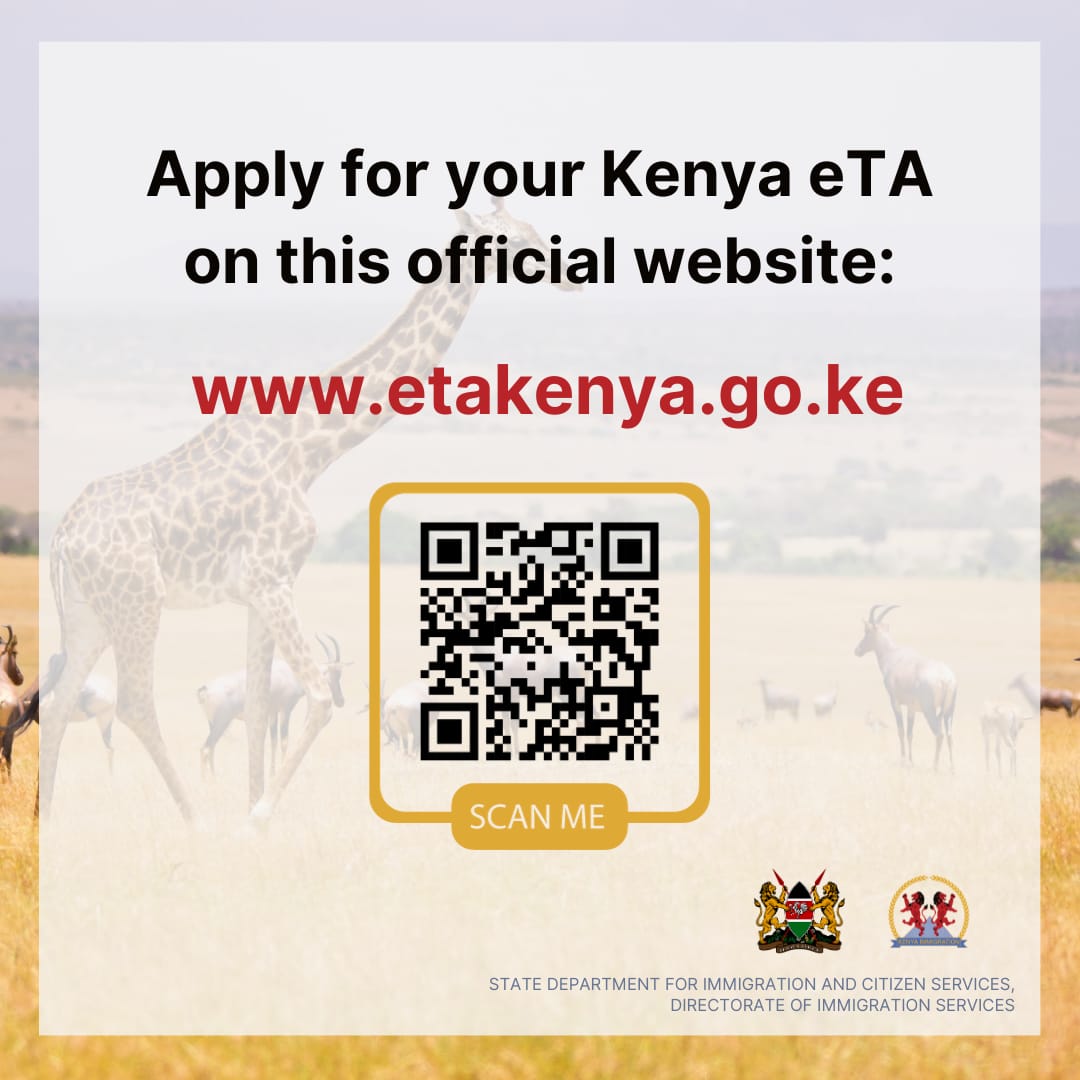
You've booked your safari, picked your lodges, and mapped your game drives across the Maasai Mara or Amboseli — but one overlooked step can still stop your trip before it starts. Since 2024, Kenya no longer offers visa-on-arrival, and a single mismatched detail on your Electronic Travel Authorization (eTA) can mean being turned away at your home airport. This guide walks you through the exact steps to apply, the documents to prepare, and the safari-specific details — like yellow fever rules and multi-country visas — that most generic guides skip.
Key Takeaways
- The Kenya eTA is a mandatory digital travel authorization that replaced Kenya's visa-on-arrival and eVisa systems in January 2024.
- Nearly all foreign visitors, including infants, must obtain an individually approved eTA before boarding a flight to Kenya.
- The application is completed entirely online at the official portal and costs approximately $30 USD per traveler, with no refund if denied.
- Approval typically takes 24–72 hours, but safari travelers should apply at least a week before departure to allow for delays.
- Travelers combining Kenya with Uganda and Rwanda can use the East African Tourist Visa (EATV) instead, which costs $100 and allows multiple entries between all three countries.
- A yellow fever vaccination certificate is required only for travelers arriving from or transiting through yellow-fever-endemic countries, not for direct flights from Europe, North America, or most of Asia.
- Most application delays stem from mismatched passport details, incomplete accommodation information, or use of unofficial third-party websites instead of the government portal.
What Is the Kenya eTA and How Is It Different from a Visa?
The Kenya eTA (Electronic Travel Authorization) is a mandatory digital pre-approval that replaced Kenya's visa-on-arrival and eVisa systems in January 2024. It links electronically to your passport and pre-screens you before you're even allowed to board your flight, rather than checking your documents only after you land.
This is a fundamentally different system from the old visa-on-arrival process. Previously, many travelers could arrive at Jomo Kenyatta International Airport (JKIA) without pre-clearance and get stamped in at the immigration desk. That fallback no longer exists. As such, your eTA approval has to be sitting in Kenya's immigration database before your airline will let you check in.
For safari travelers, this distinction matters more than it might for other trips. If you booked through a tour operator, you may already be working with a curated choosing a Kenya safari itinerary, and your eTA needs to be locked in well before that non-refundable deposit turns into a non-refundable flight. The eTA is not a visa sticker in your passport — it's a digital record that immigration officers, airline check-in staff, and border computers all check electronically.
The Kenya eTA replaced two separate systems at once, consolidating the former eVisa (introduced in 2015) and the traditional visa-on-arrival stamp into a single online authorization. Kenya's government positioned this as part of a broader "visa-free" push for the continent, even though in practice most non-African visitors still need this pre-approval — it is simply issued electronically rather than through an embassy appointment.
Why the Kenya eTA Matters for Safari Travelers
The Kenya eTA matters because there is no fallback option left if you skip it — airlines are required to deny boarding to any passenger without an approved eTA, which means a missed or rejected application can unravel a trip before it starts. This is not a theoretical risk. Airline staff check eTA status against Kenya's immigration database at check-in, and a system flag means you simply won't get a boarding pass.
For most trips, that inconvenience is annoying. For a safari, it's financially devastating. Safari lodges and mobile camps in the Maasai Mara, Amboseli, and the Mara conservancies typically require non-refundable deposits and lock in specific dates months in advance, especially during high season. If your eTA is delayed, denied, or simply forgotten, you risk losing those payments entirely — along with connecting flights, park permits, and any pre-booked activities like hot-air balloon safaris or guided walks.
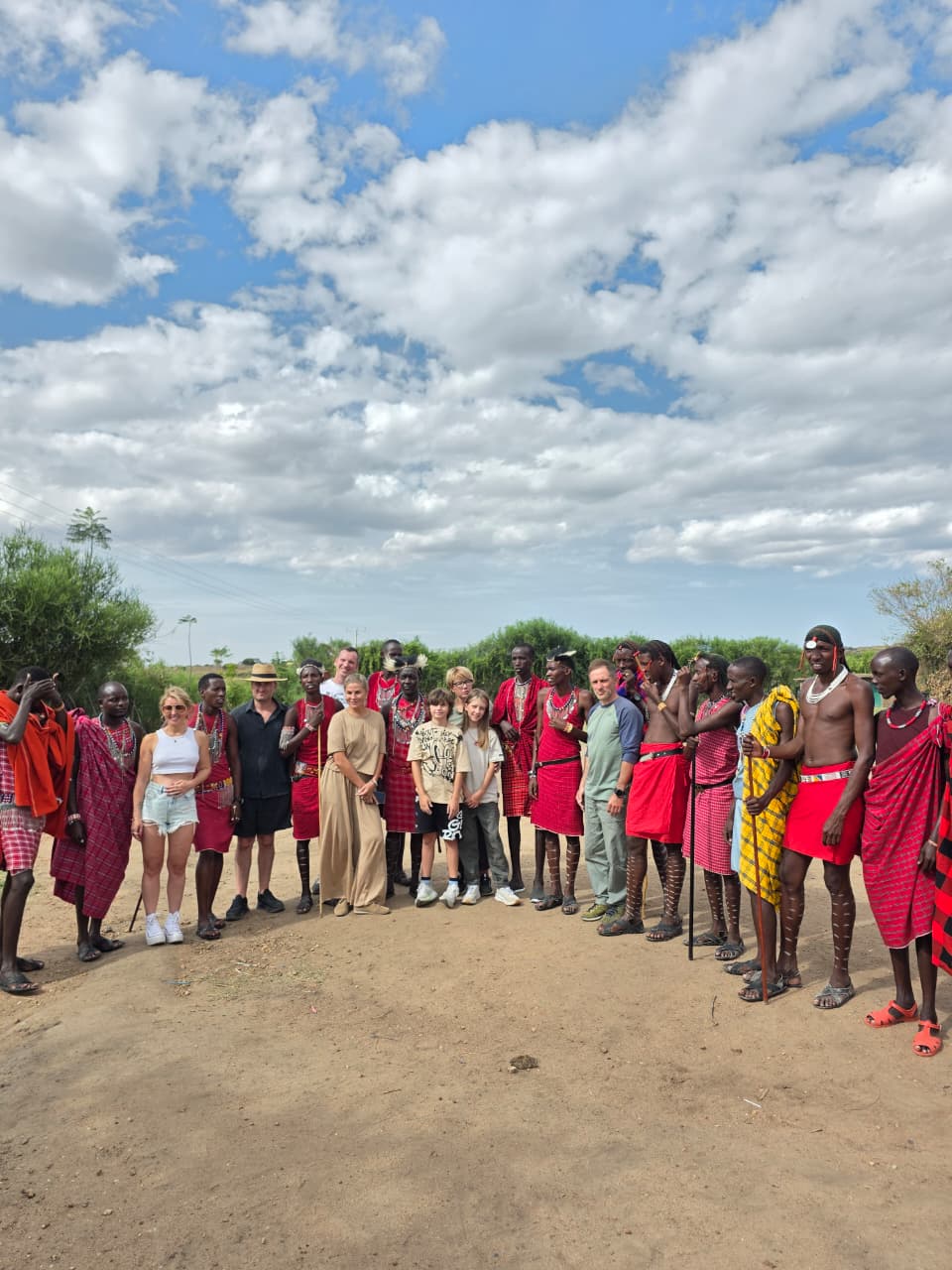
At the same time, safari itineraries often involve tighter connections and remote arrival points than a typical city break. A traveler flying into Nairobi and connecting straight to a bush airstrip has far less flexibility to fix a documentation problem mid-trip than someone staying in a single city hotel. This is precisely why safari-specific guidance matters more here than in a generic "Kenya visa" article — the margin for error is smaller, and the stakes are higher.
"Airlines may deny boarding to passengers without an approved eTA" — Source: Kenya Embassy, Washington D.C., 2026.
Who Needs a Kenya eTA Before Traveling on Safari?
Almost every non-Kenyan visitor needs an approved eTA before travel, including infants and children, with exemptions limited mainly to citizens of East African Community (EAC) member states and a growing list of African nations under Kenya's visa-free arrangements. If you're unsure where your nationality falls, it's worth checking Kenya's official Kenya visa requirements guide before you assume either way.
Which Nationalities Are Exempt from the Kenya eTA Requirement?
Citizens of most African Union member states no longer need an eTA at all and can enter Kenya visa-free for a set period, generally up to two months, as part of Kenya's continent-wide visa-free push. This exemption reflects a deliberate policy shift — Kenya has stated it wants to boost intra-African travel and tourism.
There are two notable exceptions within that African exemption list. Citizens of Somalia and Libya still require an eTA, due to security-related screening considerations that Kenya's immigration authorities have maintained even as other African nationalities were exempted. If your passport falls outside the exempt list — which covers the large majority of North American, European, Asian, Australian, and Gulf-state passport holders — you will need to apply regardless of how short your visit is.
This matters in practice for a specific subset of safari travelers: dual citizens and mixed-nationality families. For example, a US-passport-holding parent traveling with a child who holds a Kenyan or exempt-country passport still needs to apply for their own eTA even though their child does not. As such, it's worth checking each traveler's documentation individually rather than assuming the whole party is covered by one person's exemption or approval.
Can You Apply for a Kenya eTA for Infants and Children?
Yes — every traveler, including infants, needs their own individually approved eTA, and there is no option to bundle children onto a parent's application. This surprises many first-time safari parents, who assume young children are automatically covered under a family booking.
For example, a family of four traveling to the Maasai Mara for a milestone anniversary safari would need four separate eTA applications, four separate $30 fees, and four separate passport uploads — even if the baby is only a few months old. Each application requires the child's own passport, so infants must already hold individual travel documents before you begin.
How Much Does the Kenya eTA Cost?
A standard Kenya eTA costs approximately $30 USD per traveler, payable online at the time of application through the official government portal. This fee applies per person, not per booking, so a couple applying together will pay $60 total, and a family of five will pay $150.
This fee is non-refundable, regardless of whether your application is ultimately approved or denied. That's a critical detail for safari travelers to internalize early: if you make an error on your form and it's rejected, you'll need to pay the $30 fee again to resubmit a corrected application, not simply amend the original for free.
Be cautious of third-party websites quoting significantly different figures — some list prices as low as $20 for a bare-bones application or as high as $100+ for "expedited" or "VIP" service. Those markups typically reflect unofficial intermediary sites charging a service premium on top of (or instead of) the real government fee, which is one of the most common ways safari travelers lose money before they've even boarded a flight.
How Long Does Kenya eTA Approval Take?
Kenya eTA approvals are typically issued within 24 to 72 hours of submission, though the official processing window is stated as up to five business days to account for manual reviews. Most applications with clean, error-free documentation clear on the faster end of that range.
That being said, safari travelers should build in a wider buffer than the average city-break tourist. First, remote lodges and mobile camps often have unreliable or intermittent Wi-Fi, which makes it harder to troubleshoot a rejected application from the field. Second, safari trips frequently involve multiple travelers applying at once — a spouse, children, or an entire travel party — and even one flagged application can create a scramble close to departure.
As a rule, apply for your Kenya eTA at least one full week before departure. This gives you enough runway to correct and resubmit if your first application is rejected for something fixable, like a blurry passport scan or a typo in your name, without jeopardizing your flight.
| Application Scenario | Typical Processing Time | Recommended Apply-By Window |
|---|---|---|
| Clean application, all documents correct | 24–48 hours | 7 days before departure |
| Application with minor errors requiring resubmission | 3–5 business days total | 10–14 days before departure |
| High season (July–September, December–January) | Up to 5 business days | 2–3 weeks before departure |
| Multi-traveler family or group application | 24–72 hours per person | 7–10 days before departure |
What Documents Do You Need to Apply for a Kenya eTA?
You'll need five core items ready before you start your Kenya eTA application: a valid passport, a digital passport-style photo, your travel itinerary, proof of accommodation, and a payment card. Gathering these in advance — rather than hunting for them mid-application — is the single easiest way to avoid a rejected submission.
- Valid passport with at least six months of validity remaining beyond your planned entry date, plus a clear scan or photo of the bio-data page.
- Digital passport photo, typically a recent JPEG image against a plain white background, meeting standard passport-photo specifications.
- Return or onward flight booking, confirming you don't intend to overstay your authorized period.
- Proof of accommodation in Kenya, such as a lodge or hotel booking confirmation, or a Kenya safari trip visa requirements guide confirmation letter from your tour operator if you're on a packaged safari.
- Payment method — a Visa, Mastercard, or other accepted card — to pay the $30 non-refundable processing fee online.
It's also worth having your travel insurance documentation on hand as a general safari preparedness step, even though it's not formally required for the eTA form itself.
How Do You Apply for a Kenya eTA Step by Step?
You apply for a Kenya eTA entirely online at the official government portal, etakenya.go.ke, by creating an account, completing a form, uploading documents, and paying the processing fee. The entire process typically takes 20 to 30 minutes for a single traveler with documents already prepared. Below is the full sequence.
Step 1: Go to the Official Portal Only
Navigate directly to etakenya.go.ke — this is the only official Kenya eTA website. Do not use search-result ads or third-party "visa assistance" sites that mimic the government portal's design, as these routinely charge inflated fees for a service you can complete yourself for the standard $30.
Step 2: Create Your Account
Register using a valid email address and create a password. You'll receive a verification email, which you need to confirm before you can start a new application. Use an email you'll actively check while traveling, since your approval notification and any correction requests come through this address.
Step 3: Complete the Application Form
Fill in your personal details, passport information, travel dates, and the purpose of your visit exactly as they appear on your passport. Even minor discrepancies — a missing middle name, a transposed digit in your passport number — are among the most common reasons applications get flagged for manual review or rejected outright.
Step 4: Enter Your Accommodation and Itinerary Details
Provide your accommodation address in Kenya and your travel itinerary. For safari travelers, this usually means listing your first lodge or the tour operator's office address, along with your arrival and departure dates. If your itinerary spans several parks, list the primary point of entry and your operator's contact details rather than every individual camp.
Step 5: Upload Your Documents
Upload your passport bio-data page, your passport-style photo, and your return flight confirmation. Make sure scans are clear, well-lit, and uncropped — blurry or partially obscured uploads are a leading cause of processing delays, since reviewers can't verify the information against what you've typed into the form.
Step 6: Pay the Processing Fee
Pay the $30 fee using an accepted card. The payment confirms your submission and starts the review clock. Keep your payment confirmation email as a record, since you may need it if you need to follow up on a delayed application.
Step 7: Wait for Approval and Save Your eTA
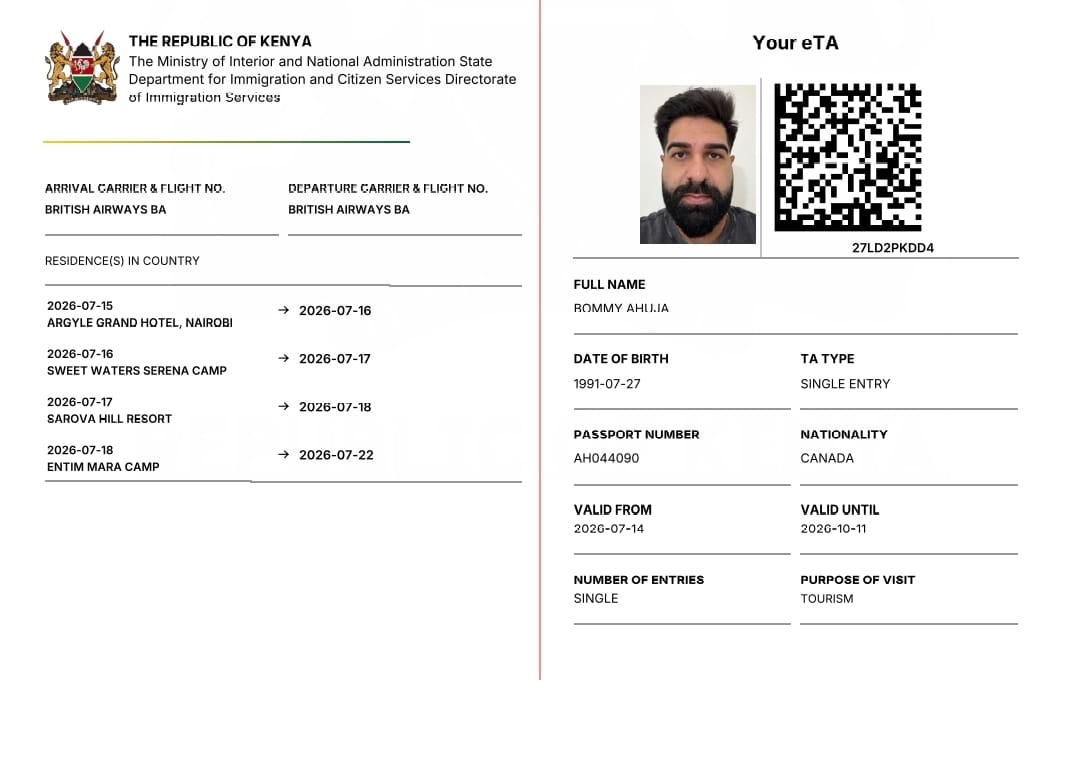
You'll typically receive an email notification within 24 to 72 hours. Once approved, download the eTA approval letter and save both a digital copy on your phone and a printed copy in your travel documents folder — a habit that matters more in East Africa than in most destinations, given how many safari lodges and remote airstrips have limited or no signal.
Do You Need a Yellow Fever Certificate to Enter Kenya?
A yellow fever vaccination certificate is required for Kenya entry only if you're arriving from, or have transited more than 12 hours through, a yellow-fever-endemic country — it is not required for travelers flying directly from Europe, North America, most of Asia, or Australia. Kenya's Ministry of Health confirms that all travelers arriving from endemic countries must present a valid certificate at the port of entry.
This distinction trips up a specific group of safari travelers more than any other: those combining Kenya with a multi-country East African itinerary. Kenya itself is classified as a yellow-fever-endemic country, which means that if your safari continues onward to a country like South Africa, India, or several other nations after Kenya, that next destination may require you to show a certificate — even though Kenya didn't require one on entry. For more detail on how this interacts with regional itineraries, our yellow fever and health guide for Kenya safaris breaks down country-by-country requirements.
The 12-hour transit rule is another detail generic guides frequently miss. For example, a traveler connecting through Addis Ababa, Ethiopia, on a long layover of more than 12 hours would need to show a yellow fever certificate upon arrival in Kenya, even though their home country never required the vaccine at all. Always check your specific routing, not just your country of citizenship, before assuming you're exempt.
What Is the East African Tourist Visa and Should Safari Travelers Use It Instead?
The East African Tourist Visa (EATV) is a single $100 joint visa that allows multiple entries across Kenya, Uganda, and Rwanda within a 90-day window, making it a more cost-effective option than three separate country visas for travelers combining a Maasai Mara safari with Uganda gorilla trekking or Rwanda's Volcanoes National Park. If you're mapping out a combining a Kenya and Tanzania safari itinerary, note carefully that this particular joint visa does not apply to your route.
That's the single most important caveat with the EATV: Tanzania is not part of the scheme. If your safari includes the Serengeti, Ngorongoro Crater, or Zanzibar, you'll need a completely separate Tanzania eVisa regardless of whether you hold an EATV for Kenya, Uganda, and Rwanda. The moment you exit the three-country EATV bloc — say, by crossing into Tanzania — the EATV is automatically invalidated, even if you're still inside its 90-day window.
There's also a routing rule that catches travelers off guard: you must apply for the EATV through the immigration portal of whichever country you plan to enter first. If your itinerary starts with gorilla trekking in Uganda before flying to Kenya for your Maasai Mara safari, you apply through Uganda's portal, not Kenya's — applying through the wrong country's system is one of the most common EATV mistakes travel operators see.
| Visa Option | Cost | Countries Covered | Best For |
|---|---|---|---|
| Kenya eTA (single country) | ~$30 | Kenya only | Kenya-only safaris |
| East African Tourist Visa (EATV) | $100 | Kenya, Uganda, Rwanda | Multi-country East Africa trips (excluding Tanzania) |
| Kenya eTA + Tanzania eVisa | ~$80–$130 combined | Kenya and Tanzania | Classic Kenya–Tanzania safari combos |
What Common Mistakes Cause Kenya eTA Delays or Denials?
The most common reasons a Kenya eTA gets delayed or denied are mismatched passport details, an expired or soon-to-expire passport, and applying through an unofficial third-party website instead of the government portal. Nearly all of these are preventable with a slower, more careful first pass through the form.
- Mismatched passport details. Typing your name, date of birth, or passport number even slightly differently than how it appears on your passport is the single most common trigger for manual review or rejection. Double-check every field against the passport photo page before submitting.
- Expired or soon-to-expire passports. Kenya requires at least six months of passport validity beyond your entry date. Travelers who renew "just in time" for their flight sometimes apply for their eTA before their new passport arrives, then forget to update their application with the new document number.
- Using unofficial third-party sites. Search ads and lookalike domains frequently charge $50–$150 "service fees" on top of, or instead of, the real $30 government fee. Beyond the extra cost, these sites can also introduce data-entry errors between their form and Kenya's actual immigration system, since they're not submitting directly.
- Incomplete accommodation details. Leaving the Kenya accommodation field blank, or entering an address that doesn't match your actual itinerary, is a frequent cause of applications getting flagged for additional review rather than outright denial.
- Low-quality document uploads. A blurry, cropped, or glare-affected passport scan forces a manual reviewer to make a judgment call — and that judgment often defaults to requesting a resubmission rather than approving an unclear document.
For example, a traveler who renews their passport two weeks before departure, then submits their eTA application using their old passport number out of habit, will find their approved eTA doesn't match the passport they present at check-in — effectively voiding the approval they already paid for. Applying early enough to catch and fix this kind of mismatch is far cheaper than discovering it at the airport counter.
What Happens If Your Kenya eTA Is Denied or Delayed?
If your Kenya eTA is denied, you'll need to review the rejection reason, correct the underlying issue, and reapply with a fresh $30 payment — there is no free resubmission option. Common rejection reasons include a passport photo that doesn't meet the required specifications, mismatched personal details between your form and your passport, or an unclear document scan that reviewers can't verify.
If your application is simply delayed rather than denied, resist the urge to submit a second application in parallel — this can create duplicate records that further slow processing. Instead, check your spam folder for correction requests, verify your payment actually cleared, and if you're within 48 hours of departure without a resolution, contact the Kenyan embassy or consulate nearest you directly for expedited guidance.
What Should You Do After Your Kenya eTA Is Approved?
Once approved, save your eTA approval letter in at least two formats: a printed hard copy and a saved digital copy accessible offline on your phone. Remote safari camps and mobile tented sites frequently have limited or no internet access, so relying solely on an email you might not be able to reload at check-in is a real risk.
Build your travel document folder around this checklist before departure:
- Printed eTA approval letter
- Passport with six-plus months of validity
- Return or onward flight confirmation
- Proof of accommodation or safari itinerary from your operator
- Yellow fever certificate, if applicable to your routing
- Travel insurance documentation
At the port of entry, immigration officers will verify your eTA electronically against your passport, so having both the printed copy and the physical document ready speeds up the process considerably. From there, most travelers move straight into arrival logistics — for guidance on that leg, see our Nairobi airport arrival guide for safari travelers.
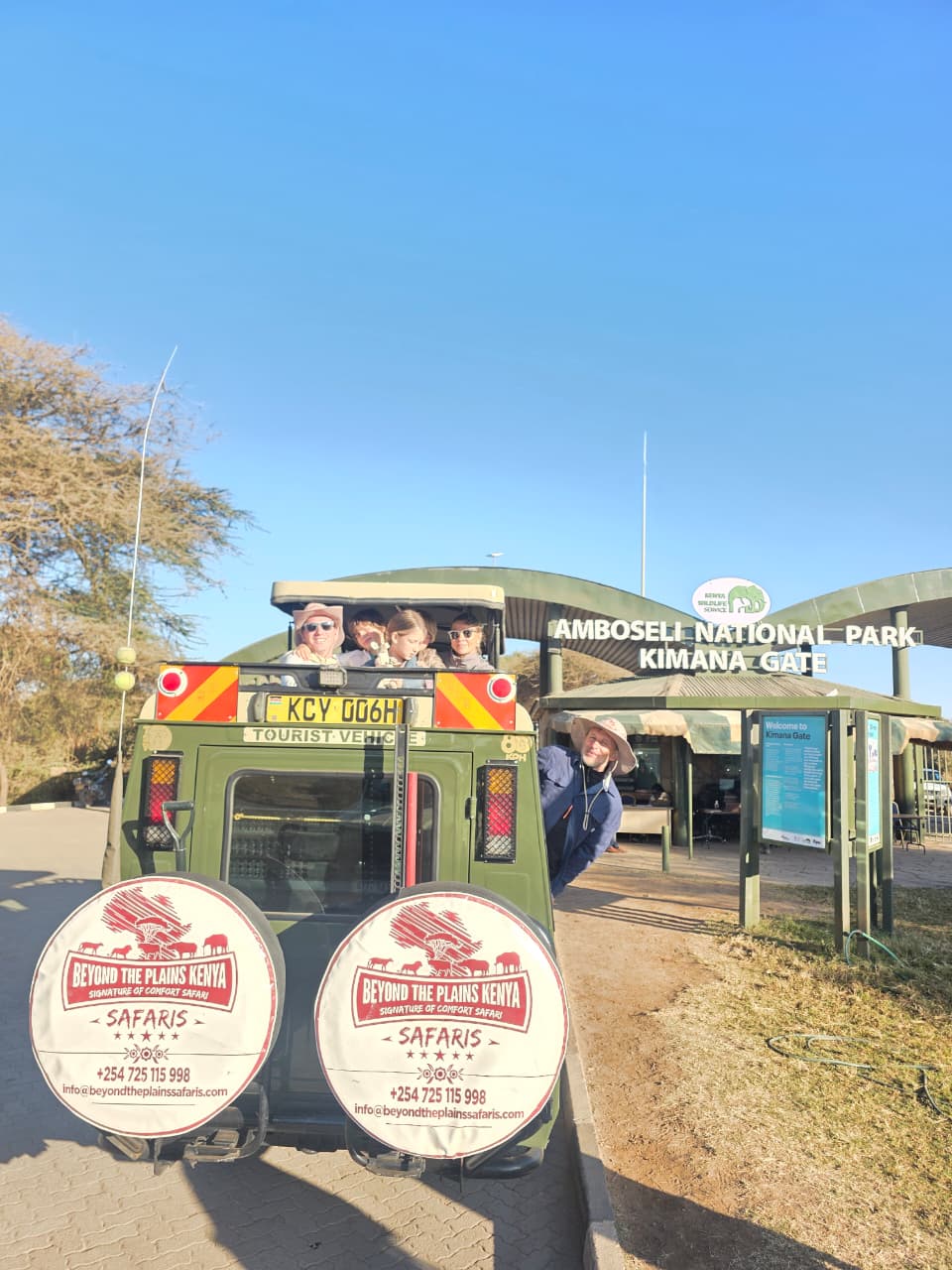
It's also worth finalizing the rest of your packing before you fly, since safari-specific gear needs differ from a standard vacation packing list. Our Kenya safari packing checklist covers what to bring for game drives, dust, and variable weather across the parks. If your route also touches down at a specific reserve, it helps to check Maasai Mara park entry fees ahead of time so there are no surprises at the gate once your documentation is sorted.
Conclusion
Getting your Kenya eTA right is a small, mechanical task compared to everything else that goes into planning a safari — but it's also the one step that can quietly unravel all the rest if you leave it too late or rush the details. Apply early, double-check every field against your passport, use only the official etakenya.go.ke portal, and factor in your yellow fever routing and any multi-country visa needs before you assume you're covered.
Once that box is checked, the only thing left between you and the Maasai Mara's open plains is a flight. If you're still finalizing where to go, our guide to Kenya vs Tanzania safari comparison can help you settle the last big decision before your documents — and your dream safari — come together.











Comments (0)
Leave a Comment
No comments yet. Be the first to comment!