

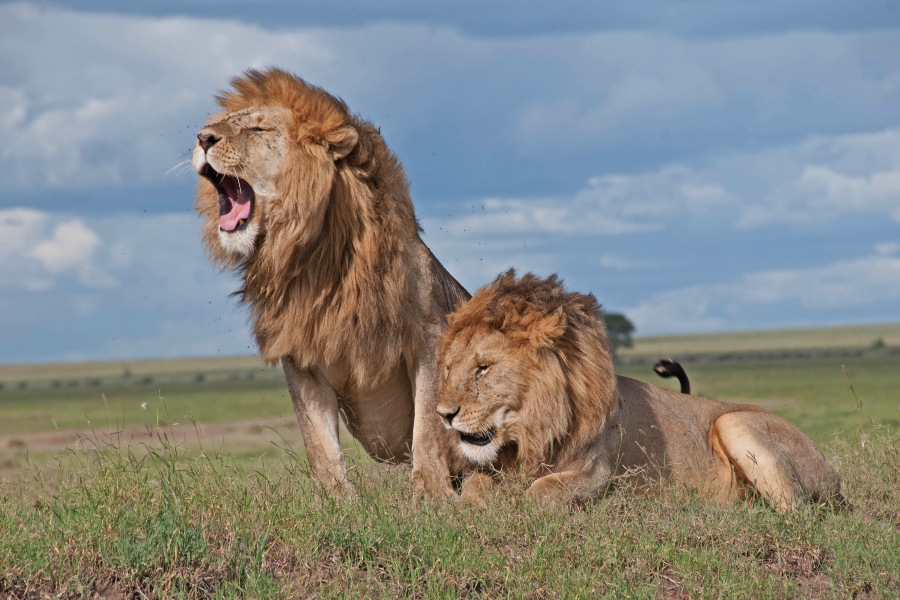
Narok County has confirmed new Masai Mara park entry fees for 2026: $100 per non-resident adult per day from January to June, rising to $200 per day from July through December. That's the headline number. But park fees are only one line item in a Masai Mara safari, and the rules around them, vehicle charges, the 12-hour ticket window, camping surcharges, trip up more travelers than the price itself.
This guide breaks down exactly what you'll pay, who pays what, and how to avoid the fee mistakes that quietly inflate a safari budget.
Masai Mara Park Fees 2026 at a Glance
| Visitor Category | Jan – Jun 2026 | Jul – Dec 2026 |
|---|---|---|
| Non-resident adult | $100/day | $200/day |
| Non-resident child (9–17) | $50/day | $50/day |
| Non-resident child (0–8) | Free | Free |
| Kenyan citizen adult | KES 1,500/day | KES 3,000/day |
| Kenyan citizen child (9–17) | KES 300/day | KES 500/day |
| East African resident adult | KES 2,500/day | KES 5,000/day |
| East African resident child (9–17) | KES 1,250/day | KES 2,500/day |
East African residents: Kenya, Uganda, Tanzania, Rwanda, Burundi, and South Sudan citizens with valid ID or passport.
Students up to age 23 with a valid ID from a recognized institution qualify for discounted student rates, separate from the child rate above.
What Actually Changed for 2026
The fee structure itself isn't new, this seasonal split was introduced under the 2023 Maasai Mara Management Plan and has simply carried forward into 2026. What's catching people off guard is the size of the jump between low and high season: a doubling from $100 to $200 per person per day the moment July 1 hits. For a family of four visiting in August instead of May, that's an extra $800 in park fees alone over a four-day stay, before accounting for vehicle charges, conservancy fees, or anything else.
The other change worth knowing: park entry fees are no longer tied to which camp or lodge you're staying at. Whether you're in a $150-a-night tented camp or a $1,500-a-night luxury lodge inside the reserve, everyone pays the same reserve entry fee. Your lodge choice affects your room rate, not your park ticket.
The 12-Hour Rule (This Is Where People Get Caught Out)
Every Masai Mara ticket is valid for 12 hours, from 6:00am to 6:00pm. If you're staying inside the reserve and departing by road the next morning, you need to be out of the gate by 10:00am, go past that, and you're charged for a full additional day. The same applies to flying out: arrive at the airstrip after 10:00am and it counts as an extra day in the park.
This catches a surprising number of travelers who assume "overnight inside the park" means their ticket covers the whole stay. It doesn't. Build your exit time into your itinerary, not just your flight time.
Vehicle and Extra Fees Nobody Mentions Upfront
Your park ticket covers you as a person. Your vehicle is billed separately, based on seating capacity, from around KES 400 for a small vehicle up to KES 5,000 for a large bus. If you're on a hot air balloon safari, add a $50 per adult landing fee on top of your standard entry. None of this is usually visible in a quoted "per person" safari price unless you ask.
Camping Fees (If You're Not Staying in a Lodge)
| Camper Type | Public Campsite | Private Campsite |
|---|---|---|
| Non-resident adult | $30/night | $40/night |
| Non-resident child/student | $20/night | $20/night |
| Kenyan citizen adult | KES 1,000/night | KES 1,000/night |
| Kenyan citizen child/student | KES 200/night | KES 200/night |
Private campsites also carry a one-time, non-refundable KES 10,000 booking fee, and campers are required to hire two rangers for night security, transport and food for the rangers is on you, not included in the fee.
Reserve vs. Mara Triangle vs. Private Conservancies
This is where most fee confusion actually comes from, people assume "Masai Mara" is one single fee zone. It isn't.
- Masai Mara National Reserve (Narok side): the main reserve, managed by Narok County. The $100/$200 seasonal fee applies here.
- Mara Triangle: the western portion, managed separately by the Mara Conservancy. Same 2026 fee structure, but it's a cashless-only zone, cards or pre-generated e-slips only, no cash accepted at the gate.
- Private conservancies (Mara North, Naboisho, Olare Motorogi, Ol Kinyei, and others bordering the reserve): these are community-owned land outside the official reserve boundary, with their own separate fee structure, typically $80–$130 per adult per night, usually folded into your lodge's nightly rate rather than paid separately at a gate.
The trade-off: conservancy fees run higher than reserve fees, but they buy you things the main reserve doesn't allow, off-road driving, night game drives, and walking safaris. Budget travelers who don't need those extras often do just as well wildlife-wise in the main reserve at the standard rate.
Is the Park Fee Included in Your Safari Quote?
This is the question that actually matters when you're comparing safari operators, and it's worth asking directly through Beyond The Plains Safaris before you book. Park fees are one of the largest single line items in any Masai Mara itinerary, and how an operator handles them in their pricing tells you a lot about how transparent the rest of the quote is.
When you get a quote, ask specifically:
- Does the quoted price include Masai Mara park entry fees for every day inside the reserve?
- Does it include the separate vehicle fee?
- If your itinerary includes a conservancy stay, is that conservancy fee bundled into the nightly lodge rate or billed separately?
- Are camping fees (if applicable) already factored in?
A reputable operator like Beyond The Plains Safaris itemizes this clearly rather than burying it in a single "safari package" number. If a quote looks unusually cheap compared to others for the same dates and parks, an unstated park fee is one of the first places to check.
Booking-Timing Tip: Season vs. Savings
If your travel dates are flexible, the calendar math is straightforward: crossing into July doubles your daily park fee. A safari booked for late June instead of mid-July can save a family of four several hundred dollars in park fees alone, without changing anything else about the trip.
The catch is that July through October is also peak Great Migration season, when the Mara River crossings draw the crowds for a reason. If witnessing a crossing is the whole point of your trip, the higher fee is the cost of that specific experience, and there's no way around it. But if you're after strong year-round game viewing, lions, elephants, cheetah, resident wildlife, without the migration specifically, traveling in the January–June window gets you the same reserve at half the daily entry cost, with fewer vehicles at every sighting.
Masai Mara Park Fees 2026 — Quick Answers
How much is the Masai Mara park entry fee in 2026?
$100 per non-resident adult per day from January to June, and $200 per day from July to December.
Do children pay to enter the Masai Mara?
Children aged 9–17 pay $50 per day year-round. Children 8 and under enter free.
Are Masai Mara park fees included in safari packages?
Usually, but not always automatically, confirm directly with your operator, since vehicle fees and conservancy fees are commonly billed as separate line items.
How long is a Masai Mara entry ticket valid for?
12 hours, from 6:00am to 6:00pm. Guests departing by road must exit by 10:00am to avoid an extra day's charge.
Are Mara Triangle fees different from Masai Mara Reserve fees?
No, same 2026 fee structure applies to both, but the Mara Triangle only accepts cashless payment.
Do private conservancies charge the same fees as the main reserve?
No. Conservancies like Mara North and Naboisho charge separately, typically $80–$130 per adult per night, usually bundled into the lodge rate rather than paid at a gate.
The Bottom Line
The 2026 fee structure itself is simple, $100 low season, $200 high season, per non-resident adult, per day. What actually determines your final safari cost is everything layered on top of that: which zone you're in, whether your vehicle and conservancy fees are itemized separately, and whether your travel dates land before or after July 1. Getting a fully itemized quote before you book, one that states park fees, vehicle fees, and conservancy fees as separate, named line items, is the single easiest way to avoid a budget surprise at the gate.












Comments (0)
Leave a Comment
No comments yet. Be the first to comment!