

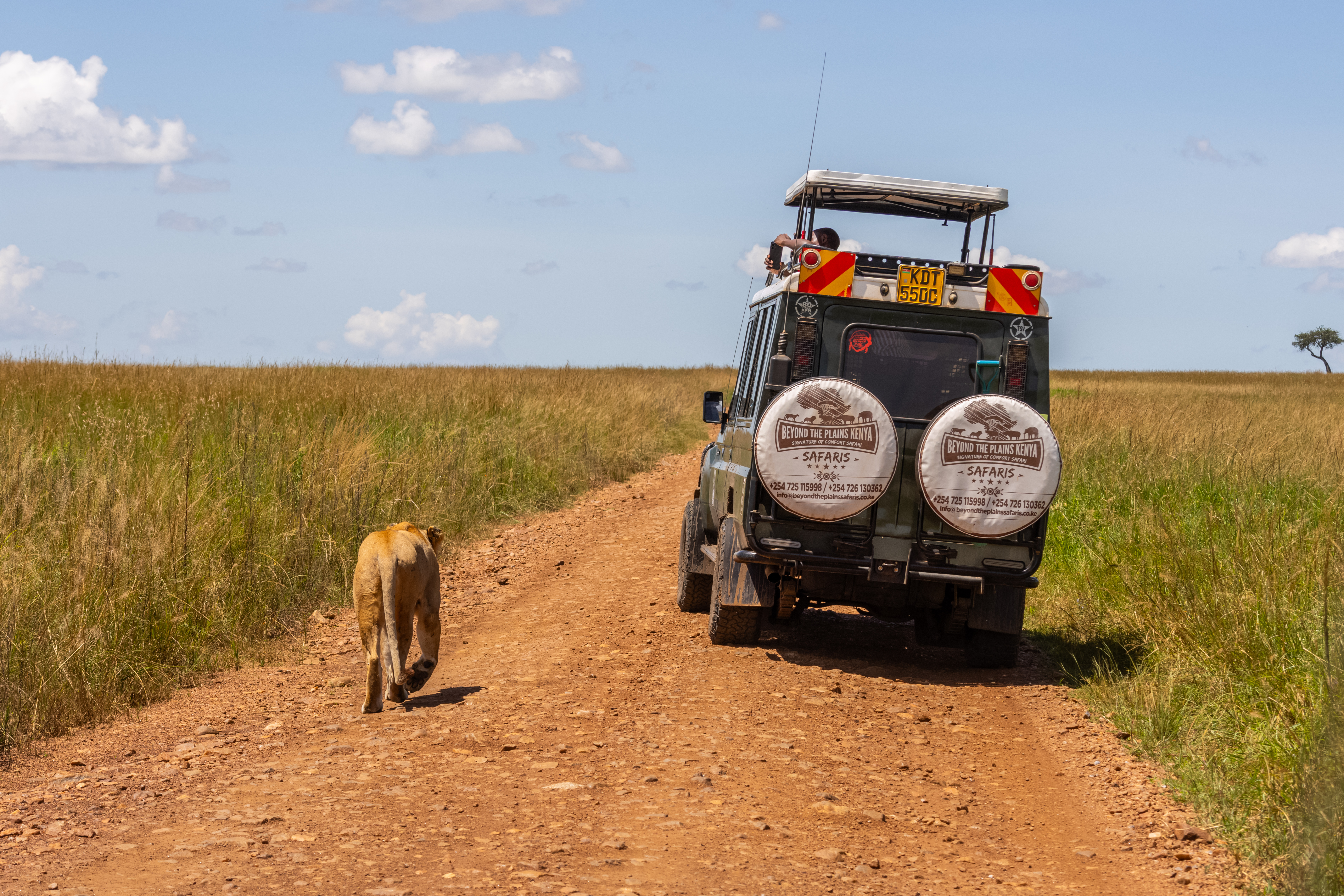
The Great Migration Kenya: Month-by-Month Guide to When, Where & How to See It
You know the Great Migration is spectacular — a million wildebeest thundering across the African plains is the kind of image that's been on bucket lists for decades. What most travelers don't realize, though, is that arriving at the wrong time — even by just a few weeks — can mean missing the crossings entirely and seeing little more than an empty riverbank. In this month-by-month guide, you'll learn exactly when the herds enter Kenya, where to position yourself each month, and how to plan a migration safari that puts you in the right place at the right time.
Key Takeaways
- The Great Migration is the largest overland wildlife movement on Earth, involving roughly 1.5 million wildebeest circulating annually between Tanzania's Serengeti and Kenya's Masai Mara ecosystem.
- Kenya is the best destination to witness the migration between July and October, when the herds cross north into the Masai Mara in search of fresh grass.
- The Mara River crossings — where wildebeest leap into crocodile-filled waters — typically peak between August and September but can occur unpredictably on any given day during this window.
- The migration is a year-round cycle, not a single event; understanding the full circuit helps travelers choose the right month for their interests — calving, crossings, predator action, or fewer crowds.
- Book accommodation 12–18 months in advance for the July–October peak season, as premium camps and conservancy lodges sell out far ahead of time.
- The Mara Triangle and private conservancies generally offer less crowded, more exclusive game-viewing than the main Masai Mara National Reserve.
- Combining a Masai Mara safari with Amboseli or the Kenyan coast gives travelers a complete East Africa experience across a 10–14 day itinerary.
What Is the Great Migration and Why Does It Happen Every Year?
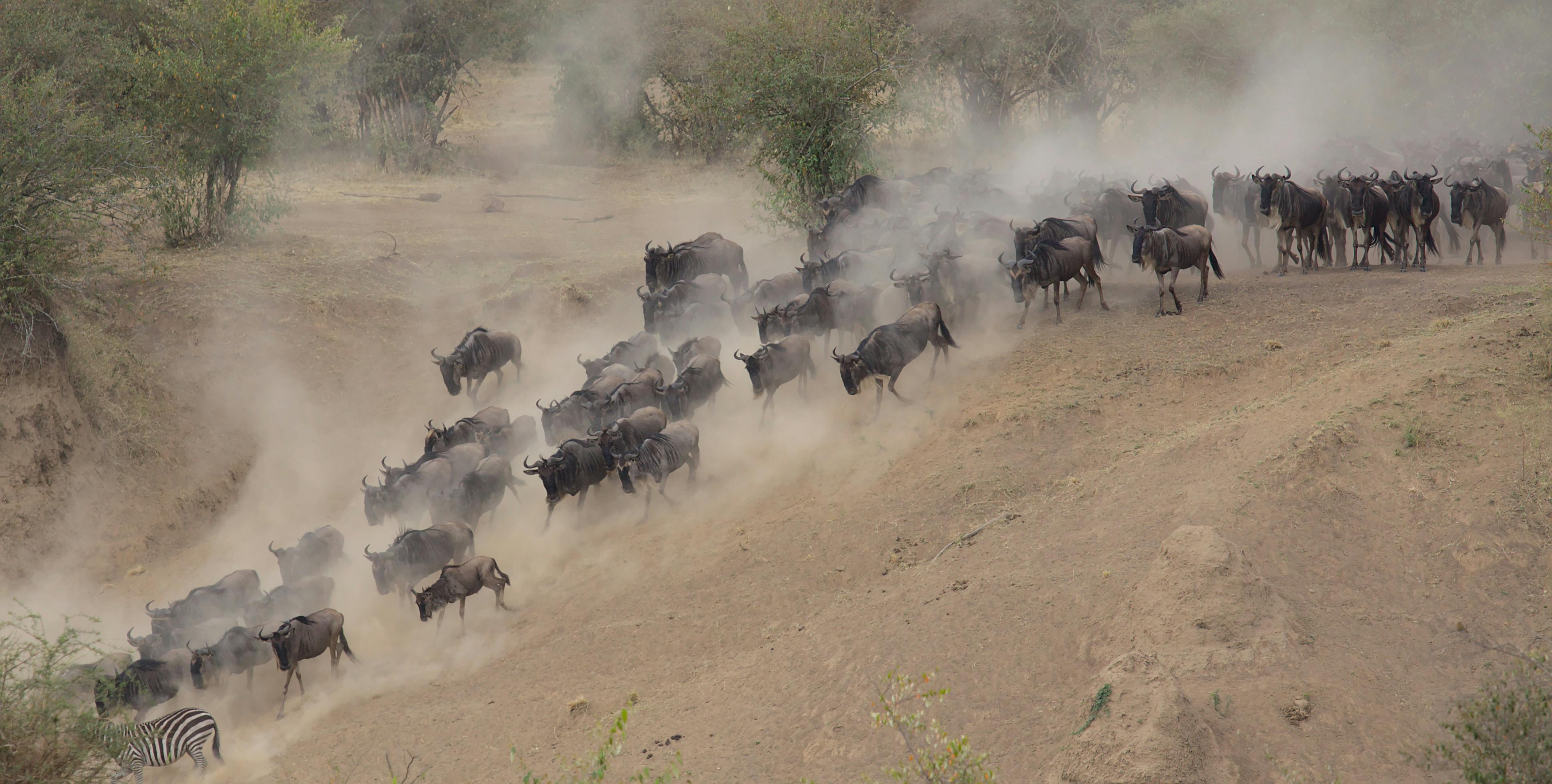
The Great Migration is the largest overland wildlife movement on Earth, involving approximately 1.5 million wildebeest, 400,000 zebras, and 200,000 gazelles completing an annual circular route between Tanzania's Serengeti ecosystem and Kenya's Masai Mara. It is not a single event but a continuous, year-round cycle driven by rainfall patterns and the availability of fresh grass across the ecosystem. The animals follow the rains instinctively, always moving toward greener pastures. For more context on the broader ecosystem, explore our Kenya travel guide: everything you need to know.
The migration is fueled purely by survival. Wildebeest need roughly 4 kg of grass per day per animal, which means the Serengeti-Mara system must constantly regenerate to support this enormous biomass. When one area is grazed out, the herds move on — and this relentless forward motion creates one of the greatest wildlife spectacles on the planet.
Why the Great Migration Is a Once-in-a-Lifetime Wildlife Event
The Great Migration stands apart from every other wildlife event on Earth because of its sheer scale, drama, and predator density. No other migration combines the numbers (over 2 million animals in total), the theatrical river crossings, and the concentration of lions, cheetahs, leopards, and Nile crocodiles that assemble to intercept the herds. The spectacle is measurable: the Masai Mara ecosystem supports one of the highest lion densities in Africa, with an estimated 850–900 lions recorded in the greater Mara ecosystem — Source: Mara Conservancy Wildlife Census, 2022.
Moreover, the emotional impact of witnessing a river crossing is difficult to overstate. Hundreds of wildebeest gather at the bank, pacing nervously for hours, before one animal finally commits — and then thousands follow in a churning, desperate rush. Crocodiles surge from the water. Lions wait on the far bank. It is raw, unscripted nature at its most cinematic, and it is why travelers fly halfway around the world to witness it.
The Full Migration Circuit: Understanding the Annual Route
The Great Migration follows a broadly predictable circular route across the Serengeti-Mara ecosystem throughout the year. Understanding this full circuit is essential for choosing the right country, the right park, and the right month. Here is the simplified annual loop:
- January–March: Southern Serengeti (Tanzania) — calving season, newborns and predator action
- April–May: Central and western Serengeti — long rains, the herds move northwest
- June–July: Northern Serengeti and into Kenya's Masai Mara — herds approach the Mara River
- August–September: Masai Mara (Kenya) — peak river crossing season
- October–November: Herds begin drifting south, exiting Kenya back into Tanzania
- December: Return to the southern Serengeti to complete the cycle
Kenya sits at the northern apex of this circuit. The Masai Mara is where the herds reach the dramatic climax of their journey — the Mara River — before the long return south. For a deeper look at the Tanzania side of this journey, read our Serengeti wildebeest migration overview.
Month-by-Month Breakdown: When and Where to See the Migration in Kenya
The Great Migration is present in Kenya primarily from late June to November, with peak river crossing activity between August and September. Below is a complete month-by-month breakdown, covering all 12 months so you can plan precisely — whether you want the crossings, the calving, or simply fewer tourists.
January and February — Calving Season in the Southern Serengeti
In January and February, the herds are deep in the southern Serengeti and Ndutu region of Tanzania. This is calving season, when roughly 500,000 wildebeest calves are born within a few weeks — one of nature's most extraordinary events. Kenya is not the right destination during these months. Tanzania offers far superior wildlife viewing, with newborn calves attracting cheetahs, lions, and hyenas in extraordinary numbers. Travelers with flexibility who prioritize predator action over river crossings should seriously consider a January or February Tanzania itinerary instead.
March and April — The Long Rains Begin
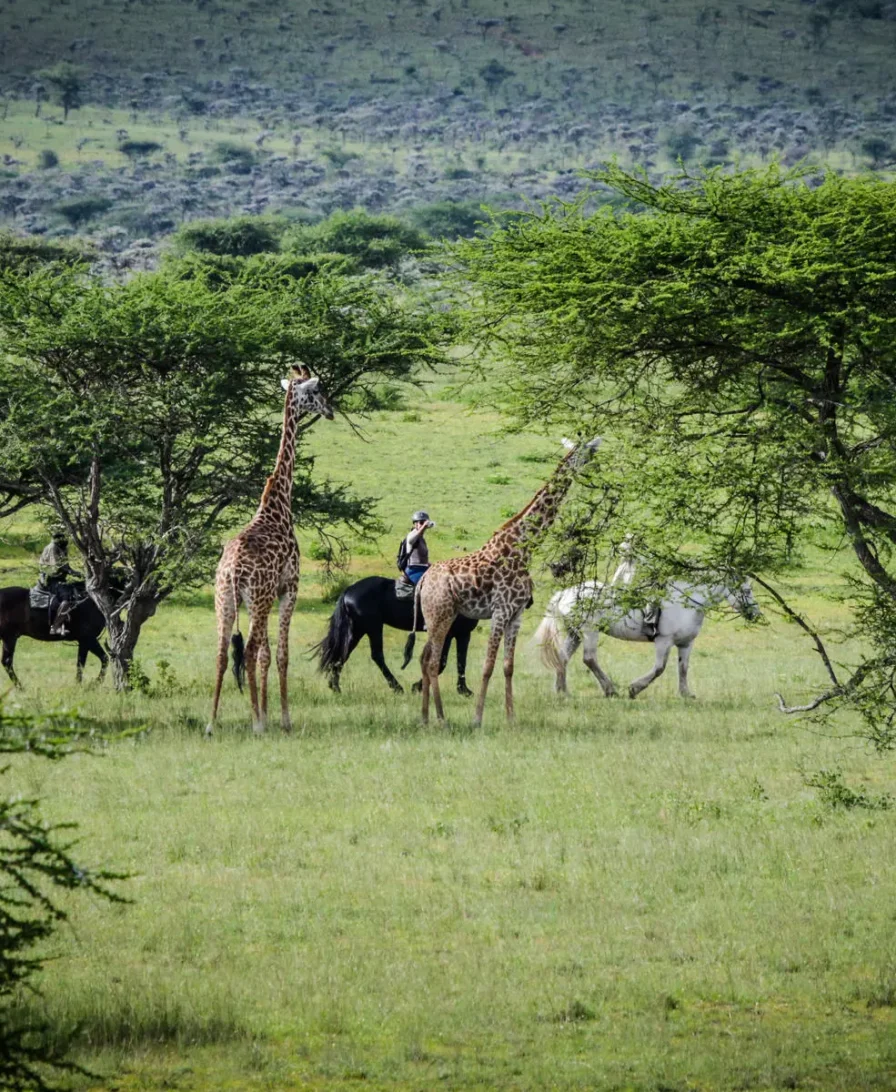
By March, the herds start pushing north and west through the Serengeti as the long rains arrive. The Masai Mara is lush and beautiful in April, but the wildebeest are still weeks away. Kenya in March and April offers excellent game-viewing for resident wildlife — elephant, giraffe, buffalo, and big cats — but the migration herds are not present. Road conditions in the Mara can deteriorate during heavy rain, so factor this into your planning.
May — Late Rains, Low Season
May is the tail end of the long rains and represents the low season across both Kenya and Tanzania. The Masai Mara is quiet, rates are lower, and the landscape is at its most verdant. Migration herds are in the central Serengeti and not yet in Kenya. May is ideal for travelers on a tighter budget who want a private, uncrowded Mara experience while accepting that the migration has not yet arrived.
Best safari camps in the Masai Mara
June — The Herds Approach
June marks the beginning of Kenya's migration season. By mid-to-late June, the leading edge of the wildebeest herds begins crossing the Tanzania-Kenya border and entering the southern Masai Mara. The landscape shifts from lush green to golden as the dry season takes hold, making for spectacular photography. Crowds begin to build in June, but early-month visitors often enjoy the best of both worlds: arriving herds and manageable tourist numbers. River crossings are possible from late June, though they are irregular.
July — Migration Arrives in Kenya
July is the month most travelers target as the start of peak Kenya migration season. By July, large herds have entered the Masai Mara, fanning out across the plains and beginning to test the Mara River in earnest. Mara River crossings can occur anywhere between July and October, but they tend to increase in frequency through July as the herds build up on the southern bank. Weather is dry and predictable, making game drives comfortable. Expect significant tourist presence — the Masai Mara in July is busy, and securing premium camps requires booking well in advance.
August — Peak River Crossing Season Begins
August is widely regarded as one of the two best months to witness the Mara River crossings. The herds are fully established in the Masai Mara, and crossing events become more frequent as the animals deplete grass on the northern bank and seek fresh pasture. August combines high crossing frequency with dry, photogenic conditions — clear skies, golden light, and no rain to interrupt early-morning game drives. Predator activity is at its annual peak: lions, leopards, cheetahs, and hyenas are all actively hunting the vulnerable wildebeest. Accommodation is at a premium; expect top-end camps to be fully booked 12–18 months ahead.
September — The Climax of the Crossing Season
September is arguably the single best month for Mara River crossings. The herds are at maximum density within the Masai Mara, crossing events are frequent, and the photographic light in September — particularly in the early morning — is exceptional. The Mara River crossing is the most dramatic and sought-after moment of the migration, though crossing events are unpredictable and can occur on any given day between July and October. Patience is required: experienced guides will often spend an entire morning at the river waiting for the herds to commit. The wait is almost always worth it.
[Insert image: Dawn light over the Mara River with wildebeest herd on the southern bank | Alt text: "Wildebeest herd gathering at Mara River September Great Migration Kenya"]
October — The Return South Begins
October sees the herds beginning their gradual drift back toward Tanzania as the short rains approach and grass quality in Kenya starts to decline. Early October still offers excellent crossing opportunities, particularly in the northern Mara and Mara Triangle. By late October, crossing activity decreases as animals move south. October is an underrated month: crowds thin out, rates drop slightly, and there is still meaningful migration activity. Travelers who missed August and September bookings should strongly consider early October.
November and December — The Herds Return to Tanzania
By November, the vast majority of the herds have exited Kenya and are moving back through the northern Serengeti. The Masai Mara returns to its resident wildlife — which remains exceptional — but the migration spectacle is over for the year. December brings the short rains and the return of the herds to the southern Serengeti for the next calving cycle. Kenya in November and December is best suited to travelers who want an uncrowded, value-oriented safari focused on resident big cats and elephant rather than migration spectacle.
| Month | Herd Location | Crossing Activity | Crowds | Value |
|---|---|---|---|---|
| January | Southern Serengeti (TZ) | None in Kenya | Low | High |
| February | Southern Serengeti (TZ) | None in Kenya | Low | High |
| March | Central Serengeti (TZ) | None | Low | High |
| April | Western Serengeti (TZ) | None | Very Low | Very High |
| May | Western/Northern Serengeti | None | Very Low | Very High |
| June | Entering Masai Mara | Sporadic | Moderate | Moderate |
| July | Masai Mara | Increasing | High | Low |
| August | Masai Mara (peak) | Frequent | Very High | Very Low |
| September | Masai Mara (peak) | Very Frequent | Very High | Very Low |
| October | Masai Mara → Departing | Decreasing | Moderate-High | Moderate |
| November | Exiting Kenya | Rare | Low | High |
| December | Southern Serengeti (TZ) | None | Low | High |
Where Exactly in Kenya to See the Migration: Top Locations and Camps
The Masai Mara ecosystem is the only place in Kenya where the Great Migration occurs, but not all areas of the Mara offer the same experience. Knowing where to position yourself within the ecosystem can be the difference between waiting at an empty river and witnessing a 10,000-animal crossing. For a full breakdown of the reserve, read our Masai Mara National Reserve guide.
The Mara Triangle vs. the Main Reserve
The Mara Triangle is the western section of the Masai Mara National Reserve, managed separately by the Mara Conservancy. It consistently delivers better game-viewing experiences than the main reserve because vehicle numbers are tightly controlled. The Mara Triangle has some of the highest crossing activity on the Mara River, as the river forms its western boundary and several classic crossing points fall within it. Camps in and around the Triangle fill up fastest — book early.
The Private Conservancies
Surrounding the national reserve is a network of private conservancies — Olare Motorogi, Mara North, Ol Kinyei, Naboisho, and others — where lodges operate under community land agreements. The private conservancies offer night drives, off-road driving, and walking safaris that are not permitted inside the national reserve. Wildebeest herds spill freely into these areas during peak migration, and the guest-to-land ratio is far lower than in the main reserve. For a comparison of the two experiences, see our section below on What Is the Difference Between the Mara Triangle and the Mara Conservancies?
Best Safari Camps for the Great Migration in Kenya
Choosing the right camp is arguably as important as choosing the right month. Here is a tiered overview of options for witnessing the migration:
Luxury tier: Camps like Angama Mara, Mahali Mzuri, and Sanctuary Olonana sit within or adjacent to prime migration corridors and offer exclusive access, private game vehicles, and exceptional guiding. Rates range from $1,200 to $3,000+ per person per night in peak season. Explore our full best safari camps in the Masai Mara guide for detailed comparisons.
Mid-range tier: Camps such as Sentinel Mara Camp, Basecamp Masai Mara, and Kichwa Tembo offer strong guiding and good migration positioning at $500–$1,100 per person per night. These represent excellent value for travelers who want quality without ultra-luxury pricing.
Mobile camps: Mobile tented camps, which relocate seasonally to follow the herds, offer perhaps the most authentic migration experience. Operators such as Asilia Africa and AndBeyond run mobile camps that reposition throughout the Mara ecosystem to maximize proximity to crossing activity. These sell out earliest of all — plan 14–18 months ahead.

Is July, August, or September the Best Month for the Masai Mara Migration?
The best month for the Masai Mara migration depends on what you prioritize. August and September together represent the peak of Mara River crossing activity and are the months most travelers target. However, each month has a distinct character:
- July offers the excitement of arriving herds, slightly lower prices than August, and increasingly frequent crossing activity. It is the best choice if August and September are fully booked.
- August combines maximum herd density, frequent crossings, and dry conditions. It is the most competitive month for accommodation and commands premium pricing — but it delivers the most reliable crossing action.
- September rivals August for crossing frequency and often surpasses it for photographic conditions, as the golden grass and clear September light are exceptional. Early September can feel slightly less crowded than peak August, though not by much.
If forced to choose a single month, late August into early September is the statistical sweet spot for combining herd density, crossing frequency, and weather conditions.
What to Do If You Miss the Peak: Masai Mara Outside Migration Season
The Masai Mara is a world-class safari destination year-round, even without the migration herds. The Mara ecosystem supports one of the most diverse and abundant resident wildlife populations in Africa, independent of the annual wildebeest movement. Lions, leopards, cheetahs, elephants, hippos, buffalo, and hundreds of bird species are present throughout the year.
For example, the Masai Mara is the best place in the world to see cheetahs, with the open plains offering optimal hunting conditions and sightlines for both the cats and safari vehicles. Many experienced safari travelers argue that the Mara in April or May — green, quiet, and alive with newborn calves of resident species — offers a more intimate experience than the peak August crowds around the crossing points.
How to Plan Your Great Migration Safari: Practical Booking Guide
Planning a Great Migration safari in Kenya requires more lead time than almost any other travel experience in Africa. Travelers planning to witness the Great Migration in Kenya should book accommodation in the Masai Mara 12 to 18 months in advance, as peak-season camps and private conservancy lodges regularly sell out well ahead of the July–October window. Here is a step-by-step planning framework:
How Far in Advance to Book
Book 12–18 months ahead for August and September. For July and October, 9–12 months is often sufficient, though top camps will still go early. If you are reading this 6 months before your intended travel date, options exist — but you will need to be flexible on camp choice and budget. Contact a specialist operator early; they often have access to released inventory and waiting lists. Our guide on how to choose an ethical safari operator in Kenya is a useful starting point.
Fly-In vs. Road Transfer
Flying into the Masai Mara from Nairobi takes approximately 45 minutes on a light aircraft and is strongly recommended for peak-season travel. Fly-in safaris save 5–6 hours of road transfer and allow more time in the bush. Road transfers (approximately 5–6 hours from Nairobi) are viable in shoulder season when roads are dry and time is not critical. Wilson Airport in Nairobi serves the Mara airstrips daily via operators including Safarilink, Air Kenya, and Fly540.
What to Pack
Packing for a migration safari is straightforward. Neutral-colored clothing (khaki, olive, beige) is standard — avoid bright colors and white, which can disturb wildlife. Key items include: a good telephoto lens if you're serious about photography, a lightweight down jacket for cold pre-dawn game drives, quality binoculars, and a dust bag for camera equipment. Our detailed Kenya safari packing list covers everything you need.
Photography Tips
For river crossing photography specifically, a telephoto lens of at least 400mm is essential for capturing the action from a safe and legally required distance. Shoot in burst mode during the crossing itself and prioritize early morning light for the most dramatic images. For broader composition and landscape work, a 70–200mm zoom is excellent across the plains. Read our wildlife photography tips for safari for a full breakdown.
Great Migration Kenya vs. Tanzania: Which Country Should You Choose?
Kenya and Tanzania offer fundamentally different migration experiences, and the right choice depends entirely on when you travel. Kenya is the clear choice from July to October, when the herds are in the Masai Mara and the Mara River crossings are happening. For any other month, Tanzania's Serengeti offers superior migration viewing — particularly for calving season (January–February) and the western corridor river crossings at the Grumeti River (May–June).
Cost is a relevant factor. Tanzania's northern safari circuit — Serengeti, Ngorongoro, Tarangire — tends to be slightly more affordable than the Masai Mara ecosystem's premium conservancy lodges at peak season. However, Kenya compensates with a broader range of add-on experiences: the Kenyan coast, Amboseli's elephant scenery against Kilimanjaro, and the Laikipia Plateau's unique wildlife. For a detailed breakdown, read our Kenya vs Tanzania safari: which is right for you? guide.
| Factor | Kenya (Masai Mara) | Tanzania (Serengeti) |
|---|---|---|
| Best months | July–October | November–June |
| River crossings | Mara River (dramatic) | Grumeti River (less so) |
| Crowd levels | High in peak season | Variable |
| Add-on destinations | Coast, Amboseli, Laikipia | Ngorongoro, Zanzibar |
| Average peak cost | ||
| Calving season | Not in Kenya | Jan–Feb (Tanzania) |
Frequently Asked Questions About the Great Migration
When do the Mara River crossings happen in Kenya? The herds typically enter Kenya's Masai Mara ecosystem between late June and July, with Mara River crossings peaking from August through September before the animals begin their return south in October and November. Crossings are unpredictable day-to-day and cannot be guaranteed on any specific date.
How long should you spend in the Masai Mara to see a river crossing? A minimum of four nights at a riverside camp is recommended to maximize your chances. Five to seven nights gives you the best probability. Experienced guides increase your odds significantly — they read animal behavior and know which crossing points are most active on a given day.
What is the weather like in the Masai Mara during migration season? July through September is dry season in the Masai Mara. Days are warm (22–28°C), nights and early mornings are cool (10–15°C), and rainfall is minimal. Dust increases as the season progresses. October brings the first short rains, which can cause brief afternoon downpours but rarely disrupt game drives significantly.
What is the difference between the Mara Triangle and the Mara Conservancies for migration viewing? The Mara Triangle is the western section of the national reserve with controlled vehicle access and prime Mara River crossing points. The private conservancies (Olare Motorogi, Mara North, etc.) surround the reserve, offer fewer vehicles per sighting, permit off-road driving and night drives, and are often where the herds disperse during peak season. Both are excellent; conservancy camps generally offer a more exclusive experience at a higher price point.
Is the Great Migration guaranteed to be visible every year? The migration follows broadly predictable seasonal patterns every year without exception — this annual movement has occurred for millennia. However, exact timing, crossing locations, and crossing frequency vary with annual rainfall patterns. No operator can guarantee a specific crossing on a specific date.
What to Do Next: How to Start Planning Your Migration Safari
Starting your Great Migration safari planning is straightforward once you know your target month. The single most important first step is deciding on your travel dates, since accommodation availability and pricing flow from that decision. Here is a practical action plan:
- Choose your target month using the month-by-month guide above — August or September for crossings, June or July for value and arriving herds, October for late-season viewing with thinner crowds.
- Set your budget — a 5-night Masai Mara migration safari ranges from approximately $2,500 per person (mid-range mobile camp) to $12,000+ per person (ultra-luxury conservancy lodge) in peak season.
- Contact a specialist operator — a Kenya-based or Africa-specialist travel company with on-the-ground relationships will access better availability and insider camp knowledge than booking direct. Read our guide on how to choose an ethical safari operator in Kenya.
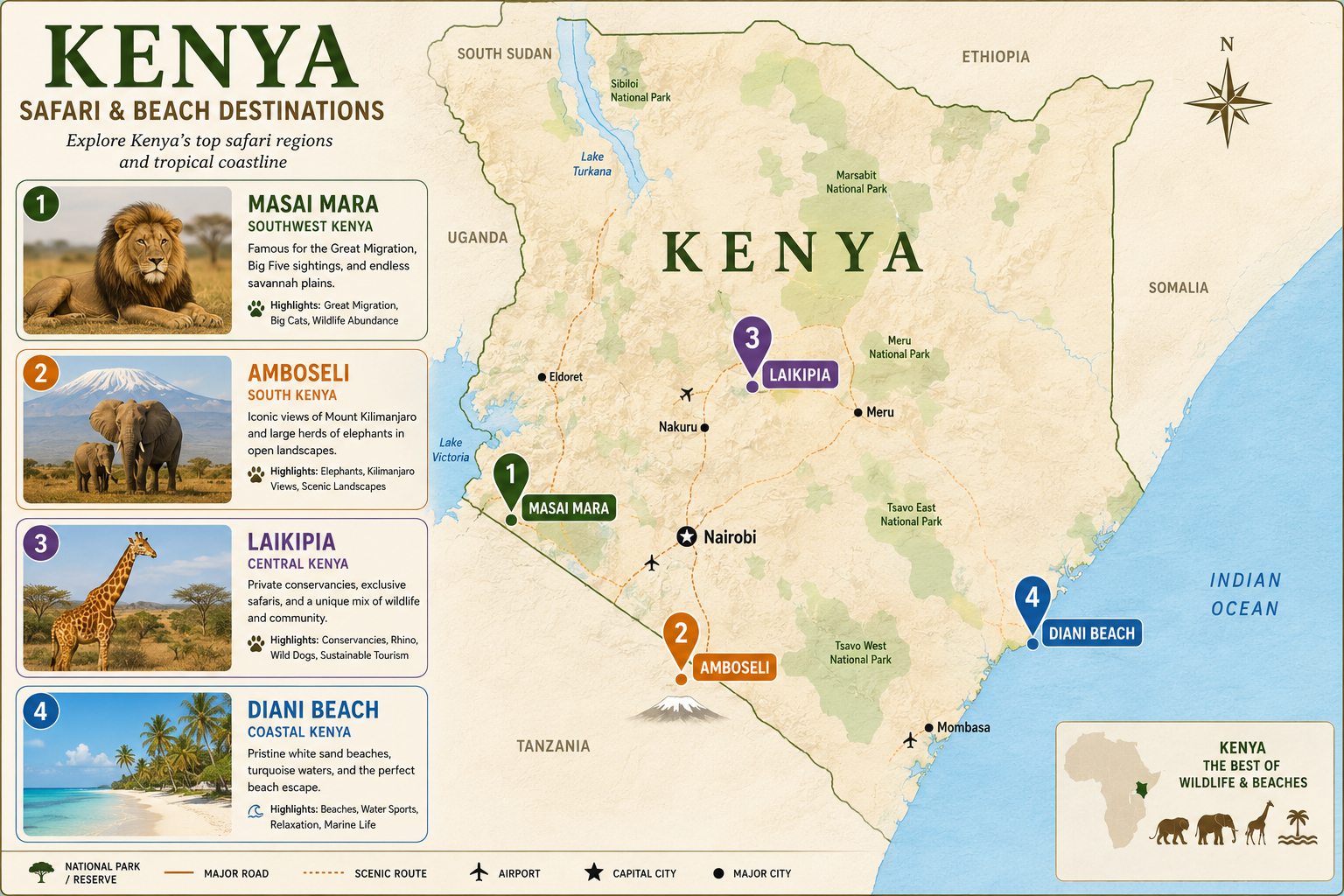
- Consider extending your itinerary — a 10–14 day Kenya trip combining the Masai Mara with Amboseli National Park (for Kilimanjaro views and elephant herds) is one of the continent's great safari combinations. Read our Amboseli National Park guide for details. For a complete range of sample trips, browse our East Africa safari itineraries.
- Add the coast — Diani Beach, a 45-minute flight south of Mombasa, pairs perfectly with a Masai Mara safari for a classic bush-and-beach Kenya combination. Read our Diani Beach Kenya travel guide to plan the extension. Alternatively, the Laikipia Plateau safari guide offers a compelling northern Kenya add-on for travelers seeking wild, off-the-beaten-track experiences.
Conclusion: Why the Great Migration Belongs on Every Traveler's Bucket List
The Great Migration is not just a wildlife event — it is the closest thing to prehistoric Earth that still exists. Over two million animals, driven by nothing more sophisticated than hunger and instinct, complete a 1,200-kilometre circuit every year across one of Africa's most spectacular landscapes. The Masai Mara, from July to October, is where this journey reaches its thundering peak.
Plan carefully, book early, and choose the month that matches your priorities. Whether you witness the chaos of a Mara River crossing, the quiet drama of predators circling a tired herd, or simply the golden spectacle of wildebeest stretching to the horizon in every direction — the Great Migration in Kenya will leave an impression that no photograph fully captures and no amount of time will fade.
The herds will cross again this year. The only question is whether you'll be there to see it.
For everything you need to begin planning, explore our East Africa safari itineraries or contact the Beyond the Plains Safaris team directly.
Written by John Dante, Director & Operations Manager, Beyond the Plains Safaris. John has over 15 years of experience leading and designing safari itineraries across Kenya and Tanzania, with specialist expertise in the Masai Mara ecosystem and Great Migration logistics.
Reviewed by the Beyond the Plains Safaris Editorial Team — safari specialists with on-the-ground Kenya experience.
Disclaimer: This article was initially drafted using AI assistance. However, the content has undergone thorough revisions, editing, and fact-checking by human editors and subject matter experts to ensure accuracy.










Comments (0)
Leave a Comment
No comments yet. Be the first to comment!