Kenya Safari Packing List: The Complete Guide to What to Pack (and What to Leave Behind)
You've done the hard part — you've booked your Kenya safari, sorted your flights, and chosen your camps. But packing for the bush is unlike packing for any other trip you've ever taken, and the mistakes most first-timers make — wrong colors, wrong bags, missing the one piece of gear that changes everything — are entirely avoidable. In this guide, you'll find a complete, Kenya-specific packing list covering clothing, gear, health essentials, documents, and the bush plane luggage rules that catch most travelers off guard, so you can arrive ready for the experience of a lifetime.
Key Takeaways
- Neutral-colored clothing is non-negotiable on a Kenya safari — khaki, olive, tan, and brown are the correct palette because bright colors such as white, red, and blue can startle wildlife and reduce the quality of game sightings for everyone in the vehicle.
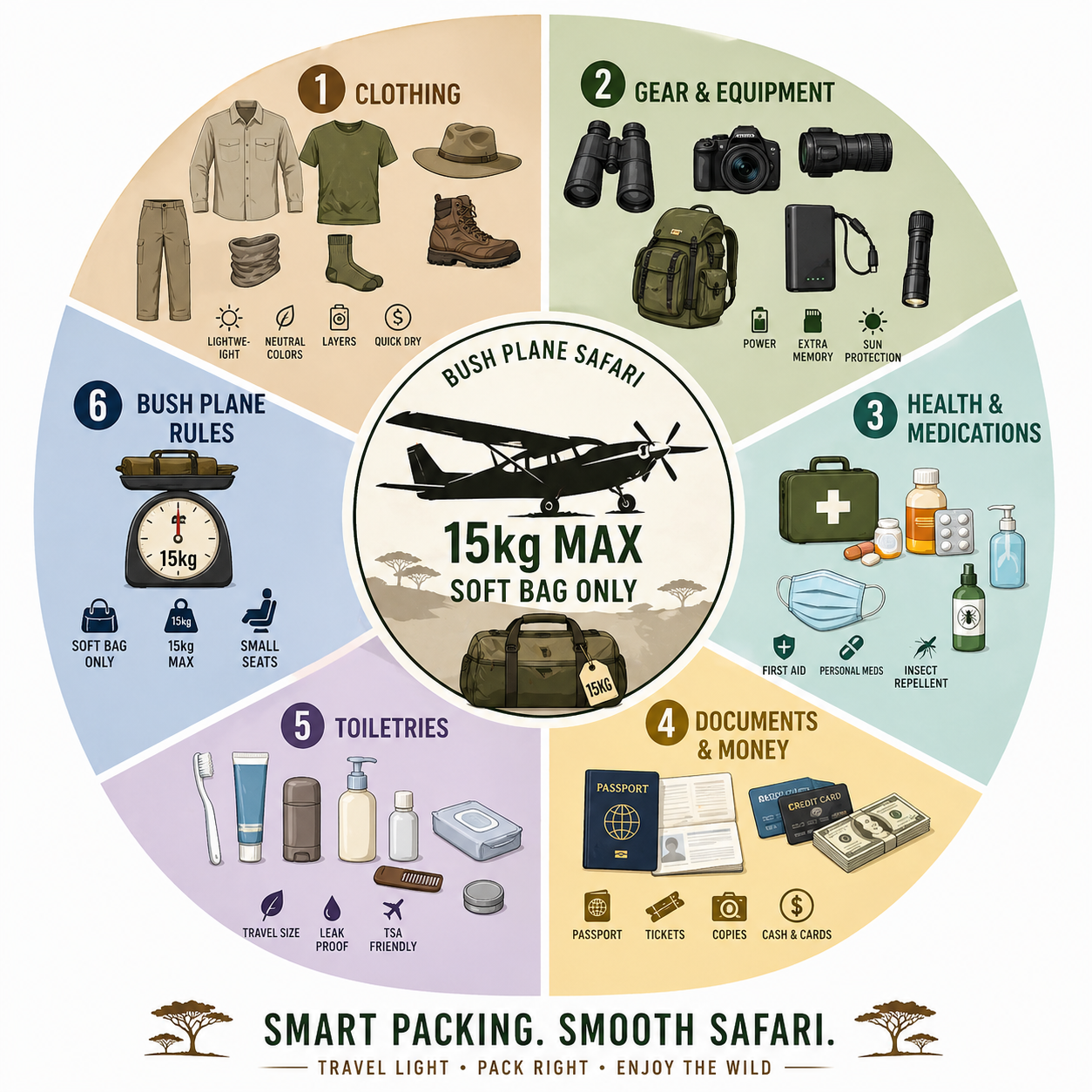
- Bush plane luggage rules in Kenya strictly limit passengers to 15kg in a soft-sided bag only — hard-shell suitcases are routinely rejected at airstrips, so planning around this rule before you pack is essential.
- Binoculars with a minimum 8x42 magnification are the single most impactful piece of safari gear most first-time safari travelers forget to pack; they transform an already remarkable game drive into something extraordinary.
- Malaria prophylaxis must be started before departure — not upon arrival — with timing and medication determined by a travel health physician based on your itinerary and personal health history.
- Kenya's temperatures can swing 20°C or more within a single day, with early morning game drives in the Maasai Mara regularly falling below 10°C while afternoon temperatures exceed 30°C — making layerable, packable clothing essential.
- Most eco-lodges and tented camps in Kenya request biodegradable toiletries, and high-DEET insect repellent consistently outperforms natural alternatives in the Maasai Mara and Amboseli ecosystems.
- The "5-day repeat" principle is the foundation of smart safari packing — pack enough clothing for five days and rely on camp laundry services, which most lodges offer, to carry you through a longer trip within the weight limit.
What Makes Packing for a Kenya Safari Different from Any Other Trip?
Packing for a Kenya safari is fundamentally different from packing for any other type of travel because the environment, transportation, and daily rhythm of a safari combine to create a set of requirements that standard travel advice simply doesn't address. You are not packing for a hotel; you are packing for the bush — open savannah, dirt airstrips, canvas tents, and game drives that begin before sunrise in temperatures that would surprise most people who only picture Africa as hot.
Consider the daily temperature range alone. Kenya's safari destinations experience swings of 20°C or more within a single day, with early morning game drives in the Maasai Mara regularly falling below 10°C while afternoon temperatures exceed 30°C — Source: Kenya Meteorological Department. That means layering isn't a preference; it's a survival strategy. A first-timer who packs only summer clothes will spend the first hour of every morning game drive shivering inside the vehicle, too cold to fully absorb what's in front of them.
Then there is the transport reality. Most Kenyan safari itineraries involve at least one leg on a bush charter plane — small, six-to-twelve-seat aircraft connecting Nairobi's Wilson Airport to airstrips in the Maasai Mara, Amboseli, Samburu, or Laikipia. These aircraft have strict weight and luggage type limits that are enforced without exception. Packing the wrong bag — regardless of what's in it — can result in luggage being left behind at the airport. For a full breakdown of how your itinerary affects these logistics, read our Kenya safari itinerary guide.
Finally, the bush is remote. Unlike a city hotel where a forgotten item can be replaced at a nearby pharmacy, your Mara camp is an hour or more from the nearest town. Packing right the first time is not just convenient — it is the difference between comfort and genuine hardship in some cases.
Why What You Pack on a Kenya Safari Matters More Than You Think
Poor packing on a Kenya safari has real, concrete consequences that go beyond inconvenience. Bright-colored clothing actively disrupts wildlife sightings — animals in the bush respond to visual cues, and a red jacket moving inside a vehicle can startle an approaching elephant or cause a predator to abandon a sighting before other guests have a chance to see it. This is why safari clothing etiquette around neutral colors is taken seriously by every reputable guide and operator.
Logistically, a hard-shell suitcase will likely be rejected at a bush plane airstrip, no matter how carefully it's packed. This is not a rare edge case; it is standard policy across all charter operators serving Kenya's internal routes. Travelers who show up with a roller bag face the choice of leaving luggage in Nairobi or paying for excess-weight fees — if the plane can accommodate it at all. According to data compiled by safari operators, incorrect luggage type is among the top three causes of departure delays at Kenyan bush airstrips.
From a health standpoint, insufficient sun and insect protection causes real harm in the East African bush. UV exposure at altitude — particularly relevant if your itinerary includes the Aberdares or Mount Kenya — is significantly more intense than most travelers expect, and mosquito activity in the Maasai Mara and Amboseli increases dramatically around dawn and dusk, precisely when game drives take place. A first-timer who skips high-DEET repellent in favor of a natural alternative is taking a meaningful health risk in a malaria-endemic region.
Packing correctly is, ultimately, a form of safari etiquette and self-care in equal measure. When you arrive prepared, you free yourself to be fully present in the bush — watching, listening, and absorbing one of the most extraordinary natural environments on earth — rather than managing discomfort or logistics.
What Clothing Should You Pack for a Kenya Game Drive?
Safari clothing for Kenya should consist exclusively of neutral tones — khaki, olive, tan, and brown — because bright colors such as white, red, and blue can startle wildlife and reduce the quality of game sightings for all passengers in the vehicle. This is not an aesthetic guideline; it is a practical one rooted in animal behavior and guide experience across decades of operating in East Africa.
The Neutral Color Rule: Why It Matters on the Maasai Mara
The neutral color requirement applies to every garment you wear on a game drive — shirts, trousers, jackets, hats, and even backpacks. White is particularly problematic because it mimics the color patterns associated with danger signals in certain species, while blue resembles water — a color that attracts tsetse flies in some regions. Olive drab and khaki blend into the savannah visually, helping the vehicle feel like a natural part of the landscape rather than an intrusion. For more on how wildlife behavior affects the game drive experience, see our guide to what to expect on a Kenya game drive.
Layering Strategy for Kenya's Temperature Swings
The layering principle is the single most important concept in your Kenya safari wardrobe. Build every outfit around three layers: a moisture-wicking base layer (long-sleeved for sun and insect protection), a mid-layer fleece or softshell jacket for cold mornings, and a lightweight outer layer that can be shed as the day warms. By 10am on most Mara mornings, temperatures climb quickly — and that heavy fleece will be stowed in your day bag within an hour of sunrise.
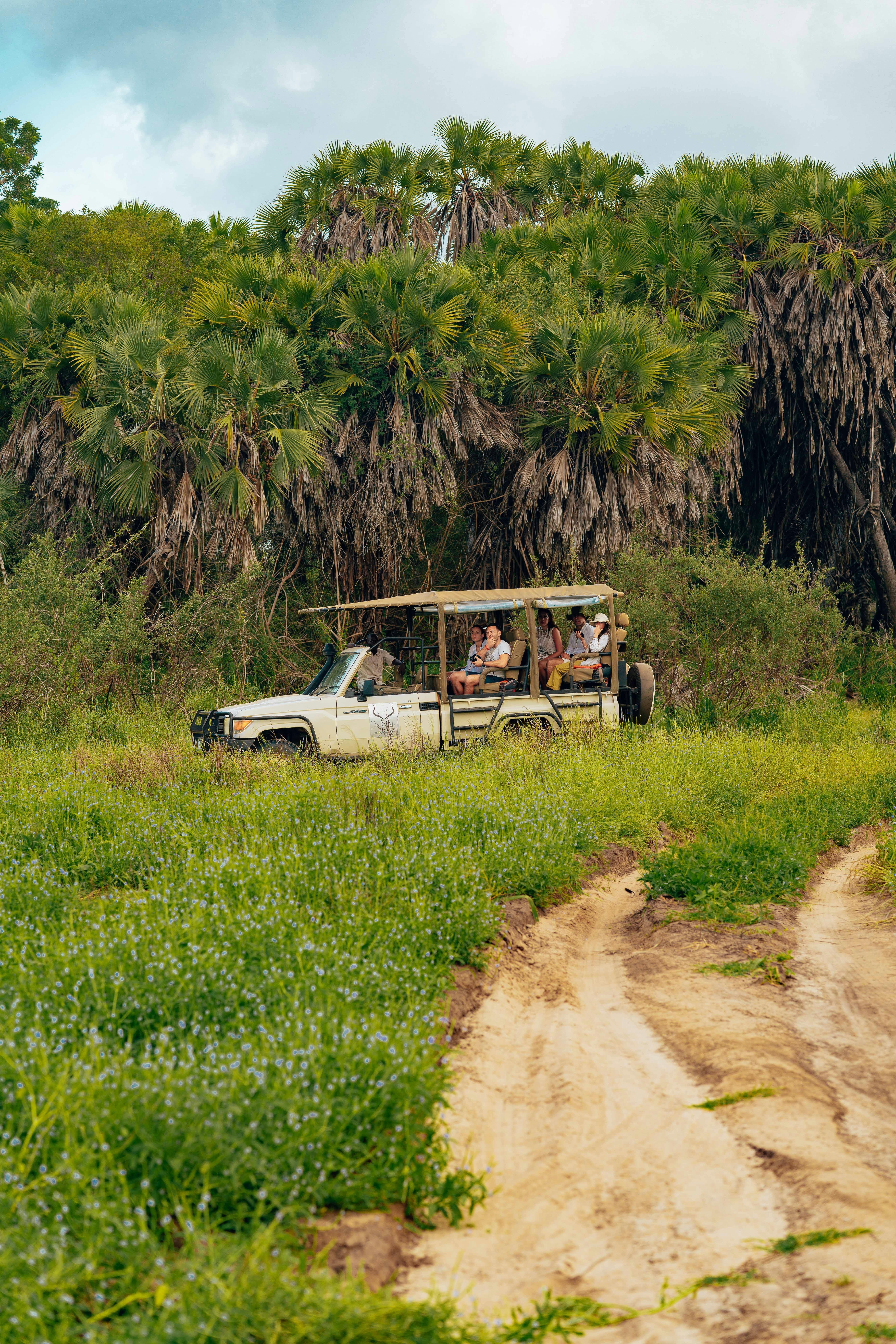
The Core Clothing List for a Kenya Safari
Here is what your clothing packing list should include, built on the 5-day repeat principle — enough for five days, with camp laundry handling the rest:
- 3–4 lightweight long-sleeved shirts in khaki, olive, or tan (linen or technical fabric)
- 2–3 pairs of lightweight long trousers — zip-off options double as shorts at camp
- 1 pair of comfortable shorts for camp evenings only
- 1 mid-weight fleece or softshell jacket — essential for pre-dawn game drives
- 1 lightweight packable down vest (optional but excellent for Aberdares or high-altitude extensions)
- 1 wide-brimmed hat — a packable sun hat with a 3-inch brim, not a baseball cap
- Moisture-wicking underwear — 4–5 pairs, quick-dry fabric
- 1–2 lightweight long-sleeved evening layers for camp dinners
- 1 pair of comfortable walking shoes or ankle boots with ankle support for walking safaris
- 1 pair of camp sandals — Birkenstocks or similar; your feet will thank you
- 1 pair of lightweight gaiters (optional, but useful in dusty Amboseli conditions — see our Amboseli National Park safari guide for why dust management matters there)
What not to wear: Avoid camouflage patterns entirely — they are illegal for civilians to wear in Kenya. Skip heavy denim, which takes days to dry and provides no technical advantage. Leave synthetic fabrics with strong static cling at home; they attract dust.
What Essential Gear Do Most First-Time Safari Travelers Forget?
Binoculars with a minimum magnification of 8x42 are widely considered the single most essential piece of safari equipment for game viewing in Kenya's open savannah ecosystems, including the Maasai Mara and Amboseli. Most first-time safari travelers arrive without them — and immediately wish they hadn't. Your guide can identify what's on the horizon; binoculars let you actually see it.
Binoculars: The Most Impactful Safari Purchase You'll Make
A good pair of binoculars transforms a distant brown shape into a cheetah scanning the horizon. The 8x42 specification matters: 8x provides sufficient magnification for open plains viewing without the image shake that makes higher-powered models hard to use from a moving vehicle, while the 42mm objective lens gathers enough light for the low-light conditions of early morning and late afternoon — the two most productive game drive hours. Brands like Nikon Prostaff, Vortex Diamondback, and Zeiss Terra all offer reliable options in the mid-to-premium price range. If you're uncertain which to choose, our guide on choosing the right Kenya safari operator includes a gear consultation section.
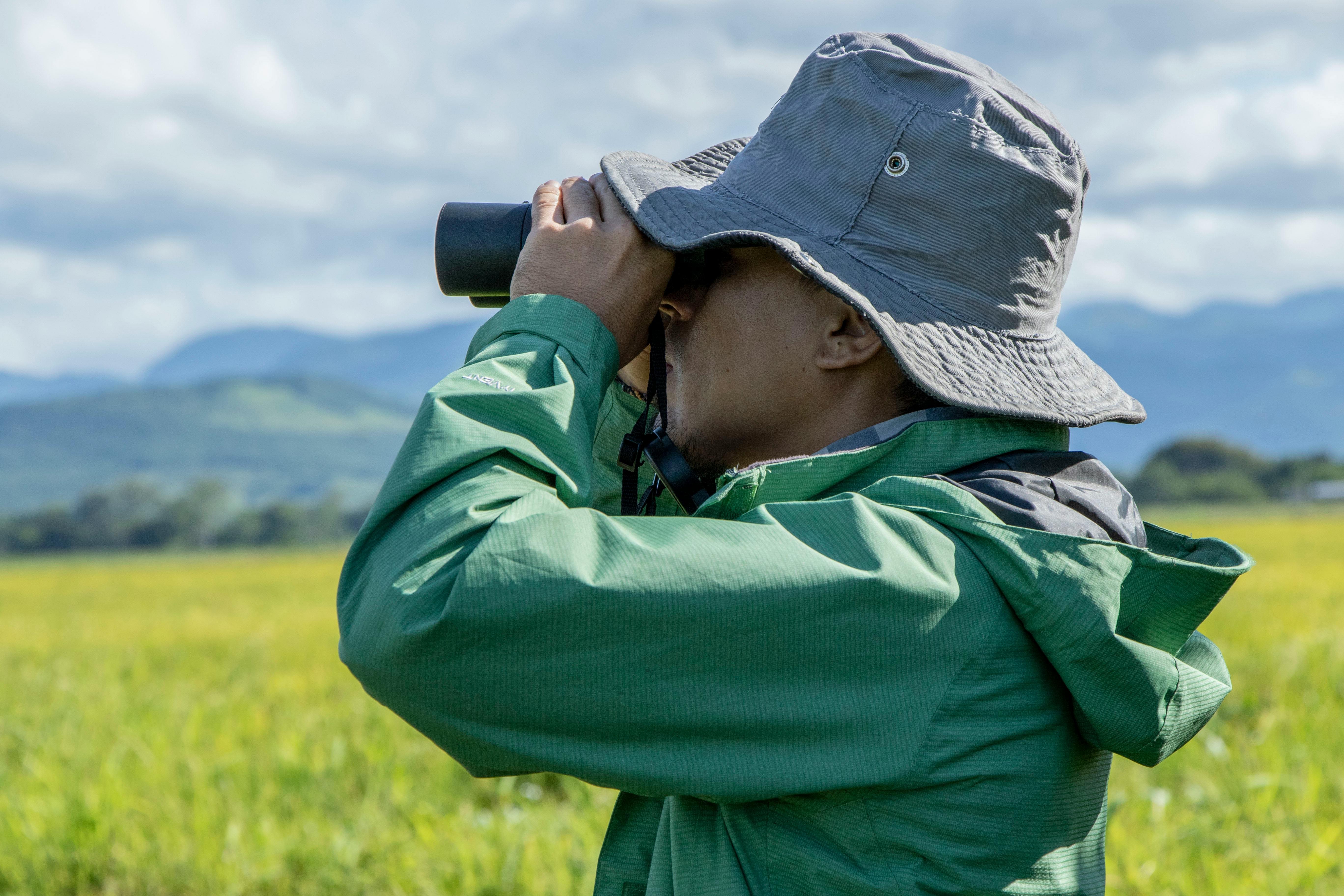
The Rest of the Essential Gear List
Beyond binoculars, your gear list should include:
- Camera and lens or a high-quality smartphone — a 70–300mm zoom lens is ideal for wildlife; a good phone camera with optical zoom is a legitimate alternative
- Dust-proof or dust-resistant camera bag — Amboseli and the dry Mara are relentlessly dusty; dust destroys camera equipment over time
- Power bank (20,000mAh minimum) — charging in remote camps is limited; a large power bank keeps your phone, camera, and headlamp charged throughout a multi-day itinerary
- Universal travel adapter with USB ports — most Kenyan lodges use British-style three-pin sockets
- Headlamp with red-light mode — camp paths are unlit; red light preserves your night vision and is less disruptive to nocturnal wildlife
- Reusable insulated water bottle — hydration in the bush is critical; most camps refill bottles to minimize plastic waste
- Small daypack (15–20L) for game drives — to carry your layers, water, camera, and binoculars within the vehicle
- Lightweight dry bag or rain cover for your daypack (invaluable during green season game drives)
What Medications and Health Essentials Do You Need for a Kenya Safari?
Malaria prophylaxis for a Kenya safari must be started before departure, not upon arrival, with the specific medication and timing determined by a travel health physician based on the traveler's itinerary and health history. This is the most important health point in this entire guide. The Maasai Mara, Amboseli, Samburu, and Tsavo are all malaria-endemic regions — there is no debate about the need for antimalarials.
Malaria Prevention: What You Need to Know Before You Go
The three most commonly prescribed antimalarials for Kenya are Atovaquone-proguanil (Malarone), Doxycycline, and Mefloquine — each with different timing requirements, side-effect profiles, and cost points. Malarone is typically started 1–2 days before arrival; Doxycycline requires 1–2 days; Mefloquine requires 2–3 weeks. Only a travel health physician can advise on which is right for your situation. Visit one at least 6–8 weeks before departure. For a full health and vaccination guide tailored to safari travel, see our article on malaria prevention for safari travelers.
Yellow fever vaccination may be required depending on your country of origin and your routing. Travelers arriving from yellow fever-endemic countries — including many parts of sub-Saharan Africa and South America — are required to present a valid yellow fever certificate (Carte Jaune) at Kenyan immigration. Even if not required for your specific routing, the vaccination is widely recommended.
The Complete Health and Safety Essentials List
- Prescribed malaria prophylaxis — started on schedule before departure
- Yellow fever vaccination certificate (Carte Jaune) — confirm requirement based on your routing
- High-DEET insect repellent (40–50% DEET) — applied to exposed skin at dawn and dusk; proven more effective than natural alternatives in the Mara ecosystem
- SPF 50+ sunscreen — reapplied frequently; UV exposure is high on open vehicles
- Personal prescription medications with a supply that exceeds your trip length by at least 7 days (in case of flight delays)
- Antihistamines — for dust, pollen, and insect reactions
- Rehydration salts (ORS sachets) — heat and activity cause faster dehydration than most travelers expect
- Broad-spectrum antibiotic (prescription) — ask your travel health physician about carrying one for stomach illness
- Altitude awareness kit if your itinerary includes the Aberdares (over 3,000m) or Mount Kenya — acclimatization symptoms can affect unprepared travelers
- Hand sanitizer — for use before meals in the field
- Travel insurance documentation — confirm your policy covers medical evacuation to Nairobi; this is non-negotiable for remote camps
What Should You NOT Pack for a Kenya Safari?
Several categories of items are actively harmful to your safari experience or logistically impossible to accommodate on bush planes and in remote tented camps. Knowing what to leave behind is as important as knowing what to bring — and this list catches most first-timers off guard.
| What NOT to Pack | Why |
|---|---|
| Hard-shell suitcases / roller bags | Rejected by bush charter planes; cannot be stored in small aircraft holds |
| Brightly colored clothing (red, white, blue, yellow) | Startles wildlife; disrupts sightings for entire vehicle |
| Heavy perfumes and colognes | Attracts insects; disturbs wildlife; intrudes on the experience for fellow travelers |
| Excessive electronics (tablets, multiple devices) | Weight penalty; theft risk in tented camps; limited charging capacity |
| Hair dryers and styling tools | Most camps lack the power supply; dead weight within your 15kg limit |
| High heels or formal footwear | Impractical on dirt paths, boardwalks, and during walking safaris |
| Valuables (expensive jewelry, watches) | Cannot be secured in a canvas tent; unnecessary and a theft risk |
| Camouflage-pattern clothing | Illegal for civilians to wear in Kenya |
| Blue denim jeans | Heavy, slow to dry, attract tsetse flies in some regions |
| Non-biodegradable toiletries | Many eco-camps prohibit them; damaging to local water systems |
Leave it behind if you're unsure. Space and weight are limited. Every item that isn't earning its place in your bag is weight you'll regret at the airstrip.
What Are the Luggage Rules for Bush Planes in Kenya?
Bush planes operating between Kenyan safari airstrips impose a strict 15-kilogram soft-bag-only luggage policy, meaning hard-shell suitcases are not accepted regardless of their size or weight. This rule applies consistently across the major charter operators serving Kenya's internal routes — including Safarilink, Air Kenya, and Coastal Aviation — and is enforced at check-in without exception.
What Counts as a "Soft Bag"?
A soft bag is any flexible, non-rigid bag that can be compressed and fitted into the small, irregularly shaped luggage holds beneath the seating area of a bush aircraft. Duffel bags, soft-sided kit bags, and large backpacks all qualify. Rigid-frame backpacks with external aluminium stays may be rejected at an operator's discretion. The ideal bush safari bag is a soft duffel in the 50–65 litre range, structured enough to pack neatly but soft enough to squash into an aircraft hold.
How to Pack 15kg Without Compromising on Essentials
Fifteen kilograms sounds restrictive, but it is genuinely achievable with the right approach. Lay out everything you intend to pack, then remove one-third of it. Wear your heaviest items on travel days — boots, your warmest fleece, your daypack. Pack clothing in compression cubes to reduce volume. If your itinerary begins in Nairobi before flying into the bush, most lodges and the major Nairobi hotels offer luggage storage — meaning you can leave a secondary bag in the city and fly into camp with only your 15kg safari kit. See our Maasai Mara safari camps and lodges guide for camp-specific luggage storage information.
Airline-specific notes: Safarilink enforces the 15kg limit strictly on all routes. Air Kenya applies similar policies but may offer slightly more flexibility on body weight allowances for larger passengers — confirm directly at booking. Coastal Aviation operates primarily on Tanzania routes but serves some cross-border itineraries; their rules mirror the Kenyan standard. If you're combining Kenya and Tanzania, our Kenya Tanzania combined safari itinerary guide covers luggage logistics across both countries.
Does It Matter What Season You're Visiting When Packing for Kenya?
The season you're visiting Kenya significantly affects your packing list, particularly around rain gear, dust protection, and layering weight. Kenya has two broad safari seasons — the dry season (June–October) and the green/wet season (November–May) — and each calls for specific adjustments to the core list.
Dry Season Packing (June–October)
The dry season is peak safari season for a reason: animals concentrate around water sources, vegetation is low, and game viewing is at its most productive. The Maasai Mara hosts the Great Migration crossing from approximately July through October. The trade-off is dust — particularly in Amboseli, where volcanic dust from the dried lake bed is relentless. Pack a buff or neck gaiter to wear over your nose and mouth, a dust cover for your camera bag, and a sealed dry bag for electronics. This is also the colder season for morning game drives, so your fleece and warm layers matter more, not less.
Green Season Packing (November–May)
The green season brings dramatic landscapes — lush grasslands, dramatic skies, migratory birds, and newborn wildlife. Prices are lower, camps are less crowded, and the photography is extraordinary. The practical packing adjustments are straightforward: add a lightweight packable rain jacket (not a heavy waterproof — rain showers in Kenya are typically brief and intense), a waterproof bag cover for your daypack, and waterproof or water-resistant footwear. The long rains (April–May) can make some dirt roads impassable, but the short rains (November–December) rarely disrupt game drives significantly. For precise monthly climate information, see our Maasai Mara weather by month guide to match your packing to your specific travel dates.
What Documents Do You Need to Bring on a Kenya Safari?
The essential documents for a Kenya safari include your passport with at least six months of remaining validity, a printed or digital Kenya e-Visa, yellow fever vaccination certificate (where required), travel insurance documentation, and your safari booking confirmation. Missing any of these at immigration or at your camp check-in creates delays that are entirely preventable.
Documents Checklist
- Passport — minimum 6 months validity beyond your return date; at least 2 blank pages for entry stamps
- Kenya e-Visa printout — Kenya operates a fully digital visa system; apply via the official government portal at least 2 weeks before travel. For a step-by-step walkthrough, see our Kenya e-visa application guide.
- Yellow fever certificate (Carte Jaune) — required if arriving from an endemic country; carry the original physical card
- Travel insurance documentation — policy number, emergency contact, and proof of medical evacuation coverage
- Safari booking confirmations — for each camp, lodge, and flight; digital copies stored offline are sufficient
- Cash in USD — for tipping guides and camp staff (standard tip is USD 10–20 per guest per day for your guide; USD 5–10 for camp staff collectively), and for small purchases at local markets
- A small combination lock — for tent and room zippers at camps; most camps are secure but a basic lock provides peace of mind for valuables
How Do You Pack a Full Safari Wardrobe in 15kg?
Packing a full Kenya safari wardrobe within 15kg is achievable when you apply the 5-day repeat principle combined with compression packing and strategic layering. The travelers who struggle with the weight limit are almost always those who pack for variety rather than function.
The 5-Day Repeat Packing System
The 5-day repeat system is simple: pack enough clothing for five days, then rely on camp laundry for anything beyond that. Most tented camps and lodges in Kenya offer same-day or next-day laundry service, often included in your accommodation rate. Given that most clothing items — a good mid-layer fleece, a pair of bush trousers — can be worn two or three times before washing, a five-day supply covers a 10–14 day itinerary comfortably.
Weight Management Tips
First, weigh your bag at home before you travel — not at the airport. A kitchen or bathroom scale gives you a reliable baseline. Second, wear your heaviest items on travel days: your boots go on your feet, your fleece goes on your body, and your daypack goes on your back — none of these count toward your 15kg hold luggage limit on most carriers. Third, use compression packing cubes: they reduce clothing volume by 30–40%, transforming what feels like an impossible packing challenge into a manageable one.
[Insert image: A packed soft safari duffel bag next to a kitchen scale showing 14.8kg | Alt text: "How to pack 15kg safari luggage soft bag Kenya bush plane"]
For travelers who still find themselves over the limit after applying these strategies, Nairobi's Wilson Airport area and most Nairobi city hotels offer secure luggage storage — leave your excess bag there, fly into camp with your 15kg kit, and collect it on your way home. Our guide to choosing the right Kenya safari operator can help you confirm what your specific operator's luggage policy allows.
Your Kenya Safari Packing Checklist: Print-Ready Summary
Use this checklist to confirm your bag before departure. Every item here earns its place.
Clothing
- 3–4 long-sleeved shirts (neutral colors: khaki, olive, tan)
- 2–3 pairs of lightweight long trousers
- 1 pair of camp shorts
- 1 mid-weight fleece or softshell jacket
- 1 lightweight packable down vest (optional)
- 1 wide-brimmed sun hat
- 4–5 pairs moisture-wicking underwear
- 1–2 lightweight evening layers
- 1 pair of walking shoes or ankle boots
- 1 pair of camp sandals
- 1 buff/neck gaiter (for dust)
- 1 lightweight packable rain jacket (green season)
Gear
- Binoculars (8x42 minimum)
- Camera and lens / smartphone with optical zoom
- Dust-resistant camera bag or sleeve
- Power bank (20,000mAh)
- Universal travel adapter
- Headlamp with red-light mode
- Reusable insulated water bottle
- Small daypack (15–20L)
- Waterproof bag cover (green season)
- Small combination lock
Health & Medications
- Malaria prophylaxis (started on schedule before departure)
- Yellow fever certificate (Carte Jaune)
- High-DEET insect repellent (40–50%)
- SPF 50+ sunscreen
- Personal prescription medications (+ 7-day buffer supply)
- Antihistamines
- Rehydration salts (ORS sachets)
- Hand sanitizer
- Travel insurance documentation
Toiletries
- Biodegradable shampoo, conditioner, and body wash
- Biodegradable laundry soap (for hand-washing)
- Toothbrush, toothpaste, floss
- Lip balm with SPF
- Moisturizer (low-humidity conditions dry skin quickly)
- Earplugs (bush sounds — hippos, hyenas — are louder than most people anticipate)
Documents & Essentials
- Passport (6+ months validity, 2+ blank pages)
- Kenya e-Visa printout or digital confirmation
- Yellow fever certificate (original physical card)
- Travel insurance card and emergency contact number
- Safari booking confirmations (camps, flights, transfers)
- Cash in USD (small denominations for tipping and local purchases)
What to Do Next: Finalizing Your Kenya Safari Packing
The most important action step after reading this guide is to weigh your bag now — not on departure day. Discovering you are 4kg over the bush plane limit at Wilson Airport with a flight in 45 minutes is an entirely avoidable crisis. Put everything on your bed, weigh it, and adjust before you leave home.
Second, identify the two or three items you don't yet own and buy them before you travel. For most first-timers, the gaps are binoculars, neutral-colored long-sleeved shirts, and high-DEET repellent — none of which are easily sourced in the Maasai Mara. If you need guidance on budgeting for pre-trip gear purchases, our Kenya safari cost breakdown guide includes a realistic equipment budget section.
Third, confirm your specific operator's luggage policy in writing before you pack. Policies are consistent across most
operators but there are minor variations — particularly around personal carry-on items on bush flights — and it is always better to confirm than to assume. Our guide to choosing the right Kenya safari operator explains what questions to ask during the booking process.
Finally, start your malaria medication on the prescribed schedule. The most common mistake is waiting until arrival to begin — which is, depending on the medication, pharmacologically ineffective. Set a calendar reminder for the correct start date and treat it as a non-negotiable pre-departure task. For timing guidance, revisit our malaria prevention for safari travelers article.
Conclusion: Pack Light, Pack Right, and Focus on the Experience
The travelers who get the most out of a Kenya safari are not the ones with the most gear or the most elaborate wardrobe. They are the ones who arrived prepared, packed within their limits, wore the right colors, and spent every hour in the bush fully present — not managing cold, logistics, or health problems that better preparation would have prevented.
Trust the list. Pack less than you think you need. Leave the hard-shell suitcase at home, invest in a good pair of binoculars, start your malaria medication on time, and choose a soft duffel that fits inside a bush plane hold. Everything else — the dust, the pre-dawn cold, the sheer improbability of what you're about to witness on the Maasai Mara — will take care of itself.
Your safari is waiting. Pack for it.
For more planning resources, explore our best time to visit Kenya for wildlife guide, or if you're adding a beach extension, our Zanzibar packing list covers everything you need after the bush.
Written by John Dante, Owner and Lead Guide, Beyond the Plains Safaris. John has guided guests across the Maasai Mara, Amboseli, Samburu, Laikipia, and the Kenyan coast for over fifteen years. His approach combines deep ecological knowledge with the practical experience of having seen — and fixed — every packing mistake a first-time safari traveler can make.
Reviewed by the Beyond the Plains Safaris Operations Team, whose collective experience spans hundreds of Kenya safari itineraries annually.
Disclaimer: This article was initially drafted using AI assistance. However, the content has undergone thorough revisions, editing, and fact-checking by human editors and subject matter experts to ensure accuracy.










Comments (0)
Leave a Comment
No comments yet. Be the first to comment!