

Nairobi to Masai Mara Safari: The Complete Road vs. Fly-In Guide (Real Costs & Local Tips)
Most people planning a Nairobi-to-Masai Mara trip spend days comparing lodges and game drive packages — and almost no time thinking about how they'll actually get there. But the transfer decision alone can shift your budget by hundreds of dollars, add or subtract half a day of travel, and completely change your first impression of the Mara. In this guide, you'll get honest, current costs for both the road and fly-in routes, a real side-by-side comparison, and the kind of local tips that most travel blogs bury or skip entirely.
Key Takeaways
- The Nairobi-to-Masai Mara road route takes 5–7 hours depending on traffic and season, costs KES 1,500–25,000 per person, and suits travelers who want to experience Kenya's landscape and have flexible time.
- Fly-in transfers via Wilson Airport take approximately 45 minutes, cost $150–$350 one-way per person, and are best for luxury travelers, short itineraries, or anyone traveling with young children.
- Road travel and fly-in safaris are not just different price points — they deliver fundamentally different journey experiences, each with distinct advantages depending on your priorities.
- Park entry fees for non-residents at Masai Mara are approximately $80 per adult per day, paid separately from your transfer and accommodation, and must be factored into your total safari budget.
- The July–October Great Migration period is peak season — fly-in seats and budget camp beds book out months in advance, and road conditions on the B3 are significantly better in the dry months.
- Local tips like booking directly with smaller camps, carrying KES cash for park fees, and timing arrivals to avoid Narok town traffic can save both money and hours of frustration.
- Both transfer options can deliver an extraordinary Masai Mara safari — the right choice depends on your budget, available days, and what kind of journey matters to you.
What Is the Nairobi-to-Masai Mara Journey?
The Nairobi-to-Masai Mara journey is the transfer leg connecting Kenya's capital city to one of Africa's most celebrated wildlife reserves, spanning approximately 270 kilometers and available via two fundamentally different routes: an overland road trip or a short bush flight. Understanding what each route actually involves — before you pick one — is the most important logistical decision you'll make for your safari.
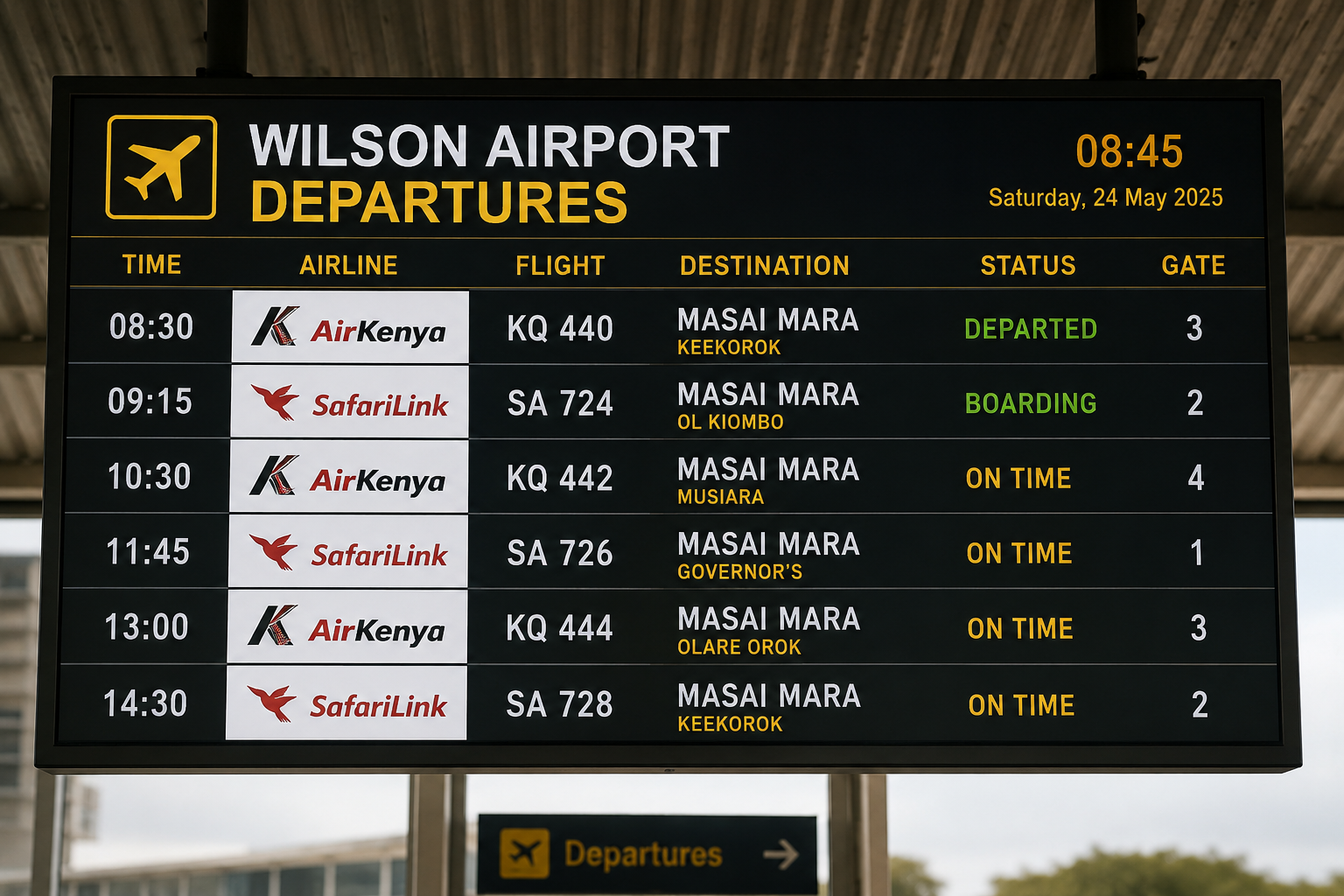
By road, the journey follows the B3 highway southwest from Nairobi through the agricultural town of Narok before descending into the Mara ecosystem. The drive covers roughly 270 km and typically takes between 5 and 7 hours, depending on Nairobi traffic, road conditions, and seasonal factors. By air, flights depart from Wilson Airport in the Langata neighborhood of Nairobi and land at one of several Masai Mara airstrips — including Keekorok, Ol Kiombo, Angama, and Musiara — in approximately 45 minutes.
The road journey from Nairobi to Masai Mara covers approximately 270 kilometers via the B3 highway through Narok and typically takes between 5 and 7 hours depending on traffic, road conditions, and the season.
Both routes end at the same extraordinary destination. But as you'll see throughout this guide, the journey itself is part of the safari experience — and choosing the wrong transfer for your situation can cost you time, money, or simply the energy you need to enjoy your first game drive. For context on everything awaiting you at the reserve, visit Beyond the Plains Safaris' Masai Mara destination guide.
Why Your Transfer Choice Matters More Than Most Travelers Realize
Your transfer method is not just a logistical detail — it directly shapes the quality of your safari experience in ways that most booking platforms never mention. The choice you make determines your arrival energy, your first hours in the bush, and a significant portion of your total trip budget.
Consider arrival energy first. A traveler who spends 6 hours in a 4x4 on a corrugated road — navigating Narok traffic and a dusty final stretch through conservancy tracks — arrives fundamentally different from one who steps off a small aircraft and into a waiting game vehicle 45 minutes after leaving Nairobi. Neither is wrong. But if you have only 3 days in the Mara and your afternoon game drive starts at 4pm, fatigue matters enormously.
Budget allocation is equally affected. The road option frees up significant funds for better accommodation or longer stays. The fly-in option compresses travel time but demands a premium that, for some travelers, is worth every dollar. For a custom itinerary that accounts for both your time and your budget, plan your safari with Beyond the Plains Safaris.
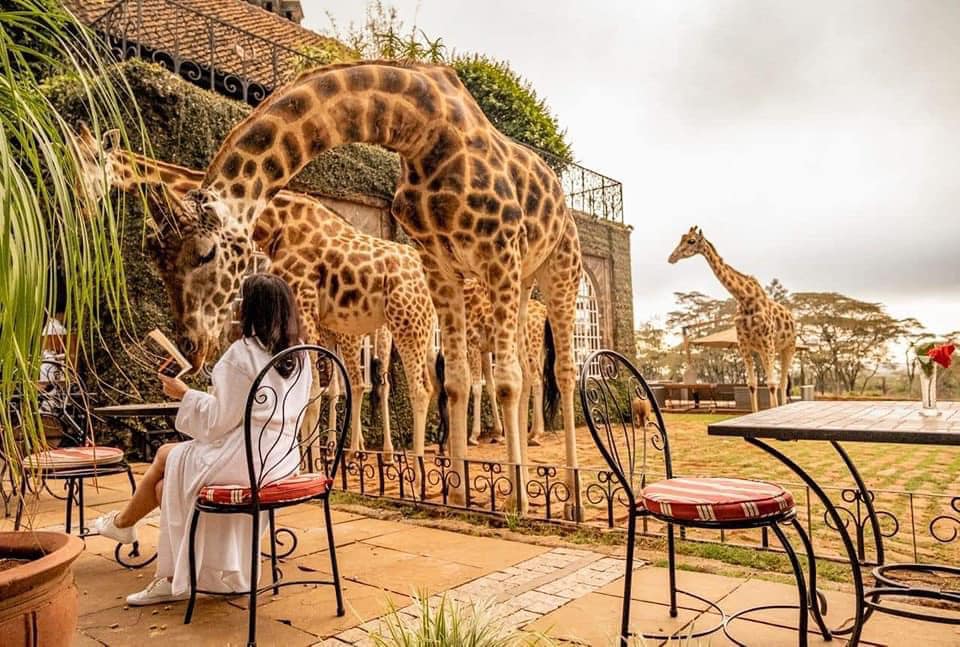
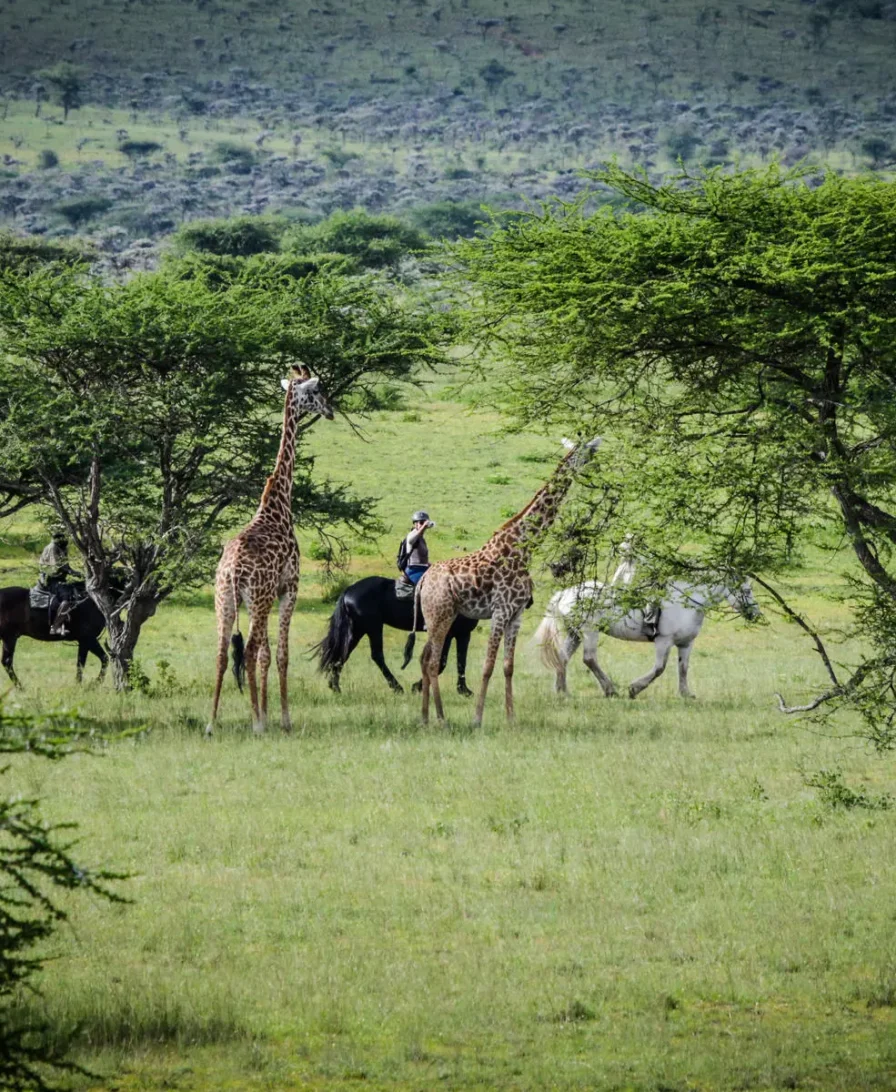
What you experience in transit also differs dramatically. The road route passes through the Great Rift Valley, offers sweeping escarpment views, winds through Maasai villages, and drops you gradually into the ecosystem — you might spot your first giraffe before you've even reached the reserve gate. The fly-in route skips all of this in exchange for a bird's-eye view of the savannah and the visceral thrill of landing on a grass airstrip surrounded by open bush.
The Road Route: What to Expect, Real Costs, and Who It's Best For
How Long Does It Take to Drive from Nairobi to Masai Mara — and Is It Worth It?
The drive from Nairobi to Masai Mara takes between 5 and 7 hours under normal conditions — longer during the long rains (April–June) or if you hit Nairobi morning traffic. The route is roughly 270 km but don't be misled by the distance: the final 50–60 km from Narok into the reserve involves unpaved tracks that require a 4x4 and reward patience.
The route itself runs from Nairobi along the B3 highway through Naivasha, then southwest through Narok town, and finally into the Mara via the Sekenani, Talek, or Oloolaimutia gates depending on your camp's location. The tarmac section to Narok is in reasonable condition and takes about 3 hours. The murram (gravel) road from Narok to the reserve boundary is the section that tests vehicles and passengers alike.
Is it worth it? For travelers with 4+ days, flexible schedules, and a desire to see Kenya's landscapes, absolutely yes. The escarpment views approaching the Rift Valley are genuinely spectacular. You'll pass through Maasai bomas (homesteads), spot wildlife before you've even paid park fees, and arrive with a sense of having earned your place in the Mara. For a self-drive adventure, read our guide on how to plan a self-drive safari in Kenya.
What Are the Road Conditions on the Nairobi–Narok–Masai Mara Route?
Road conditions vary significantly by season and are the most common complaint among first-time road-trippers to the Mara. The B3 highway to Narok is tarmacked and generally good. The road from Narok to the reserve boundary is where conditions diverge sharply.
Dry season (July–October, January–February): Roads are dusty but firm. A well-maintained 4x4 handles them comfortably. Most shared shuttles and private transfers operate without incident. This is the ideal time to drive, and it also coincides with the Great Migration — making the road trip doubly rewarding.
Wet season (April–June, November): The murram roads become deeply rutted mud tracks. Some stretches become impassable for standard vehicles. Budget extra time — what takes 5 hours in July can take 8 or more in May. Only travel in a proper 4x4 with high clearance during the rains, and always confirm road conditions with your camp before departing.
How Much Does the Road Route Cost?
The road route to Masai Mara is significantly more affordable than flying — shared shuttle transfers start from around KES 1,500 per person — but adds 5–7 hours of travel time each way compared to the 45-minute fly-in option.
Here's a realistic breakdown of road transfer costs in 2025:
| Transfer Type | Cost per Person (One Way) | Best For |
|---|---|---|
| Shared shuttle (e.g., Riverside Shuttle) | KES 1,500–2,500 (~$12–$20) | Solo budget travelers |
| Budget group transfer (4–6 people sharing) | KES 4,000–7,000 (~$30–$55) | Small groups splitting cost |
| Private 4x4 transfer (hired vehicle + driver) | KES 15,000–25,000 (~$115–$195) | Families, comfort-seekers |
| Self-drive 4x4 rental (per day) | KES 8,000–15,000 (~$60–$115) | Experienced drivers only |
Note: Shared shuttles operate on fixed schedules (typically 7:00am departures from central Nairobi). Private transfers offer flexibility in departure time and stops. Self-drive is only recommended for experienced off-road drivers who have researched current road conditions and self-drive logistics thoroughly.
Is It Safe to Self-Drive from Nairobi to Masai Mara?
Self-driving to Masai Mara is safe for experienced 4x4 drivers who plan carefully — but it is not recommended for first-time visitors to Kenya. Navigation apps like Google Maps and Maps.me are useful for the tarmac section, but the final tracks into the reserve require local knowledge. Carry physical fuel (the Narok fuel stations are the last reliable stop), download offline maps, and inform your camp of your estimated arrival time.
The Fly-In Safari: What to Expect, Real Costs, and Who It's Best For
How Much Does a Fly-In Safari from Nairobi to Masai Mara Actually Cost ?
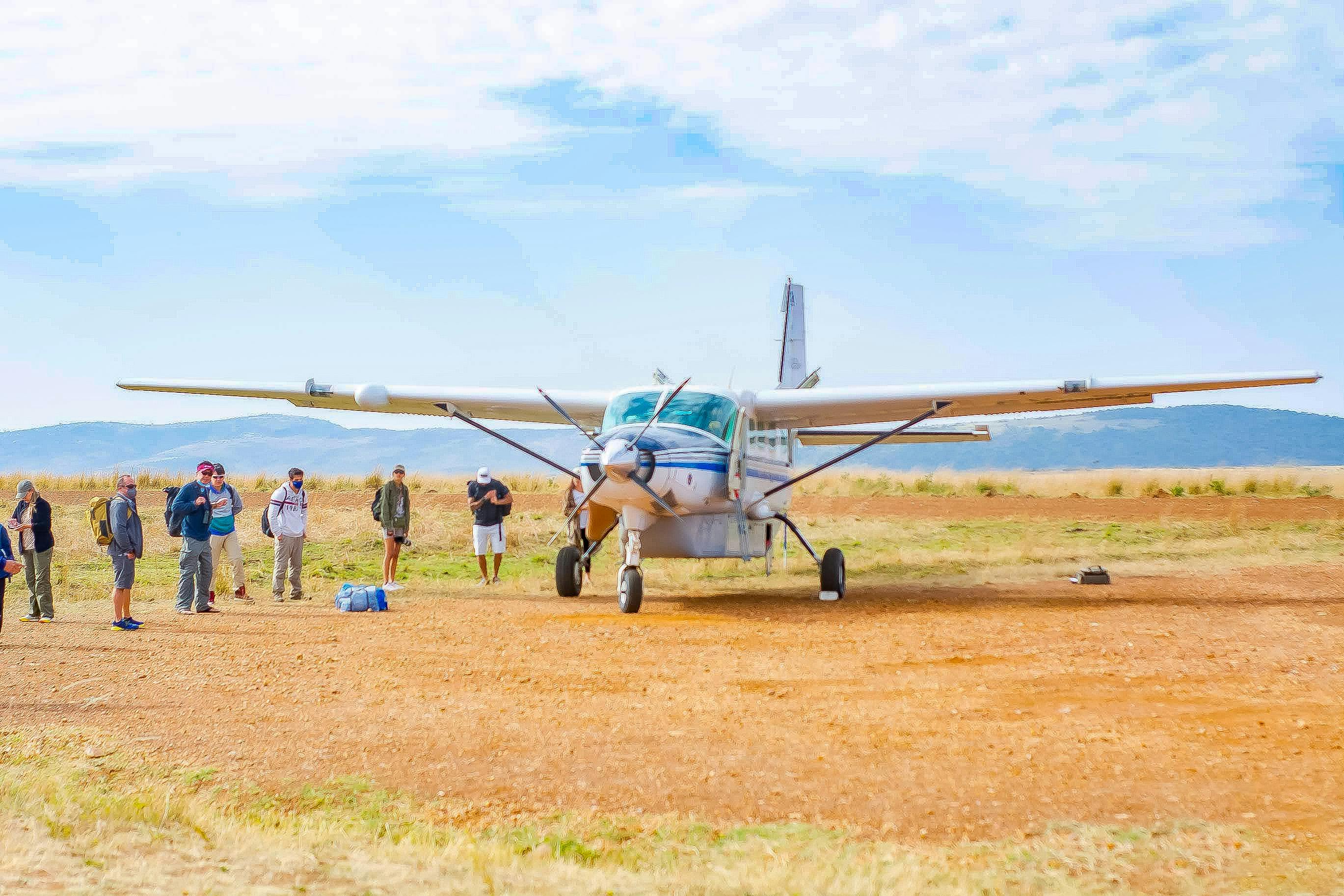
Fly-in transfers from Wilson Airport in Nairobi to Masai Mara airstrips take approximately 45 minutes and are operated by carriers including AirKenya and SafariLink, with one-way fares ranging from $150 to $350 per person depending on the operator and season.
Wilson Airport (IATA: WIL), located 6 km south of Nairobi CBD in Langata, is the departure point for all scheduled light aircraft services to the Mara. It is a small, easy-to-navigate airport — nothing like JKIA — and most operators ask you to arrive 30–45 minutes before departure. Transfers from central Nairobi to Wilson take 20–40 minutes depending on traffic.
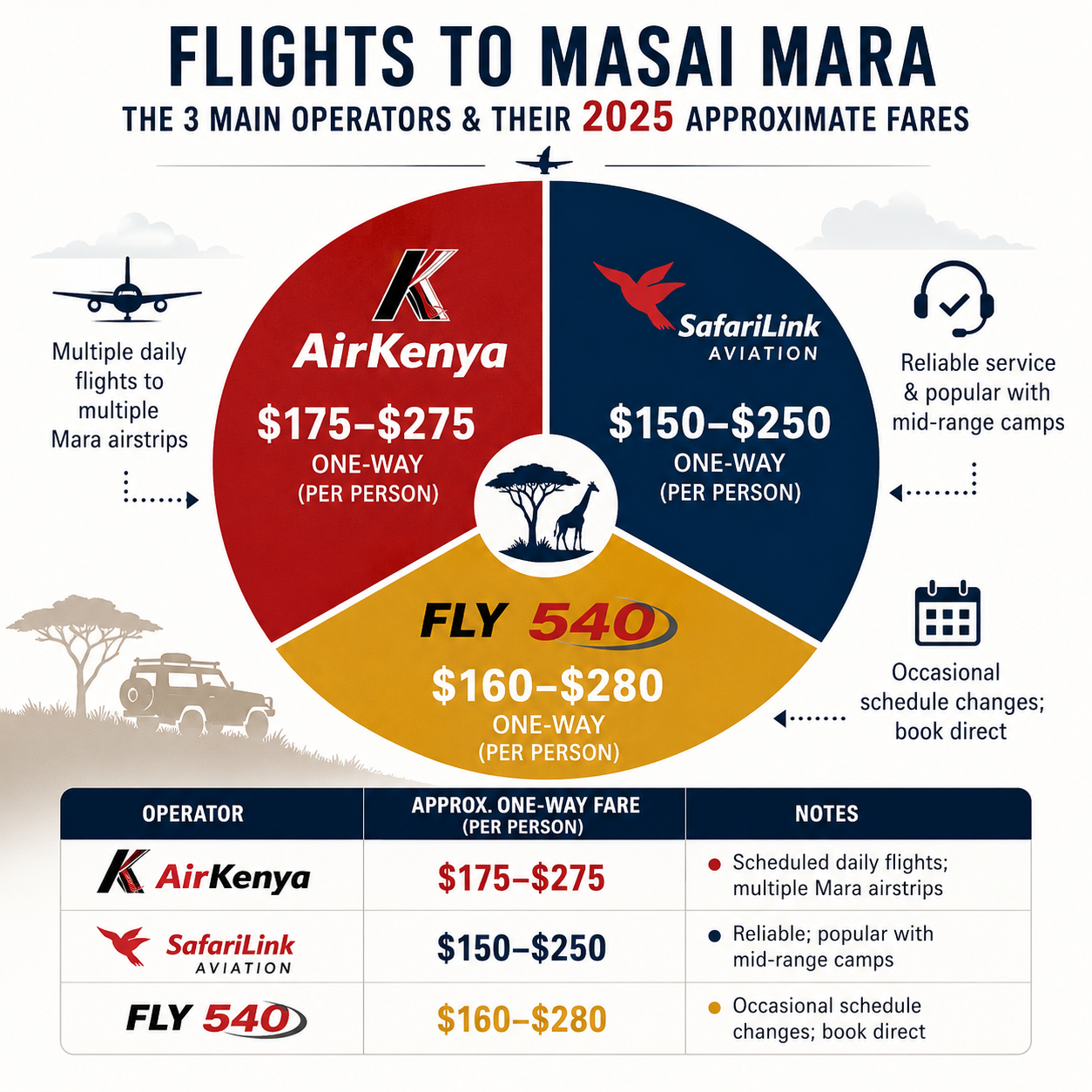
The three main operators and their approximate fares:
| Operator | Approx. One-Way Fare (per person) | Notes |
|---|---|---|
| AirKenya | $175–$275 | Scheduled daily flights; multiple Mara airstrips |
| SafariLink Aviation | $150–$250 | Reliable; popular with mid-range camps |
| Fly 540 | $160–$280 | Occasional schedule changes; book direct |
Baggage restriction: All light aircraft to the Mara impose a 15 kg soft bag limit — no hard-shell suitcases. This is a firm rule, not a suggestion. Pack a soft duffel or a dedicated safari packing list compatible bag. Excess baggage can sometimes be stored at Wilson Airport or your Nairobi hotel.
Which Airstrips Does Masai Mara Have and How Do You Choose the Right One?
Masai Mara has multiple airstrips, and choosing the right one depends entirely on which camp or conservancy you're staying in. This is a detail many travelers overlook — landing at the wrong airstrip can mean an additional 45-minute game drive transfer when you expected 10 minutes.
- Keekorok Airstrip — central Mara, closest to Governor's Camp and Keekorok Lodge
- Ol Kiombo Airstrip — southeastern Mara, serves camps in the Sekenani area
- Angama Airstrip — escarpment area, serves Angama Mara and nearby conservancy camps
- Musiara Airstrip — northern Mara, prime wildlife area, serves luxury camps in the Musiara Marsh zone
- Olare Orok / Naboisho — private conservancies north of the reserve; require specific flights
Always confirm your arrival airstrip with your camp before booking your flight. Most luxury lodges coordinate airstrip transfers as part of their package. If you're booking through Beyond the Plains Safaris, your camp transfer is arranged as part of your itinerary.
Can You Book a Fly-In Safari to Masai Mara Without a Full Tour Package?
Yes — you can book domestic flights to Masai Mara independently, directly through AirKenya or SafariLink's websites. However, independent booking is only straightforward if your camp confirms the exact airstrip and arranges a game vehicle to meet you on arrival. Most budget and mid-range camps do not automatically include airstrip transfers — this is typically an additional cost of $20–$50 per person.
For luxury lodges, the airstrip pickup is almost always included. For everything else, confirm in writing before you book your flights.
Road vs. Fly-In: Side-by-Side Comparison Across 5 Key Dimensions
The most useful comparison between road and fly-in options looks at five dimensions that actually matter to real travelers: total cost, travel time, comfort, flexibility, and environmental impact. No single option wins across all five — the right answer depends on which dimensions matter most to you.
Dimension 1: Total Cost
Road wins decisively on cost. A shared shuttle transfer costs KES 1,500–2,500 per person. A private 4x4 transfer costs KES 15,000–25,000 — still significantly less than flying. Even at the top of the road budget, you're spending $115–$195 per person compared to $150–$350 per person for a fly-in. Over a group of four travelers, the difference can fund an extra night at a mid-range camp.
Fly-in adds cost but can be partially offset by luxury lodge packages that bundle the flight fee, making the all-in price comparable to a mid-range road option once you factor in transfers, tips, and incidentals.
Dimension 2: Travel Time
Fly-in wins completely on time. Wilson Airport to Mara airstrip: 45 minutes. Road: 5–7 hours each way, meaning a 3-day safari loses nearly a full day to road transit. For travelers with tight schedules — a long weekend, a 4-day itinerary, a business traveler squeezing in a safari — this is non-negotiable.
Road travelers recover some time by combining the transit with en-route sightseeing. The Rift Valley viewpoint, for example, is a genuine highlight that fly-in travelers never see.
Dimension 3: Comfort and Fatigue
Fly-in is significantly more comfortable. Light aircraft cabins are small and can feel turbulent in afternoon thermals, but the experience is brief and genuinely exciting. Road travel in a 4x4 for 5–7 hours on corrugated murram tracks is tiring — especially for older travelers, those with back issues, and young children.
That said, the road experience has its own comfort: you can stop when you want, adjust the temperature, eat your own snacks, and travel at a pace that suits your group.
Dimension 4: Flexibility
Road wins on flexibility. You can depart when you want, stop at the Rift Valley viewpoint, detour through Naivasha, carry as much luggage as your vehicle allows, and adjust your schedule based on traffic conditions. Fly-in is fixed: scheduled departures, weight limits, specific airstrips, and weather-dependent operations (small aircraft don't fly in heavy storms).
Dimension 5: Environmental Impact
Both options carry a carbon footprint, and neither is truly "green" in the context of long-haul international travel. A light aircraft produces roughly 0.25–0.35 kg of CO₂ per passenger-km. A road transfer in a shared vehicle produces less per passenger than a private flight. If sustainability is a priority, the shared road option is the lower-impact choice — and several responsible operators offer carbon offset programs alongside their road packages.
How Do Road vs. Fly-In Costs Compare When You Include the Full Safari Budget?
The transfer is only one part of your total safari expenditure — and often not the biggest. Understanding the full cost picture prevents the most common budgeting mistake: choosing the cheap transfer option and then being surprised by everything else.
What Are the Masai Mara Park Entry Fees for Non-Residents and Residents ?
Masai Mara National Reserve charges non-resident adults approximately $80 USD per day in park entry fees, payable separately from accommodation and transfer costs. Resident Kenyan citizens pay significantly less — approximately KES 1,500–3,000 per day depending on the specific reserve zone. Children under 11 enter free or at reduced rates.
Park fees are paid at the gate, and KES cash or USD cash is the most reliable payment method — card machines exist but are inconsistently functional. Carrying cash is strongly advised. For the full breakdown, read our guide to Masai Mara park fees and the booking process.
Full Safari Budget Scenarios (per person, 3 nights/4 days):
| Budget Tier | Transfer | Accommodation | Park Fees | Meals | Guide Tips | Total Estimate |
|---|---|---|---|---|---|---|
| Budget (Road) | KES 2,500 (~$19) | $60–$90/night | $240 ($80×3) | Included | $30–50 | $400–$550 |
| Mid-Range (Road) | KES 20,000 (~$155) | $150–$250/night | $240 | Included | $50–80 | $850–$1,150 |
| Mid-Range (Fly-In) | $250 | $150–$250/night | $240 | Included | $50–80 | $990–$1,320 |
| Luxury (Fly-In) | Bundled | $450–$900/night | $240 | Included | $100–150 | $1,850–$3,000+ |
Notes: Most camps include meals and game drives in their rates. "Budget" camps typically exclude game drives (add $40–$80/drive). Tipping guides ($15–$25/day) and camp staff ($5–$10/day) is expected and non-optional in good conscience.
For budget safari camps in the Masai Mara and luxury lodges near the Masai Mara, the full range of options is outlined in our accommodation guides.
Local Tips That Tour Operators Won't Tell You
What Is the Best Time of Year to Travel from Nairobi to Masai Mara?
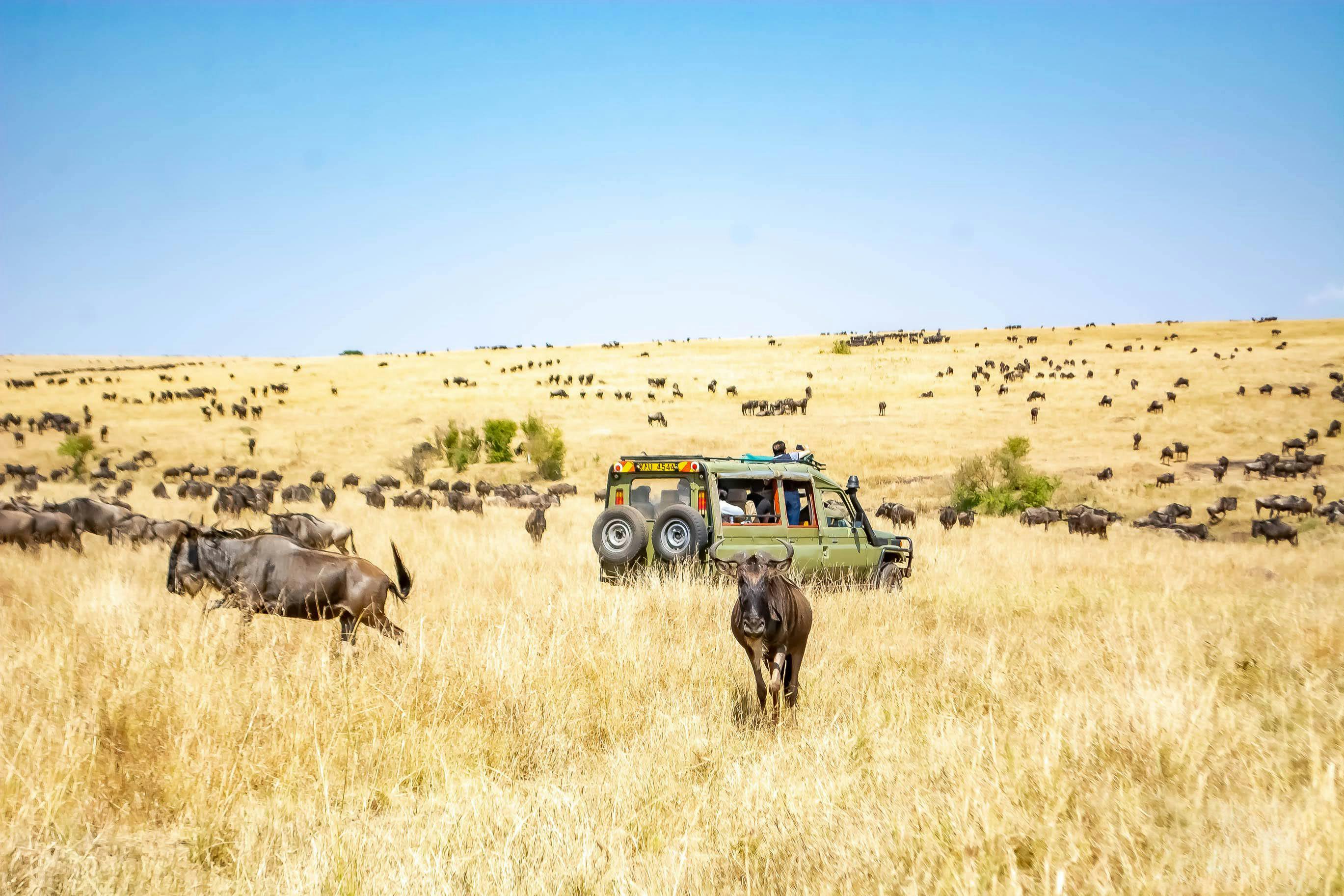
The best time to visit Masai Mara from Nairobi is between July and October for the Great Migration — the largest wildlife spectacle on earth, when 1.5–2 million wildebeest and zebra cross between Tanzania's Serengeti and Kenya's Mara. This period also coincides with dry road conditions, making both the road and fly-in options more reliable.
January and February offer a drier secondary season with good game viewing, fewer tourists, and lower accommodation rates. The best time to visit Masai Mara for the Great Migration depends on which crossings you want to witness — the Mara River crossings peak between August and September.
Peak season booking advice: Fly-in seats for July–October book out 4–6 months in advance. Budget camp beds go even faster. Book your flights, accommodation, and camp package simultaneously — not sequentially.
How to Avoid the Narok Weigh-Bridge Delay
Narok town sits midway on the road route and is notorious among safari drivers for two things: the Kenya Revenue Authority weigh-bridge checkpoint and the town's single congested main road. Depart Nairobi before 6:30am to clear Nairobi traffic and reach Narok before the weigh-bridge queue builds. Arriving in Narok between 11am and 2pm on weekdays is the worst window — budget an extra 30–90 minutes.
Carry KES cash for incidentals along the road — the last reliable ATMs are in Nairobi. Fuel up in Narok (last reliable petrol before the reserve) and resist the pressure to stop at roadside "souvenir stalls" in the final 30 km — they slow you down and most are not affiliated with genuine Maasai artisans.
Negotiating Group Discounts and Direct Booking Benefits
Booking directly with camps and lodges — rather than through international booking platforms — often yields 10–15% savings and gives you more flexibility on itinerary adjustments. Smaller, independently-owned camps in particular respond well to direct inquiries. For fly-in bookings, block-booking seats for a group of 4+ on the same AirKenya or SafariLink flight sometimes unlocks a marginal group discount — always ask.
Kenya safari visa and entry requirements for international visitors are handled online via the Kenya eTA system — apply at least 2 weeks before travel to avoid processing delays.
Which Nairobi-to-Masai Mara Transfer Option Is Best for Families with Young Children?
The fly-in option is best suited for travelers with fewer than four days, families with young children, luxury lodge guests whose packages include airstrip transfers, or anyone for whom time efficiency outweighs budget considerations.
For families specifically: Young children under 8 find the road journey genuinely difficult — 6 hours of corrugated tracks, no predictable rest stops, and significant dust. The 45-minute flight is far more manageable. Most fly-in luggage restrictions (15 kg soft bag) are also easily met by families packing strategically. The excitement of landing on a bush airstrip is often the highlight of the trip for children — they're already "in the wild" before they've touched the ground.
For families choosing the road option, a private 4x4 transfer (not shared) with a knowledgeable driver-guide who can narrate the drive makes the journey an activity rather than an ordeal. Stop at the Rift Valley viewpoint, spot giraffes near Narok, and arrive at your camp with stories already in hand.
What Should You Pack Differently Depending on Whether You're Flying or Driving?
Fly-in travelers face a strict 15 kg soft bag limit. This means ruthless packing: a neutral-coloured safari wardrobe (khaki, olive, beige — avoid white and bright colours that attract insects and compromise game viewing), compact binoculars, and no hard-shell suitcases. Store excess luggage at your Nairobi hotel or Wilson Airport's left-luggage service.
Road travelers have no luggage restriction (other than what fits in the vehicle), which means you can bring a cooler bag with drinks and snacks for the journey, a larger camera kit, and an extra layer for the early morning game drive chill. Carry dust-proof bags for electronics — the murram roads are particularly punishing on lenses.
For a complete Masai Mara packing list for a safari covering both transfer scenarios, our full guide breaks down essentials by category.
Recommended Operators, Vehicles & Booking Platforms for Both Routes
Road Transfer Operators Worth Booking
Riverside Shuttle runs a daily shared shuttle from Nairobi to the Mara and back, departing at 8:00am. It's the most established budget option and consistently reliable. Easy Coach Kenya covers the Nairobi–Narok segment for ultra-budget travelers who want to arrange the final stretch separately.
For private 4x4 transfers, the most reputable approach is booking through a KATO-registered operator like Beyond the Plains Safaris, which provides experienced driver-guides in properly maintained Land Cruisers or Land Rovers — vehicles that have been vetted on the actual Mara tracks, not just on Nairobi tarmac.
Fly-In Operators Worth Booking
AirKenya (airkenya.com) and SafariLink Aviation (flysafarilink.com) are the two most reliable scheduled carriers. Both offer online booking, regular schedules (typically 2–3 flights per day to various Mara airstrips), and reasonable transparency on baggage policies. Book directly with the airline for the best available fares — third-party platforms add margin without adding value.
For the complete SafariLink and AirKenya flight comparison, including schedule reliability and airstrip coverage, our dedicated guide breaks down both carriers side by side.
What to Do Once You Arrive: Your First 24 Hours in the Mara
Your first 24 hours in the Masai Mara set the tone for the entire safari. Whether you've arrived by road or by air, the sequence below applies universally.
Check in and orient immediately. Ask your camp manager about wildlife activity that morning — guides know where the predators were, where the herds are moving, and what's changed since yesterday. This intelligence shapes your first game drive more than any pre-trip research.
Time your first game drive for golden hour. The best light in the Mara is between 6:00–8:30am and 4:30–6:30pm. If you've arrived by road after a long day, resist the temptation to skip the afternoon drive — the light at sunset on the savannah is something you will not forget. Read our guide on what to expect on your first game drive for a full preparation briefing.
Communication with camp staff is simpler than most visitors expect. Your guide, called bwana msafiri (travel companion) in Swahili by camp tradition, will brief you on safety protocols, vehicle etiquette (stay seated, don't stand or extend arms), and daily schedules. Tip your guide at the end of each drive, not only at departure — it motivates exceptional guiding throughout your stay.
Pack your game drive bag the night before with sunscreen, a dust mask or buff, binoculars, a charged camera with extra memory cards, and a light fleece or layer — early mornings in the open vehicle are cold even in July.
Are There Any Stops Worth Making on the Road from Nairobi to Masai Mara?
Several stops on the B3/A104 route genuinely add value to the road journey — and only add 30–60 minutes total to your transit time. The Great Rift Valley viewpoint near Mai Mahiu (approximately 60 km from Nairobi) is the most dramatic: a panoramic escarpment overlook of the entire Rift Valley floor, often with acacia trees silhouetted against the distance. It costs nothing and takes 15 minutes. Take it.
Naivasha town (approximately 90 km from Nairobi) offers the last comfortable restaurant break and fuel stop before the road narrows. The Fishmonger Restaurant on the lake road is a reliable stop for grilled tilapia if you're travelling at lunch time. Narok town is purely functional — fuel, water, and snacks only. Don't linger.
Avoid the "Maasai village tour" offers from roadside touts between Narok and the reserve gates. Genuine cultural experiences inside the reserve, arranged through your camp and with proper community benefit, are far more meaningful.
Conclusion: Which Transfer Option Is Right for Your Masai Mara Safari?
Choosing between the road and fly-in route to Masai Mara is not a question of which option is "better" — it's a question of which option is right for your specific situation. Use this simple framework to decide:
Choose the road if:
- You have 4+ days and want to absorb Kenya's landscape at ground level
- Budget is a genuine constraint and you want to allocate savings to better accommodation
- You're an adventurous traveller who values the journey as much as the destination
- You're booking a Kenya safari itinerary of 5 days or more from Nairobi
Choose the fly-in if:
- You have 3 days or fewer and can't afford to lose half a day each way
- You're travelling with young children or older adults for whom a long road journey is genuinely uncomfortable
- You're staying at a luxury lodge that includes airstrip transfers in its package
- You've already done the road trip and want to experience the Mara differently
Both routes arrive at the same place: a landscape where lions rest on termite mounds, elephants move through golden grass at dusk, and the sheer scale of the African bush resets something in you that city life has compressed. The transfer is the prelude. The Mara is the story.
Ready to plan your safari? Whether you're comparing road and fly-in options, looking at budget safari camps in the Masai Mara or luxury lodges near the Masai Mara, or still deciding between Amboseli vs. Masai Mara, the team at Beyond the Plains Safaris will help you build an itinerary around real wildlife conditions — not brochure promises.
Get your free safari quote → | Schedule a consultation →
Written by Lilian Wairimu, Senior Safari Specialist at Beyond the Plains Safaris. Lilian has personally guided and planned hundreds of Masai Mara itineraries for clients from across the globe, with over a decade of on-the-ground experience coordinating both road and fly-in transfers across all seasons.
Reviewed by the editorial team at Beyond the Plains Safaris — a KATO-registered Kenya and Tanzania safari operator with a 4.9 TripAdvisor rating and 2025 Tourism Excellence Award recognition.
Disclaimer: This article was initially drafted using AI assistance. However, the content has undergone thorough revisions, editing, and fact-checking by human editors and subject matter experts to ensure accuracy. Cost figures are indicative 2025 estimates and may vary by season, operator, and availability. Always confirm current pricing directly with operators before booking.










Comments (0)
Leave a Comment
No comments yet. Be the first to comment!