You already know that a Kenya safari means game drives, iconic landscapes, and close encounters with the Big Five. What most travelers don't realize is how dramatically the experience changes once private jets, whole-camp buyouts, and personal chefs enter the picture — the difference isn't just comfort, it's an entirely different trip. This guide breaks down exactly what ultra-luxury safari travel includes, what it costs, and how to plan one.
Key Takeaways
- A VIP or ultra-luxury Kenya safari combines private aviation, exclusive-use camps, and dedicated staff to remove shared logistics and maximize privacy.
- A buyout camp gives a single group exclusive use of an entire property — every room, vehicle, guide, and staff member — for the duration of the stay.
- Private jet and light-aircraft charters eliminate scheduled-flight layovers, letting guests move directly between remote camps on their own timeline.
- Personal chefs on ultra-luxury safaris build custom menus around each guest's preferences and dietary needs, often serving meals in unconventional bush settings.
- Pricing at this tier reflects exclusivity rather than added activities; costs scale with private air time, camp buyout capacity, and staff-to-guest ratios.
- Kenya's tourism sector generated $3.84 billion in revenue in 2025, a record year that underscores rising global demand for premium East African travel.
- Working with a specialist safari operator, rather than a general travel agent, typically unlocks buyout availability and bespoke logistics that aren't listed publicly.
What Is a VIP or Ultra-Luxury Kenya Safari?
A VIP or ultra-luxury Kenya safari is a fully private, custom-built safari built around three pillars: private air transport, exclusive-use accommodation, and a dedicated team of staff — including guides, chefs, and often butlers — assigned solely to one traveling party. Unlike a standard luxury safari, where guests stay in a beautiful camp but still share vehicles, meal times, or communal spaces with other travelers, an ultra-luxury or VIP safari removes every point of shared logistics. An ultra-luxury Kenya safari typically combines private air transfers, exclusive-use accommodation, and dedicated culinary and guiding staff to eliminate shared logistics with other travelers.
This distinction matters more than most first-time luxury travelers expect. A "luxury" safari camp might have nine beautifully appointed tents, a full-time chef preparing set menus for all guests, and scheduled game drives shared with two or three other vehicles. A VIP or ultra-luxury version of that same camp — booked as a buyout — puts every one of those nine tents, the entire kitchen team, and every vehicle at the disposal of a single group. The wildlife, landscapes, and camp architecture stay the same. What changes is who else is there, and the answer becomes: no one.
For clarity, here's how the two tiers compare across the dimensions that actually affect a traveler's day-to-day experience:
| Dimension | Standard Luxury Safari | VIP / Ultra-Luxury Safari |
|---|---|---|
| Air travel | Scheduled light-aircraft flights, shared with other passengers | Private charter or full jet, on the guest's own schedule |
| Camp access | Individual rooms booked within a shared property | Entire camp or lodge booked exclusively (buyout) |
| Dining | Set menu, shared dining times | Personal chef, custom menus, private dining locations |
| Guiding | Shared vehicles, fixed drive schedules | Dedicated guide and vehicle per family or couple |
| Staff ratio | Typically 1 staff member per 2-3 guests | Often 1 staff member per guest, or higher |
| Flexibility | Fixed itinerary, group pacing | Fully custom pacing, routes, and activities |
For readers weighing whether a fully private trip is worth the premium over a standard high-end itinerary, our guide on private safaris in East Africa: what actually matters breaks down the trade-offs in more depth.
Why Ultra-Luxury Safaris Matter (What the Premium Actually Buys)
Ultra-luxury safaris matter because they convert a good trip into a fully controllable one — travelers pay for privacy, time, personalization, and peace of mind, not just thread count and views. Each of these deserves its own explanation, since they are the actual product being sold, not marketing language.
First, privacy is the most obvious draw. A buyout camp means no strangers at breakfast, no other vehicles jostling for position at a lion sighting, and no compromise on where a family's children can safely roam the property. This matters enormously for high-profile guests, multigenerational families, and couples celebrating a honeymoon or anniversary who don't want an audience.
Second, time efficiency is often underestimated until a traveler experiences the alternative. A private jet or light-aircraft charter departs when the group is ready, not when a shared flight schedule dictates. That being said, this isn't only about convenience — it's about maximizing wildlife time. For example, a family flying privately from Nairobi to a Laikipia conservancy can land at a private airstrip, be in a game vehicle within fifteen minutes, and catch prime morning light for photography, instead of waiting on a scheduled flight's mid-morning departure.
Third, personalization covers everything from dietary accommodation to pacing. At this level, an operator builds the itinerary around the guests, not the other way around. As such, a family with young children might do shorter morning drives and longer midday pool time, while a photography-focused couple might request pre-dawn departures and extended golden-hour stays at a single sighting.
Finally, safety and comfort carry real weight for security-conscious travelers, elderly guests, or families with medical considerations. Exclusive-use properties and private guiding teams make it far easier to manage dietary allergies, mobility needs, or discreet medical support without involving other guests or camp-wide logistics.
This demand is not anecdotal. Kenya's tourism sector generated approximately $3.84 billion in revenue in 2025, a 10 percent increase over 2024, with international arrivals climbing 9 percent to 2.7 million visitors — more than double the global average growth rate for international tourism that year — Source: Kenya Ministry of Tourism and Wildlife, Kenya Tourism Sector Performance Report 2025. At the same time, Virtuoso's 2026 Luxe Report, based on survey responses from more than 2,400 travel advisors across over 50 countries, identified "Unlimited Luxe" — including full resort and camp buyouts for milestone celebrations — as one of the defining luxury travel trends of the year — Source: Virtuoso, 2026 Luxe Report. Separately, Virtuoso reported during its 2026 Travel Week that member sales were pacing more than 20 percent ahead of the prior year, with luxury hotel sales specifically up 24.5 percent year-over-year — Source: Virtuoso, via TravelPulse, August 2026. Together, these figures confirm what specialist operators are seeing on the ground: demand for fully private, exclusive-use African travel is rising, not plateauing.
That said, the premium buys something harder to quantify than any single figure: decision-making authority over the trip itself. On a standard luxury safari, the camp sets meal times, the shared vehicle schedule dictates when a group leaves for a game drive, and the itinerary bends around what fits everyone else booked that week. On an ultra-luxury or buyout safari, the traveling party sets all of it. A grandmother who needs a slower morning, a teenager who wants to sleep through sunrise and drive out at midday instead, or a photographer who wants to stay at one sighting for three hours instead of thirty minutes — all of that becomes possible only when no other guests' preferences have to be balanced against theirs. In addition, this level of control extends to security planning for guests who prefer not to be publicly identified during their stay, since a fully private camp allows staff briefings and access management that a shared property simply cannot offer.
To see how this plays out specifically in Kenya's most in-demand region, our Maasai Mara safari guide covering best time to go, costs, and where to stay is a useful companion resource.
How Much Does a Private Jet Safari in Kenya Cost?
Private jet safaris in Kenya cost more than scheduled flights because guests are paying for an entire aircraft, a flexible schedule, and often a more direct routing between remote airstrips, rather than a single seat on a shared plane. There is no single published rate, since pricing depends on aircraft type, distance, and how many legs the itinerary requires — but understanding the two main options makes the cost structure much clearer.
Private Jet Charter vs. Private Light Aircraft Transfers
Most ultra-luxury Kenya safaris don't actually use a full private jet for every leg. Instead, they blend two types of private air travel. A private jet charter typically covers the international-to-domestic connection — for instance, flying a family directly into Nairobi's Wilson Airport or a private airstrip near a conservancy — while a private light aircraft charter (usually a Cessna Caravan or similar bush plane) handles the shorter hops between camps once the group is already in Kenya.
Kenya's safari aviation sector is built around a handful of established operators who run both scheduled and private-charter services. Safarilink Aviation, founded in 2004 and based at Wilson Airport in Nairobi, operates a fleet of roughly a dozen aircraft ranging from 13 to 52 seats, flying scheduled routes to around 18 safari and coastal destinations while also offering full private charters for groups who need flexible timing or a specific routing — Source: Safarilink Aviation. Governors' Aviation, the in-house air service of the Governors' Camp collection, similarly runs daily scheduled Cessna Grand Caravan flights between Nairobi, the Maasai Mara, Amboseli, and Lake Naivasha, alongside private charter availability across Kenya, Tanzania, Uganda, and Rwanda — Source: Governors' Camp. Booking a full aircraft through either type of operator, rather than individual seats, is what defines a "private jet safari" in practical terms.
What Drives the Price Up or Down
Several factors move the cost of private air travel on a Kenya safari significantly:
- Aircraft size and type — a six-seat Cessna Caravan charter costs far less than a mid-size private jet.
- Number of legs — an itinerary hopping across three or four conservancies multiplies charter costs compared with a single round trip.
- Distance and remoteness — flights to far-flung conservancies in Laikipia or Samburu cost more than short Mara hops due to fuel and positioning.
- Group size relative to aircraft capacity — chartering a 12-seat aircraft for a party of four still costs the same as chartering it for twelve.
- Seasonal demand — peak migration months (July–October) and the December holiday period see higher charter demand and correspondingly firmer pricing.
For travelers deciding whether flying is even necessary versus driving between parks, our comparison of Nairobi to Maasai Mara: road versus fly-in walks through the time and cost trade-offs in detail, and our dedicated fly-in Kenya safaris page outlines standard routings. Some ultra-luxury itineraries also substitute helicopters for fixed-wing aircraft on certain legs — our insider's guide to Kenya helicopter safaris covers when that option makes sense and what it costs.
What Is a Buyout Camp and How Does It Work?
A buyout camp is a safari property booked in its entirety by a single group, giving exclusive use of every room, vehicle, guide, and staff member for the length of the stay. In practice, this means no other guests check in during the booking window — the camp effectively becomes a private estate for that family, couple, or group.
Buyouts work by reserving every tent or villa on a property simultaneously, rather than one or two rooms within a shared occupancy. Most camps that offer this option have a minimum-night stay for buyouts and typically require booking well in advance, since it removes the property's other inventory from the market entirely for those dates.
A real example illustrates the mechanics well. Segera Retreat, set within a 50,000-acre private, malaria-free conservancy on Kenya's Laikipia Plateau, offers ten individually designed villas that can be booked as single units, in small groups, or as a full-property buyout for exclusive use of the entire retreat — Source: Segera Retreat. That flexibility is fairly typical of the ultra-luxury tier: the same physical camp can serve as a standard luxury booking for a couple wanting one villa, or transform into a fully private buyout for an extended family or corporate group wanting the whole property.
How Many Guests Can a Typical Buyout Camp Accommodate?
Buyout capacity varies significantly by property, and this is one of the first questions a specialist operator will ask when planning an ultra-luxury itinerary. Smaller boutique camps with five or six tents might comfortably buy out for 10–12 guests, while larger luxury properties with nine or more suites can accommodate 18–20 guests as a full buyout. &Beyond's Bateleur Camp, on the edge of the Maasai Mara, was fully renovated in 2018 and now comprises two separate camps of nine tented suites each — a structure that lends itself naturally to either a single large buyout or two smaller exclusive-use bookings running side by side — Source: Afar. Families planning a multigenerational trip should always confirm buyout capacity, adjoining-room configurations, and any age restrictions directly with the property before finalizing dates; our guide to planning a family reunion safari in Kenya covers exactly this kind of large-group logistics.
Which Kenya Regions Are Best for Ultra-Luxury Buyout Experiences?
The best regions for ultra-luxury buyout safaris in Kenya are the Maasai Mara ecosystem, the Laikipia Plateau, and Samburu, each offering a different balance of wildlife density, privacy, and landscape. Choosing between them depends on what the traveler prioritizes — Big Five density, total seclusion, or a rugged, off-the-beaten-path feel.
Maasai Mara & Mara North Conservancy
The Maasai Mara remains Kenya's flagship safari destination and hosts the Great Migration for much of the July–October period. Within the wider Mara ecosystem, private conservancies bordering the main reserve — such as Mara North Conservancy — operate under strict vehicle-density limits and off-road driving rules, making them especially well suited to buyout camps and private guiding. Angama Mara, perched on the Oloololo Escarpment above the Mara Triangle, was founded by Steve and Nicky Fitzgerald, safari industry veterans who previously ran more than 60 lodges for the luxury operator &Beyond before building their own property — Source: Afar. Its elevated position and design make it a frequently requested buyout for milestone celebrations. Readers comparing conservancy options in more depth should see our guide to the Mara North Conservancy and our roundup of the best Maasai Mara safari camps and lodges.
Laikipia
North of the Mara, the Laikipia Plateau offers a different kind of exclusivity: fewer visitors overall, private conservancies with strict guest caps, and activities not permitted in national reserves, such as walking safaris and night drives. Properties like Segera Retreat exemplify the buyout-friendly model common in this region. For a broader look at what makes Laikipia distinct, see our guide to Laikipia's private conservancies and our roundup of Kenya's best private conservancies.
Samburu
Further north still, Samburu National Reserve and its surrounding community conservancies offer a more remote, arid-landscape safari with species not found further south, including Grevy's zebra and reticulated giraffe. Its relative remoteness makes it a natural fit for private jet or charter access rather than road travel, and buyout camps here tend to feel especially secluded. Our Samburu National Reserve safari guide covers logistics, wildlife highlights, and the best camps in the area, and the Samburu Game Reserve destination page has current trip options.
How Do Personal Chefs Work on a Safari, and Can They Accommodate Dietary Restrictions?
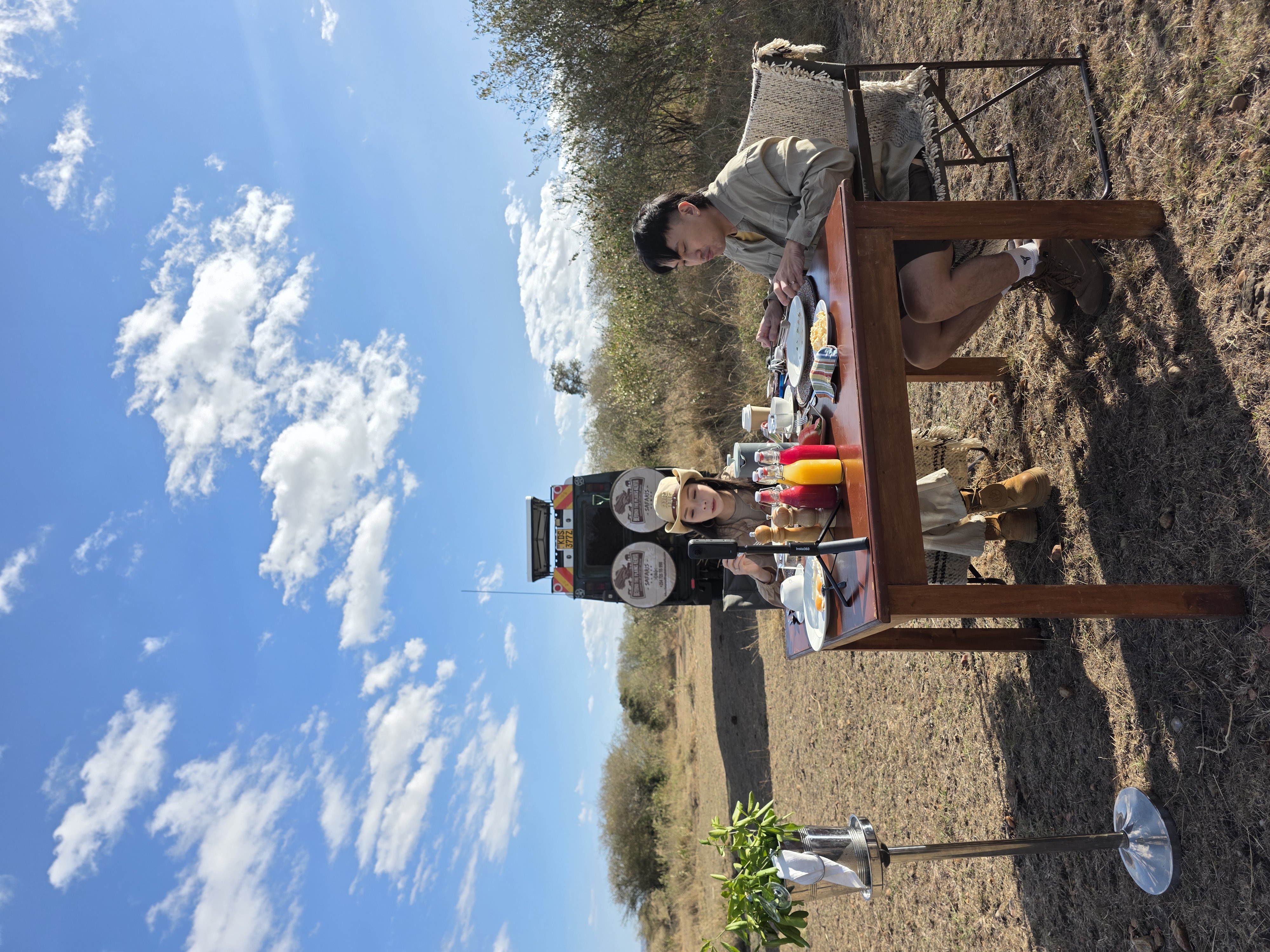
Personal safari chefs design menus around each guest's dietary needs and preferences, often preparing meals for private bush breakfasts or sundowner dinners away from the main camp. Rather than a set menu decided by the property, a personal chef consults directly with the traveling party — sometimes before arrival, via the operator — to plan meals around allergies, medical dietary needs, cultural or religious requirements, and simple personal taste.
In practice, this means a family with a child who has a nut allergy can dine worry-free, a vegan traveler gets a fully designed tasting menu rather than a modified side dish, and a couple celebrating an anniversary can request a private table set up on a riverbank at sunset instead of the communal dining tent. At this level, meals become part of the itinerary's storytelling rather than a logistical afterthought — a private bush breakfast overlooking a waterhole, or a candlelit dinner under a star-filled Laikipia sky, staged entirely for one group.
Most ultra-luxury camps that offer personal chef service will request dietary information in advance so ingredients can be sourced and menus planned before the group even lands. For guests with more complex needs — severe allergies, specific medical diets, or religious dietary law — it's worth confirming these details directly with the operator during initial planning rather than leaving them for arrival day.
What Additional VIP Inclusions Should You Expect?
Beyond air travel, buyouts, and personal chefs, several other inclusions commonly define the top tier of Kenya safari travel:
- Dedicated private guide and vehicle — one guide and vehicle assigned solely to a single family or couple for the entire trip, rather than a shared vehicle rotating guests.
- Butler or house-manager service — a dedicated staff member coordinating everything from laundry to sundowner logistics, common at properties like Bateleur Camp.
- In-camp spa and wellness treatments — many ultra-luxury properties now offer private spa tents or wellness pavilions, reflecting the broader "wellness travel" trend Virtuoso identifies among luxury travelers.
- Enhanced security and discretion — relevant for high-profile guests, with properties able to manage staff briefings and access control for a fully private stay.
- Medical support and evacuation cover — reputable operators arrange or confirm access to East Africa's established flying-doctor evacuation networks as standard practice for remote-area travel, regardless of tier.
Moreover, it's worth noting that not every VIP inclusion needs to be booked à la carte. Specialist operators typically bundle these elements into a single custom quote, which is one reason working with an experienced planner (covered below) tends to produce a smoother experience than assembling each component independently.
Tools, Examples & Practical Applications
To make these concepts concrete, here's how a real ultra-luxury itinerary structure typically comes together, along with realistic price positioning.
Sample 5-night ultra-luxury Kenya itinerary structure:
- Private charter transfer from Nairobi (Wilson Airport) to a Laikipia private airstrip.
- Two nights at a full-buyout Laikipia conservancy camp, with a dedicated guide, private vehicle, and personal chef.
- Private light-aircraft transfer to a Mara North or Mara Triangle buyout camp.
- Three nights at a full-buyout Mara property, including a private bush dinner and a full-day game drive with picnic lunch.
- Private charter return to Nairobi or onward to a coastal extension.
On pricing, exact published rates are rare at this tier since every quote is custom, but industry market analysis gives a useful directional signal: a 2026 market report distributed via GlobeNewswire estimated the global high-end safari outfitters segment at $2.73 billion in 2025, growing at a compound annual rate of roughly 7.7 percent as high-net-worth travel demand, expanded luxury lodge inventory, and improved access to remote destinations continue to drive the category — Source: High-End Safari Outfitters Market Report 2026, GlobeNewswire, July 2026. As such, prospective travelers should treat any fixed number they see online as a rough starting point rather than a firm quote, and request a tailored proposal based on group size, season, and exact regions.
For a full breakdown of how safari costs scale across tiers, see our guides on Kenya safari cost, how much a Kenya safari costs per day, and our direct comparison of mid-range versus luxury safari options. If you're weighing a fully private trip against a small-group departure, our piece on group versus private safari experiences is a helpful next read.
What's Next: How to Plan Your Ultra-Luxury Kenya Safari
Planning an ultra-luxury Kenya safari starts with choosing the right specialist operator, confirming buyout availability early, and locking in air logistics before accommodation. These steps, in order, tend to produce the smoothest planning process.
How Far in Advance Should You Book an Ultra-Luxury Kenya Safari?
Top-tier buyout camps and their associated private air slots book up well ahead of peak periods. Practically speaking, travelers targeting the July–October migration season or the December–January holiday window should begin planning nine to twelve months out, since exclusive-use inventory is inherently limited — a camp can only be bought out by one group at a time, unlike a standard room booking. Shoulder-season travel (February–March or June) offers more flexibility and can sometimes be arranged with four to six months' notice.
What Is the Best Time of Year for a Private Kenya Safari?
The best time depends on priorities. July through October delivers the Great Migration and peak wildlife density but the highest demand for buyouts and charters. January and February offer excellent game viewing with green scenery and thinner crowds. Our best time to visit Kenya for a safari guide and Great Migration month-by-month guide break this down by month, which is especially useful when private air scheduling is part of the decision.
Should You Book Directly or Through a Luxury Safari Specialist?
Booking directly with a single property works when a traveler already knows exactly where they want to stay. However, most ultra-luxury itineraries span multiple camps, regions, and air segments, which is where a specialist operator adds real value — coordinating buyout availability, private air logistics, dietary planning with camp chefs, and contingency routing if weather affects a bush airstrip. A knowledgeable operator also typically has direct relationships with camp management that can surface buyout availability not listed on public booking calendars. For guidance on vetting an operator, see our checklist for choosing a Kenya safari operator and our roundup of the best Kenya safari companies and tour operators.
A few practical planning steps worth prioritizing early:
- Confirm buyout capacity and minimum-night requirements directly with shortlisted camps before finalizing dates.
- Lock private air segments early, since charter aircraft availability tightens fastest during peak season.
- Share dietary and medical needs upfront so personal chefs and camp staff can plan and source accordingly.
- Ask about combining regions — most ultra-luxury trips pair two or three ecosystems (for example, Laikipia and the Mara) rather than staying in one place.
- Review packing needs early, since private charters often have stricter baggage weight limits than commercial flights; our Kenya safari packing list covers what to bring and what to leave behind.
Honeymooners and couples planning a milestone trip may also want to see our guides to honeymoon safaris in Kenya and the best luxury honeymoon destinations in Kenya, while families should start with our family-friendly African safari planning guide or a ready-made 9-day family safari in Kenya itinerary as a starting template.
Frequently Asked Questions About VIP Kenya Safaris
A few additional questions come up repeatedly once travelers understand the core mechanics of private jets, buyouts, and personal chefs. These are worth addressing directly.
Is a private jet necessary, or are light-aircraft transfers enough? For most itineraries within Kenya, private light-aircraft charters handle inter-camp travel perfectly well, since flight times between conservancies rarely exceed an hour. A full private jet typically only becomes relevant for the international leg or when connecting Kenya to a second country, such as a Tanzania extension, on a tight schedule. Many ultra-luxury travelers combine a scheduled first- or business-class international flight with private light-aircraft charters domestically, which controls cost without sacrificing the on-the-ground flexibility that matters most.
What does a VIP or ultra-luxury safari include that a standard safari doesn't? Beyond the headline features already covered — private air, buyouts, and personal chefs — the practical difference shows up in staff ratios, dining flexibility, and the ability to change plans mid-trip without affecting anyone else. A standard luxury camp might reshuffle a game drive schedule for the whole group if one activity runs long; a private buyout simply adjusts for that one family.
Can an ultra-luxury safari be combined with a beach extension? Yes. Many operators pair an inland buyout safari with a private-villa stay on the coast, and the same private-aviation logistics apply for that final leg. Our guides to Diani Beach and safaris from Diani cover how this combination typically works.
Conclusion
A VIP or ultra-luxury Kenya safari isn't simply a more expensive version of a standard trip — it's a fundamentally different way of experiencing East Africa's wildlife, built around privacy, personalization, and control over every detail. Private jets and light-aircraft charters remove the friction of shared logistics. Buyout camps hand an entire property, staff, and vehicle fleet over to one group. Personal chefs turn every meal into a moment designed specifically for the travelers at the table. Together, these elements explain why Kenya's tourism sector, having just posted a record $3.84 billion year, continues to see rising demand at the very top of the market.
For the right traveler — a family marking a milestone, a couple who wants total privacy, or a group that simply wants the very best version of a safari — this level of investment buys something that can't be recreated: an irreplaceable trip, built entirely around them. The next step is a conversation with a specialist who can turn these possibilities into an actual itinerary. Start planning your ultra-luxury Kenya safari with a consultation to explore buyout availability, private air options, and personal chef planning for your dates.









Comments (0)
Leave a Comment
No comments yet. Be the first to comment!