

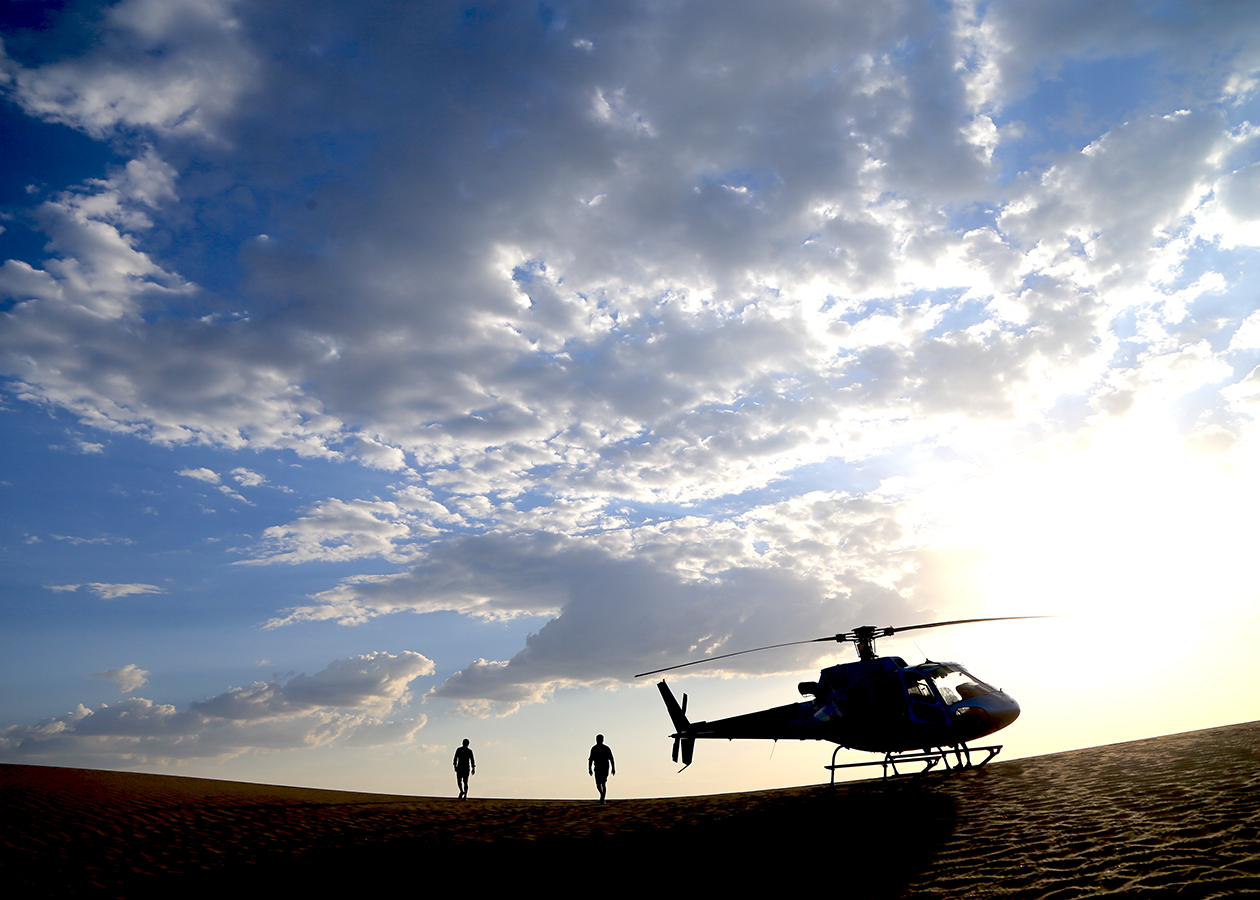
The Insider's Guide to Kenya's Helicopter Safaris: Where to Fly, What It Costs, and How to Book It Right
You've probably pictured a Kenya safari from the window of a 4x4, bouncing along dirt tracks toward a distant herd. What most travelers don't realize is how much of Kenya's most dramatic landscape — and its most exclusive conservancies — is only reachable by air. This guide breaks down exactly what a helicopter safari involves, where to fly, what it costs, and how to choose an operator with genuine safety credentials.
Key Takeaways
- A helicopter safari is a guided aerial safari experience that uses a helicopter, rather than a 4x4 or fixed-wing aircraft, to reach remote conservancies and view wildlife and landscapes from the air.
- Kenya's most popular helicopter safari regions include the Masai Mara, Samburu, Laikipia, Mount Kenya, and Amboseli, each offering distinct terrain and wildlife viewing from altitude.
- Helicopter safaris typically combine short scenic flights, bush breakfasts or sundowners in remote locations, and off-airstrip landings not accessible by road or fixed-wing aircraft.
- Pricing is driven primarily by helicopter positioning and flight-hour costs rather than by season, so per-person rates can run into the thousands of dollars per excursion or multi-day trip.
- Operator safety credentials matter: travelers should confirm KCAA (Kenya Civil Aviation Authority) licensing, pilot experience hours, and aircraft maintenance transparency before booking.
- Helicopter safaris are usually booked as an add-on to a broader Kenya safari itinerary rather than as a standalone trip.
- The best time for helicopter safaris varies by region — Mount Kenya summit visibility is clearest January–March and June–September, while the wildebeest migration is best viewed from the air July–October.
What Is a Helicopter Safari and How Does It Differ From a Fixed-Wing Safari?
A helicopter safari is a guided wildlife and landscape tour conducted by helicopter, offering access to remote conservancies and off-airstrip landing sites not reachable by vehicle or fixed-wing aircraft. Unlike a conventional game drive, there's no dirt track dictating your route and no queue of vehicles at a sighting. Unlike a fixed-wing scenic flight, a helicopter can slow down, hover, and descend low over a herd of elephants or a river crossing without needing a runway on either end.
This distinction matters more than it sounds. Fixed-wing aircraft need a graded airstrip to take off and land, which means your flight starts and ends at fixed points, usually a lodge's private strip. A helicopter, by contrast, can set down almost anywhere with a flat, clear patch of ground — a riverbank, a hilltop, a private conservancy with no airstrip at all. That flexibility is the entire value proposition of flying by helicopter in Kenya.
It's also worth separating a helicopter safari from a hot air balloon safari vs. helicopter safari comparison, since travelers often confuse the two. A balloon safari is a slow, silent, sunrise-only drift over the plains, dependent on wind direction and typically lasting about an hour. A helicopter safari, by comparison, is faster, fully directional, available at almost any time of day, and can cover far greater distances — from a private conservancy in the Mara to the snow-capped slopes of Mount Kenya in a single outing.
How a Helicopter Safari Compares to a Fixed-Wing Transfer
The table below breaks down the practical differences travelers weigh before booking.
| Feature | Helicopter Safari | Fixed-Wing Transfer | Hot Air Balloon |
|---|---|---|---|
| Landing flexibility | Off-airstrip, almost anywhere | Requires a graded airstrip | N/A (no directional landing) |
| Typical altitude for viewing | Low-level, can hover | High-altitude cruising | Low-level, drifting |
| Duration | 20 minutes to multi-day | Point-to-point transfer only | 45–60 minutes |
| Time of day | Flexible, most daylight hours | Scheduled departures | Sunrise only |
| Best for | Scenic detours, bush breakfasts, remote conservancies | Efficient transfers between parks | A single, slow sunrise experience |
| Relative cost | Highest per flight-hour | Moderate, often shared-seat | Fixed per-person rate |
Why Helicopter Safaris Matter
Helicopter safaris matter because they open up parts of Kenya that ground vehicles and scheduled flights simply cannot reach. Roughly two-thirds of Kenya's private conservancy land sits outside the road network that connects the major national reserves, which means a huge share of the country's best wildlife habitat is functionally invisible to travelers who never leave the ground.
First, helicopters save time in a way that changes what's possible on a trip. A transfer that takes four hours by road between, say, Nairobi and a remote Laikipia conservancy can take under an hour by air. That saved time can be reinvested directly into game viewing, which matters enormously for travelers on a tight window.
Second, a helicopter changes your perspective on the landscape itself, not just the wildlife. Flying low over the Great Rift Valley escarpment, the Loita Hills, or the braided channels of the Mara River reveals topography and migration patterns that are simply invisible from a vehicle seat. For example, watching thousands of wildebeest funnel toward a single river crossing point only makes visual sense from altitude — on the ground, you see a few hundred animals at most, not the full scale of the movement.
Third, helicopters land where no lodge airstrip exists. This is what makes a bush breakfast on an isolated escarpment, or a sundowner beside a private waterhole, possible in the first place. As such, helicopter safaris tend to appeal most to travelers who have already done a conventional safari and want an elevated, less-crowded version of the experience the second time around.
What Types of Helicopter Safaris Can You Book in Kenya?
Kenyan helicopter safaris generally fall into three categories, each suited to a different kind of trip and budget. Understanding which one fits your itinerary is the first practical step in planning, before you even start comparing operators.
Scenic Transfer Flights
A scenic transfer flight replaces a road or fixed-wing journey between two points with a helicopter route chosen for its views rather than its efficiency alone. Instead of flying the most direct line, the pilot follows escarpments, rivers, or migration corridors. This option suits travelers moving between camps who want the transfer itself to be part of the safari, not just logistics. For instance, a transfer from the Masai Mara to Nairobi can be routed over the Rift Valley's soda lakes rather than the standard flight corridor, turning a necessary leg of the trip into a genuine highlight.
Bush Breakfast and Sundowner Flights
Bush breakfast and sundowner flights are short excursions — typically 30 to 90 minutes of flying time — built around a meal or drinks service at a remote, off-airstrip location. These are usually add-ons booked from a single lodge rather than a multi-stop itinerary. A typical bush breakfast flight departs at dawn, lands on an escarpment or riverbank with a table already set up by camp staff, and returns within two to three hours total, including the meal itself. This format works well for honeymooners and couples celebrating a milestone, since it's the most affordable entry point into helicopter flying without committing to a full-day charter.
Multi-Day Fly-In Itineraries
A multi-day fly-in itinerary uses a helicopter — sometimes combined with a fixed-wing aircraft for longer legs — to move between several conservancies and lodges over the course of a trip, landing off-airstrip along the way for game viewing. This is the most comprehensive and most expensive format, and it's the one most associated with the term "helicopter safari" in luxury travel marketing. A well-designed fly-in safari lodges in Kenya itinerary might link Laikipia, the Mara, and a private Amboseli conservancy over five or six days, with a helicopter detour built into at least one leg for aerial game viewing rather than direct transfer.
In practice, many operators mix aircraft types across a single multi-day itinerary rather than flying every leg by helicopter. Longer transfers — Nairobi to the Mara, for instance — are often flown fixed-wing for efficiency, while shorter, scenic legs between conservancies within the same region use the helicopter. This hybrid approach keeps overall costs manageable while still delivering the off-airstrip landings and low-altitude game viewing that make a helicopter add-on worthwhile in the first place. The exact mix should be spelled out in your itinerary before you book, since "helicopter safari" is sometimes used loosely in marketing copy to describe trips with only a single short helicopter segment.
Private Charter Versus Shared Helicopter Flights
A private charter reserves the entire aircraft for your group, while a shared flight splits the cost — and the cabin — with other travelers on a similar route. Private charters offer full flexibility on timing, route, and landing sites, which matters if you want to hover longer over a specific sighting or adjust your flight path on the fly. Shared flights, more common on standard transfer routes between well-traveled hubs, bring the per-person cost down considerably but remove that flexibility. Most bush breakfast and multi-day fly-in itineraries are booked as private charters by default, since the appeal of those formats depends on control over timing and route.
Which Regions of Kenya Are Best Explored by Helicopter?
Kenya's Masai Mara, Samburu, Laikipia, Mount Kenya, and Amboseli are the regions most commonly covered by helicopter safari itineraries, each offering distinct terrain and wildlife viewing from altitude. The right region for you depends heavily on what you want to see and when you're traveling — timing matters more for helicopter safaris than most travelers expect, since visibility and wind conditions shift by season.
Masai Mara
The Masai Mara National Reserve and its surrounding private conservancies remain the single most popular helicopter safari region in Kenya, largely because of the wildebeest migration. Flying over the Mara River during crossing season reveals the scale of the migration in a way ground viewing cannot, and helicopters can reach conservancies like Mara North and Naboisho that have no scheduled fixed-wing service at all. If you're building a broader trip around this region, our Masai Mara safari itinerary ideas guide is a useful starting point for combining ground and air days.
Samburu and Laikipia
North of the equator, Samburu National Reserve and the surrounding Laikipia conservancies offer a completely different landscape — arid, russet-colored plains cut by the Ewaso Ny'iro River, with wildlife found nowhere else in Kenya's southern circuit, including Grevy's zebra and reticulated giraffe. Laikipia in particular is built for helicopter access, since much of its private conservancy land was never designed around a road network. Our full Samburu National Reserve travel guide covers ground-based options for travelers combining this region with a helicopter add-on.
Mount Kenya
A helicopter flight around Mount Kenya's glaciated peaks is one of the most visually dramatic routes in the country, but it's also the most weather-dependent. Cloud cover regularly obscures the summit by mid-morning, so early departures matter here more than in any other region. Visibility is generally clearest during Kenya's two dry seasons, and it's worth checking Mount Kenya flying conditions by season before locking in a date, since a summit flight booked in the wrong week can turn into a flight over solid cloud instead.
Amboseli
Amboseli National Park pairs large, easily photographed elephant herds with unobstructed views of Mount Kilimanjaro across the Tanzanian border, and the combination photographs exceptionally well from the air. A short helicopter detour here is often paired with a Mara or Tsavo itinerary rather than booked as a standalone destination. For ground-based context on the park, see our Amboseli safari guide.
Lake Magadi and the Loita Forest
Lake Magadi's pink-tinged soda flats and the dense, largely unmapped Loita Forest are two of the least-visited landscapes in southern Kenya, precisely because there's no realistic way to reach them by road in a single day. These routes appeal to repeat visitors who have already covered the Mara and Amboseli and want something genuinely off the standard circuit. They're almost always flown as a scenic detour within a longer itinerary rather than a dedicated trip.
Choosing Between Regions When You Can Only Book One Flight
If your budget or schedule only allows for a single helicopter excursion, match the region to your priority rather than defaulting to the most photographed option. Travelers chasing the migration should prioritize the Mara between July and October, when the river crossings are active. Travelers who care more about landscape than wildlife density often get more out of a Mount Kenya or Rift Valley route, since those flights are built around scenery rather than animal sightings. And travelers combining a safari with elephant photography tend to find the short Amboseli detour delivers the most striking single-flight payoff, given Kilimanjaro's backdrop. As such, it's worth deciding what you actually want a photograph or memory of before locking in a region.
What Should a First-Time Helicopter Safari Traveler Expect on the Day?
A first-time helicopter safari traveler should expect a short, closely managed day built around a single flight window, weather permitting, rather than an open-ended excursion. Most lodges and operators run the same basic sequence, though the details shift depending on whether you've booked a bush breakfast, a sundowner, or a full-day charter.
First, expect an early or precisely scheduled departure time, since wind and thermal conditions are most stable in the early morning and late afternoon. Pilots in Kenya routinely adjust or delay flights based on weather, and a well-run operator will tell you this upfront rather than treating a delay as an exception.
Second, expect a safety briefing before boarding, covering seatbelt use, headset communication, and boarding and disembarking procedure around a running rotor. This briefing typically takes five to ten minutes and is standard practice across licensed operators, not an optional add-on.
Third, expect the flight itself to be shorter than most travelers assume. A bush breakfast flight might involve only 20 to 30 minutes of actual flying time split across the outbound and return legs, with the bulk of the morning spent at the landing site. That being said, multi-day fly-in itineraries obviously involve more total flight time spread across several legs of the trip.
Finally, expect luggage restrictions. Helicopters have tighter weight and space limits than road vehicles, so operators typically cap luggage at one soft-sided bag per person. It's worth packing accordingly — our packing list for a Kenya safari covers what to bring and what to leave behind for exactly this reason.
How Much Does a Helicopter Safari in Kenya Cost?
Helicopter safari pricing in Kenya is driven primarily by the cost of positioning the aircraft and flight hours rather than by season, so per-person rates change less between peak and green season than on ground-based safaris. This is a meaningful difference from vehicle-based safaris, where high season can add a significant premium to lodge rates.
In practice, the total cost of a helicopter safari depends on three main variables: the type of experience (transfer, bush breakfast, or multi-day itinerary), the distance the aircraft has to be positioned from its home base, and the number of passengers splitting the charter cost. A short bush breakfast flight from a single lodge is the most affordable entry point, since the helicopter is likely already based nearby. A multi-day fly-in itinerary that repositions the aircraft across several regions carries the highest cost, because you're effectively paying for the helicopter's travel time as well as your own.
| Experience Type | Typical Duration | What Drives the Price | Relative Cost |
|---|---|---|---|
| Scenic transfer flight | 30–90 minutes | Distance flown, number of passengers sharing the charter | Moderate |
| Bush breakfast or sundowner | 1–3 hours total (including the meal) | Flight-hour rate, catering setup | Moderate |
| Multi-day fly-in itinerary | Several flights over 3+ days | Aircraft positioning, total flight hours, exclusivity | Highest |
Because pricing is quoted per flight-hour and per aircraft rather than per person in most cases, splitting the charter across a small group — a family or a couple traveling with friends — meaningfully reduces the per-person cost. For a full breakdown of how helicopter add-ons fit into an overall trip budget, see our Kenya safari cost breakdown, which covers how aerial extras compare against ground-based lodge and vehicle costs across a typical itinerary.
It's also worth asking what's included in a quoted rate before you compare two operators head to head. Some quotes bundle the catering for a bush breakfast or sundowner into the flight price, while others itemize food and drinks separately. Positioning fees — the cost of flying the helicopter to your starting lodge if it isn't already based nearby — are another common line item that catches first-time bookers off guard, since a lodge without its own helipad may need the aircraft repositioned from the nearest hub. Ask for an all-in quote that separates the flight-hour rate, positioning fee, and catering, so you're comparing operators on the same basis rather than against a headline number that excludes extras.
Kenya's broader tourism sector has grown substantially in recent years, which has pushed demand — and pricing — for premium add-ons like helicopter flights upward during peak booking windows. International visitor arrivals to Kenya rose 9% to 2.7 million in 2025, up from 2.47 million in 2024 — Source: Ministry of Tourism and Wildlife, Kenya, 2026. That same year, Kenya's travel and tourism sector is estimated to have contributed over KSh1.2 trillion to the national economy, more than 7% of GDP — Source: World Travel & Tourism Council, 2025. Booking early during high-demand months protects both your preferred flight window and your price, since helicopter availability is far more limited than lodge room inventory.
Is a Helicopter Safari Safer or Riskier Than a Vehicle Safari?
A helicopter safari carries a different risk profile than a vehicle safari, not necessarily a higher one, provided the operator is properly licensed and the aircraft is well maintained. Vehicle safaris carry road-related risks — collisions, breakdowns in remote areas, encounters with wildlife on foot during transfers. Helicopter safaris carry aviation-related risks that are managed through a completely different regulatory and maintenance framework.
This is a topic where measured, factual language matters more than reassurance. Aviation safety in Kenya is regulated by the Kenya Civil Aviation Authority (KCAA), which licenses commercial helicopter operators, certifies pilots, and sets maintenance and inspection standards that aircraft must meet to remain airworthy. A KCAA Air Operator Certificate is not a formality — operators must demonstrate ongoing compliance, not just pass a one-time review, to keep it.
That said, weather remains the single most common reason a helicopter flight is delayed or cancelled in Kenya, particularly around Mount Kenya and during the long rains. A responsible operator will cancel or reschedule a flight rather than push through poor visibility, and travelers should treat a same-day cancellation as a sign of good judgment, not poor planning.
Pilot experience is worth weighing alongside aircraft maintenance, since the two factors address different kinds of risk. A pilot's total flight hours matter less than their hours specific to the terrain and altitude you'll be flying over, since low-level flying around mountainous or densely wooded terrain draws on different skills than high-altitude cruising. Established operators in Kenya's safari aviation sector typically staff routes with pilots who have logged substantial hours specifically within the region they're flying, not just general commercial hours elsewhere. Asking about regional experience specifically, rather than accepting a generic total-hours figure, gives you a clearer picture of how well-matched a pilot is to your route.
How Do You Verify a Helicopter Operator Is KCAA-Licensed?
You verify a helicopter operator is KCAA-licensed by asking directly for their Air Operator Certificate (AOC) number and cross-checking it, and by requesting documentation on pilot experience and aircraft maintenance history before you pay a deposit. Verifying operator safety involves confirming Kenya Civil Aviation Authority (KCAA) licensing, checking pilot flight-hour experience, and asking directly about aircraft maintenance and inspection records before booking.
A credible operator will not hesitate to share this information. If a lodge or tour company is vague or evasive when you ask about licensing, treat that as a warning sign rather than an oversight. This is exactly the kind of practical vetting our guide to choosing a licensed Kenya safari operator walks through in more depth, since the same principles apply whether you're booking a ground operator or an aviation partner.
What Questions Should You Ask a Helicopter Safari Operator Before Booking?
Before booking, ask the operator these specific questions and expect clear, direct answers to each one:
- What is your KCAA Air Operator Certificate number, and can you confirm it is current?
- How many flight hours does the assigned pilot have, and how many of those hours are specific to the region you'll be flying over?
- What is the make and age of the aircraft, and when was its last scheduled maintenance inspection?
- What is your weather cancellation policy, and how are refunds or rescheduling handled if a flight is cancelled for safety reasons?
- Is the helicopter based locally, or will it need to be positioned from elsewhere, which affects both cost and availability?
- What insurance coverage applies to passengers during the flight?
By asking these questions upfront, you can compare operators on substance rather than marketing language, and any operator worth booking will answer without hesitation. If you're comparing several companies at once, our broader top luxury safari operators in Kenya roundup and our questions to ask before booking a safari checklist both cover adjacent vetting steps worth running through as well.
Can You Combine a Helicopter Safari With a Traditional Ground Safari?
Yes, a helicopter safari can be combined with a traditional ground safari, and this is in fact how most travelers book one. Helicopter safaris are usually booked as an add-on to a broader Kenya safari itinerary rather than as a standalone trip, most often layered into the middle or end of an existing ground-based schedule.
A common pattern looks like this: several days of conventional game drives in a private conservancy, followed by a single helicopter day — a bush breakfast, a scenic detour, or a transfer routed for views — before continuing to the next lodge by road or fixed-wing aircraft. This structure lets you experience both perspectives without committing your entire budget to aviation. It's worth comparing this against a straight road transfer too; our Nairobi to Masai Mara road vs. fly-in guide breaks down exactly how much time and cost separates the two options on one of Kenya's most common routes.
When Is the Best Time of Year for a Kenya Helicopter Safari?
The best time of year for a Kenya helicopter safari depends on the region and what you want to see, since visibility, wind, and wildlife movement all shift by season. The best time to view the wildebeest migration from a helicopter is July through October, when herds cross the Mara River between the Serengeti and Masai Mara ecosystems.
Outside migration season, Kenya's two dry periods — roughly January to March and June to September — generally offer the clearest flying conditions across most regions, including the best visibility for a Mount Kenya summit flight. The long rains, typically falling between March and May, bring more frequent cloud cover and a higher chance of weather-related delays, though they also mean lush, green landscapes that photograph beautifully from altitude for travelers who don't mind the trade-off. For a month-by-month breakdown across the whole country, our best time to visit Kenya guide covers seasonal patterns in more detail, and our dedicated migration timing guide tracks the herds month by month if that's your primary focus.
How Far in Advance Should You Book a Helicopter Safari, and What's Next?
You should book a helicopter safari three to six months in advance for peak season travel, since helicopter availability in Kenya is far more limited than lodge room inventory and popular aircraft get reserved well ahead of the July–October migration window. Kenya's tourism sector welcomed an estimated 7.9 million total visitors in 2025, combining international and domestic travel, generating roughly Ksh500 billion in sector revenue — Source: Kenya Tourism Sector Performance Report, 2025. That level of demand puts real pressure on limited aviation inventory during the busiest months, which is exactly why early booking matters more for helicopter add-ons than for most other parts of a safari.
Here's how to move from research to a confirmed booking:
- Decide which experience type fits your trip — a single bush breakfast, a scenic transfer, or a multi-day fly-in itinerary — based on your budget and how much of your trip you want spent in the air.
- Set your travel dates around your priority region, whether that's migration season in the Mara or clear-sky conditions around Mount Kenya.
- Work with a specialist agent who can vet operators on your behalf, confirming KCAA licensing and aircraft details rather than relying on marketing copy alone.
- Combine your helicopter day with a broader ground itinerary, since standalone helicopter-only trips are rare and generally less cost-efficient. Our guide on how to plan a luxury Kenya safari is a useful next step for building out the rest of the trip.
- Confirm your budget includes contingency for weather delays, and ask your operator directly how rescheduling works before you pay a deposit.
- Book your ground accommodation and helicopter day together where possible, since many fly-in safari lodges in Kenya coordinate directly with a small number of vetted local operators.
If you'd rather skip the research and have a specialist build the itinerary around you, our team can walk through region, timing, and operator options directly and put together a combined ground-and-air plan suited to your dates and budget.
Conclusion
A helicopter safari isn't an impulse upgrade you tack onto a trip at the last minute — it's a considered investment in a genuinely rare perspective on Kenya, one that rewards the traveler who plans it properly. Get the fundamentals right: understand what type of flight fits your itinerary, choose your region based on timing rather than guesswork, and vet your operator's KCAA credentials as carefully as you'd vet a pilot on any other flight you'd take. Do that, and the reward is a view of the Mara River crossing, the Rift Valley escarpment, or Mount Kenya's glaciers that no vehicle seat and no runway-bound aircraft can offer. If you're ready to start mapping out where a helicopter day fits into your Kenya itinerary, our team at Beyond the Plains Safaris can help you plan it end to end, from ground lodges to the aircraft overhead.
Written by John Dante, Director and Operations Manager at Beyond the Plains Safaris. John oversees on-the-ground operations and operator vetting for Beyond the Plains Safaris' Kenya and Tanzania itineraries, working directly with licensed aviation and ground partners across the region.
Reviewed by Beyond the Plains Safaris Editorial Team, Nairobi-based safari planning specialists with direct experience coordinating fly-in and helicopter itineraries across Kenya's private conservancies.
Disclaimer: This article was initially drafted using AI assistance. However, the content has undergone thorough revisions, editing, and fact-checking by human editors and subject matter experts to ensure accuracy.










Comments (0)
Leave a Comment
No comments yet. Be the first to comment!