A Kenyan safari is often seen from the open roof of a Land Cruiser. On horseback, you experience the bush differently: there is no engine between you and the wildlife, and herds of zebra may keep grazing as you ride past. This guide covers where to ride, what level of experience you need, what a horseback safari costs in 2026/27, and how to choose an operator. Options for horseback riding tours range from short rides to multi-day mobile expeditions.
Key Takeaways
- A horse riding safari in Kenya can be a two-hour introductory ride or a multi-day mobile expedition through the Maasai Mara, Laikipia, or the Chyulu Hills.
- Kenya is widely regarded as the birthplace of the horseback safari, with the experience dating back to the 1970s.
- Multi-day rides in Big Five areas usually require confident intermediate or advanced riding skills. Beginners can join shorter rides in Lake Naivasha and some Mara conservancies.
- Most operators set a rider weight limit of 90 to 95 kg (about 197 to 210 lbs). Give your accurate weight when booking.
- A six- to eight-night mobile ride in the Maasai Mara typically costs $9,000 to $13,000 per person. Two-hour rides start at about $55 in Naivasha and can cost around $250 in a Mara conservancy.
- The dry seasons, from June to October and December to March, are generally best for riding. From July to October, you may also encounter the Great Migration.
- Compare operators by guide experience, horse care, and safety procedures. Book migration-season departures 9 to 12 months ahead, as places are limited.
What Is a Horseback Safari in Kenya?
A horseback safari in Kenya is a guided wildlife trip on horseback through conservancies and wilderness areas such as the Maasai Mara, Laikipia, and the Chyulu Hills. Options include short rides and week-long mobile camping trips, all led by professional guides on trained mounts.
Most rides take place on private or community-managed land because horseback safaris are generally not allowed inside Kenya's main national parks and reserves. Some areas in the north offer riding, walking safaris, and night activities that are restricted in national parks. Read our guide to Laikipia conservancies for more on the region.
Kenya has a long history of horseback safaris, which began here in the 1970s. The country remains one of the best places to see large herds of wildlife from the saddle. Safaris Unlimited, founded by Tony Church in 1971, still runs Mara rides led by his son Gordie Church.
What Are the Main Types of Riding Safari in Kenya?
Mobile tented safaris move camp every day or two as the group rides between locations. On the Safaris Unlimited Mara itinerary, riders cover more than 200 km over eight nights, while a support team drives ahead to set up camp. Riders can ride out from camp before the team moves ahead. This format suits strong riders who want a multi-day expedition and are comfortable sleeping in a different location most nights.
Lodge-based rides start and finish at the same property each day. At Ol Donyo Lodge in the Chyulu Hills, rides last two to four hours, leaving time to return for a meal and a comfortable bed. Shorter one- or two-hour rides can also be added to a standard Maasai Mara safari.
Lewa Wilderness offers another option in the region: guests can choose a shorter ride on the plains around the property, a longer excursion into the valleys, or an overnight fly camp. The overnight ride is a middle ground between a day ride and a full mobile expedition, but it is for experienced riders who can manage a fit mount on rugged terrain.
Why Choose a Horseback Safari Over a Game Drive?
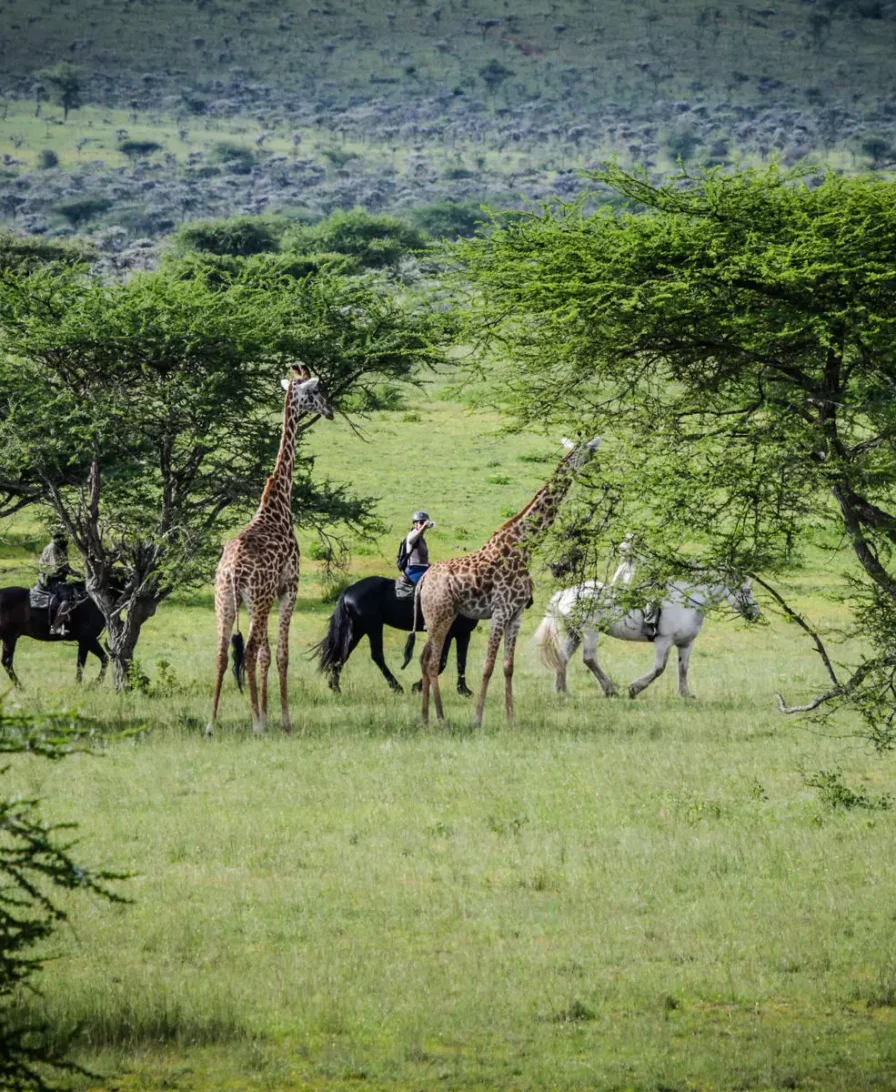
Horseback safaris bring you close to plains game in near silence and let you reach terrain vehicles can't access. Zebra, giraffe, eland, and wildebeest may continue feeding as a rider approaches, sometimes allowing a close view. At Ol Donyo, for example, riders can encounter giraffe, zebra, and elephants on open lava plains.
You experience the bush through more than sight. You can hear birds around the herd, smell wild sage crushed beneath the mounts' hooves, and notice your mount's attention shift before you spot an animal nearby. When conditions allow, a canter alongside running zebra is another part of the ride.
Horses also don't need roads, so they leave less disturbance across grassland than vehicles. Many riding areas are community-owned, where tourism income goes to local landowners. Learn more in our guide to community-owned conservancies in Kenya.
Horseback Safari vs. Vehicle Safari
| Factor | Horseback safari | Vehicle game drive |
|---|---|---|
| Closeness to plains game | Herds may keep grazing as you approach | Vehicles can get close, but engine noise may move animals |
| Predator viewing | Guides keep riders at a safe distance | Better for close lion and leopard viewing |
| Noise | Near silent | Engine and radio noise |
| Terrain access | Off-road routes, hills, and some river crossings | Mostly tracks and roads |
| Physical demand | Two to eight hours in the saddle per day | Low |
| Who can join | Riders who meet skill and weight requirements | Most travelers |
| Typical cost | About $55 for two hours to $1,700 or more per night | About $150 to $1,500 or more per person per day |
The two experiences work well together. Many riders add vehicle drives for predator viewing, and some also join a guided bush walk. See our guide to walking safaris in Kenya.
Where Are the Best Places for a Horseback Safari in Kenya?
The best-known riding areas are the Maasai Mara conservancies, Laikipia, the Chyulu Hills, and Lake Naivasha. Each offers a different landscape and suits a different type of rider.
Is the Maasai Mara the Best Place to Ride With the Migration?
The Maasai Mara (also written Masai Mara) is the classic choice for a Maasai Mara horseback safari. Its open grasslands suit long canters, and from July to October you may see wildebeest herds moving through the area. Rides take place outside the national reserve, in places such as Olare Motorogi, Naboisho, and Mara North. Read our guides to Naboisho Conservancy and Mara North Conservancy.
Offbeat Safaris focuses its rides on the Mara region. The company was founded in 1989 by Tristan and Lucinda Voorspuy and has been under new ownership since 2023.
Why Choose a Laikipia Horse Riding Safari?
A Laikipia horse riding safari takes you through varied country, including acacia valleys, rocky kopjes, and highland forest, with Mount Kenya on the horizon. The plateau covers roughly 9,500 square kilometers of private and community conservancies and holds Kenya's largest black rhino population.
Borana Lodge and Lewa Wilderness offer lodge-based riding for intermediate riders and above, with longer rides available by arrangement. The property also offers options for different experience levels. Novice rides use gentle, trained mounts on the plains around the lodge, while more experienced riders can arrange full-morning excursions into the valleys.
For the more challenging rides, riders should be comfortable at a rising trot and two-point canter, with soft hands and an independent seat. These skills help you stay balanced and in control on uneven ground. Lewa sets its own rider weight limit at 90 kg (about 200 lbs), which is lower than the 95 kg limit used by some other operators.
Riding at the property is English-style, and trail saddles are available. Ask about tack options before traveling, especially if you usually ride in a different style. Horse and rider matching also matters, so ask how the team assigns mounts based on a guest's size and experience.
What Is the Overnight Fly Camp at Lewa?
Experienced riders at Lewa can arrange an overnight ride and fly camp, with the mounts kept nearby. The camp is simple, with basic comforts such as bucket showers and dinner by an open fire. It is a shorter alternative to a multi-night mobile safari, but it still requires you to control a fit mount at all paces across rugged terrain.
The overnight camp can also be available to guests who prefer to walk rather than ride. Walking and camping arrangements depend on the property and travel dates, so discuss the options when planning your stay. Fly camping costs extra, and the price and availability depend on the dates booked.
What Makes the Chyulu Hills Horseback Safari Unique?
The Chyulu Hills offer views of Mount Kilimanjaro and the chance to ride through elephant country. Ol Donyo Lodge, operated by Great Plains Conservation, takes up to six guests per ride with two guides. Riders can cover volcanic terrain at medium to fast paces, depending on their experience and conditions. See Great Plains Conservation's riding information.
The area pairs naturally with a vehicle safari in Amboseli National Park, where elephant viewing is a major draw.
Where Can Beginners Go Horse Riding in Lake Naivasha?
Lake Naivasha horse riding is one of the most accessible options in Kenya. Sanctuary Farm charges KES 7,000 (about $55) for a two-hour ride across 450 acres, where riders may see giraffe, zebra, wildebeest, and buffalo. The farm welcomes riders of all levels and children aged three and older.
You can pair a morning ride with cycling at nearby Hell's Gate National Park.
Kenya Riding Destinations Compared
| Destination | Best for | Rider level | Ride style | Big Five? |
|---|---|---|---|---|
| Maasai Mara conservancies | Migration and long canters | Strong intermediate to advanced for multi-day trips; beginners can join some short rides | Mobile camps or taster rides | Yes |
| Laikipia, including Borana, Lewa, Sosian, and Ol Malo | Rhino country and varied terrain | Intermediate and above; Lewa has novice-friendly plains rides | Lodge-based, lodge-to-lodge, or Lewa fly camp | Yes |
| Chyulu Hills, including Ol Donyo | Kilimanjaro views and elephants | Intermediate to experienced; age 12 and older at Ol Donyo | Lodge-based rides, two to four hours a day | Yes |
| Lake Naivasha, including Sanctuary Farm and Soysambu | First rides and family outings | All levels; children aged three and older at Sanctuary Farm | Short rides | No |
How Experienced Do You Need to Be for a Horseback Safari in Kenya?
Multi-day horseback safaris in the Maasai Mara usually require advanced riding skills because riders must control a horse at speed in Big Five country. You need an independent seat, a balanced rising trot, and control during a fast canter over uneven ground. Ol Donyo, for example, expects riders to manage a horse at all paces on rough terrain, and guests aged 12 and older complete a riding assessment before setting out.
Stamina matters, too. Multi-day riders often cover 25 to 35 km per day and spend four to seven hours in the saddle. Allow eight to 12 weeks for cardio and core conditioning before departure, particularly if you don't ride regularly.
Am I Ready for a Multi-Day Ride?
Answer these questions honestly before choosing an itinerary:
- Can you ride at a walk, rising trot, sitting trot, and canter on an unfamiliar horse?
- Have you ridden outside an arena, including on hills or rough ground, in the past six months?
- Can you stop and turn a forward-going horse at a fast canter?
- Can you spend four to six hours in the saddle and ride again the next morning?
- Are you comfortable riding in English tack?
- Are you under 90 to 95 kg, including your riding clothes?
If you answered yes to all six, you may be ready for a multi-day ride. Four or five yes answers may point toward a lodge-based excursion in the north or the Chyulu Hills. An intermediate plus rider may also suit longer lodge-based excursions, subject to the operator's assessment. With three or fewer yes answers, start with a taster ride in Naivasha or a Mara conservancy.
What Is the Horse Riding Safari Weight Limit?
Most Kenyan operators set a horse riding safari weight limit of 90 to 95 kg (197 to 210 lbs). Safaris Unlimited sets a 90 kg limit, while Offbeat Safaris allows up to 95 kg. In a review of nine published Kenyan riding programs for 2026, four set their limit at 90 kg and five at 95 kg or 210 lbs.
Limits vary by operator. Lewa Wilderness sets its limit at 90 kg (about 200 lbs). Ol Donyo may consider experienced riders above 95 kg for its advanced mounts after reviewing a riding questionnaire. Give your accurate weight when booking, since operators use it to match riders with suitable animals.
Can Beginners and Children Go on a Horse Riding Safari in Kenya?
Yes. A beginner horse riding safari in Kenya is possible on short, controlled rides. Olerai in the Mara welcomes beginners, limits groups to four riders, and provides a lead guide and a backup guide.
The property also offers novice-friendly rides on the plains, while valley excursions and the overnight fly camp require stronger skills. Ol Donyo accepts riders from age 12 when accompanied by a riding parent, and younger children can ride in Naivasha. See our family safari in Kenya guide for more family-friendly options.
How Much Does a Horseback Safari in Kenya Cost?
The cost of a horseback safari in Kenya ranges from about $55 for a two-hour ride in Naivasha to $9,000 to $13,000 per person for a six- to eight-night mobile safari in the Maasai Mara. Short rides in Mara conservancies cost around $250 per person for two hours. A seven-night mobile ride is about $11,950 per person.
2026/2027 Maasai Mara Riding Safari Price Comparison
The table below compares seven published Mara riding departures for 2026 and breaks the price down by night.
| Operator or agent | Nights | Published price per person sharing | Approx. per night | Weight limit |
|---|---|---|---|---|
| Safaris Unlimited, short ride | 6 | £7,518 | £1,253 | 90 kg |
| Safaris Unlimited, full ride | 8 | £9,407 | £1,176 | 90 kg |
| Offbeat Safaris | 7 | From £9,030 | £1,290 | 95 kg |
| Equitours | 7 | $11,950 | $1,707 | 210 lbs |
| Globetrotting | 7 | $11,950 | $1,707 | 95 kg |
| Horse Riding Tours | 7 | $10,850 | $1,550 | Published limit |
| Safari Frank, including $1,750 in conservancy fees | 8 | $12,450 | $1,556 | 90 kg |
Among these published trips, USD-priced rides average about $1,630 per person per night, while GBP-priced rides average about £1,240 per night. These rates are comparable to mid- to high-end accommodation, but usually include mounts, guides, meals, mobile camps, and some transfers.
What Is Included, and What Costs Extra?
Check these costs before you compare quotes:
- Conservancy fees. These often range from $80 to $130 per adult per night. Fees inside the main reserve are $100 per day from January to June and $200 per day from July to December.
- Single supplements. The operator, for example, charges an additional £1,700 for a solo room on its six-night ride. The fee is waived if you're willing to share. See our guide to single supplements in Kenya.
- Internal flights. Equitours includes flights between Nairobi and the Mara, but many operators do not. See our fly-in Kenya safaris page.
- Tips and insurance. These can add 5% to 10% to your total.
Use our free Kenya safari cost calculator to estimate the wider trip budget. Our Kenya safari cost breakdown explains the main expenses in more detail.
When Is the Best Time to Go on a Horseback Safari in Kenya?
The best riding conditions are generally during the dry seasons, from June to October and December to March, when the ground is firmer and the grass is shorter. Offbeat Safaris runs Mara rides from June to October and December to March, while the operator's Mara departures run from June to October.
The long rains in April and May can turn black cotton soil into slick mud, so most mobile rides stop during this period.
Month-by-Month Riding Guide
| Month | Riding conditions | Highlights |
|---|---|---|
| January to February | Excellent | Dry conditions, green plains, and calving in the southern ecosystem |
| March | Good, with a chance of rain late in the month | Quieter conditions and lower demand |
| April to May | Poor; most mobile rides close | Long rains |
| June | Very good | Grass is high, and the migration is approaching |
| July to October | Excellent | Chance to ride near the wildebeest migration; peak prices |
| November | Fair | Short rains; some lodge rides continue |
| December | Very good | Festive season, so book early |
Can You Ride Alongside the Great Migration in the Maasai Mara?
Yes. From July to October, riders in the northern and eastern Mara areas may encounter wildebeest herds on the open plains. Guides keep groups away from river crossings, where crocodiles and crowds of vehicles make riding unsafe.
For month-by-month migration timing, read our guide to the Great Wildebeest Migration in Kenya. You can also see our guide to the best time to visit Kenya.
Is It Safe to Ride Horses Among Lions and Elephants?
Horseback safaris in Kenya are considered safe when experienced operators follow clear wildlife protocols, but riding carries more risk than a vehicle safari. Guides assess wind direction, terrain, and animal behavior throughout the ride. They keep well away from known lion prides and give elephants and buffalo space. Ol Donyo, for example, sends two guides with groups of up to six riders.
Riders also need to control their mounts. If an elephant or buffalo charges, the group may need to move away quickly at a canter. Operators therefore turn away riders who cannot manage a horse at speed. Equus Journeys, for example, says a guide may move an unprepared rider into a vehicle for the rest of the safari.
What Insurance and Health Preparation Do You Need?
Choose travel insurance that explicitly covers horse riding and emergency air evacuation. Many standard policies exclude riding, so read the policy details before you travel. For vaccinations and malaria advice, see our Kenya safari vaccinations and health guide. For broader travel information, read Is Kenya safe for tourists?.
How Do You Judge Horse Welfare?
A responsible operator treats its mounts as working partners. Look for:
- Rest days built into the riding schedule.
- A farrier and veterinarian available on-site or on call.
- Weight limits that are clearly stated and followed.
- Well-muscled animals, with tack that fits and doesn't rub.
Safaris Unlimited keeps a mixed stable of about 25 to 30 mounts, including Boerperd, Thoroughbred, and Arabian crosses ranging from 14 to 17 hands. A varied stable helps the team match riders with suitable animals.
At the property, ask how each mount is matched to a rider's size and experience. The riding style and equipment matter, too: rides are English-style, with trail saddles available.
What Should You Pack for a Kenya Riding Safari?
In addition to our general Kenya safari packing list, bring:
- A certified riding helmet. Some operators provide helmets, but your own is more likely to fit properly.
- Half-chaps and short boots, or long boots you've already broken in.
- Worn-in riding tights or jodhpurs.
- Neutral clothing in khaki, olive, or brown. Avoid white and bright colors.
- Gloves and a long-sleeved shirt for riding, plus a wide-brim hat or helmet visor for the sun.
- A soft duffel bag, usually limited to 15 kg, that can fit on a light aircraft.
What Do Kenya Riding Itineraries Look Like?
Most trips follow one of four formats: a mobile Mara expedition, a lodge-based or lodge-to-lodge trip in the north, a short ride added to a regular safari, or a shared trip with activities for both riders and non-riders.
Sample 1: Seven-Night Maasai Mara Mobile Ride for Advanced Riders
- Day 1: Fly from Nairobi to the Mara, then take an afternoon assessment ride.
- Days 2 to 6: Ride 25 to 35 km per day between fly camps, with picnic lunches beneath acacia trees and evening game drives.
- Day 7: Take a final morning ride, followed by a sundowner on an escarpment.
- Day 8: Fly back to Nairobi.
- Estimated cost: $10,850 to $12,450 per person.
Sample 2: Three-Night Laikipia Ride for Intermediate Riders
Stay at Borana or Lewa and ride for two to four hours each morning through rhino country. Afternoons can include game drives, bush walks, or time to rest. Rates start at about $700 to $1,500 per person per night. At the property, you can ask about plains rides, longer valley excursions, or an overnight camp, depending on your riding level and dates. This option pairs well with a wider Laikipia conservancies itinerary. Some packages include luxury accommodation, but inclusions vary by operator and trip.
Sample 3: Two-Hour Taster Ride for Beginners
Add a morning ride at Olerai, at about $250, or Sanctuary Farm in Naivasha, at about $55, to a standard Kenya safari. A short ride is an easy way to try riding in the bush without committing to a multi-day trip.
Sample 4: Can a Non-Riding Partner Join?
Yes. Some operators let non-riders follow by vehicle, meet the group for lunch, and stay at the same camp. The operator, for example, offers vehicle, walking, and aerial wildlife activities for guests who don't ride.
At Lewa, non-riders may be able to join a walking safari and overnight camp instead. Arrangements depend on the property and dates. A non-riding partner in the Mara could also book a dawn Maasai Mara balloon safari while you ride, a popular pairing for honeymoon safaris in Kenya.
Which Operators Run Horseback Safaris in Kenya?
These established operators are a useful starting point. Compare their dates, riding requirements, and trip details before booking.
- Safaris Unlimited: Founded in 1971; Gordie and Felicia Church lead mobile Mara rides.
- Offbeat Safaris: Founded in 1989; runs mobile Mara rides under new ownership since 2023.
- Ol Donyo Lodge, Great Plains Conservation: Lodge-based riding in the Chyulu Hills.
- Borana Lodge: Lodge-based riding in the northern region, with multi-day rides available by arrangement.
- Lewa Wilderness: Lodge-based rides in the north, including plains rides, longer valley excursions, and an overnight fly camp for experienced riders. Visit the Lewa Wilderness horse safari page for details.
- Sanctuary Farm: Short rides for all levels at Lake Naivasha.
For a wider operator checklist, read our guide to choosing a Kenya safari operator.
How Do You Plan a Horseback Safari in Kenya?
Start by assessing your riding level honestly, then choose a destination and season that suit your experience. Compare operators on guide experience, group size, horse care, and safety procedures. Migration-season departures are limited, so booking 9 to 12 months ahead gives you the best choice of dates.
Kenya recorded 2.76 million international arrivals in 2025/26, up 9.8% year over year, with tourism earnings of KSh564 billion, according to KBC. Riding groups usually cap at four to 12 guests, so popular departures can fill early.
- Assess your riding ability. Use the checklist above and ask your riding instructor for an honest assessment.
- Choose a destination and season. Pick the Mara for migration viewing, the plateau for rhinos and varied terrain, the Chyulu Hills for Kilimanjaro views, or Naivasha for a first ride.
- Compare two or three operators. Ask about group size, guide-to-rider ratio, horse care, and what happens if you can't keep up. Ask whether the outing can be arranged as a private ride; availability and price vary by operator.
- Book early. Reserve July to October departures 9 to 12 months ahead, and review the deposit terms.
- Prepare for the ride. Arrange insurance that covers horse riding, apply for your Kenya eTA, and aim to ride three or four times a week for two months before departure.
- Plan the rest of your trip. Add vehicle game drives, choose from the best Maasai Mara camps and lodges, and consider ending your trip on the coast.
Conclusion
A horseback safari is one of the most immersive ways to see Kenya's wildlife, provided you choose a ride that matches your ability. Strong riders can join a six- to eight-night mobile expedition in the Mara or the northern region for about $9,000 to $13,000. Intermediate riders can choose lodge-based programs at places such as Ol Donyo, Borana, or Lewa, while beginners can start with a short ride in Naivasha for about $55.
Before booking, check the skill requirements, weight limit, tack type, and what's included in the price. Those details will help you choose the right ride, whether that's a two-hour introduction, a full-morning excursion, or an overnight camp with mounts nearby.
Book a free 30-minute safari consultation with our Nairobi-based team. We'll help match your riding experience, destination, and travel dates with the right safari itinerary.
Frequently Asked Questions
Where can you go on a horseback safari in Kenya?
The main riding areas are the Maasai Mara conservancies, Laikipia, the Chyulu Hills, and Lake Naivasha. Most rides take place on private or community-managed land rather than inside Kenya's main national parks and reserves.
How much does a horseback safari in Kenya cost?
A two-hour ride costs about $55 in Lake Naivasha and around $250 in a Mara conservancy. A six- to eight-night mobile safari in the Maasai Mara typically costs $9,000 to $13,000 per person.
Do you need riding experience for a Kenya horseback safari?
Short rides in Lake Naivasha and some Mara conservancies welcome beginners. Multi-day rides usually require strong intermediate or advanced skills, including control at a canter on uneven ground.
When is the best time for a horseback safari in Kenya?
The dry seasons, from June to October and December to March, generally offer the best riding conditions. From July to October, riders in the Maasai Mara may also encounter wildebeest herds.









Comments (0)
Leave a Comment
No comments yet. Be the first to comment!