


What Actually Happens at a Maasai Village Visit: An Honest, Respectful Guide for Safari Travellers
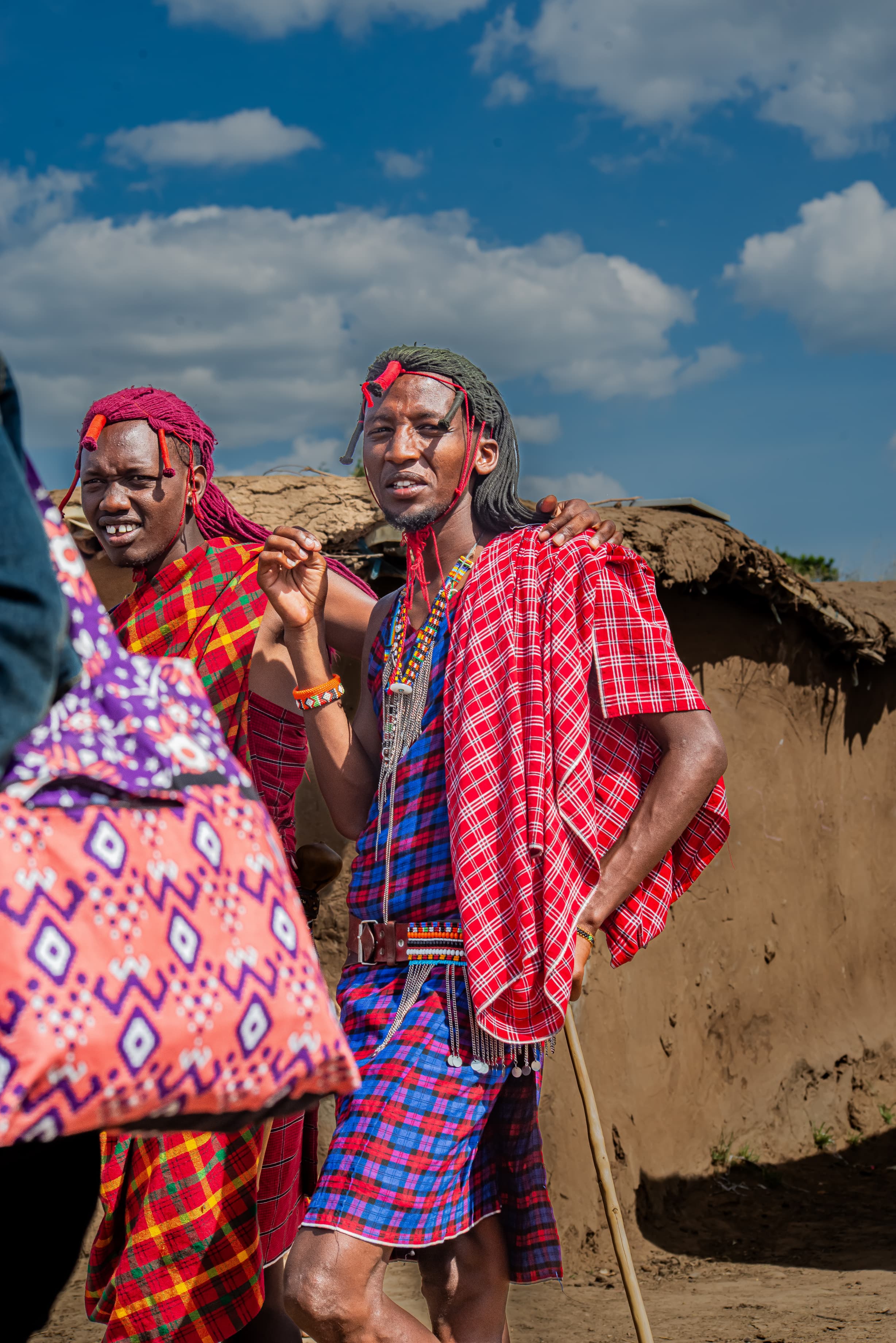
You've seen the images: red-cloaked warriors mid-leap against an open sky, and you've probably already decided you want to experience it in person. But most travel content about Maasai village visits tells you what you'll see — not what you'll navigate, ethically and emotionally, once you're standing inside a manyatta with a guide ushering you from hut to handicraft stall. This guide gives you the honest, unvarnished account of what actually happens at a Maasai village visit — so you can show up informed, respectful, and ready to engage meaningfully.
Key Takeaways
- A Maasai village visit (manyatta visit) typically lasts 60–90 minutes and includes a welcome ceremony, a guided tour of the homestead, cultural demonstrations, and a community craft market.
- Not all Maasai village visits are equal — the difference between an ethically run, community-benefiting experience and a performative tourist stop largely comes down to which operator organises it and how revenue is distributed.
- The adumu (jumping dance) and fire-starting demonstrations are real cultural practices, though they are performed specifically for visitors; understanding this distinction helps set honest expectations.
- Visitors are almost always invited to the craft market at the end of the visit — this is a legitimate income stream for community members, and low-pressure browsing is perfectly acceptable.
- Respectful photography during a Maasai visit requires asking permission from individuals, not just a blanket approval from the guide, and many community members will decline.
- Meaningful cultural exchange is possible in a short visit, but it requires curiosity, humility, and a willingness to listen rather than simply observe.
- Choosing a safari operator who partners directly with Maasai communities — rather than routing visits through third-party handlers — is the single most important factor in ensuring your visit is ethical and beneficial.
What Is a Maasai Village Visit and What Does It Typically Include?
A Maasai village visit, known locally as a manyatta visit, is a structured cultural experience typically lasting 60 to 90 minutes in which safari guests are welcomed into a traditional Maasai homestead, shown daily practices including fire-starting and beadwork, and invited to purchase handmade crafts directly from community members. The manyatta itself is the basic unit of Maasai settlement: a circular enclosure of low, mud-and-dung homes (inkajijik) surrounded by a thorn-bush fence (enkiama) built to keep livestock in at night and predators out. Inside the fence you'll find separate sleeping quarters for families, a central area for the cattle and goat enclosures, and in some cases a small communal space used for meetings and ceremonies.
These visits happen at two main geographic clusters. In Kenya, they are concentrated in the areas surrounding the Maasai Mara National Reserve — particularly community conservancies bordering the reserve, where Maasai landowners have chosen tourism as an income strategy. In Tanzania, manyatta visits are offered in the Ngorongoro Conservation Area and in villages near the Serengeti National Park, where the Maasai have lived alongside wildlife for centuries under a co-existence model unique in East Africa.
Community-Run Visit vs. Tour Operator Add-On: Why the Distinction Matters
Not every Maasai village visit is organised the same way. Community-run visits are managed directly by the manyatta or by a village council, with entrance fees and craft revenue flowing back into the community's accounts. Tour operator add-ons, by contrast, are sometimes arranged through intermediary brokers who take a significant cut before any money reaches community members. The visitor experience may look identical on the surface — the same jumping dance, the same fire-starting, the same craft stalls. What differs is where the money goes. When planning your Kenya safari packages, asking your operator directly how the village visit is structured is not intrusive — it's exactly the right question.
Why Maasai Village Visits Are Included on Safari Itineraries
Maasai village visits appear on safari itineraries because they offer travellers a structured point of cultural contact that game drives alone cannot provide. Watching wildlife from a vehicle is extraordinary, but it is also, by design, a form of observation. A manyatta visit introduces a human dimension — conversations (however brief), shared space, and the chance to understand that the landscape you're driving through has been home to the Maasai people for well over three centuries.
For the Maasai, hosting visits is an economic calculation that many communities have made consciously and strategically. Land in the Mara ecosystem, for example, is under constant pressure from agriculture, and community conservancy models — in which landowners lease land to wildlife use in exchange for tourism revenue — have proven effective at keeping land open and wildlife viable. Village visits contribute to that revenue model. When properly structured, tourism income gives Maasai families a concrete financial incentive to maintain their pastoral way of life, which in turn directly benefits conservation outcomes across the ecosystem.
At the same time, it would be inaccurate to claim every community has chosen this with full enthusiasm. Some have; some tolerate it; some are genuinely ambivalent. A good guide will acknowledge that nuance rather than presenting a uniformly cheerful picture.
What Actually Happens During a Maasai Village Visit? A Step-by-Step Account
A typical manyatta visit follows a loose but recognisable sequence: arrival and welcome, a guided tour of the settlement, cultural demonstrations, time for questions, and a visit to the craft market. Here is what each stage actually looks, sounds, and feels like — without the brochure gloss.
Arrival and the Welcome Ceremony
You will usually hear the village before you see it. As your vehicle pulls off the dirt track, a group of warriors and women will be arranged at the entrance, and the singing starts — a deep, rhythmic chanting that uses the voice as a percussion instrument, with the men producing a resonant chest hum while the women answer in a higher call. It is genuinely striking. The dust will be in your nose. The light, depending on the time of day, will be doing something dramatic across the thorn trees.
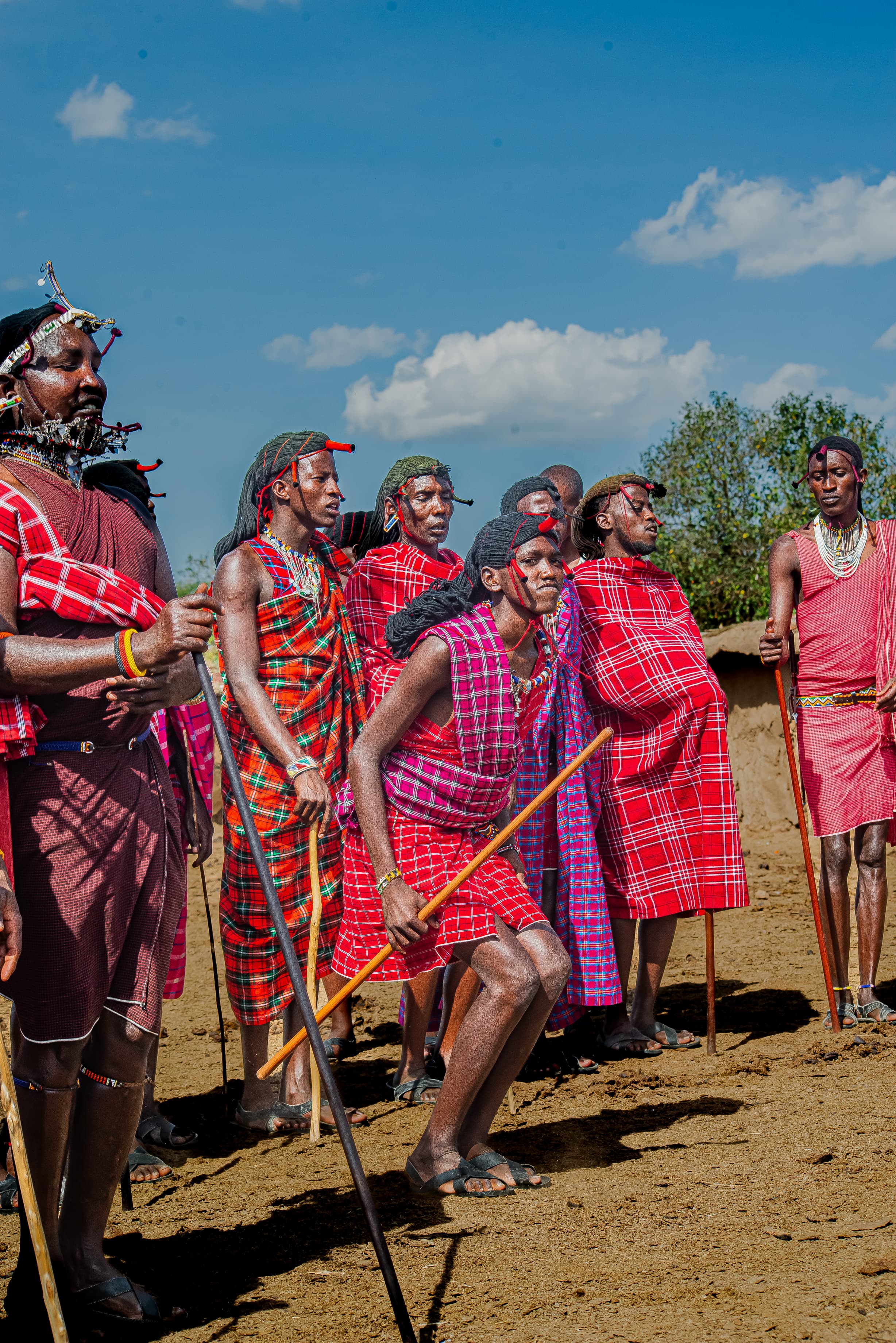
The adumu — the Maasai jumping dance performed for visitors — is a genuine cultural tradition among Maasai warriors, though it is adapted and shortened for tourism contexts; understanding this distinction is key to appreciating the experience without misrepresenting it. The adumu is traditionally performed at eunoto, the coming-of-age ceremony when junior warriors (ilayiok) transition to senior warrior status. In a visitor context, it is performed on request, often repeatedly, with less ceremonial framing. That does not make it fake — it makes it a cultural performance in the same way that a traditional folk music group performing for tourists is a real tradition being shared, not fabricated. Knowing the original context enriches what you see.
Tour of the Manyatta: What You're Actually Seeing
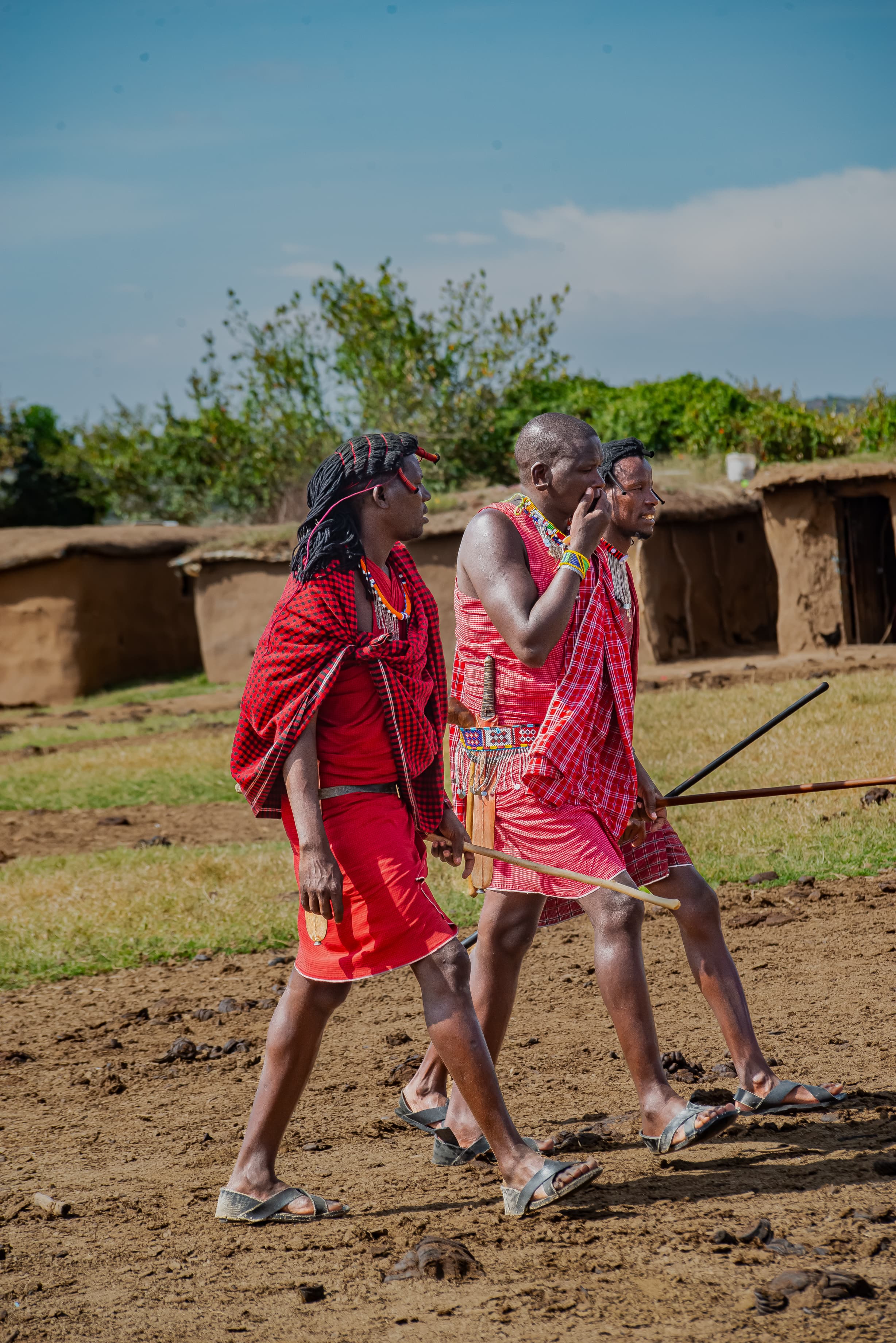
Your guide — usually a community member who speaks English and often several other languages — will walk you through the enclosure. The homes are small, dark, and functional. Maasai women build them: a framework of branches plastered with a mixture of mud, cow dung, ash, and sometimes urine, which hardens into a surprisingly durable material that keeps the interior cool during the day and warm at night. You'll stoop to enter. Inside, there is a sleeping area, a cooking area, a small pen sometimes used for newborn animals, and very little natural light. The smell is of smoke, earth, and livestock — not unpleasant, but specific and unforgettable.
The livestock enclosure at the centre of the manyatta is the economic heart of the settlement. For many Maasai families, cattle remain the primary measure of wealth, social standing, and security. You'll be shown the cattle pen and, if timing allows, some of the animals. Your guide may explain the traditional relationship between the Maasai and their livestock — that cattle are not simply assets but are woven into spiritual life, marriage negotiations, and community ceremonies.
Cultural Demonstrations: Fire-Starting, Beadwork, and Herbal Knowledge
Fire-starting is the demonstration most visitors remember. Using two sticks — a softwood fireboard and a hardwood drill — a warrior will produce an ember in under a minute through friction alone, if conditions are right. It is genuinely skilled and takes considerable practice. You may be invited to try; most visitors fail immediately, which generates good humour on both sides.
Beadwork is one of the most complex and symbolically rich aspects of Maasai material culture. Every colour and pattern carries meaning — age, clan, marital status, warrior grade. Women create elaborate collars, bracelets, and earrings that function as a visual language readable to other Maasai. The beadwork you see being made or displayed during the visit is authentic in craft, even if the commercial versions in the market are sometimes simplified for tourist taste. If you're interested in what to pack for a Kenya safari, note that buying quality beadwork is a worthwhile addition to your budget.
Some guides will also share knowledge of medicinal plants used in traditional Maasai practice — specific shrubs for treating fevers, bark preparations for stomach ailments, roots used during childbirth. This knowledge is extensive and largely undocumented in formal medical literature. Whether your guide has deep knowledge here or a more surface-level script varies considerably.
The Craft Market at the End
Every manyatta visit concludes with time at a community craft market. Stalls are laid out — sometimes along a fence, sometimes arranged in a semicircle — displaying beaded jewellery, carved wooden items, gourds, small sculptures, and sometimes textiles. The pressure to buy varies enormously. At well-run visits, vendors are friendly and the interaction is genuinely transactional. At poorly managed ones, you may feel surrounded in a way that is uncomfortable.
Purchasing from the craft market is a legitimate and direct income transfer to community members. This is not an operator's margin — it goes to the person selling to you. You do not have to buy, but if you were moved by any part of the visit, this is the most direct way to reciprocate. Negotiate respectfully; prices are often flexible but are not dramatically inflated to begin with.
The Honest Realities: What Tourism Brochures Don't Tell You
The performative nature of some elements of a manyatta visit is real, and pretending otherwise does not serve anyone. The jumping dance happens when visitors arrive — not spontaneously. The fire-starting is demonstrated rather than being an act of daily necessity in a community where lighters and matches exist. Some guides deliver their explanations in a practiced script that varies little from group to group. None of this makes the visit worthless; it simply means approaching it as a cultural exchange with a staged frame rather than an unmediated encounter.
Do the Maasai Actually Live in the Village You're Visiting?
This question comes up often, and the honest answer is: it depends on the visit. Some manyatta visits are conducted in settlements where people genuinely live year-round. Others are conducted in villages that function primarily as tourism sites, where residents may move between this location and other settlements, or where the group gathered for your visit is drawn from a wider community rather than the immediate homestead. Operators who work with established community conservancies are more likely to offer visits to genuinely inhabited settlements. This is a fair question to ask your operator when booking, and a reputable operator will answer it directly.
How Does Money from Maasai Village Visits Reach the Community?
Entrance fees for manyatta visits typically range from USD $25 to $80 per person, with higher fees generally associated with conservancy-affiliated visits where revenue-sharing is more formalised. In community-run visits, fees go directly into a village account managed by the local council or community trust. In broker-mediated visits, the math is often less favourable: the intermediary takes a percentage, the operator takes a percentage, and what reaches the community may be a fraction of the headline fee.
Safari operators who partner directly with Maasai communities — rather than routing visits through intermediary tourism brokers — are more likely to ensure that entrance fees, craft sales revenue, and tips contribute meaningfully to community livelihoods. When evaluating operators for your trip — whether you're exploring Kenya safari packages or Tanzania safari itineraries — this is among the most substantive questions you can ask.
How Do You Know If Your Maasai Village Visit Is Ethically Run?
Ethical Maasai village visits are distinguished by direct community ownership of the experience, transparent revenue-sharing with the hosting manyatta, and the absence of third-party middlemen who extract the majority of entrance fees before they reach community members. Beyond that principle, there are concrete green flags and red flags worth knowing.
Green Flags: Signs of a Responsibly Managed Visit
| Green Flag | What It Indicates |
|---|---|
| Operator names the specific community or conservancy | Partnership is established and traceable |
| Entrance fee is disclosed in advance | Pricing is transparent, not negotiated on-site |
| Guide is a community member, not an outsider | Revenue and knowledge stay local |
| Visit is timed respectfully (not during midday heat or prayer times) | Community consent is embedded in logistics |
| Photography protocol is explained before arrival | Individual rights are protected |
| Craft market is low-pressure | Community members, not operators, control the sales space |
Red Flags: Signs of a Visit Worth Questioning
- The visit is an unspecified "add-on" with no community named
- Entrance fee is paid directly to the driver or operator, with no community receipt
- The visit feels rushed — under 45 minutes with little time for conversation
- Children approach the vehicle before arrival asking for sweets or money (a sign of unregulated tourism creating dependency)
- Photography is framed as "included" without any individual consent process
For a broader framework on selecting operators who take accountability seriously, see Beyond The Plains Safaris' approach to choosing a safari operator in Kenya.
What Should You Wear and How Should You Behave During a Maasai Village Visit?
Dress modestly and practically for a manyatta visit. There is no strict formal dress code, but clothing that covers the shoulders and knees is respectful and appropriate — particularly for women. Bright colours are welcome and are often commented on positively by Maasai community members, who have a sophisticated relationship with colour and adornment. Avoid wearing your own red-checked shuka (the Maasai wrap) as a costume — it reads as mimicry rather than respect. For a full guide to appropriate clothing across your trip, the Kenya safari packing list covers this in detail.
Photography Etiquette: The Rule Most Visitors Get Wrong
Photography during a Maasai village visit requires individual consent from each person being photographed — a blanket permission from a guide or chief does not extend to individual community members, many of whom prefer not to be photographed. This is not a technicality; it reflects a genuine and widely held preference among many Maasai, particularly elder women, who find close-up photography intrusive regardless of context. The correct approach: make eye contact, gesture toward your camera with a questioning expression or ask verbally (your guide can help translate), and accept a refusal gracefully. Many community members will agree to be photographed in exchange for a small tip, typically KES 100–200 or equivalent — this is normal and perfectly acceptable.
On Gift-Giving: Why Sweets for Children Is Actively Discouraged
Bringing sweets, pens, or small toys to distribute to children at Maasai villages is well-intentioned but causes measurable harm. It trains children to approach vehicles and tourists as sources of handouts, which disrupts community dignity and creates dependency dynamics that operators and community leaders have spent years trying to manage. If you want to contribute beyond the craft market, ask your operator about community development funds, school supply donations through established channels, or conservation partnerships — all of which deliver value without the unintended consequences.
Tipping
Tipping your guide at the end of a manyatta visit is appropriate and appreciated. A typical tip for a 60–90 minute visit is USD $5–15 per person in your group. This is separate from any craft purchases and goes directly to the individual who invested time and knowledge in your experience.
Is a Maasai Village Visit Authentic or Is It a Tourist Performance?
A Maasai village visit sits somewhere between a living cultural demonstration and a curated experience — and being honest about that ambiguity is more useful than defending either extreme. Critics who call these visits "tourist traps" and advocates who insist they are "completely authentic" are both working with oversimplified frameworks.
Consider what is genuinely real: the manyatta architecture is real and functional. The beadwork techniques are real and passed through generations. The fire-starting method is real and still used in contexts beyond tourism. The language, the singing structure, the cattle relationship — all of it is real. What is adapted is the timing, the framing, the accessibility of the experience to outsiders, and the commercial transaction at the end. Cultural exchange has always involved some degree of presentation — the question is whether the underlying culture is intact, respected, and controlled by the people sharing it. In community-run visits with direct revenue sharing, the answer is generally yes.
The more useful question is not "authentic or not?" but "who benefits and who decides?" When the community controls the narrative, the pacing, and the revenue, the experience has integrity — even if it also has showmanship. For travellers who want deeper context before their trip, the African safari beginner's guide covers the broader cultural landscape of East African tourism.
Is Photography Allowed at a Maasai Village Visit?
Photography is generally permitted at manyatta visits, but it is governed by individual consent rather than blanket approval. Most operators will clarify this at the start. The practical rule: photograph landscapes, the homestead structure, and animals freely. For people, ask each time. Children photographed with parental consent can make for genuinely meaningful images; photographing children without permission is never appropriate, regardless of the tourist context. Some visitors choose not to photograph at all — prioritising presence over documentation — and this is entirely valid and often remarked upon positively by community members.
Who Should Include a Maasai Village Visit on Their Safari Itinerary?
A manyatta visit is well-suited to travellers who are curious about human geography and cultural context, not just wildlife. It works particularly well on Kenya family safaris, where children engage readily with the fire-starting demonstration and the livestock interactions, and where the physicality of the experience — crouching into a home, touching the dried mud walls, hearing the singing close-up — creates lasting memories distinct from game drives. It is also a meaningful addition to honeymoon safaris in Kenya and Tanzania, where couples often appreciate having at least one experience that involves human connection rather than animal observation alone.
It is less well-suited to travellers who are primarily focused on maximising game drive time, who feel uncomfortable in situations where social dynamics are ambiguous, or who have strong reservations about any form of cultural tourism. Those reservations are legitimate and should be honoured — not every itinerary needs a manyatta visit.
How Beyond The Plains Safaris Approaches Maasai Cultural Experiences
Beyond The Plains Safaris structures Maasai village visits through direct community partnerships rather than third-party broker arrangements. This means entrance fees are agreed in advance with the hosting community, the guide conducting the tour is a community member with genuine knowledge rather than an outsider hired for the role, and craft market revenue goes directly to the sellers. Visits are included on relevant Kenya and Tanzania itineraries as an optional activity, never as a mandatory stop — because guest choice and community readiness both matter.
As a KATO-registered operator and 2025 Tourism Excellence Award winner (1st Runners-Up, Best Tour Operator in Kenya), Beyond The Plains Safaris operates within a framework of industry accountability that includes how cultural experiences are organised, not just how game drives are run. This accountability is one reason guests consistently highlight the quality and honesty of their cultural experiences in verified reviews across TripAdvisor and Google.
Manyatta visits are available as part of Maasai Mara safari tours, Kenya and Tanzania combined itineraries, and standalone Mara-focused packages. For those exploring the Ngorongoro Conservation Area in Tanzania, visits to Maasai communities near the Ngorongoro Crater are also available. Speak to the team about how a cultural visit can be integrated into your specific itinerary — schedule a consultation or request a free quote.
Is a Maasai Village Visit Worth Including on Your Safari Itinerary?
The honest answer is: it depends on what you bring to it. A manyatta visit is not a passive experience that delivers insight automatically. It requires you to show up curious rather than simply observant, to ask the questions that go beyond the script, to look at the person demonstrating fire-starting and wonder about their life rather than simply waiting for the flame. When visitors engage at that level, even a 90-minute visit produces something genuinely memorable — not because it provided full cultural understanding (it cannot), but because it created a moment of real human contact inside a landscape that can otherwise feel overwhelmingly vast and non-human.
When visitors treat it as a photo stop on the way back from a game drive, it produces exactly what it looks like: a photo stop.
The value of a Maasai village visit lies entirely in how it is approached — by the operator who organises it, by the community that hosts it, and by the traveller who participates. Get all three right, and it becomes one of the most talked-about hours of your safari. Get one of them wrong, and it becomes the uncomfortable memory you'd rather forget.
If you're planning a Kenya or Tanzania safari that includes a Maasai cultural experience, get in touch with the Beyond The Plains Safaris team to discuss how a community-partnered manyatta visit can be built into your itinerary with the right structure and the right expectations.
Written by John Dante, Director & Operations Manager, Beyond The Plains Safaris — a KATO-registered safari operator based in Nairobi, Kenya, specialising in custom Kenya and Tanzania safari itineraries. John has over a decade of experience designing safari experiences across East Africa and has personally overseen dozens of community-partnered Maasai cultural visits.
Reviewed by The Beyond The Plains Safaris Editorial Team — cross-checked against current community partnership agreements, guide briefing protocols, and guest feedback from verified TripAdvisor and Google reviews.










Comments (0)
Leave a Comment
No comments yet. Be the first to comment!