


Why We Always Build a Buffer Day Into Kenya–Tanzania Combined Trips — Even When Clients Don't Want To
By John Dante, Owner & Safari Director | Beyond the Plains Safaris | Nairobi, Kenya Published: May 2026 · 15 min read · Category: Travel Tips
"Can you just cut the buffer day? We want every hour inside the parks."
I hear this on nearly every Kenya and Tanzania combined safari we build at Beyond the Plains Safaris. And every single time, my answer is the same: no.
Not because I enjoy the argument. Not because I'm padding the itinerary. But because after more than 15 years planning and guiding combined East Africa safaris out of Nairobi, I have watched what happens when the buffer day gets cut — and I have watched what happens when it stays in. The difference is not subtle.
This post is the honest, unfiltered version of the conversation I have with every client who pushes back. I'm going to tell you exactly what the buffer day is protecting you from, what it actually looks like in practice, and what has happened to travellers who overruled us. By the end, you'll understand why every experienced East Africa operator — not just us — builds this day in without apology.
What Is a Buffer Day, and Why Does It Exist?
A buffer day on a Kenya–Tanzania safari is a single, strategically placed day — usually at the point where you transition between countries — that acts as a shock absorber for the entire itinerary. It is not a wasted day. It is the day that keeps every other day intact.
Combined Kenya–Tanzania safaris are logistically complex in ways that single-country trips simply aren't. You are crossing an international border, switching vehicles, switching guides, switching operators, and often switching flight legs — all within the space of one travel day. You are coordinating pre-paid, non-refundable lodge bookings on both sides of that border. You are depending on small aircraft, rural road conditions, and border procedures that are never fully predictable.
A buffer day acknowledges that reality honestly. Removing it assumes everything goes perfectly. And in East Africa's wilderness circuits, "everything going perfectly" is not a planning assumption — it's a gamble.
7 Reasons the Buffer Day Is Non-Negotiable
1. The Border Crossing Takes Far Longer Than Clients Expect
This is the single most consistent surprise for first-time Kenya–Tanzania travellers, and it dominates the conversation on TripAdvisor's Kenya safari forum and Reddit's r/africatravel community year after year.
There are two main land border crossings used on combined Kenya–Tanzania safari packages:
Namanga — between Amboseli/Nairobi and Arusha — is the more efficient of the two. On a quiet day, the crossing through the One-Stop Border Post takes 30 to 45 minutes. But during peak safari season (July–October), when dozens of operators, overland trucks, and group tours converge on the same facility simultaneously, that 30 minutes becomes two or three hours. I've had groups held at Namanga for four hours during a particularly busy August morning. There was nothing to be done except wait.
Isebania/Sirare — used when moving directly between the Maasai Mara and Tanzania's western Serengeti — is in a different category entirely. On a map, the Mara and the Serengeti look almost adjacent. In practice, the total road transfer from Mara camps to your first Serengeti lodge via Isebania is consistently 9 to 12 hours. I have heard operators quote clients "around six hours." I have never seen it done in six hours. Not once.
Travellers who have made this drive share the same experience repeatedly on TripAdvisor: the expectation is a long afternoon; the reality is arriving after dark, exhausted, having seen nothing but road and border infrastructure all day.
What the buffer day does here: it sits between countries so that even a slow border or a longer-than-expected drive doesn't consume what should have been your first game drive in Tanzania.
2. By Law, Your Kenyan Driver Cannot Enter Tanzania — and Vice Versa
This surprises almost every client who hasn't done a combined trip before. It is not a quirk of individual operators; it is the law in both countries.
Kenyan safari operators are licensed to operate within Kenya. Tanzanian operators within Tanzania. When your vehicle reaches the border, your Kenyan driver-guide stops. Turns around. Goes home. A Tanzanian vehicle and driver-guide — booked through our partner network — meets you on the other side.
When this handoff is smooth, it's seamless and you barely notice it. When it isn't — when there's a scheduling misalignment, a vehicle breakdown, a communication failure between operators — there is no backup vehicle. You wait at the border until the situation is resolved.
This isn't a theoretical risk. It's one of the most common causes of unexpected delays on combined safaris, and it's essentially invisible to clients until it happens to them.
What the buffer day does here: it ensures that even a delayed handoff doesn't cascade into a missed lodge check-in, a forfeited night, or a ruined first impression of a new country.
3. Bush Flights Are Brilliant — Until They're Not
Flying between Kenya and Tanzania is almost always the right choice. Our Maasai Mara and Serengeti safari tour package is built around flying for exactly this reason — it eliminates the gruelling Isebania overland stretch and gets clients into the field faster. I recommend it to almost everyone.
But bush flights across East Africa operate on small aircraft — typically 6 to 12 seats — and their schedules are far more vulnerable than commercial aviation. The risks are specific and real:
Weather is the most common cause of delays. Afternoon thunderstorms in the green season can ground aircraft for three to five hours, and there is no commercial equivalent to re-route through. The next bush flight on that route might be the following morning.
Wildlife on the airstrip is not a joke. During migration season, wildebeest, zebra, and other animals regularly move across bush airstrips. Rangers have to clear them before aircraft can land or depart. This can take 20 minutes. It can take two hours. In 2024, a client group of ours was delayed four hours at a Mara airstrip while rangers managed a herd that simply would not move.
Mechanical issues on small aircraft are handled very differently than on commercial flights. There is no "we'll put you on the next flight in 45 minutes." There may not be an alternative aircraft within range that day.
The luggage limit — typically 15 to 20 kilograms per person in soft-sided bags — creates its own pressure. Overweight bags require rebooking or redistribution, which takes time, especially at remote airstrips with no ground staff.
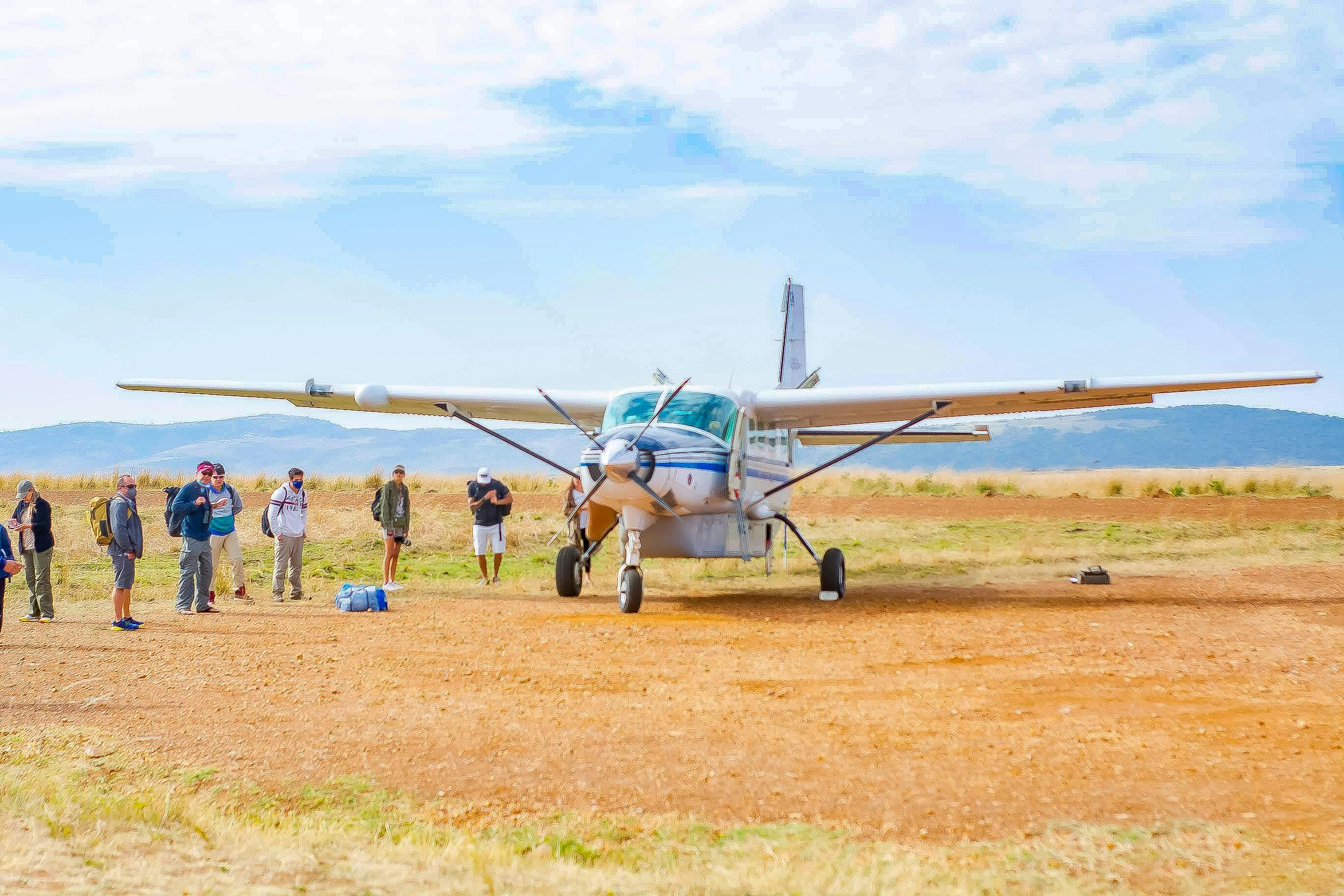
What the buffer day does here: if a bush flight is cancelled or significantly delayed, the buffer absorbs it. Without the buffer day, a cancelled morning flight doesn't just mean a late arrival — it means forfeiting a pre-paid, non-refundable lodge night on the other side.
4. Your Lodge Booking Does Not Move. You Do.
This is the financial reality that clients often don't fully internalise until they're standing at a border crossing or airport, running late.
High-end and mid-range lodges and tented camps in the Serengeti, Ngorongoro Crater, Maasai Mara, and Amboseli are booked 6 to 12 months in advance, especially during peak migration season. Those bookings are date-specific. The lodge holds your room to a cut-off time. After that, it's released — and in high season, it's resold within hours.
A late arrival doesn't get you a discount or a rain-check. You lose the night.
Premium camp rates in peak Serengeti season run $800 to $1,500 per person per night. I have had to make the call to a client — more than once — explaining that the night they were delayed into is gone. The money is gone. The game drive that evening is gone. What remains is an unplanned scramble to find alternative accommodation in an area where there is none at that tier.
What the buffer day does here: it sits as a protective layer before your high-value, non-refundable park bookings. Any delay on the transit side lands in the buffer, not in the safari.
5. The Document Requirements Are More Demanding Than People Prepare For
Getting across the Kenya–Tanzania border involves more documentation than most international arrivals, and a single missing or ambiguous document can create a hold of hours.
Here is what border officials will check:
- Passport: Valid for at least six months beyond travel dates, with a minimum of two blank pages. Combined safaris generate multiple entry/exit stamps. Passports with limited space have been refused at land crossings — and there is no solution available at the border.
- Kenya eTA: Required for most nationalities, applied for online before travel. Cost: $32.50 USD. Processing typically takes 72 hours but is not guaranteed. Peak periods cause delays.
- Tanzania visa: Available online or on arrival. Most Western passport holders qualify for arrival, but online application is strongly recommended to avoid queues.
- East African Tourist Visa: This covers Kenya, Uganda, and Rwanda — but not Tanzania. It is the most common visa misconception on combined trips. You need separate visas for each country. If your itinerary loops back into Kenya from Tanzania, you need either a multiple-entry Kenyan eTA or a new single-entry approval. Single-entry holders returning from Tanzania have been refused re-entry at Namanga. See our full visa requirements guide for current details.
- Yellow fever vaccination certificate: Mandatory for entry into Tanzania from Kenya, which is classified as a yellow fever-endemic country. Border officials at land crossings check for this consistently. The certificate format matters — ambiguous dating or unofficial card formats have been questioned at the border and caused multi-hour holds while consular contacts were explored. This cannot be resolved at the crossing itself.
What the buffer day does here: a document-related delay at the border — something no operator can fully control — lands in the buffer rather than destroying your first park day.
6. Exhaustion Is Real, and Combined Safaris Are Physically Demanding
I want to be honest about something most operators won't say directly: combined Kenya–Tanzania trips are tiring. Not unpleasantly so — but demanding in ways that single-country trips aren't.
You are managing multiple vehicles, multiple guides (who each have their own knowledge, style, and communication rhythm), multiple camp check-ins with different camp managers and different camp rules, two sets of border procedures, and the cognitive load of adjusting to a new operating environment every few days. Add the fact that most international clients arrive already carrying 8 to 12 hours of long-haul travel, and the safari days begin at 5:30 AM with early-morning game drives.
Camp managers across the Mara and Serengeti tell me the same thing: the clients who get the most out of their safaris are the ones who arrive rested. The clients who arrive exhausted — especially those who flew in, immediately boarded a bush plane, and haven't slept properly in 36 hours — miss things. They fall asleep on game drives. They don't have the bandwidth to engage with what's happening in front of them.
A buffer day — particularly one placed in Nairobi or Arusha before entering the parks — functions as a legitimate recovery window that makes every subsequent day more valuable, not less.
What the buffer day does here: it lets you arrive at your first lodge alert, prepared, and genuinely ready for what East Africa is about to show you.
7. The Migration Window Is Unforgiving
If you're combining Kenya and Tanzania specifically to witness the Great Migration — and most clients who book this trip are — then you already understand that timing matters. What's less obvious until you're planning is how little margin exists.
The peak river crossing windows at the Mara River typically span a few weeks, not months. The calving season in Tanzania's southern Serengeti is similarly concentrated. A combined itinerary that loses two days to logistics — a delayed border, a cancelled flight, a slow handoff — doesn't just cost you time in the abstract. It may cost you the specific wildlife encounter that was the entire reason you planned this trip 18 months ago.
I have watched clients who were supposed to arrive at Kogatende in the northern Serengeti — prime crossing territory — instead spend that morning in a van driving through Mugumu township because their previous leg ran long. There was no crossing that day. They didn't get another chance on that trip.
What the buffer day does here: it keeps the high-value wildlife days intact even when the logistics days run long. The migration doesn't give refunds.
What the Buffer Day Actually Looks Like
A buffer day is not a blank square on the itinerary. Here's how we typically programme it at Beyond the Plains Safaris:
Buffer at the Kenya–Tanzania transition (most common placement)
Nairobi overnight option:
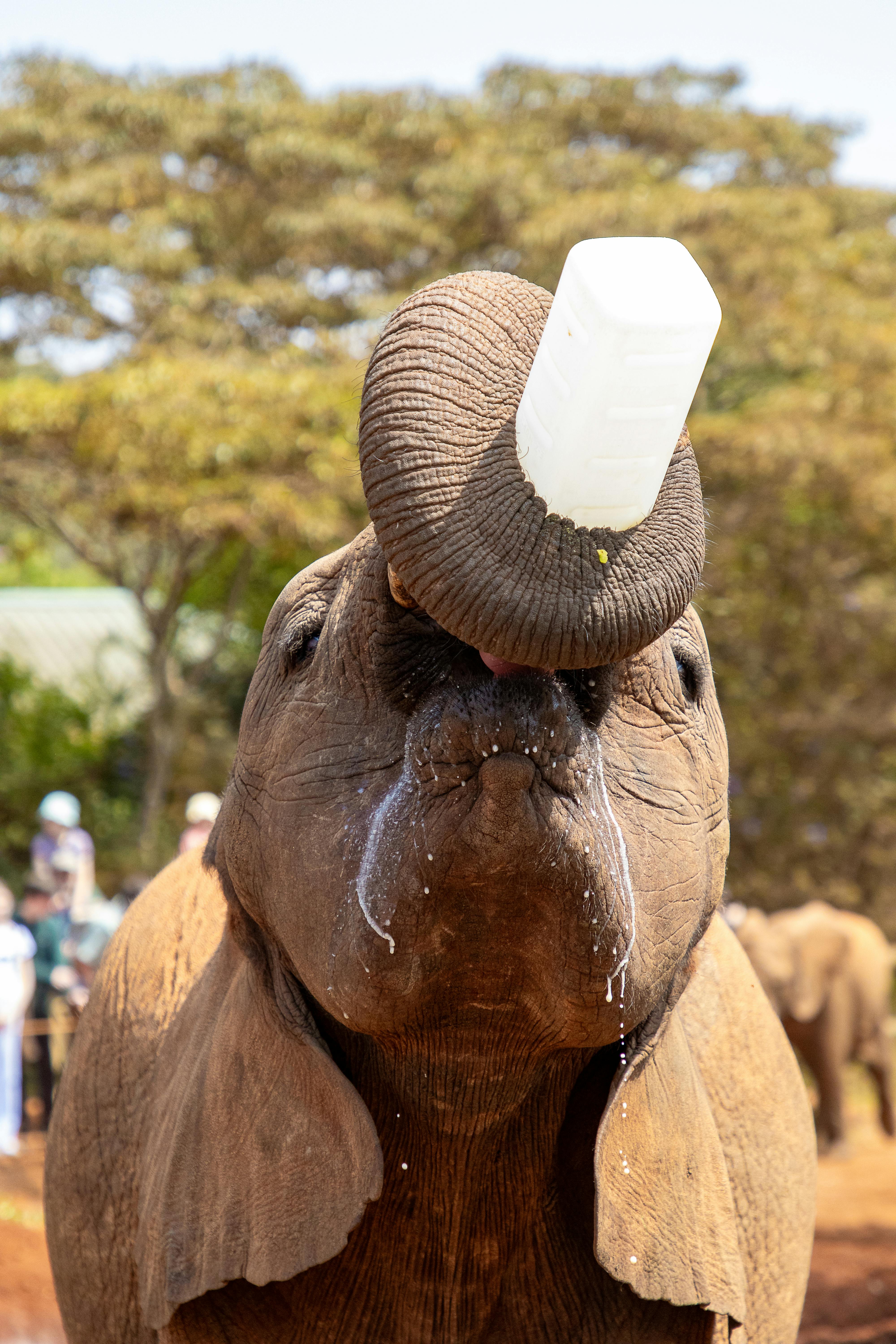
- Morning: David Sheldrick Wildlife Trust for elephant orphan feeding (book in advance — popular)
- Late morning: Giraffe Centre or Karen Blixen Museum
- Afternoon: Light lunch, gear check, packing for bush flight weight limits
- Evening: Dinner at a Nairobi restaurant — the city's food scene is genuinely good and underrated by most clients who treat Nairobi as a transit hub
Arusha overnight option:
- Morning: Arusha National Park walking safari or game drive — excellent colobus monkeys, buffalo, and Kilimanjaro views on a clear day
- Afternoon: Cultural Heritage Centre for shopping, or a coffee farm tour in the foothills of Mount Meru
- Evening: Briefing with your Tanzania guide for the days ahead
Buffer at the end of the trip (less common, but sometimes appropriate)
We occasionally place the buffer day at the trip's close — a flexible morning in Nairobi or Arusha that can absorb any final-day disruptions before an international departure. This protects the flight home but does not protect the park bookings during the trip. We use it in addition to, not instead of, a mid-trip buffer when budgets allow.
Real Scenarios: What Happens Without the Buffer Day
I'm careful about client privacy, so these are composites of situations I've either managed directly or been told about by colleagues in the industry. They are not exceptional stories. They are the kinds of things that happen regularly on tightly-packed combined itineraries.
Scenario A — The Isebania miscalculation A couple booked a 10-day combined trip through an operator who quoted the Mara-to-Serengeti drive as "around 6 hours." They left camp at 7 AM. They arrived at their Serengeti lodge at 9:30 PM — fourteen and a half hours later, including the border crossing. Their first Serengeti morning game drive started at 9 AM instead of 6 AM because they couldn't physically get out of bed. Their Serengeti allocation was two nights. They saw one lion at distance. That was the trip they'd saved four years for.
Scenario B — The cancelled bush flight A family of four flying from the Maasai Mara to Kilimanjaro via charter had their aircraft grounded at 7 AM due to a mechanical issue. The next available charter with four seats was the following morning. Without a buffer day, their first Amboseli night — fully non-refundable — was forfeited. The replacement accommodation we helped arrange at short notice cost an additional $540 per person. The Kilimanjaro morning views they'd planned that first sunrise for never happened.
Scenario C — The yellow fever certificate hold A solo traveller crossing at Namanga presented a yellow fever certificate where the vaccination date was written in European date format (DD/MM/YY). The border official couldn't confirm the date with certainty. The hold lasted two hours and forty minutes while a supervisor was consulted and contacts were made. She arrived at Lake Manyara — her one allocated night there — at 6 PM, in time for dinner but not for the afternoon game drive she'd planned. Lake Manyara was the only time she had allocated for that park. She never saw the tree-climbing lions she'd specifically requested to see.
The Question I Get Most Often: "But What If Nothing Goes Wrong?"
Then you have a planned, enjoyable day in Nairobi or Arusha — two cities with more to offer than most safari clients expect — and you arrive at your first park camp rested, prepared, and ready.
That is not a consolation prize. Nairobi is one of the most interesting cities in Africa. Arusha sits at the foot of Mount Meru with extraordinary food and a genuine character that rewards a slow morning. Our clients who have reluctantly accepted the buffer day, then found themselves with a smooth transit, consistently tell us the Nairobi or Arusha stopover was one of the trip's unexpected highlights.
The buffer day costs one night's city accommodation — typically $150 to $400 per person depending on the hotel tier, far less than a park lodge night. Against the cost of a forfeited Serengeti camp night ($800–$1,500 per person), it is the most straightforward insurance calculation in safari planning.
Frequently Asked Questions
Do I need a buffer day if I'm flying between Kenya and Tanzania?
Yes. Flying eliminates the overland time risk but introduces its own failure points — weather cancellations, mechanical issues, wildlife on airstrips, weight limit delays at remote strips. The buffer day is relevant regardless of how you travel between countries.
Can the buffer day go at the end of the trip instead?
A buffer at the end protects your international departure flight. It does not protect your park bookings during the trip. We recommend placing it at the country transition point and, when budgets allow, a secondary half-day buffer before departure as well.
How much does a buffer day add to the total cost?
Typically one night's accommodation in Nairobi or Arusha plus meals and any activity you choose. Budget $150–$400 per person for the night; add activities to taste. Against the potential cost of a forfeited park lodge night, it is comfortably the most cost-effective day on the itinerary.
What do travellers on TripAdvisor and Reddit say about cutting buffer days?
Consistently: regret. The TripAdvisor Kenya and Tanzania safari forums are full of threads from travellers who packed their itineraries tight, encountered a predictable delay, and lost game drive time they can't recover. Reddit's r/travel and r/solotravel communities show the same pattern. The advice from experienced East Africa travellers is unanimous: never build a combined itinerary so tight that one delayed variable breaks the whole trip.
Does every operator recommend buffer days?
No — and this is how you distinguish experienced East Africa specialists from operators who are telling you what you want to hear. An operator who removes the buffer day because you asked them to, without explaining why it exists, is not acting in your interest. They are optimising for the booking, not for your experience.
Will Beyond the Plains Safaris remove the buffer day if we insist?
We will always tell you what we recommend and why. If you insist on removing the buffer day after we've explained the risks, we'll accommodate that preference and document clearly that it was offered. But we will never quietly remove it without this conversation — because that conversation is part of what you're paying us for.
A Summary of What the Buffer Day Protects
| Risk | How It Happens | Buffer Day Protection |
|---|---|---|
| Border crossing overrun | Namanga: 30 min to 3+ hrs; Isebania: 9–12 hrs total | Absorbs overrun without consuming park time |
| Vehicle/guide handoff delay | Mandatory at every border; no backup if delayed | Provides transition flexibility |
| Bush flight cancellation | Weather, wildlife on strip, mechanical — no same-day alternative | Cancelled flight moves into buffer, not into a lodge forfeit |
| Non-refundable lodge forfeiture | Late arrival = lost night, no recovery in peak season | Buffer sits before high-value bookings |
| Document hold at border | Yellow fever cert, visa format, full passport | Delay lands in buffer, not in your Serengeti morning |
| Traveller exhaustion | Long-haul + complex transitions + early game drives | Recovery day before demanding wildlife schedule |
| Migration window loss | Peak windows are narrow — a lost day may be the only shot | Park days protected from being consumed by logistics |
What to Do Next
If you're in the early stages of planning a combined Kenya and Tanzania safari, here are the questions to ask every operator you speak to:
- Does this itinerary include a buffer day, and where does it sit?
- What is your contingency if our bush flight is cancelled?
- Does our visa cover re-entry into Kenya if the itinerary loops back?
- Have you confirmed the yellow fever certificate format accepted at our specific crossing point?
- Are the lodge bookings at the country transition non-refundable, and what is the policy for late arrivals?
An operator with real combined-safari experience will answer all five without hesitation. If any of these questions produces a vague or deflecting answer, that tells you something important.
We've built these questions into our standard consultation process at Beyond the Plains Safaris because they're the questions that matter — not just for the buffer day, but for the whole trip.
Ready to Plan Your Kenya–Tanzania Safari the Right Way?
At Beyond the Plains Safaris, we design combined Kenya–Tanzania itineraries that are honest about what East Africa actually requires — not just what sounds good in a brochure. We are a KATO-certified operator, verified on SafariBookings, listed on TripAdvisor, licensed by the Tourism Regulatory Authority of Kenya, and — unlike most companies — we cover both Kenya and Tanzania with our own guides and partner networks rather than subcontracting.
We include a buffer day in every combined itinerary we build. We will always explain why. And when clients come back — which they do — the buffer day is never the thing they regret.
Get a free, customised Kenya–Tanzania itinerary quote →
Schedule a 30-minute planning consultation →
WhatsApp us directly: +254 725 115 998
Further Reading on Beyond the Plains Safaris
- The Ultimate Kenya & Tanzania Safari Guide: How to Combine Both Destinations Seamlessly
- How to Compare Kenya Safari Quotes: The Complete Step-by-Step Guide
- The Three Kenya Safari Itineraries We Quietly Talk Clients Out Of
- Kenya Safari Cost Breakdown 2026
- Visa Requirements for a Kenya Safari Trip
- Maasai Mara National Reserve | Serengeti National Park | Ngorongoro Crater | Amboseli National Park
Written by John Dante, Owner & Safari Director, Beyond the Plains Safaris. John has designed and personally guided combined Kenya–Tanzania safari itineraries for over 15 years, with specialist knowledge of the Great Migration corridor, cross-border logistics, and Tanzania's northern circuit. Beyond the Plains Safaris is based in Nairobi, Kenya, and is a certified member of the Kenya Association of Tour Operators (KATO), licensed by the Tourism Regulatory Authority (TRA), and a verified operator on SafariBookings.com and TripAdvisor.
All logistics, crossing times, visa requirements, and lodge pricing referenced in this article reflect current ground conditions as of May 2026 and are reviewed periodically by the Beyond the Plains editorial team. Requirements are subject to change — always confirm current visa and health requirements with your operator and the relevant embassy before travel.











Comments (0)
Leave a Comment
No comments yet. Be the first to comment!