
10 Days, Two Countries, One Safari You Won't Forget: A Complete Kenya–Tanzania Itinerary
By John Dante — Owner & Lead Guide, Beyond The Plains Safaris
I've guided hundreds of safaris across East Africa, and the question I get most often isn't "which park is best?" It's this: "I have 10 days — can I see Kenya and Tanzania in the same trip?"
The honest answer is yes. But only if you plan it right.
A poorly structured 10-day itinerary across both countries will leave you exhausted, over-driven, and underwhelmed. A well-built one will feel like two completely different safaris stitched together — each with its own rhythm, its own landscapes, its own wildlife encounters that you simply can't replicate anywhere else on Earth.
This is the itinerary I recommend most. It moves logically across the border, minimizes unnecessary driving, and gives you genuine depth in every ecosystem — from the elephant-heavy plains below Kilimanjaro to the sweeping volcanic rim of the Ngorongoro Crater, all the way north into the Serengeti migration corridors.
Why Combine Kenya and Tanzania?
Most first-time safari travelers are drawn to one country based on what they've seen on a nature documentary — usually the wildebeest crossing in the Masai Mara, or elephants walking in front of Kilimanjaro. But Kenya and Tanzania aren't competing destinations. They're complementary ones.
Kenya gives you the Masai Mara — arguably the most wildlife-dense reserve on the continent — along with Amboseli's iconic elephant herds and that unforgettable backdrop of Africa's highest peak. Tanzania gives you the Ngorongoro Crater, which functions like a natural wildlife enclosure holding one of the densest predator populations on earth, and the Serengeti, which at roughly 14,750 square kilometers is simply vast in a way that changes how you think about wilderness.
Ten days lets you sample both properly without rushing. Here's how I'd structure it.
Days 1–2: Nairobi Arrival and Amboseli National Park
Most international flights into East Africa land in Nairobi in the morning, which is actually perfect. You clear immigration, collect your luggage, and within a few hours you can be on the road south toward Amboseli — a four-hour drive that passes through Maasai lands and gives you your first look at the scale of the African bush.
I always recommend clients spend their first night at an Amboseli camp rather than Nairobi. There's nothing wrong with the city, but after a long-haul flight, waking up to birdsong and the silhouette of Kilimanjaro at first light is the kind of arrival that sets the tone for everything that follows.
First-Timer Tip
Don't try to do an evening game drive on Day 1. The jet lag will catch up with you halfway through, and you'll struggle to focus. Rest, eat well, and save your energy for the morning when the light is better anyway.
Days 3–4: Amboseli — Elephants, Kilimanjaro, and Open Plains
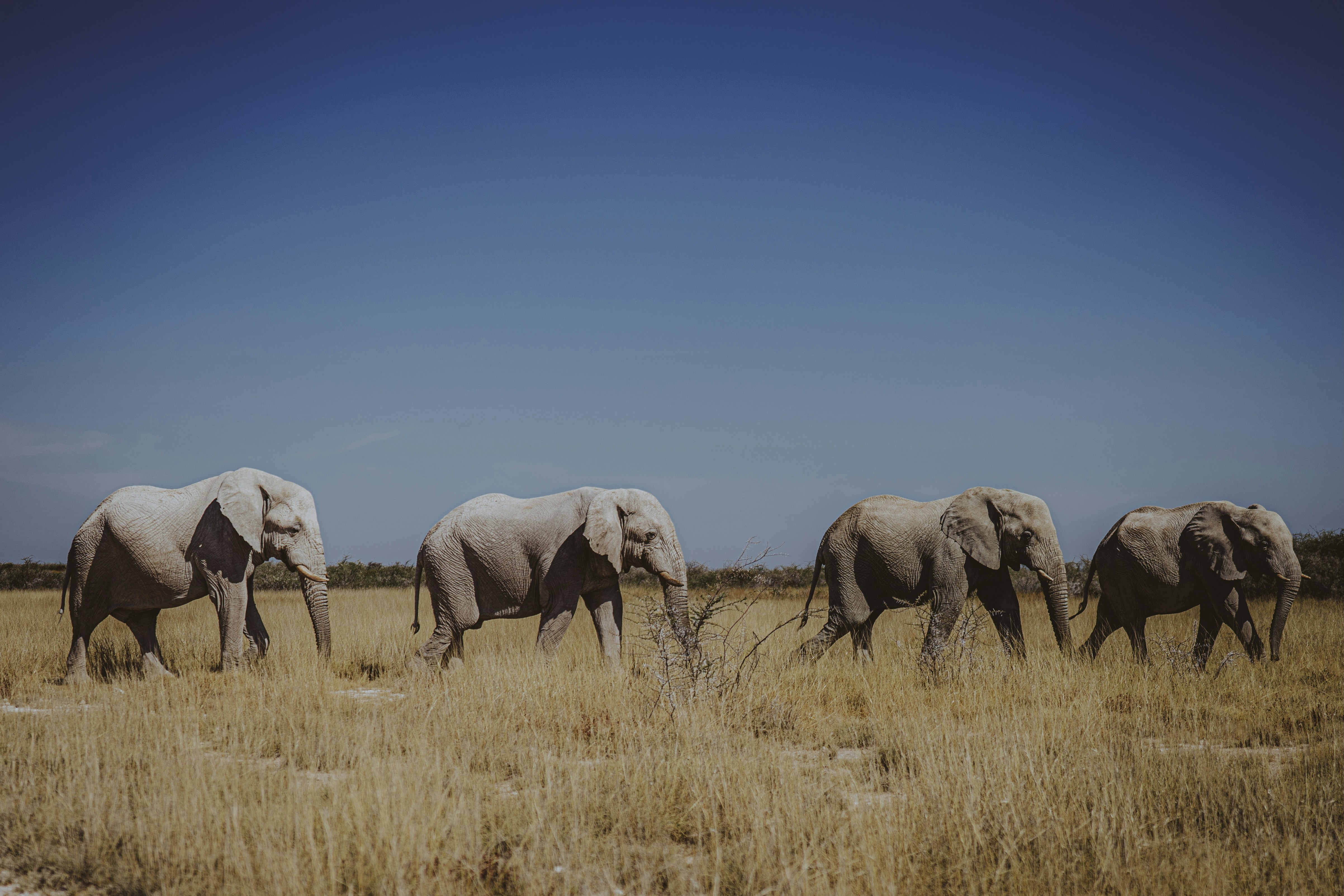
Amboseli is where Kenya hooks people for life. The park sits at the foot of Kilimanjaro, and on a clear morning — which in Amboseli is most mornings — the mountain fills the horizon in a way that feels almost theatrical. Against that backdrop, you'll find some of the largest elephant herds in Africa.
Amboseli's elephant population is one of the most studied in the world, and it shows in how relaxed the animals are around vehicles. You'll get close — closer than in most parks — and spend time watching entire family groups move across the floodplains with the mountain lit gold behind them. It's the single most-photographed wildlife scene in East Africa for a reason.
Beyond elephants, Amboseli has good populations of lion, cheetah, buffalo, giraffe, zebra, and wildebeest. The swamp areas around Enkongo Narok attract hippo and a remarkable variety of waterbirds. Two full days here is the minimum I'd recommend — you'll want the early morning light on Day 3 and the more relaxed afternoon drives of Day 4 once you've settled in.
Day 5: Cross Into Tanzania — Arusha and the Northern Circuit
The Kenya–Tanzania border crossing at Namanga is one of the most straightforward land crossings in East Africa. With the right visa paperwork in order — your operator should handle this in advance — it moves quickly and efficiently.
Day 5 is a transition day. You'll cross the border in the morning and drive to Arusha, Tanzania's safari hub, arriving in the early afternoon. Use the time to rest, eat a proper lunch, and recalibrate. Arusha itself has a relaxed energy — the central market is worth a wander if you have an hour, and the coffee grown on the slopes of nearby Mount Meru is exceptional.
Visa Note
Both Kenya and Tanzania offer East Africa tourist visas that cover multiple countries in a single application. If you're planning this itinerary, apply for the East Africa Tourist Visa rather than single-entry visas for each country — it's significantly cheaper and eliminates border paperwork complexity. Your operator should guide you through this well before departure.
Storm rolling in over the Masai Mara — our Land Cruiser parked under a lone acacia as the afternoon sky turned. Moments like this are why you don't rush a safari. Photo: Beyond The Plains Safaris.
Days 6–7: Ngorongoro Crater and the Serengeti's Southern Plains
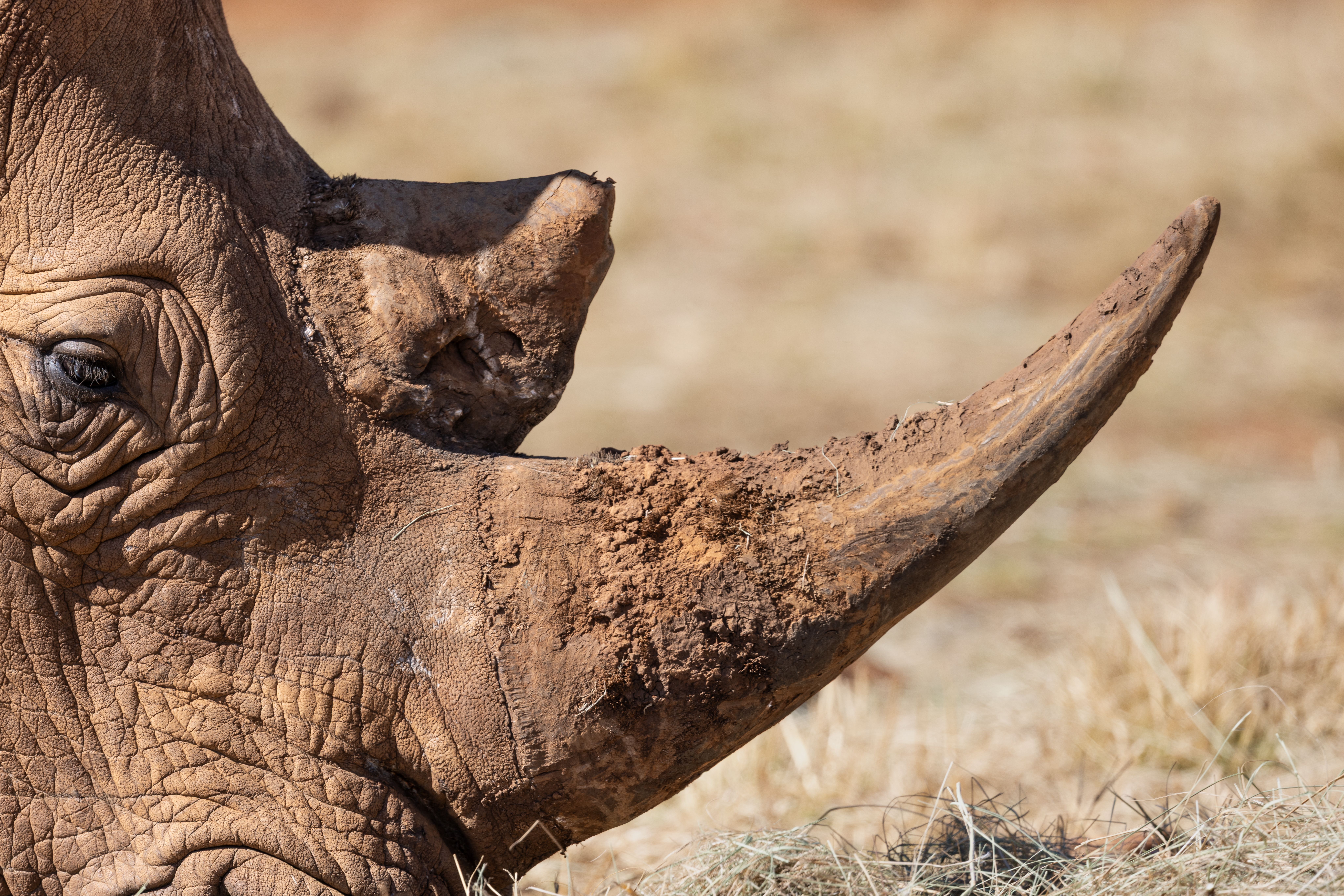
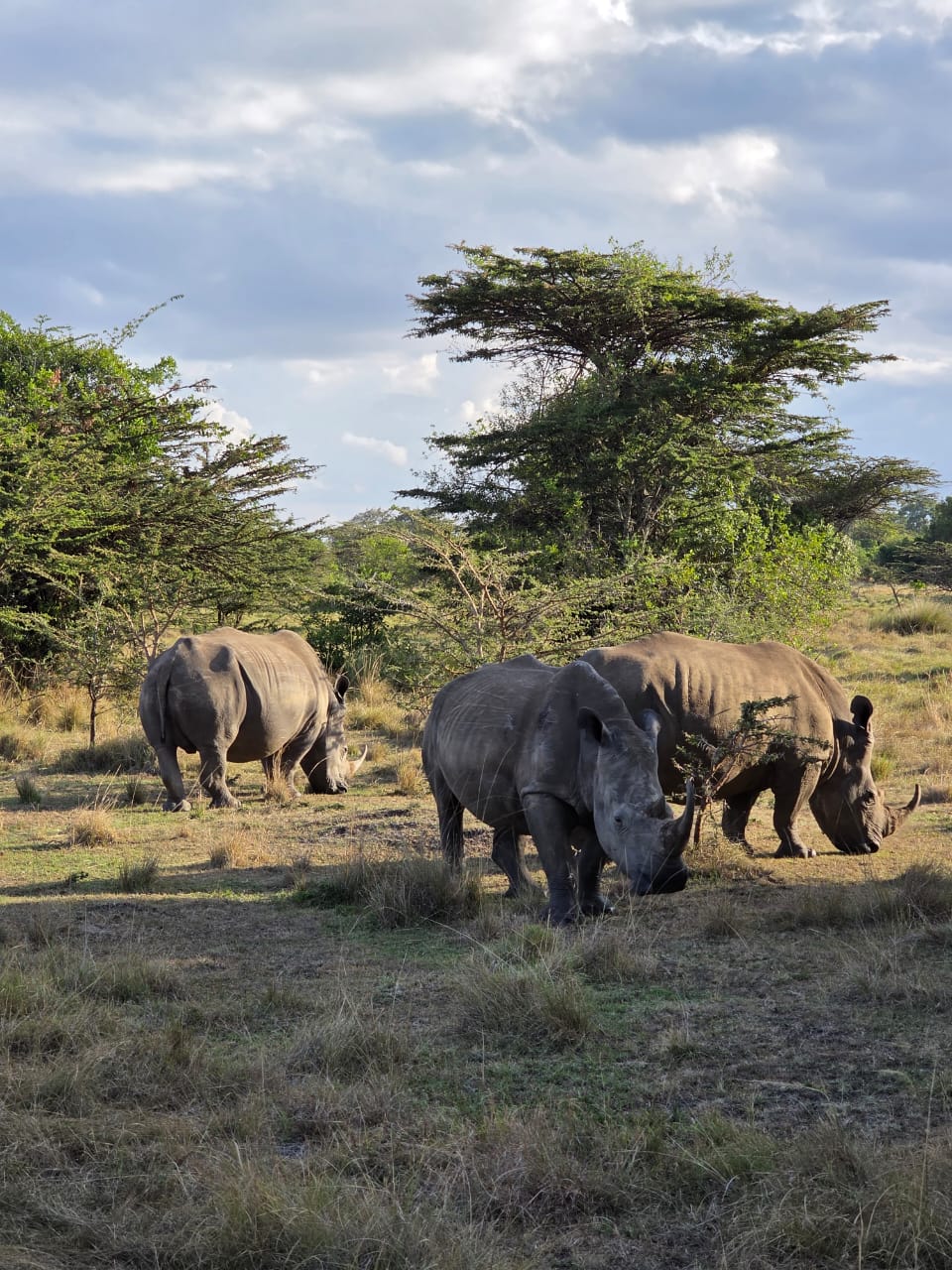
Nothing quite prepares you for the Ngorongoro Crater. You drive to the rim in the morning, look down into what appears to be an impossibly green bowl 600 meters below you, and then descend into it. What you find at the bottom is something between a wildlife sanctuary and a living documentary — approximately 25,000 animals living within the crater walls, including one of the densest populations of lions and black rhino left in Africa.
The crater floor covers about 260 square kilometers and contains forest, grassland, swamp, and a soda lake that draws flamingo in the tens of thousands. On a single morning game drive here I've had clients tick off lion, leopard, elephant, rhino, and hippo before 10am. That kind of density is unusual anywhere on the continent.
After a half-day in the crater, push on toward the southern Serengeti in the afternoon. The landscape shifts dramatically as you leave the crater rim and descend onto the Serengeti plains — open, golden, almost oceanic in its scale. Depending on the time of year, you may already be driving through calving grounds where thousands of wildebeest are dropping young in the short-grass plains.
Days 8–9: Central Serengeti and the Migration
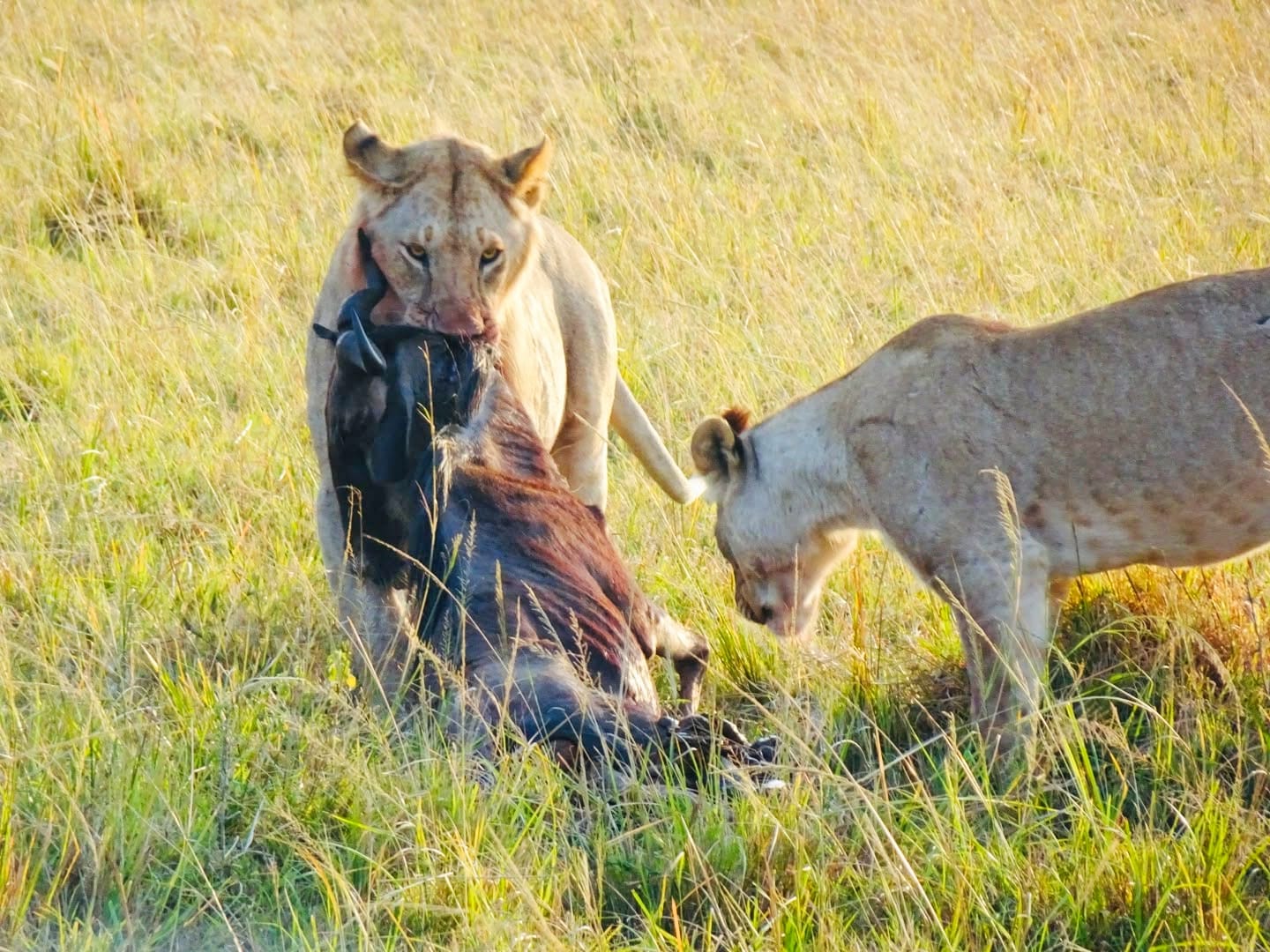
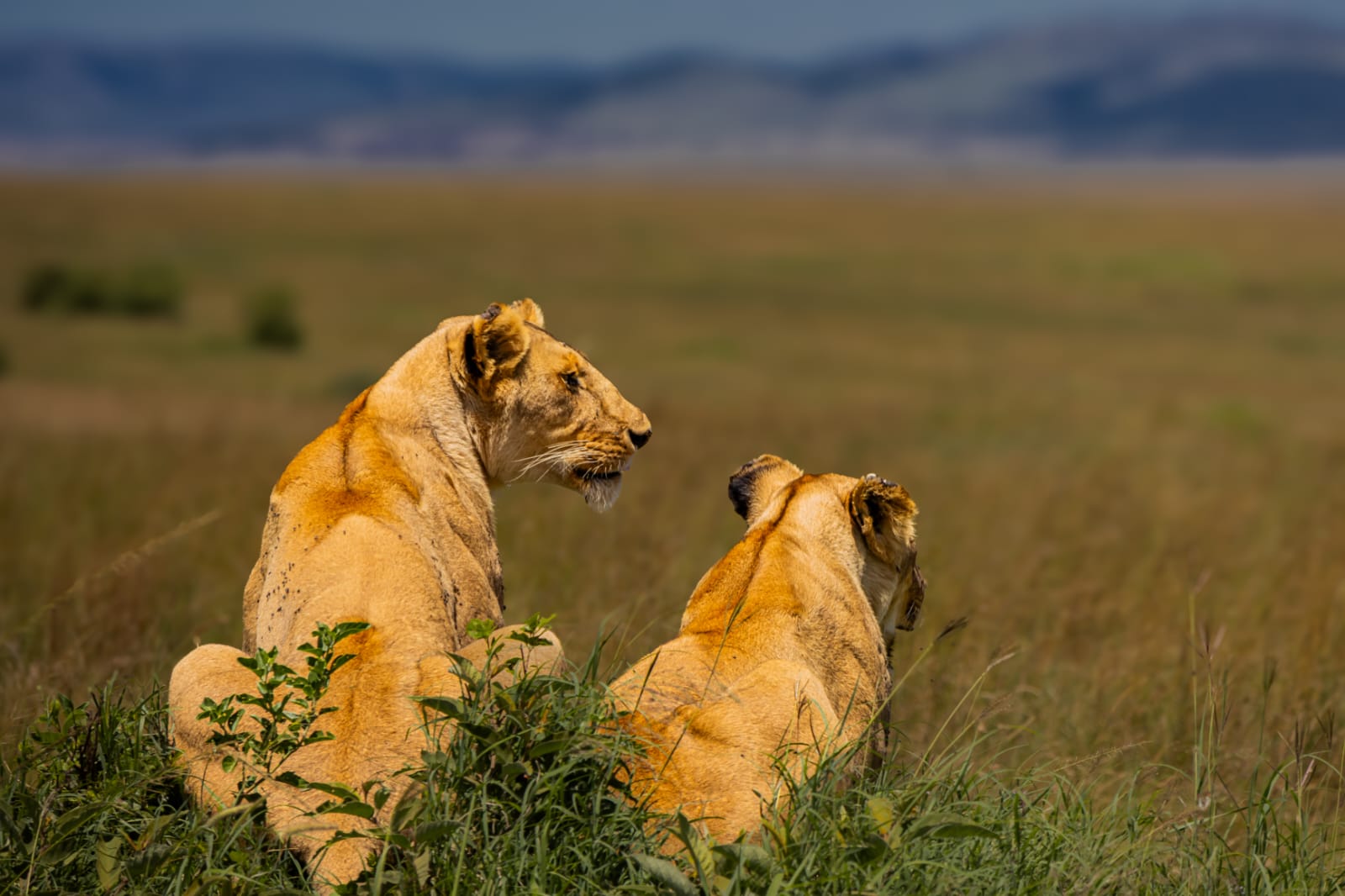
The Serengeti's central zone — the Seronera Valley — is where the ecosystem's big cat population concentrates. Resident lion prides, leopards lounging in sausage trees along the river, and cheetahs working the open plains. The Seronera River itself acts as a year-round water source, which means wildlife doesn't disappear during the dry season the way it can in other parks.
If your trip falls between June and October, the Serengeti leg of this itinerary overlaps with the Great Migration's northern push. The wildebeest herds — roughly 1.5 million animals — move through the western corridor and eventually toward the Mara River crossings. In 2026, La Niña-influenced conditions are accelerating the herds' movement northward, with early reports suggesting the first significant Mara River crossings could happen as early as mid-July. If you're traveling in July, build some flexibility into your Serengeti days.
Two nights in the central Serengeti gives you three game drives — two mornings and one afternoon — which is the minimum you need to feel like you've genuinely explored this park rather than just driven through it.
For detailed guidance on timing your Serengeti visit around the migration, see our Great Migration timing guide.
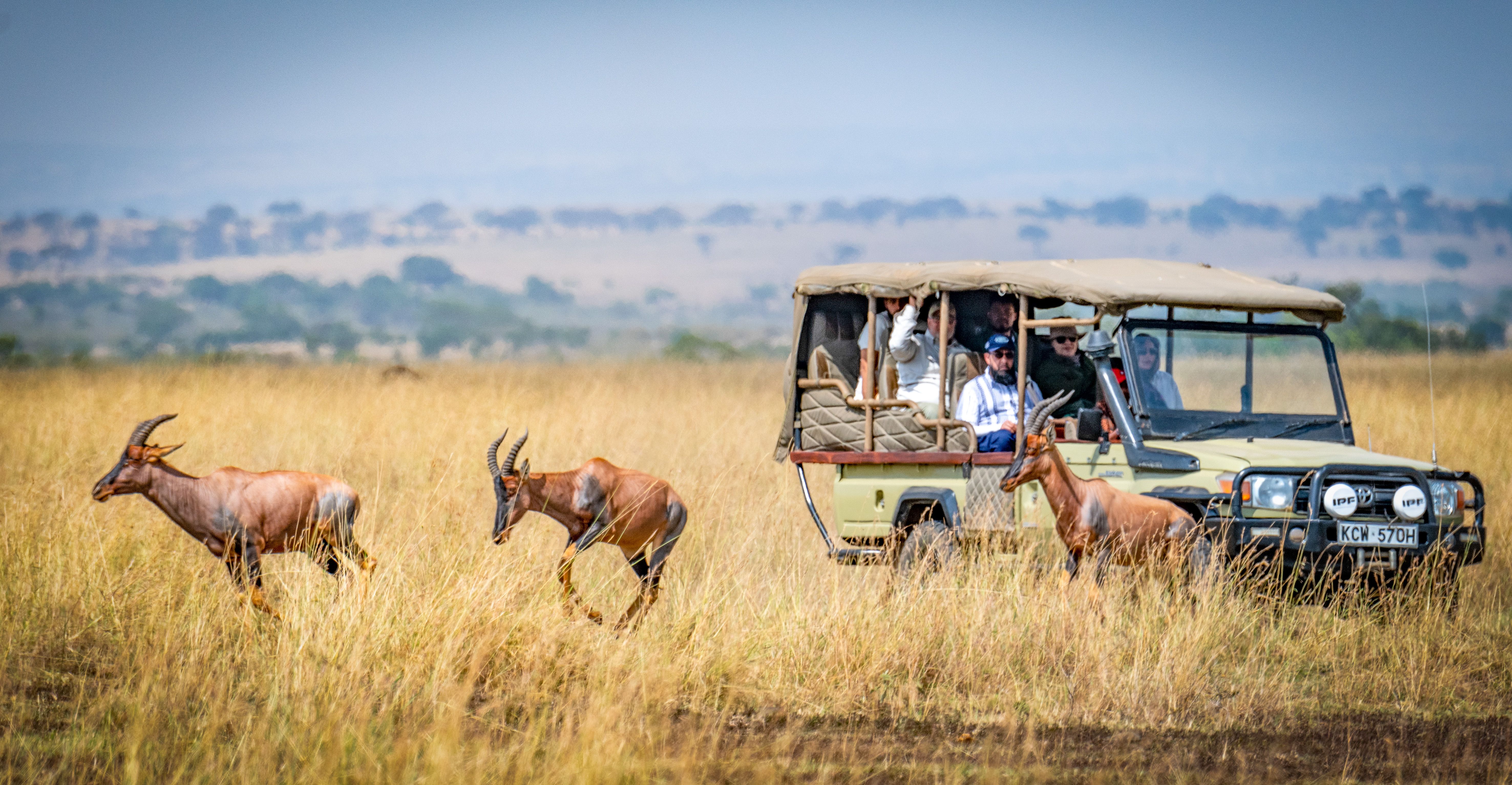
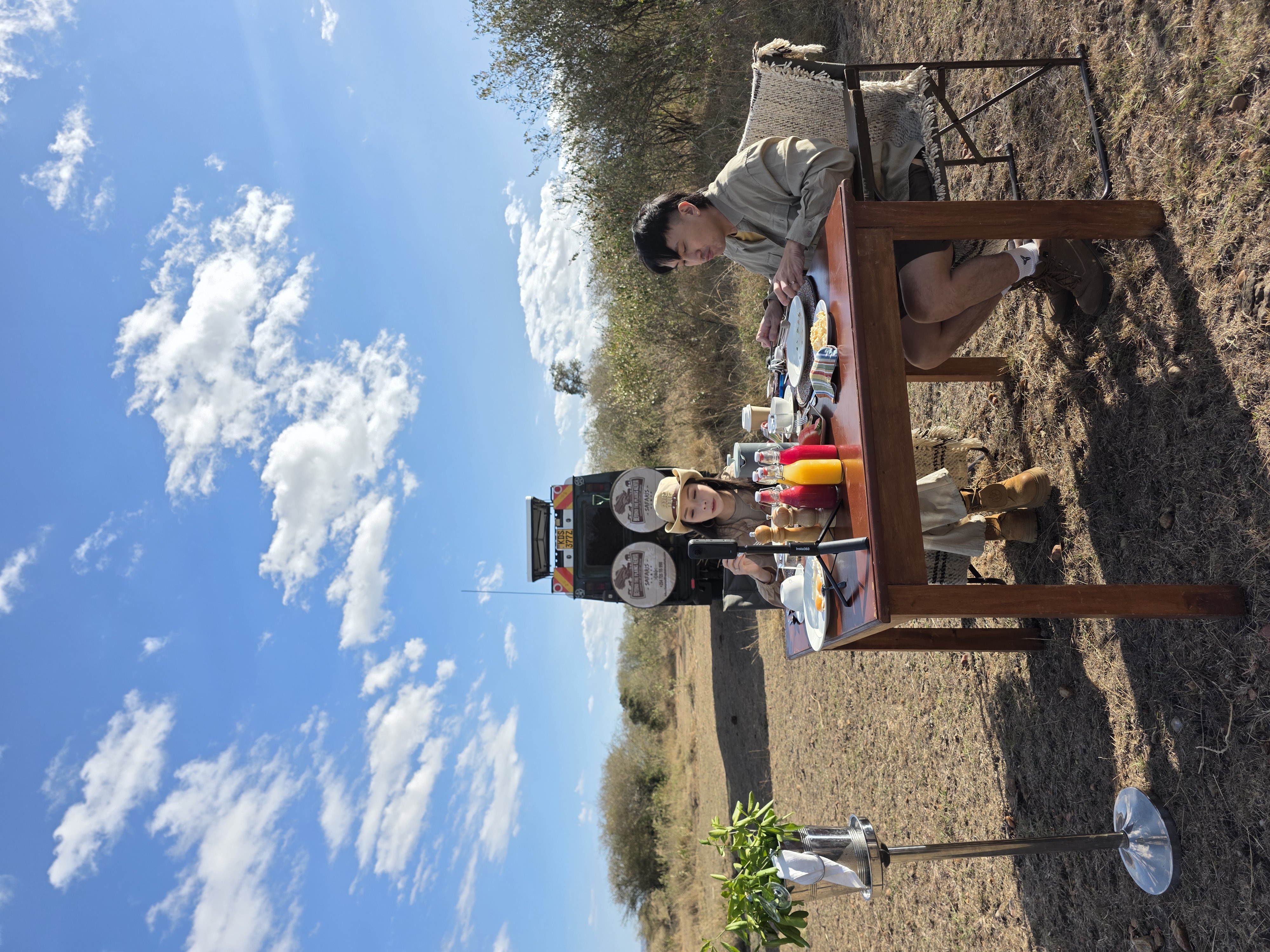
Happy guests on a pop-top game drive through the Mara grasslands — zebra graze indifferently in the background. This is what it actually looks and feels like out there. Photo: Beyond The Plains Safaris.
Day 10: Fly Out and Final Morning Game Drive
Most international flights out of Nairobi or Kilimanjaro depart in the late afternoon or evening, which gives you one last morning game drive before you need to head to the airstrip. Don't skip it. Some of the best wildlife encounters I've guided have happened on final-day drives, when clients have relaxed into the rhythm and stopped trying to photograph everything.
Fly from the Serengeti into Arusha or Kilimanjaro International Airport, or — if you've structured it this way — connect back into Nairobi for your international departure. Either works. The key is booking your internal charter flight in advance during peak season, when small aircraft fill up weeks ahead.
What to Pack for a 10-Day Kenya–Tanzania Safari
Clothing
• Neutral-colored layers (khaki, olive, tan — avoid bright colors and black, which attracts tsetse flies)
• A warm fleece or light down jacket — early morning drives in the Ngorongoro highlands can be genuinely cold
• Lightweight long-sleeved shirts for sun protection
• Comfortable walking shoes and sandals for camp
• A wide-brimmed hat
Gear
• Binoculars — 8x42 or 10x42 are ideal; don't rely on the vehicle's pair
• A camera with at least 300mm of zoom if you want serious wildlife shots
• A dust bag or dry bag for electronics — the Serengeti is notoriously dusty in the dry season
• A power bank — some bush camps have limited charging hours
• Sunscreen with high SPF — the equatorial sun at altitude is stronger than you expect
What Nobody Tells You About Combining Both Countries
The part most itineraries don't acknowledge is the transition fatigue. Crossing a border, changing currency, adjusting to a different camp environment, and re-learning a new landscape on consecutive days takes more out of you than it sounds on paper. This is why I build Day 5 as a genuine rest and transition day — not a half-day game drive crammed in before the border crossing.
The other thing nobody mentions is how different the two countries feel on the ground, even though they share the same ecosystem. Kenya has a faster pace — camps are a little more polished, roads around Amboseli are better maintained, and the Maasai guiding culture in the Mara has a particular warmth and humor that's hard to describe until you've experienced it. Tanzania feels older and quieter. The Serengeti in particular has a sense of scale and solitude that Kenya's parks, wonderful as they are, rarely match.
Both are extraordinary. Neither is better. That's the point of combining them.
Is 10 Days Enough?
It depends on what you mean by "enough." Ten days is enough to have a genuinely transformative safari experience across two countries. It is not enough to feel like you've exhausted either one of them — and that's actually a feature, not a flaw. Most of my repeat clients return because a 10-day trip left them wanting more of both.
If you have 14 days, I'd add two more nights in the Masai Mara on the Kenya end. If you have 7, I'd drop Ngorongoro and concentrate the Tanzania leg entirely in the Serengeti. But 10 days is the sweet spot — long enough to go deep, short enough to stay energized for every drive.
If you're still figuring out how long your Kenya safari should be, our guide on how many days to spend on a Kenya safari breaks down the options in detail.
East Africa is one of the last places on Earth where you can sit in an open vehicle, surrounded by lions, with no fence between you and the horizon. Ten days is a long time to spend in that landscape. It's also never quite long enough.
Plan well. Travel with someone who knows both countries. And leave room for the unexpected — because the best moments on any safari are always the ones you didn't schedule.
About the Author
John Dante is the owner and lead guide at Beyond The Plains Safaris, a Kenya- and Tanzania-based safari operator specializing in private, expert-guided wildlife experiences. With years of field guiding across the Masai Mara, Amboseli, Ngorongoro, and the Serengeti, John combines deep ecosystem knowledge with a practical, first-hand approach to safari planning. He is based in Nairobi.
Website: beyondtheplainssafaris.com
Comments (0)
Leave a Comment
No comments yet. Be the first to comment!