
The Ultimate Guide to a Luxury African Safari: Destinations, Costs, and How to Plan the Trip of a Lifetime
You already know that an African safari is one of the world's great travel experiences — the kind that permanently rewires how you see the planet. But most safari content tells you the same things: book early, bring binoculars, visit the Serengeti. What it rarely tells you is what the finest 1% of safari experiences actually look like, what they genuinely cost, and exactly how to access them. This guide covers every dimension of the luxury African safari — from the best private reserves and camps to seasonal strategy, pricing transparency, and how to plan a trip that lives up to the dream.
Key Takeaways
- A luxury African safari is defined by exclusive private game reserve access, expert field guides, low guest-to-guide ratios, and all-inclusive premium accommodation — not merely polished décor.
- Botswana, Kenya, Tanzania, South Africa, and Rwanda are the continent's top luxury safari destinations, each delivering distinct wildlife encounters and landscape experiences.
- Luxury safari rates typically range from $800 to $3,000+ per person per night, generally inclusive of accommodation, all meals, game drives, park fees, and most beverages.
- The best time for East Africa — Kenya and Tanzania — is July through October, when the dry season concentrates wildlife and the Great Migration peaks in the Masai Mara.
- Booking through a specialist safari operator rather than a generalist travel agent is the most reliable way to secure the right camps, the right itinerary, and genuine value.
- The world's leading luxury safari brands — Singita, andBeyond, Wilderness Safaris — integrate conservation land management and community development directly into their business models.
- Sustainable luxury safaris allow travelers to experience Africa's wilderness while directly contributing to its long-term preservation, making conservation credentials an increasingly central part of premium trip planning.
What Is a Luxury African Safari and What Makes It Different from a Standard Safari?
A luxury African safari is characterized by exclusive access to private game reserves or conservancies, highly trained professional guides, low guest-to-guide ratios, and all-inclusive accommodation at premium tented camps or lodges — distinguishing it fundamentally from a standard national park safari.
That distinction matters more than most travelers realize before they arrive. On a standard safari inside a public national park, you share roads with dozens of other vehicles. You follow fixed game drive routes. You return to a lodge at set times. The experience is still extraordinary — but it is a shared one, and the wildlife encounters reflect that.
On a luxury safari, the calculus is entirely different. Private concessions give your camp exclusive or near-exclusive access to thousands of acres of wilderness. Your guide can follow a leopard off-road for an hour if the tracking demands it. Your game drives depart at dawn and return when you are ready. For first-timers to Africa who are accustomed to excellence in every other area of their lives, this isn't a minor upgrade — it's a wholly different category of experience.
What "Luxury" Actually Means in a Safari Context
Luxury on safari has three distinct pillars: access, expertise, and environment. Access means private land with restricted visitor numbers. Expertise means your guide holds a senior Field Guide qualification — ideally a FGASA Level 2 or Professional Guide rating — and can read animal behavior, track spoor, and interpret ecosystems in real time. Environment means accommodation that is architecturally considered and spatially generous, whether that's a tented suite with a private plunge pool in the Masai Mara or a converted colonial homestead in the Serengeti.
The finest camps also operate on a low volume, high value philosophy. Most carry no more than 16 guests at any one time. Some carry as few as eight. This isn't just marketing language — it shapes every dimension of your experience, from the silence at dinner under the stars to the probability of being the only vehicle at a lion kill.
Why Is a Luxury African Safari Worth the Investment?
A luxury African safari delivers a caliber of wildlife access, personal freedom, and emotional transformation that standard safari travel cannot replicate — and that justifies the premium at every price point.
The value question is the right one to ask. Luxury safaris are expensive. A ten-day trip combining Kenya and Tanzania for two people with internal flights can comfortably reach $30,000–$50,000. That figure deserves scrutiny, not assumption.
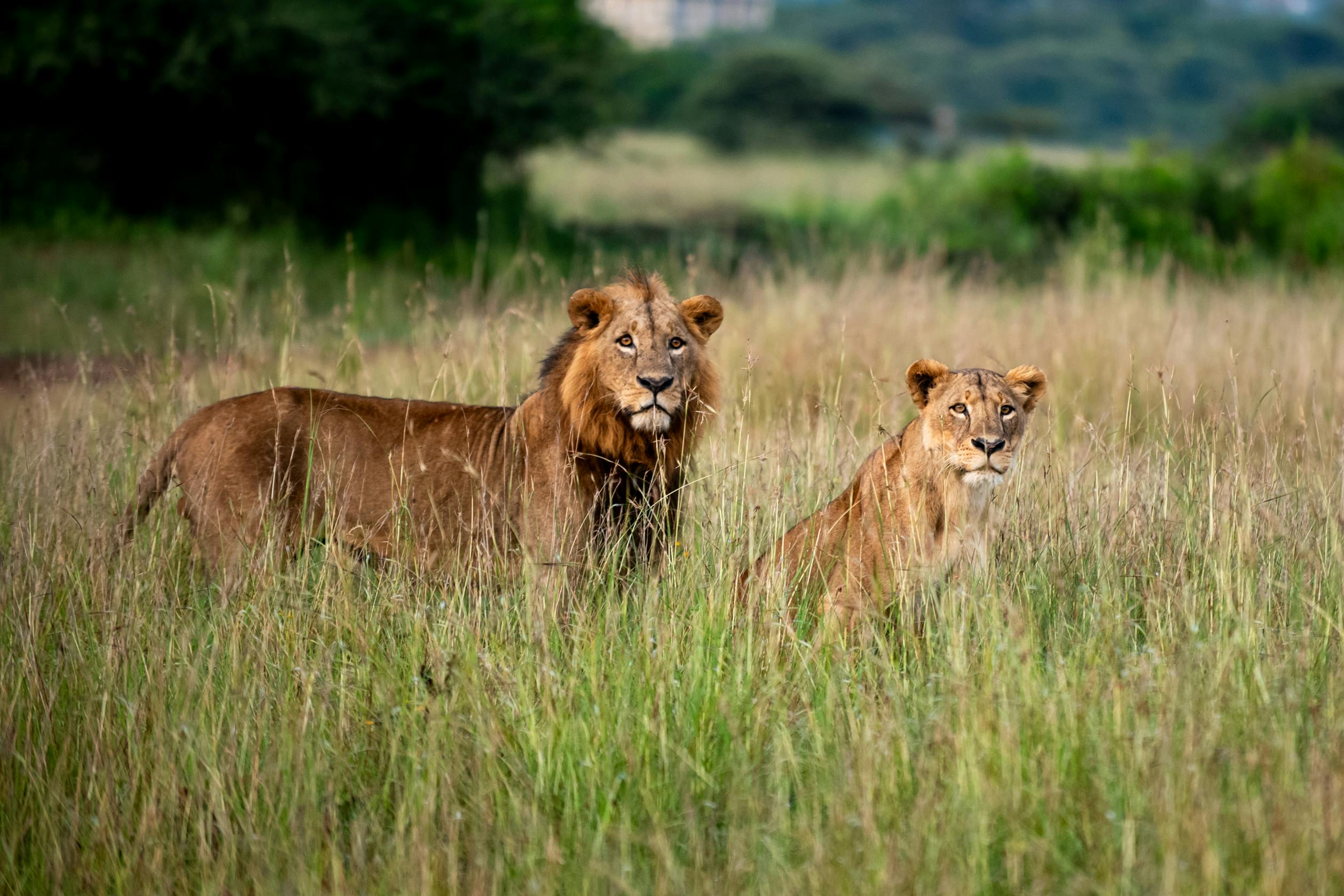
Consider what you are actually buying. Private concession access means you are not competing with 40 other vehicles at a lion sighting — a common scene in the public sections of the Masai Mara during peak season. You are, instead, watching that lion with one or two other vehicles at most, often none. The wildlife encounters on private land are measurably more intimate. According to a 2023 study by the African Safari Association, travelers in private conservancies report an average of 40% more close-range predator sightings per day than those operating exclusively in public parks.
Moreover, the guide is the experience. A senior FGASA-qualified field guide on a luxury safari does not merely drive you to animals — they reconstruct the landscape's history from tracks in the dust, identify 400 bird species by call, and explain the ecological relationship between termite mounds and fig trees. That depth of interpretation is unavailable at most standard-tier properties.
Finally, there is the accommodation itself. Sleeping under canvas in a premium tented camp — waking to the sound of elephants at the waterhole outside your suite, watching the Milky Way from your private deck — is an experience with no domestic equivalent. It is not comparable to a hotel stay of any category. The emotional ROI, as seasoned travelers consistently report, is unlike almost any other journey they have taken. For more on why discerning travelers choose specialist operators for exactly this reason, read our guide on why Beyond The Plains Safaris stands apart for high-end safari travel.
Which African Countries Offer the Best Luxury Safari Experiences?
The premier luxury safari destinations in Africa are Botswana, Kenya, Tanzania, South Africa, Rwanda, Zimbabwe, and Uganda — each offering distinct ecosystems, wildlife profiles, and levels of exclusivity.
Choosing between them is less about which is "best" in absolute terms and more about what kind of experience you want. Let's explore each in detail.
Kenya — The Masai Mara and the Great Migration
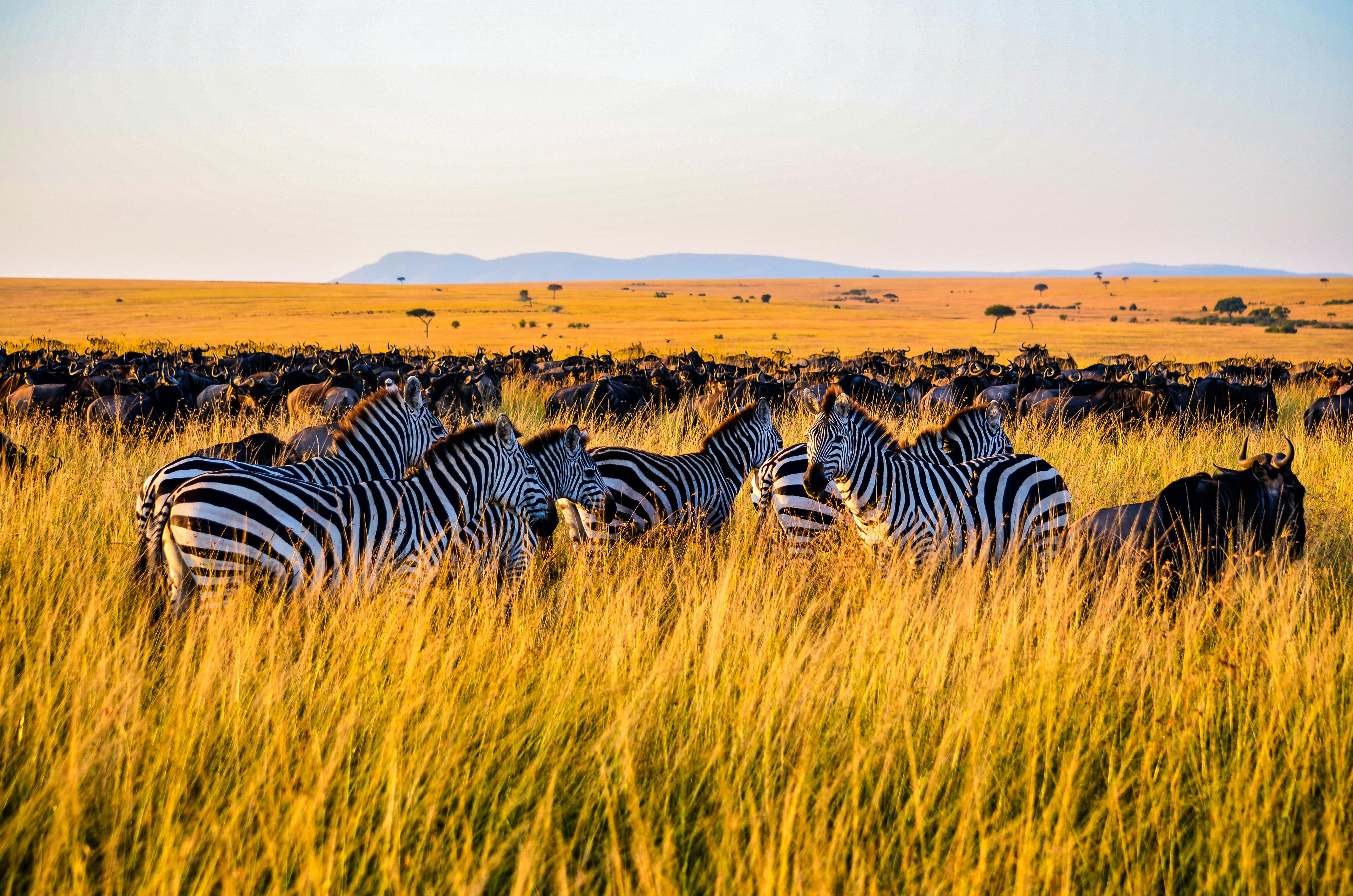
Kenya is where many travelers take their first luxury safari, and for good reason. The Masai Mara National Reserve and its surrounding private conservancies — Olare Motorogi, Naboisho, Ol Kinyei — deliver some of the most consistent big cat sightings on the continent. The Mara's open savannah is dramatic and immediately cinematic. You will see lions within the first morning.
The Mara's private conservancies are the key upgrade over the main reserve. Conservancy fees fund community land leases, which means livestock is excluded from vast corridors of prime game country — and vehicle numbers are tightly controlled. The result is a private-land experience within Kenya's most famous ecosystem. Explore the full Masai Mara travel guide for a deeper look at what each zone offers.
Beyond the Mara, Amboseli National Park — with its iconic elephants against the backdrop of Kilimanjaro — and Samburu Game Reserve in the north, home to the endemic Grevy's zebra and reticulated giraffe, round out a Kenya itinerary with tremendous ecological variety.
Tanzania — Serengeti, Ngorongoro, and Ruaha
Tanzania offers the largest continuous wilderness areas in Africa. The Serengeti National Park alone covers 14,763 square kilometres. Combined with the private concessions on its northern and western boundaries, it gives luxury travelers the paradox of true remoteness within one of the continent's most celebrated ecosystems.
The best time to visit the Serengeti depends on which aspect of the Great Migration you want to witness. The river crossings at the Mara River happen between July and September; calving season in the southern Serengeti runs from January to March. Both are extraordinary in different ways. The Ngorongoro Crater, a UNESCO World Heritage Site, offers a concentrated wildlife experience within a collapsed volcanic caldera — genuinely unlike anywhere else on earth.
For travelers seeking true remoteness, Ruaha National Park in southern Tanzania remains one of Africa's least-visited and most rewarding destinations. Elephant herds numbering in the hundreds, large lion prides, and wild dogs — all without the vehicle traffic of the northern circuit. For a multi-destination approach, our Kenya–Tanzania safari itinerary guide maps out how to combine both countries efficiently across 10 days.
Botswana — The Gold Standard of Exclusivity
Botswana is widely regarded as Africa's premier luxury safari destination due to its strict low-volume, high-value tourism policy, which limits visitor numbers across the Okavango Delta and Chobe National Park to preserve both wildlife density and exclusivity.
This policy is not accidental. Botswana made a deliberate decision decades ago to prioritize quality of experience over volume of visitors. The result is a country where private concessions are enormous, camps are few and far between, and the sensation of having the wilderness to yourself is not marketing copy — it is the daily reality.
The Okavango Delta, a UNESCO World Heritage Site and one of the world's largest inland deltas, is the centerpiece. Game-viewing by mokoro (traditional dugout canoe) through papyrus channels at dawn, walking with armed guides through floodplains, and flying between remote water camps by light aircraft — the Okavango is an experience defined by its inaccessibility and the intimacy that creates.
South Africa — Sabi Sand and the Big Five
South Africa offers something no other destination delivers: world-class luxury camps within a four-hour flight from Europe, combined with a malaria-free option in the Eastern Cape. The Sabi Sand Game Reserve, which shares an unfenced boundary with Kruger National Park, is perhaps the finest leopard-tracking destination in the world. Leopard sightings in Sabi Sand are so reliable they are almost guaranteed.
For travelers combining a safari with a beach stay or a Cape Town extension, South Africa's logistical accessibility is unmatched. Read our guide to East Africa safari packages if you're comparing South Africa against an East African itinerary.
Rwanda and Uganda — Gorilla Trekking Expeditions
Rwanda's Volcanoes National Park and Uganda's Bwindi Impenetrable Forest offer something no other safari destination can: face-to-face encounters with mountain gorillas in the wild. Permits currently cost $1,500 per person per day in Rwanda and $700 in Uganda. These are not transfers that can be found cheaper elsewhere — they are fixed conservation fees.
Rwanda's Bisate Lodge, set on a hillside overlooking the volcanoes with six forest villas and an extraordinary reforestation program surrounding the property, represents one of the most architecturally and ethically ambitious luxury safari properties on the continent. The combination of gorilla trekking with Bisate's level of hospitality is a genuinely once-in-a-lifetime experience for the traveler who has done everything else.
What Types of Luxury Safari Experiences Are Available in Africa?
Luxury safari experiences extend far beyond the classic morning game drive, encompassing fly-in itineraries, walking safaris, gorilla trekking, mobile tented camps, private villa safaris, conservation expeditions, and bespoke family and honeymoon programs.
Understanding which format suits your travel style is as important as choosing the right destination. Each delivers a fundamentally different relationship with the landscape.
Classic Game Drives in Private Concessions
Classic game drives in a private 4×4 Land Cruiser or open-sided vehicle with your dedicated guide and tracker remain the backbone of most luxury safari itineraries — and rightly so. The combination of open bush, pre-dawn departures, and a professional guide reading the landscape from the front seat is irreplaceable.
Morning drives typically run from 6:00 AM to 10:30 AM, followed by breakfast and a midday rest during the heat of the day. Evening drives depart around 4:00 PM and end after dark, incorporating a sundowner stop with drinks in the bush and spotlight tracking of nocturnal species. Most luxury camps include two drives per day in their all-inclusive rates.
Walking Safaris — The Most Immersive Experience on Earth
Walking safaris — conducted on foot with an armed professional guide in wilderness areas — are widely considered the most visceral and immersive safari experience available. On foot, your senses recalibrate entirely. You learn to read tracks and dung. You understand scale — how large a buffalo actually is when there is no vehicle between you. You become, briefly, part of the ecosystem rather than a spectator.
The best walking safari destinations include the Luangwa Valley in Zambia (where the walking safari was pioneered), Ruaha in Tanzania, and the Okavango Delta in Botswana. Most luxury camps in these areas offer half-day or full-day walks as standard inclusions.
Fly-In Safaris — The Most Efficient Way to Cover Ground
Fly-in safaris connect remote camps by light aircraft, eliminating long road transfers and allowing travelers to cover multiple ecosystems across several countries in a single itinerary. A typical fly-in safari might begin in Nairobi, fly to the Masai Mara, cross to the Serengeti by charter, then continue to Zanzibar for a beach close — all within ten days.
The aircraft used are generally 5–12 seat Cessna Caravans or similar. Baggage is restricted to 15kg in a soft-sided bag. This is a genuine constraint worth planning around. For logistics and routing advice, our Kenya and Tanzania safari packages guide covers the most popular fly-in combinations in detail.
Honeymoon Safaris — Milestone Travel Elevated
Honeymoon safaris represent a growing segment of luxury safari bookings, and the finest camps design the experience accordingly — private dinners in the bush, in-suite spa treatments, champagne at a private waterhole, dedicated butler service. The Masai Mara's private conservancies, with their intimate camps and dramatic landscapes, are among the most popular honeymoon safari settings in the world. For a comprehensive planning resource, read our honeymoon safari Kenya guide, which covers the best camps, the best timing, and how to elevate the experience.
What Are the Top Luxury Safari Camps and Lodges in Africa?
The world's finest luxury safari camps and lodges are defined not by their thread-count or wine list, but by the quality of their wilderness setting, the exclusivity of their land access, and the depth of expertise their guides deliver.
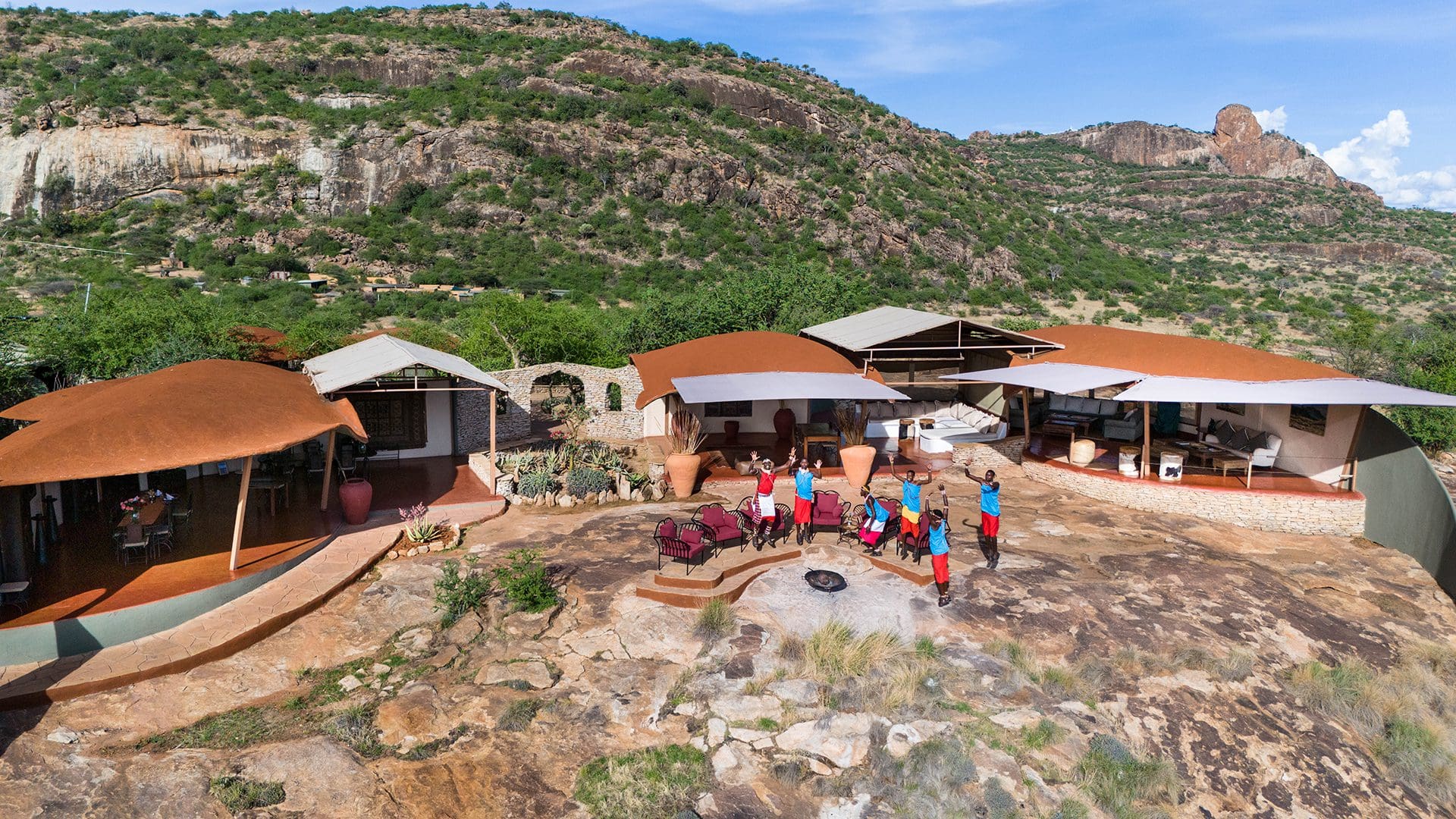
With that framework, here are the properties that consistently set the benchmark:
| Property | Location | Key Differentiator | Approx. Rate (Per Person/Night) |
|---|---|---|---|
| Singita Grumeti | Serengeti, Tanzania | Private 350,000-acre concession; conservation-led | $2,500–$4,000+ |
| Mombo Camp | Okavango Delta, Botswana | "Place of plenty" — Africa's finest predator density | $2,000–$3,500+ |
| andBeyond Bateleur Camp | Masai Mara, Kenya | Classic safari elegance; Great Migration access | $1,200–$2,000+ |
| Mahali Mzuri | Masai Mara, Kenya | Sir Richard Branson's private camp; 12 tented suites | $1,500–$2,500+ |
| Bisate Lodge | Volcanoes NP, Rwanda | Gorilla trekking base; extraordinary reforestation | $1,800–$3,000+ |
| Singita Lebombo | Kruger, South Africa | Modernist architecture; exclusive river concession | $2,000–$3,500+ |
| andBeyond Ngorongoro Crater Lodge | Ngorongoro, Tanzania | Baroque camp at the crater rim; surreal setting | $1,500–$2,500+ |
Singita — Conservation at the Highest Level
Singita operates 15 lodges and camps across six African countries, each anchored in a private conservation concession. Their model is explicit: luxury hospitality funds wildlife protection. The Singita Grumeti concession in the western Serengeti covers 350,000 acres, previously decimated by poaching, now one of Tanzania's most intact wildlife corridors. Guest fees fund anti-poaching units, community programs, and habitat restoration. At Singita, spending more means protecting more.
andBeyond — Pioneering Conservation Hospitality
andBeyond operates across 11 African countries and has pioneered the integration of high-volume traveler philanthropy with on-the-ground conservation. Their Care of the Land, Care of the Wildlife, Care of the People philosophy is embedded in every property. The andBeyond camps across Kenya — including Bateleur in the Mara conservancies — consistently rank among the continent's best for guide quality and wildlife access.
Wilderness Safaris — Remote Africa at Its Finest
Wilderness Safaris specializes in genuinely remote destinations — the Okavango Delta, the Kalahari, the Linyanti Concession in northern Botswana. Their camps are intentionally small (some as few as six guests), their guides among the most rigorously trained in Africa, and their conservation footprint among the lightest. For travelers who measure a safari's quality by its silence and solitude, Wilderness Safaris is the benchmark.
How Much Does a Luxury African Safari Cost Per Person?
Luxury safari rates in Africa typically range from $800 to over $3,000 per person per night, with the price generally inclusive of accommodation, all meals, game drives, park fees, and non-premium beverages.
This is the question most travelers approach with either unrealistic optimism or unnecessary anxiety. Let's address it directly.
Price Tiers Explained
The luxury safari market segments into three tiers:
Premium ($800–$1,200 per person per night): Well-appointed tented camps or lodges in high-quality locations. Experienced guides, all-inclusive rates, private game drives. This tier represents excellent value and delivers most of what defines a luxury safari. Many properties in Kenya's private conservancies and South Africa's Sabi Sand operate in this range.
Ultra-Luxury ($1,200–$2,500 per person per night): Purpose-built camps in exclusive private concessions. Smaller guest numbers (often 8–12 maximum), architectural distinction, higher guide-to-guest ratios, and wine lists that would satisfy in any European city. This is the Mahali Mzuri, andBeyond Bateleur, and comparable tier.
Prestige ($2,500–$5,000+ per person per night): Full private camp buyouts, Singita-tier properties, and bespoke experiences where the camp adapts entirely to you. At this level, the concession, the guiding team, and the hospitality are all operating at the absolute ceiling of what safari travel offers.
What's Typically Included
Most luxury safari rates include: all accommodation, all meals, twice-daily game drives, park and conservancy fees, laundry service, Wi-Fi (where available), and house wines, beers, and spirits. What's typically excluded: international flights, visas, travel insurance, premium spirits and champagnes, and spa services. For a detailed breakdown of how to allocate your safari budget, our Kenya safari packages guide walks through every cost category.
What a 10-Day Itinerary Costs
A 10-day Kenya and Tanzania luxury safari for two people — three nights in a Mara conservancy, three nights in the Serengeti, two nights in Ngorongoro, two nights at Zanzibar — would typically cost between $25,000 and $45,000 per couple, inclusive of all internal charter flights and transfers. International flights from the US or UK add $3,000–$8,000 per couple depending on class.
What Is the Best Time of Year to Go on a Luxury African Safari?
The best time for a luxury safari in East Africa — particularly Kenya and Tanzania — is between July and October, when the dry season concentrates wildlife around water sources and the Great Migration peaks in the Masai Mara.
Timing, however, is not universal. Each destination has its own optimal window, and understanding the seasonal calendar is one of the most valuable things a specialist operator provides.
East Africa Seasonal Calendar
July–October (Peak Season): This is the dry season across Kenya and Tanzania. Vegetation thins, making animals easier to spot. Water sources concentrate game. In the Masai Mara, the Great Migration wildebeest river crossings happen between July and September — one of nature's genuinely unmissable spectacles. This is also peak pricing season; expect rates 15–25% higher than shoulder months.
January–March (Calving Season): The southern Serengeti hosts the wildebeest calving season, when approximately 8,000 calves are born per day — drawing predators in extraordinary concentrations. This is a less-visited, genuinely spectacular alternative to the river crossings.
November–April (Green Season): Often dismissed as "rainy season," the green season in East Africa delivers lush landscapes, newborn wildlife, exceptional birdlife, and significantly lower rates and guest numbers. Many experienced safari travelers prefer it specifically for its atmosphere and value.
Botswana Seasonal Calendar
May–October (Dry Season): Botswana's peak season is its best season without qualification. As the Okavango Delta floods (paradoxically, during the dry season, fed by Angolan rains), game concentrates on islands and floodplains. Predator activity is extraordinary. This is when to go.
South Africa Year-Round Access
South Africa's Sabi Sand and the broader Kruger ecosystem offer year-round luxury safari access. Leopard sightings are consistent regardless of season. The malaria-free Eastern Cape properties work particularly well for families with young children and travelers who prefer shorter flights from Europe.
How Do You Choose a Reputable Luxury Safari Operator?
A reputable luxury safari operator is distinguished by destination-specific expertise, direct relationships with the camps they recommend, a track record of repeat clients, and transparency about what they include and exclude from their quotes.
This decision matters enormously. The difference between a specialist safari operator and a generalist travel agency booking African holidays between Caribbean cruises is the difference between an itinerary that works — camps that match in terms of experience level, conservation ethos, and guiding quality — and one that looks good on paper but disappoints in the field.
What to Look For in a Specialist Operator
First, look for first-hand knowledge. Your operator should have personally visited and stayed at every camp they recommend. They should be able to tell you which tent at Mahali Mzuri has the best view, how the guiding at one Mara conservancy compares to another, and exactly what the airstrip is like at Ruaha in the wet season.
Second, look for conservation alignment. The best operators actively recommend properties that protect land and benefit communities — not just the most profitable ones. Ask them directly: "What is the conservation model at the camps you're recommending?"
Third, ask about repeat client rates. An operator whose clients come back — and refer their friends — is doing something structurally right. Our guide to the best safari operators in Kenya outlines exactly what to ask before committing to any operator.
The Specialist vs. Generalist Question
Booking a $40,000 safari through a generalist travel agent because they also handle your annual ski trip is a risk. Safari itinerary-building requires specific knowledge — understanding which concession boundary gives you river crossing access, which camp's kitchen outperforms its competitors by a margin, and which internal flight schedule actually works with arrival times at Nairobi's Wilson Airport. Beyond The Plains Safaris specializes exclusively in East Africa, which means every recommendation is backed by on-the-ground experience rather than operator brochures.
What Should You Pack for a Luxury African Safari?
Packing for a luxury African safari requires balancing comfort and practicality: neutral-toned lightweight clothing, quality optics, and a minimal bag footprint to accommodate light aircraft weight restrictions.
The good news is that luxury camps take care of most of what you'd normally over-pack. Laundry is returned within hours. Toiletries are provided. The bad news is that charter flights between camps impose strict 15kg soft bag limits — non-negotiable, enforced by scale at every airstrip.
Essential Packing List
- Neutral-colored clothing (khaki, olive, tan, grey) — no white or bright colors on game drives; wildlife responds to contrast
- Layers — mornings and evenings in the bush are cold year-round at altitude; a mid-layer fleece is always needed
- Quality binoculars — 8×42 or 10×42 are ideal; this is the single most impactful gear investment for wildlife viewing
- A camera with a telephoto lens — minimum 200mm equivalent; many travelers now opt for a 100–400mm zoom
- Comfortable walking shoes with ankle support for walking safaris
- A wide-brimmed hat and high-SPF sunscreen
- Insect repellent containing DEET (for malaria-risk areas)
- Soft-sided duffel bag fitting within the 15kg limit
Health Preparations
Malaria prophylaxis is required for most East and Central African safari destinations. Consult a travel medicine clinic at least six weeks before departure. Recommended medications include atovaquone-proguanil (Malarone) and doxycycline. Yellow fever vaccination is required for entry to some countries when arriving from or transiting through infected zones. For a complete health preparation checklist, consult our Kenya safety and travel health guide.
Are Luxury African Safaris Environmentally Sustainable?
The leading luxury safari operators in Africa are directly funding wildlife corridor conservation, anti-poaching operations, and community development — making premium safari travel one of the most effective models of conservation finance that exists.
This is not public relations. It is economics. The only reason vast private concessions in Botswana, Kenya, Tanzania, and South Africa remain as wildlife land rather than agricultural or pastoral land is because they generate more revenue as safari destinations than any alternative use. When you pay $2,000 per night at a Singita camp, a meaningful percentage of that fee goes directly into land protection.
How to Identify Genuinely Ethical Operators
Leading luxury safari operators such as Singita, andBeyond, and Wilderness Safaris integrate conservation land management and community development programs directly into their business models, meaning guest fees contribute to wildlife corridor protection and local livelihoods. When evaluating any operator or camp, ask four questions:
- How much land does this concession protect, and from what?
- What percentage of staff are from local communities?
- Does the operator publish annual conservation impact reports?
- Is there a community benefit program, and can I see its outcomes?
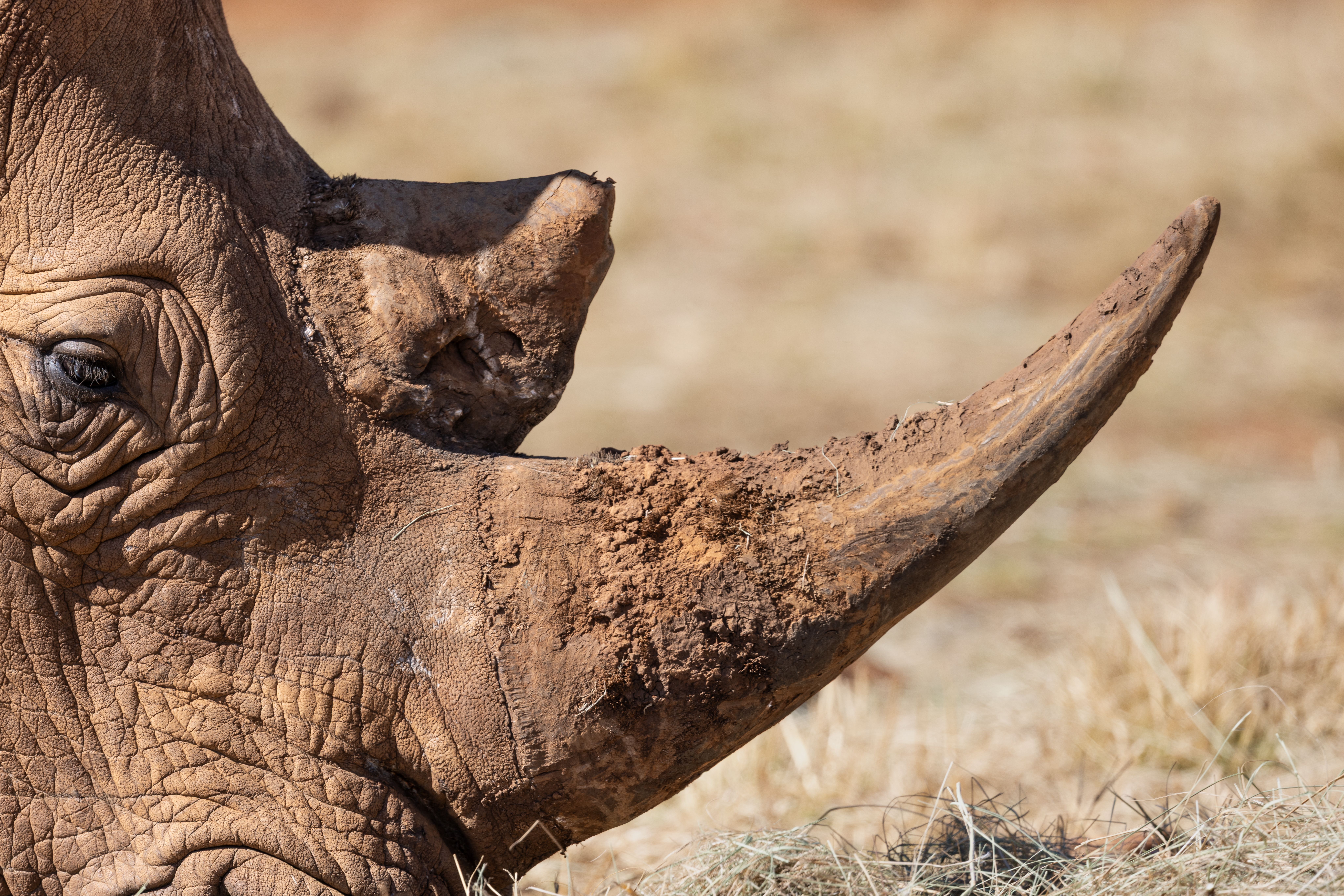
Properties like Tswalu Kalahari in South Africa — the country's largest private game reserve — and the Ol Pejeta Conservancy in Kenya, home to the last two northern white rhinos, represent the highest tier of conservation-integrated luxury. At Ol Pejeta, every visitor fee contributes directly to rhino protection. Explore the Ol Pejeta Conservancy to understand how conservation tourism works at its most impactful.
Carbon Considerations
International flights to Africa carry a significant carbon footprint — a return flight from New York to Nairobi emits approximately 2.5 tonnes of CO₂ per passenger. The responsible approach is to first minimize destinations within a single itinerary (rather than flying between three or four countries), choose operators who offset flights as a standard inclusion, and stay longer in fewer places. A 12-night stay across two destinations is both ecologically and experientially superior to a 12-night stay across six.
How Long Should a Luxury African Safari Itinerary Be?
The minimum effective luxury safari is seven nights; ten to fourteen nights is the ideal range for travelers combining two or more destinations and seeking a complete, unhurried experience.
Seven nights in a single destination — say, five nights in the Masai Mara and two nights at Amboseli — delivers a coherent wildlife experience with time to settle into the rhythm of game drives. You stop looking at your phone by day three. You start reading the landscape by day five. That recalibration requires time.
Twelve to fourteen nights is the sweet spot for multi-destination itineraries. It allows three to four nights in each location — long enough to build a relationship with your guide and see a location across different conditions. It also accommodates the reality that travel days eat into game-viewing days: a morning flight from the Mara to the Serengeti means one game drive lost, not two days.
For itinerary inspiration, the 10-day Kenya–Tanzania combined safari guide maps out a proven routing that balances variety with depth.
Can You Combine Multiple Destinations on a Single Luxury Safari Trip?
Yes — combining two or three destinations on a single luxury safari trip is not only possible but often produces a richer, more varied experience, provided the routing and timing are designed by someone with field experience across all locations.
The most popular combinations:
Kenya + Tanzania: The Masai Mara and Serengeti share the same ecosystem, the same wildebeest herd, and a short charter flight connects them. This is the most requested combination in East Africa and for good reason — it delivers the Great Migration from two perspectives.
Tanzania + Zanzibar: Combining a northern Tanzania safari with four nights on Zanzibar's Matemwe coast is the most popular complete Africa itinerary. Wildlife and bush for eight nights; Indian Ocean beach, spice markets, and Stone Town for four. The contrast is profound and satisfying.
Kenya + Amboseli + Coast: Three nights in the Masai Mara, two nights in Amboseli beneath Kilimanjaro, and a close at Diani Beach delivers Kenya's greatest hits with a coastal finish. Explore Diani Beach as a post-safari beach destination.
The key rule for multi-destination itineraries: do not try to include more than three destinations. Two is ideal. Three is the maximum before the logistics begin to consume the experience.
What Is Included in an All-Inclusive Luxury Safari Package?
An all-inclusive luxury safari package typically covers accommodation, all meals, twice-daily game drives, park and conservancy fees, laundry, house wines and spirits, and all ground transfers — giving travelers a fully predictable cost structure with no surprise additions.
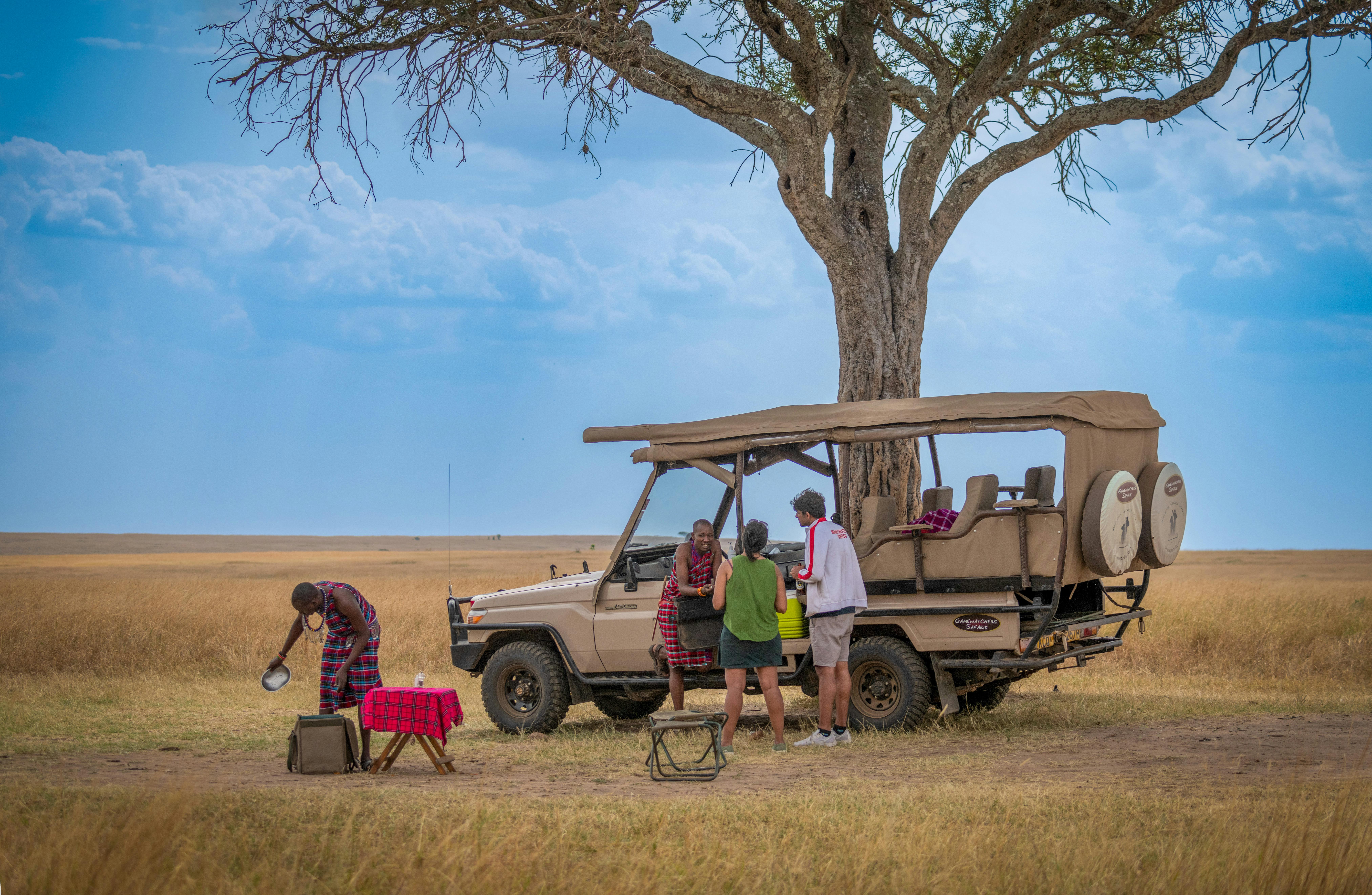
This bundled pricing model is one of the most underappreciated advantages of luxury safari travel. Once you arrive in camp, there is almost nothing to pay. You are not calculating whether to order a second glass of wine. You are not tallying up activity fees. The commercial friction that defines most holidays is absent.
What is typically not included: international flights, visas, travel insurance, premium champagnes and rare spirits, spa treatments, and single-supplement charges (an important cost to account for if traveling solo). Some camps also charge separately for specialized activities like helicopter flights or private dining in the bush.
For European travelers planning an East African safari, our complete Kenya safari guide for European travelers covers visa logistics, routing from major European hubs, and what to expect on arrival at Nairobi's Jomo Kenyatta International Airport.
What's Next: How to Take the First Step Toward Your Luxury Safari
The path from "I want to do this" to a confirmed, expertly designed luxury safari itinerary is shorter than most people assume — provided you start in the right place.
Step 1: Define your travel window. Safari timing is not negotiable in the way hotel dates are. The Great Migration has a calendar. The Okavango flooding has a calendar. Gorilla permit availability has a calendar. Start with when you want to travel and work backwards from there.
Step 2: Decide on your primary experience. Do you want the Great Migration? Gorilla trekking? Big cat density? Maximum remoteness? Each answer points toward a specific destination, and sometimes a specific camp within that destination.
Step 3: Set a realistic budget. Work with the price tiers outlined in this guide. A $15,000 per-person budget for ten nights including international flights in business class is achievable. A $7,000 per-person budget requires trade-offs — either shorter duration, lower-tier accommodation, or fewer destinations. Be honest about what you want and what you can spend.
Step 4: Contact a specialist. Not a generalist travel agency. A specialist who has personally visited the camps they recommend, knows the guide teams, and has a verifiable track record with clients at your travel tier. Schedule a consultation with Beyond The Plains Safaris to discuss your itinerary with a team that operates exclusively in East Africa and has designed hundreds of luxury safari itineraries for discerning travelers.
Step 5: Confirm permits early. Gorilla permits in Rwanda sell out six to twelve months in advance. Hot-air balloon slots over the Serengeti during peak season are similarly limited. Some private concessions cap annual visitor numbers. Booking twelve months ahead is not excessive for a high-investment trip.
Conclusion
A luxury African safari is not simply an expensive version of a standard one. It is a fundamentally different experience — defined by private land access, expert guiding, intimate camps, and a level of wildlife immersion that reshapes how you understand the natural world. The price reflects the rarity of what you are accessing, and the transformation that most guests describe on returning is genuine and lasting.
Africa rewards the traveler who plans carefully, invests in quality, and trusts the expertise of people who know the land. The logistics are manageable. The costs are transparent. The experience is unmatched.
The only question left is when you go.
Get your free luxury safari quote from Beyond The Plains Safaris →
Written by John Dante, Director & Operations Manager, Beyond The Plains Safaris. John has designed and personally experienced hundreds of luxury safari itineraries across Kenya, Tanzania, and East Africa, with hands-on expertise in private conservancy access, guide training, and conservation-integrated travel.
Reviewed by the Beyond The Plains Safaris editorial team — expert safari specialists with collective field experience across East Africa's premier wilderness destinations.










Comments (0)
Leave a Comment
No comments yet. Be the first to comment!