

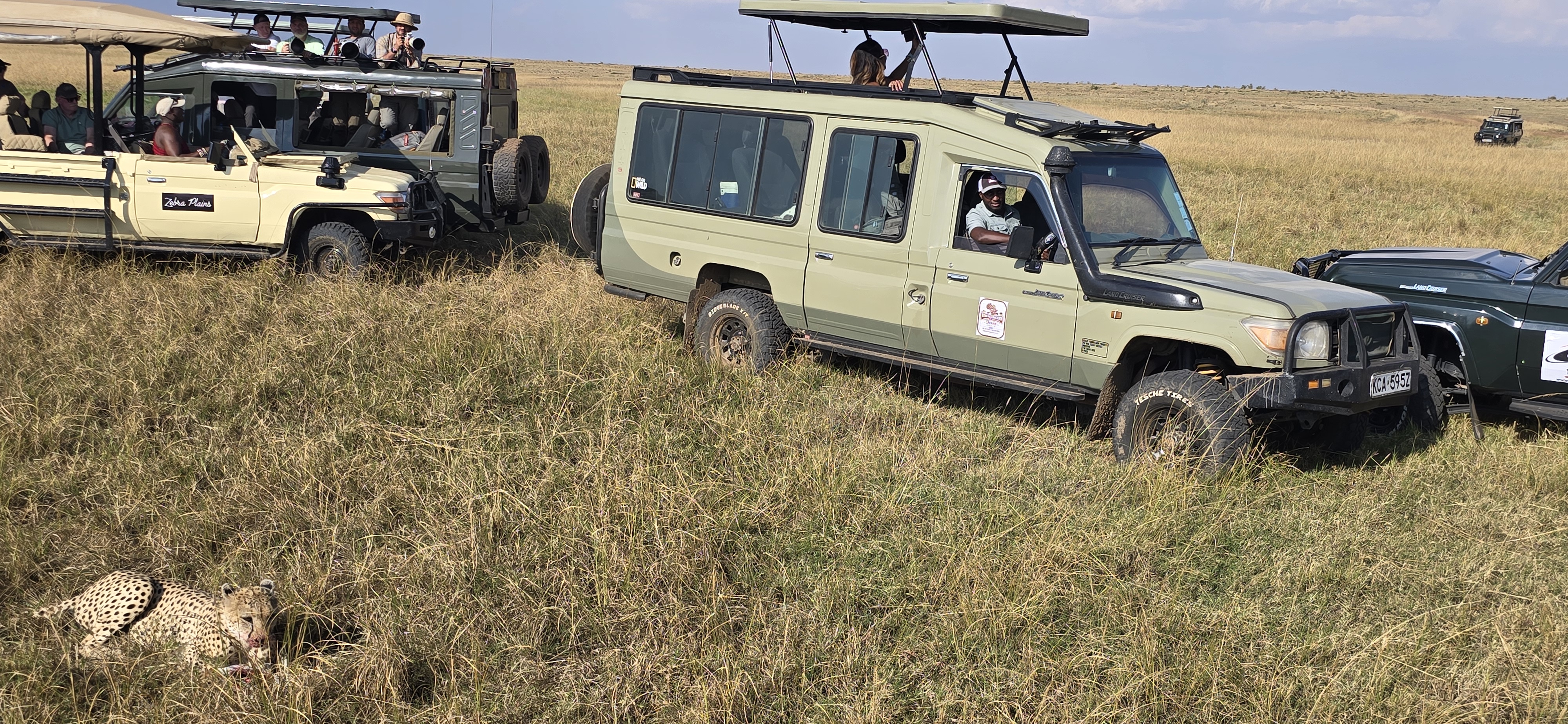
You've pictured it before — lions lounging in golden grass, a hot air balloon drifting over the Maasai Mara at sunrise. But turning that image into a real trip from the UK means untangling flight routes, budgeting honestly, and picking the right month to travel, and most guides skip straight past those practical details. This guide breaks down exactly what a Kenya safari from the UK costs, which flights get you there, and when to go for the best experience.
Key Takeaways
- A Kenya safari tour from the UK typically combines an 8–10 hour flight with a 5–10 day safari package covering parks such as the Maasai Mara, Amboseli, or Tsavo.
- Direct flights to Nairobi are available from London Heathrow with British Airways and Kenya Airways, while other UK airports usually require one connection.
- Total trip costs for UK travelers generally range from budget camping safaris to premium lodge-based experiences, with flights, accommodation, and park fees as the three largest cost categories.
- The dry season, from July to October, offers the best wildlife visibility and coincides with the Great Migration's river crossings in the Maasai Mara.
- Shoulder seasons in January and February offer lower prices and good wildlife viewing with fewer crowds, making them a strong value alternative to peak season.
- UK travelers need a valid passport and an Electronic Travel Authorisation (eTA) for Kenya, plus up-to-date routine vaccinations, with yellow fever documentation required if arriving from certain countries.
- Booking flights and safari packages 4–6 months in advance typically secures better pricing and availability, especially for travel during UK school holidays.
What Is a Kenya Safari Tour from the UK?
A Kenya safari tour from the UK is a travel package that combines an international flight to Nairobi with a guided wildlife tour through parks such as the Maasai Mara, Amboseli, or Tsavo. Most tours run between 5 and 10 days on the ground, though the flight itself adds a full day of travel on either end once you factor in check-in, transit, and time zone shifts. As such, the "trip" your itinerary describes and the total time you'll actually be away from home are two different numbers worth keeping straight when you request leave from work.
At its core, the package structure is simple. First, you fly into Jomo Kenyatta International Airport (NBO) in Nairobi. Then, you're transferred — either by light aircraft or 4x4 road transfer — to your first safari circuit. For example, a typical first-timer itinerary might combine three nights in the Maasai Mara National Reserve with two nights in Amboseli National Park, using Nairobi as the hub in between.
Most reputable operators build in game drives, park fees, accommodation, and ground transport as part of a single quoted price. That being said, international flights and personal travel insurance are almost always booked separately by the traveler. A Kenya safari tour from the UK is, in practice, two bookings stitched into one experience — your flight, and your ground package — and understanding that split is the first step to budgeting accurately.
Why Kenya Is a Top Safari Choice for UK Travelers
Kenya is a top safari choice for UK travelers because it combines a manageable flight time, a straightforward entry process, and some of the most concentrated wildlife viewing on the continent. Unlike safari destinations in Southern Africa, which typically involve flights of 11 hours or more, Kenya sits within a single overnight flight window from London. This matters more than it sounds — a shorter flight means less jet lag eating into your first days on safari.
Moreover, Kenya's visa process has become genuinely simple for British citizens. As of 2026, UK passport holders apply for an eTA online rather than visiting an embassy, with most approvals processed within a few working days — see our Kenya visa requirements for UK travelers guide for the full process. This shift away from visa-on-arrival has removed one of the biggest points of friction that used to put first-time travelers off.
At the same time, Kenya offers exceptional value relative to the wildlife density on offer. The Maasai Mara alone hosts the annual wildebeest migration, and parks like Amboseli deliver close-up elephant sightings against the backdrop of Mount Kilimanjaro. For example, a single week in Kenya can realistically deliver sightings of all of the Big Five — lion, leopard, elephant, buffalo, and rhino — something that takes considerably longer in more sparsely populated reserves elsewhere in Africa.
Finally, Kenya's tourism infrastructure is mature. English is an official language, ATMs and card payments are widely available in tourist areas, and the guiding standard across established operators is consistently high. This combination of accessibility, wildlife density, and infrastructure is why Kenya remains the most searched safari destination among UK travelers planning their first African trip.
Flight Options from the UK to Kenya
Are there direct flights from the UK to Kenya? Yes — British Airways and Kenya Airways both operate non-stop flights from London Heathrow to Nairobi, and this is the fastest and most convenient way to reach Kenya from the UK. If you're departing from anywhere other than Heathrow, you'll typically need one connection, usually through Amsterdam, Doha, or Addis Ababa.
Are There Direct Flights from the UK to Kenya?
British Airways and Kenya Airways run daily non-stop services on the Heathrow–Nairobi (LHR–NBO) route, with scheduled flight time ranging from roughly eight hours 35 minutes to nine hours 15 minutes depending on winds and season — Source: British Airways/Directflights.com, 2026. This is currently the only true direct route between the UK and Kenya; travelers flying from Manchester, Birmingham, or Edinburgh will connect through a European or Middle Eastern hub, most commonly Amsterdam with KLM, Doha with Qatar Airways, or Addis Ababa with Ethiopian Airlines.
For the best UK airports for flights to Nairobi, Heathrow is the clear first choice if a direct flight matters to you. That said, connecting flights from regional UK airports are often only two to three hours longer door-to-door, and can sometimes be cheaper than flying direct — particularly if you're willing to fly via Doha or Amsterdam during shoulder season.
How Long Is the Flight from the UK to Kenya?
The flight from London Heathrow to Nairobi takes approximately eight and a half to nine and a quarter hours on the direct route. Add roughly two to four hours if you're connecting through a European or Gulf hub, plus layover time, which typically ranges from ninety minutes to three hours depending on the airline and airport. For example, a Manchester departure connecting through Amsterdam might mean a total door-to-door travel time closer to 12–13 hours, versus around 9 hours flying direct from Heathrow.
Best Time to Book Your Flights
Booking flights and safari packages 4–6 months in advance typically secures better pricing and availability, especially for travel during UK school holiday windows (Easter, summer, and Christmas/New Year). This lead time matters more for Kenya than for many other long-haul destinations, because flight capacity on the Heathrow–Nairobi route is limited to two airlines, and seats fill quickly once the July–October peak season approaches. In addition, booking early gives your safari operator more room to secure the specific lodges and camps you want, rather than settling for late-availability alternatives.
How Much Does a Kenya Safari Cost from the UK?
A Kenya safari from the UK is made up of three major cost categories: international flights, ground safari costs (accommodation, park fees, transport, and guiding), and pre-trip expenses like the eTA and vaccinations. Flights from London to Nairobi vary considerably by season and how far in advance you book, and ground costs scale dramatically depending on whether you choose budget camping, mid-range lodges, or luxury tented camps.
Park fees themselves are a cost line that catches many first-time travelers off guard. In the Maasai Mara National Reserve, for instance, non-resident adult park fees are set at USD 100 per person per day from January through June, rising to USD 200 per person per day from July through December — Source: Narok County Government, 2026. That single fee, multiplied across a family and several days, can meaningfully shift your total budget — which is exactly why understanding budget vs. luxury safari lodges matters before you start comparing quotes.
Cost Breakdown by Accommodation Tier
The table below sets out how the three common accommodation tiers typically compare across a Kenya safari itinerary. Use it as a planning reference rather than a fixed quote, since exact pricing depends on your dates, group size, and specific camps chosen.
| Tier | Typical Accommodation | What's Usually Included | Best For |
|---|---|---|---|
| Budget | Mobile camping, basic tented camps | Shared facilities, set-menu meals, shared 4x4 game drives | First-timers on a tighter budget, younger travelers |
| Mid-Range | En-suite tented camps, 3–4 star lodges | Private rooms, full board, shared or semi-private game drives | Couples, families wanting comfort without luxury pricing |
| Luxury | Premium tented camps, fly-in lodges | Private guides, fine dining, spa facilities, private vehicles | Honeymooners, milestone celebrations, multigenerational trips |
Flights are typically the least flexible cost, since UK-to-Nairobi fares don't move much regardless of which accommodation tier you choose. Accommodation, by contrast, is where your budget has the most room to flex — a family choosing mid-range tented camps over luxury fly-in lodges can often cut their ground costs substantially while still enjoying excellent guiding and comfortable rooms.
What Is Included in a Typical Kenya Safari Package?
A typical Kenya safari package includes accommodation, all meals while on safari, park entry fees, a professional driver-guide, and game drives in a 4x4 safari vehicle. Most packages also include internal transfers between parks, whether by road or light aircraft. What's usually excluded is your international flight, travel insurance, the eTA fee, tips for guides and camp staff, and alcoholic drinks at most (though not all) camps.
What Is the Best Month to Go on Safari in Kenya?
July through October is widely regarded as the best time to visit Kenya for safari, because wildlife concentrates around permanent water sources during the dry months and the Great Migration's river crossings typically occur during this window. That said, "best" depends heavily on what you're optimizing for — wildlife density, weather, crowd levels, or price — and Kenya rewards different travelers at different times of year.
When Does the Great Migration Happen in Kenya?
The Great Migration typically arrives in the Maasai Mara between July and October, when roughly two million wildebeest and zebra cross from Tanzania's Serengeti in search of fresh grazing. The dramatic river crossings at the Mara and Talek rivers, which draw photographers from around the world, cluster most heavily in August and September. For the month-by-month detail on when herds are likely to be where, see our Great Migration river crossing schedule.
Dry Season vs. Shoulder Season vs. Green Season
Kenya's safari calendar splits broadly into three windows, and each one trades off differently between wildlife visibility, weather, and price.
| Season | Months | Wildlife Viewing | Price Level |
|---|---|---|---|
| Dry / Peak Season | July – October | Excellent — animals cluster near water; Great Migration river crossings | Highest |
| Shoulder Season | January – February | Very good — calving season in the Mara, fewer crowds | Moderate |
| Green / Low Season | March – May, November | Good but harder viewing — lush vegetation, some road access issues | Lowest |
Shoulder season travel to Kenya, particularly in January and February, offers lower average costs than peak dry season while still providing strong wildlife-viewing conditions. This is also calving season for wildebeest in the southern Mara ecosystem, which brings its own drama — newborn calves attract predators, and game drives during this window can be surprisingly action-packed. For UK travelers who can be flexible on school-holiday dates, January and February represent one of the best value windows on the calendar.
Month-by-Month Weather Snapshot
Broadly, Kenya's dry months (June to October, and January to February) bring blue skies and easier game viewing, while March to May marks the long rains, when some Mara access roads can become difficult after heavy downpours. November brings shorter "short rains," which are usually less disruptive and still allow for good safari conditions, often at reduced rates. For UK travelers used to grey winters, even Kenya's rainy months tend to mean warm, intermittent showers rather than day-long washouts — the Mara's average daytime temperatures stay in the low-to-mid 20s°C for most of the year.
Sample Itineraries and Tour Types
How many days do you need for a Kenya safari? Most first-time visitors from the UK spend between 7 and 10 days on the ground, which is enough time to cover two or three parks without feeling rushed, while accounting for internal transfer time between circuits. Shorter 5-day trips are possible if you focus on a single park like the Maasai Mara, while 10-day-plus itineraries suit travelers combining a safari with a coastal extension in Diani or Zanzibar.
7-Day vs. 10-Day Kenya Safari Options
A 7-day itinerary typically covers two parks — commonly the Maasai Mara and Lake Nakuru, or the Maasai Mara and Amboseli — giving you three to four nights in each without excessive driving days. A 10-day itinerary, by contrast, allows for a third park circuit, or extra nights in the Mara specifically to increase your odds during migration season. For example, a well-paced 10-day route might run Nairobi to Amboseli, then on to the Maasai Mara, before finishing with a night near Lake Nakuru National Park to see its flamingo-lined shores and dense rhino population.
Family-Friendly, Luxury, and Budget Camping Safaris
Kenya safaris broadly split into three tour types, and knowing which one fits your travel party changes almost every other decision — from vehicle type to camp selection.
- Family-friendly safaris — built around shorter game drives, family tents or interconnecting rooms, and camps with flexible mealtimes; see our guide to family-friendly Kenya safari itineraries for age-specific advice.
- Luxury safaris — private guides, fly-in transfers between parks, and premium tented camps or lodges with spa and dining experiences built in.
- Budget camping safaris — mobile tented camps, group game drives, and shared facilities, which keep ground costs significantly lower without sacrificing the core wildlife experience.
Families traveling with young children should also read up on Kenya safari with kids: what to know before booking, since some camps set minimum age restrictions for game drives and others don't. As such, this is one detail worth confirming with your operator before you pay a deposit, not after.
Practical Planning Tools and Resources
Do UK Citizens Need a Visa for Kenya?
Yes — UK citizens need an Electronic Travel Authorisation (eTA) to enter Kenya, applied for online before departure rather than obtained as a visa on arrival. The eTA currently costs around USD 30 (roughly £23–£25) for a single-entry authorisation and is typically processed within a few working days — Source: eTA Kenya official portal, 2026. Applications should be submitted through the official eCitizen or eTA Kenya portal only, since third-party sites often charge inflated fees for the same service.
What Vaccinations Do I Need for a Kenya Safari?
There's no single fixed vaccination list required for every UK traveler heading to Kenya, since requirements depend partly on your medical history and where you're arriving from. That said, routine vaccinations should be up to date, and travelers are generally advised to consider hepatitis A, typhoid, and malaria prophylaxis given Kenya is a malaria risk area. Yellow fever vaccination documentation is required specifically if you're arriving from, or have transited through, a country with risk of yellow fever transmission — not simply because you're visiting Kenya. For the full breakdown by circuit and season, see our guide to vaccinations and health advice for Kenya travel, and always confirm current requirements with a UK travel health clinic or your GP before departure, since guidance can change.
Is Kenya Safe for UK Tourists?
Kenya's established safari circuits — the Maasai Mara, Amboseli, Tsavo, and the main tourist routes around Nairobi — are visited by hundreds of thousands of international tourists each year with a strong overall safety record for guided travel. As with any international trip, the main risks for tourists tend to be petty theft and traffic incidents rather than anything specific to safari activities themselves, and reputable operators build safety briefings, vetted drivers, and secure camps into every itinerary. Sensible precautions — using registered operators, avoiding unlicensed taxis, and keeping valuables secured — go a long way toward a smooth trip.
Packing and Pre-Trip Checklist
Before you fly, it's worth working through a short checklist rather than packing at the last minute, since safari-specific items aren't always easy to source once you're on the ground. A well-planned Kenya safari packing list should cover neutral-coloured clothing, layers for cool early-morning game drives, a wide-brimmed hat, insect repellent, and a good pair of binoculars. Beyond packing, confirm your passport has at least six months' validity remaining, check your airline's baggage allowance for internal light-aircraft transfers (which are often stricter than international allowances), and arrange comprehensive travel insurance that specifically covers safari activities.
What to Do Next
Once you've absorbed the flight routes, cost ranges, and seasonal trade-offs above, the next step is turning research into a bookable plan. First, compare quotes from two or three established operators rather than booking the first itinerary you're offered, since park circuits, camp quality, and inclusions vary more than headline prices suggest. Second, check your passport's expiry date and start your eTA application early, since a rejected or delayed application close to departure can cause real stress.
At the same time, it's worth thinking carefully about how to choose a Kenya safari tour operator, since the operator you pick determines everything from vehicle quality to guide expertise to how quickly someone responds if a flight gets delayed. Finally, once you've settled on rough dates and a budget, book your flights and safari package together where possible — this reduces the risk of a mismatch between flight availability and lodge availability during peak months.
Conclusion
A Kenya safari from the UK is more achievable than it first appears once you break it down into its component parts: a direct or one-stop flight of around 9–13 hours, a ground package built around two or three parks, and a seasonal window chosen to match your priorities and budget. Whether you're drawn to the drama of the Great Migration in September or the quieter, better-value calving season in February, Kenya delivers wildlife encounters that are genuinely hard to match anywhere else on the continent. The details — visas, vaccinations, packing, and picking the right operator — are all manageable with a little lead time, and none of them should be the reason this trip stays a someday plan. Start comparing flight dates and operator quotes now, and that image of golden grass and a sunrise balloon ride over the Mara can become a trip on your actual calendar.
Written by Felix Obari, Senior Safari Specialist at Beyond the Plains Safaris. Felix has spent years designing tailor-made Kenya and Tanzania itineraries for international travelers, with particular expertise in Maasai Mara circuits, Great Migration timing, and UK and European client planning.











Comments (0)
Leave a Comment
No comments yet. Be the first to comment!