

You've read the listicles. You know Kenya has the Mara and Tanzania has the Serengeti, and you've been told, diplomatically, usefully, infuriatingly, that "both are incredible." What those articles won't tell you is what an operator who books both countries every week actually thinks: which one wins on cost, which wins on wildlife density, and which one you should book based on when you're traveling and how much you're willing to spend.
What Is the Real Difference Between a Kenya Safari and a Tanzania Safari?
Kenya and Tanzania are not interchangeable safari destinations, they are distinct ecosystems with different park-management philosophies, pricing structures, and visitor experiences, despite sharing the same East African savanna biome and much of the same wildlife. Both sit astride the equator and both host the full Big Five: lion, leopard, elephant, buffalo, and rhino.
Kenya's flagship parks, the Masai Mara National Reserve, Amboseli, Tsavo East and West, Samburu, and the private conservancy of Ol Pejeta, form a tourism ecosystem built over decades of investment: well-trodden, well-served, and increasingly well-managed through the private conservancy model. Tanzania's circuit is larger and more diverse: the Serengeti is the centerpiece, a UNESCO World Heritage Site covering 14,763 km², with the Ngorongoro Crater, the world's largest intact volcanic caldera, sitting within a conservation area to the southeast. Tanzania's southern circuit adds Nyerere (Africa's largest protected area, formerly the Selous) and Ruaha, both offering an expedition-level remoteness the northern circuit can't match.
The comparison matters because choosing the wrong destination for your travel window or budget can turn a $10,000 safari into an expensive disappointment. Clients have booked Tanzania in November expecting the Serengeti's classic plains experience, only to find the landscape flooded and the herds scattered. Context is everything, which is exactly what a "both are great" answer fails to give you.
The 10-Point Verdict: Kenya vs. Tanzania
| Dimension | Winner |
|---|---|
| Cost & value for money | Kenya |
| Wildlife density & Big Five access | Tie (park-dependent) |
| The Great Migration | Depends on timing |
| Crowds & over-tourism | Kenya (conservancies) |
| Accessibility & logistics | Kenya |
| Accommodation variety | Tanzania |
| Activities beyond game drives | Tanzania |
| Cultural experience | Tie |
| Safety & traveler reliability | Tie |
| Best for first-timer vs. repeat visitor | Kenya (first), Tanzania (repeat) |
Which Country Has Higher Safari Costs?
Winner: Kenya.
Tanzania's national park fees are among the highest in Africa and are the primary driver of the cost gap. Serengeti entry runs roughly $70–$80 per person per day for non-residents, and the Ngorongoro Crater adds a separate conservation fee and crater service fee on top. Stack multiple parks across a 7-night itinerary and these fees compound quickly, a comparable 7-night Tanzania safari typically costs 20–35% more than an equivalent Kenya itinerary, even with matched lodge quality.
Kenya's Masai Mara National Reserve fees sit at a similar $70–$80 per person per 24 hours, but Kenya's private conservancies charge a conservancy fee (typically $100–$150 per person per night) that replaces the park fee and includes off-road driving and night game drives, activities Tanzania's parks don't permit at any price. For mid-range travelers specifically, Kenya's depth of quality tented camps at $400–$700 per person per night in the Mara conservancy ecosystem is broader than Tanzania's equivalent tier, which skews toward either budget or ultra-luxury with a thinner middle. Internal flights add to the gap too: Kenya's domestic network is more competitive with shorter legs between parks, while Tanzania's southern circuit often needs charter flights from Dar es Salaam. See our full Kenya safari cost breakdown for exact per-tier numbers.
Does Kenya or Tanzania Have More Wildlife per Game Drive?
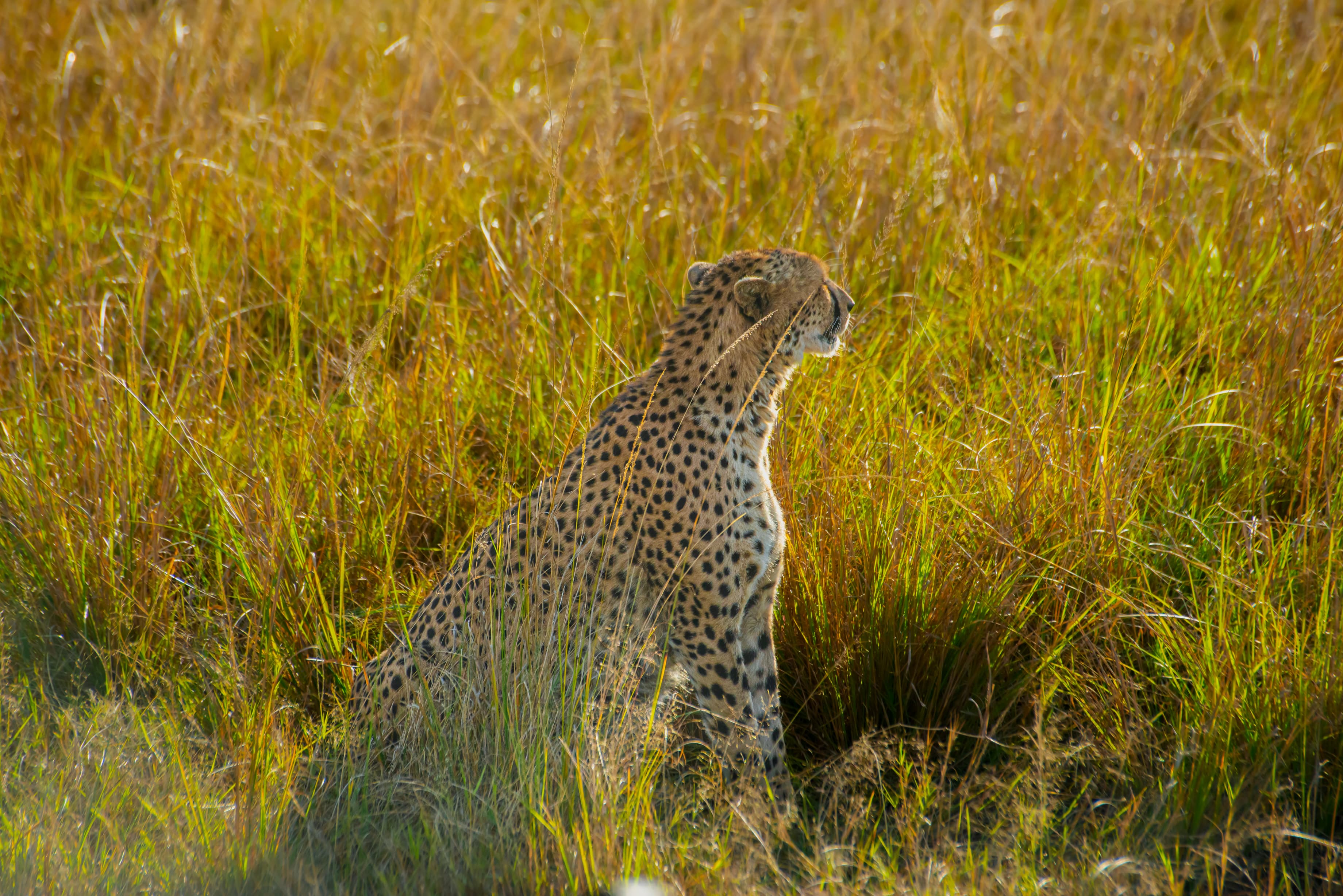
Wildlife density in East Africa isn't a national attribute; it's determined park by park, by ecosystem size, seasonal movement, and vegetation. In Kenya, Amboseli consistently delivers the highest elephant density of any park in Africa, with herds of 50–100 animals common near the swamp zones. The Masai Mara's predator density between July and October, lion prides, cheetah coalitions, reliable leopard sightings, is hard to match anywhere on the continent.
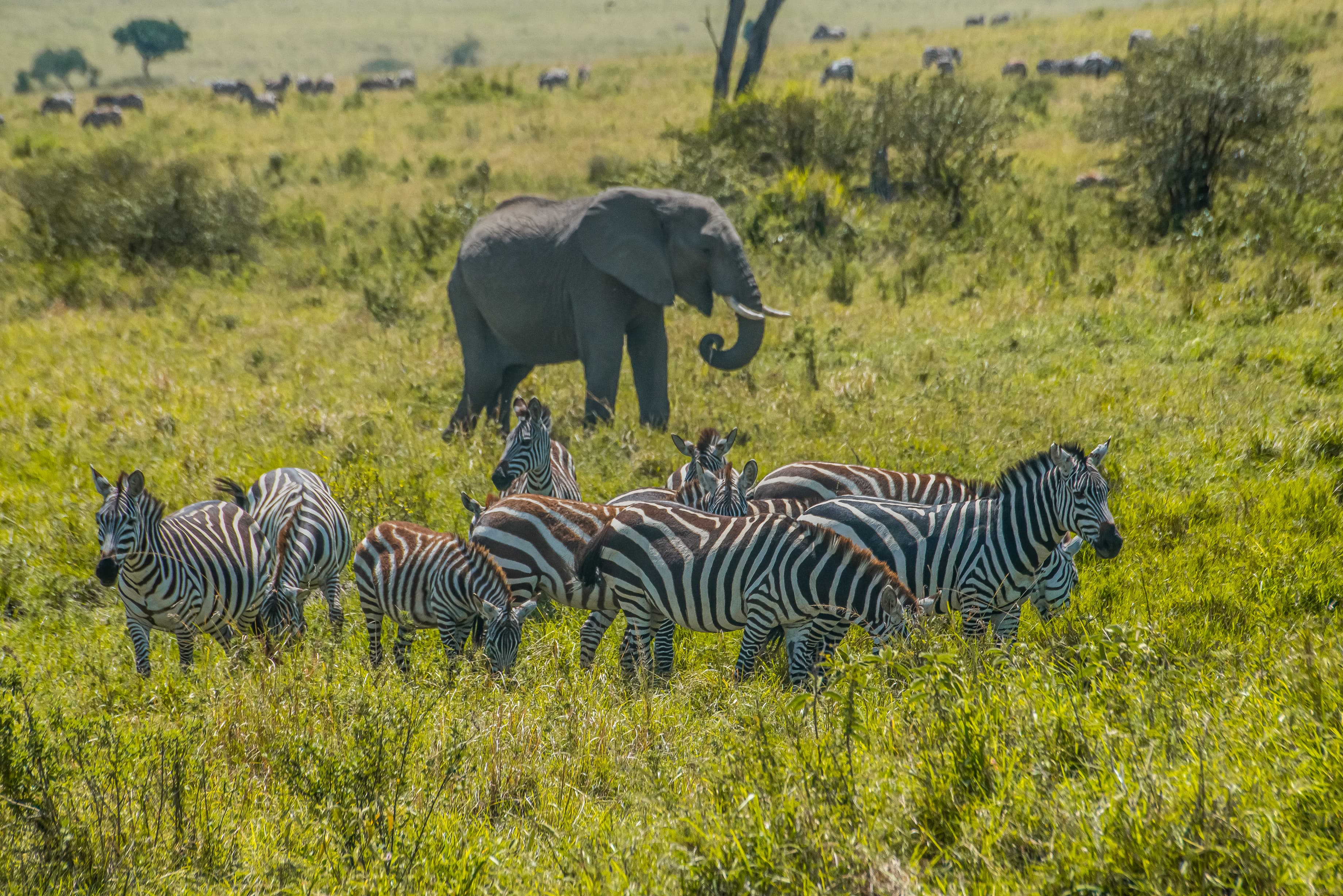
In Tanzania, the Ngorongoro Crater is the single most wildlife-concentrated area in East Africa: a self-contained volcanic caldera covering roughly 260 km², with walls rising 600 metres from the crater floor, supporting an estimated 25,000 large animals including one of Africa's densest lion populations (Source: UNESCO World Heritage Committee). The Serengeti's open plains host the largest terrestrial mammal migration on Earth, roughly 1.5 million wildebeest and 250,000 zebra, and Ruaha holds Tanzania's largest elephant population alongside lion density that rivals the Mara. The honest answer: if you're at Ngorongoro or the Serengeti during migration season, Tanzania wins this category outright. If you're at Amboseli or a Mara conservancy in peak season, Kenya wins it. Overall, the countries are even.
Is Kenya or Tanzania Better for the Great Migration?
Winner: depends on when you're traveling. The Serengeti hosts the Great Migration year-round due to its size, the herds are always somewhere in the ecosystem, but the experience isn't uniform across months. Tanzania's chapter centers on calving season in the southern Ndutu region from January to March, when over 8,000 wildebeest calves are born daily at the peak, one of the most predator-intense windows of the entire migration cycle, as cheetahs, lions, hyenas, and wild dogs converge on the vulnerable newborns.
Kenya's chapter is the Mara River crossings, from roughly July to October, as the herds push north into the Masai Mara searching for short-grass grazing, widely regarded as one of the greatest wildlife spectacles on Earth. If your travel window is July–October, the Mara crossings make Kenya the clear migration winner. Any other month, the Serengeti has more guaranteed wildebeest present. One caveat that applies to both countries: the migration isn't a circus with a fixed schedule. Crossings depend on rain patterns, grass availability, and river levels, clients have waited four days at the Mara River without a crossing, and others have seen three in two days. For the full seasonal picture, see our Great Migration month-by-month guide and our dedicated Masai Mara vs. Serengeti breakdown, which goes deeper on these two ecosystems specifically for migration timing.
Which Destination Is Less Crowded?
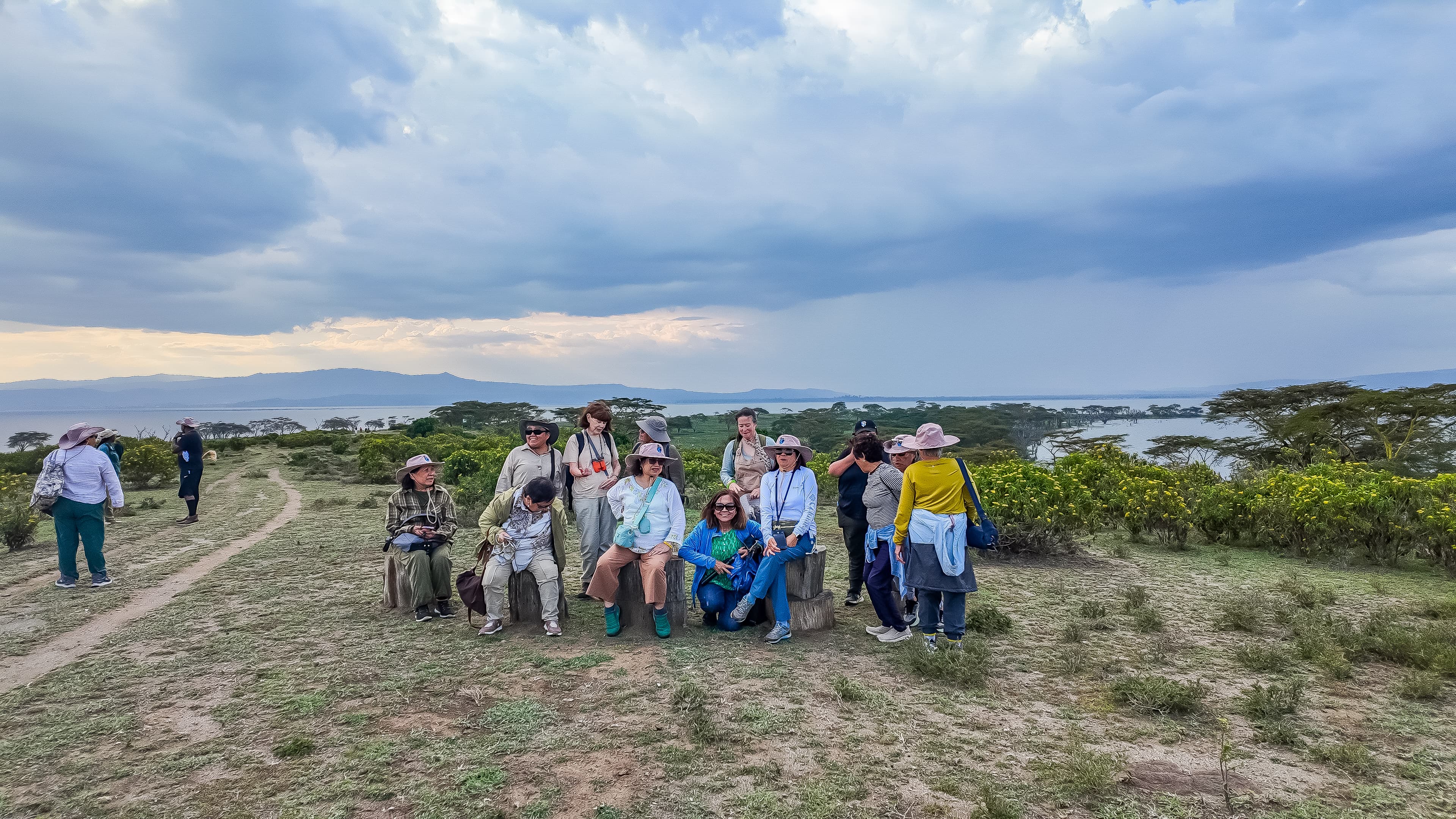
Kenya — specifically, the private conservancies. Kenya's conservancy system is the single biggest structural advantage it holds over Tanzania, and it's underappreciated by travelers who only compare national parks. Conservancies like Ol Pejeta, Lewa, Borana, Ol Kinyei, Naboisho, and Mara North sit adjacent to protected areas, operate under exclusive lodge agreements, and cap the number of vehicles permitted in a given area, in Naboisho, a single lodge might hold exclusive traversing rights over 50,000 acres with only a handful of other vehicles on the entire property.
Tanzania's national parks have no equivalent mechanism. The Serengeti's popular predator territories, lion prides near Seronera, the cheetah-rich Ndutu area, can see 20–30 vehicles around a single kill during peak season. The park is vast, so this isn't true everywhere, but the iconic central-Serengeti zones are genuinely crowded July through October. The irony: Tanzania's best low-crowd areas, Ruaha, Nyerere, Katavi, are also its least-visited and most expensive to reach, requiring charter flights and high-end budgets. Kenya's conservancy advantage, by contrast, is accessible at mid-range price points.
Is Kenya Easier to Reach Than Tanzania?
Winner: Kenya. Nairobi's Jomo Kenyatta International Airport is East Africa's primary aviation hub, with direct flights from London, New York, Amsterdam, Dubai, Mumbai, and multiple European capitals, most Kenya-bound guests arrive with a single connection from almost anywhere. Tanzania's entry points are more fragmented: Kilimanjaro International Airport serves the northern circuit but receives fewer direct international routes, and Julius Nyerere International Airport in Dar es Salaam serves the southern circuit but requires onward domestic flights that add time and cost. Most Tanzania itineraries need more total travel hours from North America or Europe than an equivalent Kenya trip.
Self-drive viability also differs sharply. Kenya has a functional self-drive culture in parks like Amboseli and the Aberdares, with well-marked roads, decent cell coverage, and rental operators based in Nairobi. Tanzania self-drive is largely impractical for most international visitors, guided safaris are the default given the distances and road conditions. For travelers flying from Nairobi to the Mara specifically, see our road vs. fly-in guide for real costs and logistics.
Which Country Offers Better Luxury Accommodation?
Tanzania — for variety and exclusivity. Tanzania's accommodation landscape offers greater geographic variety and some of Africa's most architecturally distinctive properties, from mobile camps that physically follow the migration across the Serengeti plains (Singita Mara River Tented Camp, andBeyond Serengeti Under Canvas) to crater-rim lodges at Ngorongoro (andBeyond Ngorongoro Crater Lodge, Lemala Ngorongoro). The mobile-camp concept has no direct Kenya equivalent.
Kenya's luxury accommodation is concentrated and excellent but less geographically diverse: the Mara ecosystem (Mara Plains Camp, Encounter Mara) and the Laikipia plateau hold extraordinary private conservancy lodges, and Amboseli's Tortilis Camp and Amboseli Serena pair elephant herds with Kilimanjaro views. For rhino-focused stays, Ol Pejeta's Sweetwaters Serena (accessible mid-range) and Ol Pejeta House (private exclusive use) lead Kenya's northern circuit.
What Can You Do in Each Country That You Can't Do in the Other?
Tanzania — for breadth of activity. Kenya's activity advantages: night game drives, permitted in most private conservancies including Ol Pejeta but prohibited in Tanzania's national parks; off-road driving, standard in Kenya conservancies but not allowed in the Serengeti, Ngorongoro, or most Tanzanian parks; walking safaris in Laikipia and the Mara conservancies with armed ranger guides; a Diani Beach extension, a 45-minute flight from Nairobi; and Samburu's "Special Five" (gerenuk, reticulated giraffe, Grevy's zebra, Somali ostrich, Beisa oryx) species found nowhere in Tanzania.
Tanzania's advantages: a Zanzibar beach extension, arguably Africa's most iconic beach add-on and 25 minutes by flight from Kilimanjaro; hot-air balloon safaris over the Serengeti's wider, more scenically dramatic plains; Ngorongoro Crater floor drives, a uniquely bounded ecosystem with no Kenya equivalent; chimpanzee trekking in Mahale or Gombe on the western circuit; and Kilimanjaro climbing, entirely within Tanzania. For travelers building a multi-week itinerary wanting more than game drives, Tanzania wins on sheer breadth.
How Do Cultural Experiences Compare?
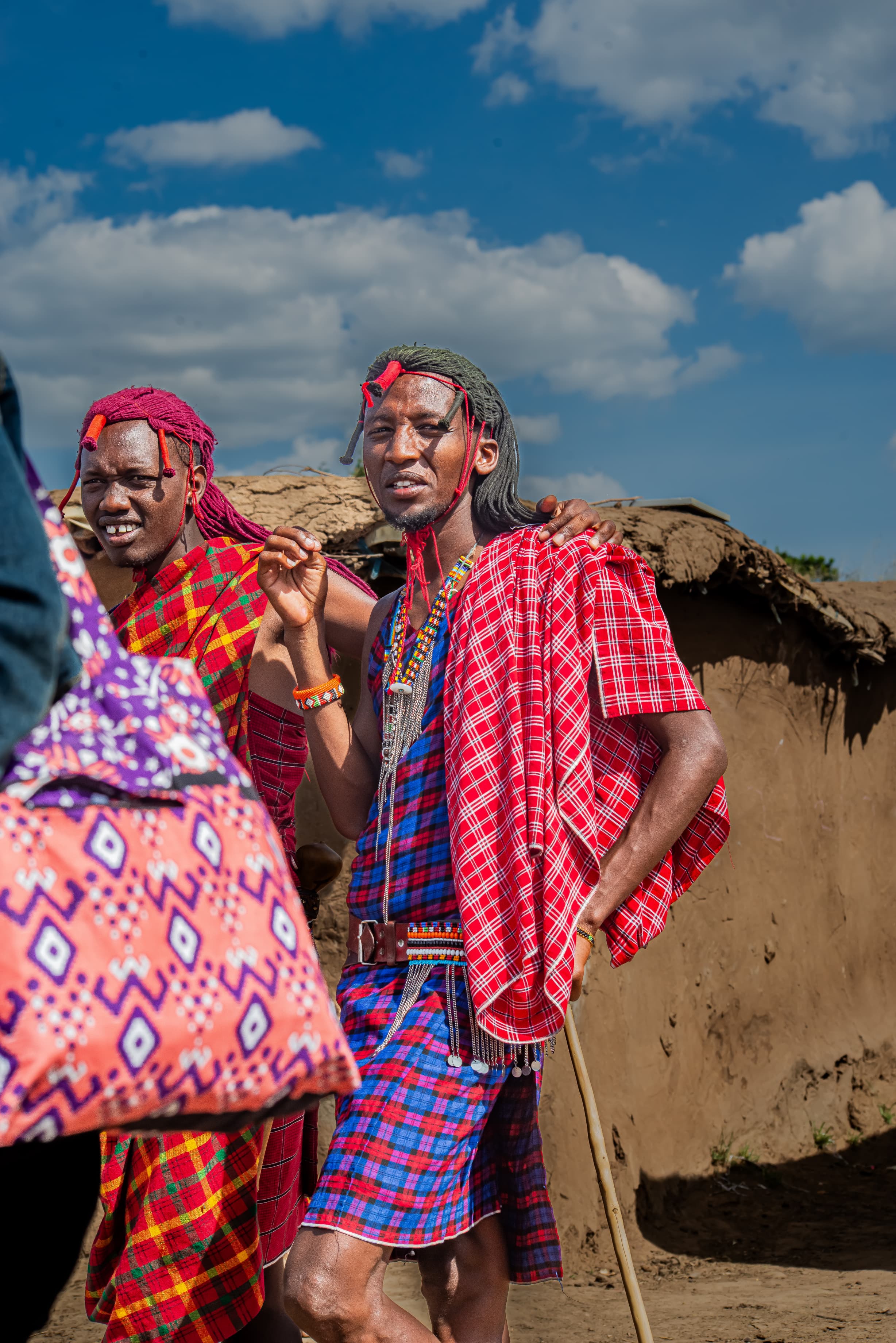
Cultural engagement in both countries centers heavily on Maasai community visits, available in the Mara ecosystem in Kenya and the Serengeti/Ngorongoro zone in Tanzania. Quality varies enormously by operator and specific community relationship, not by country, the best visits are organized through lodges with genuine long-term community partnerships where fees go directly to the community and guides are local; the worst are roadside stops with a staged "village" and a $20 entry fee. Both versions exist in both countries.
Kenya has a slight edge in guide quality, the Kenya Professional Safari Guides Association certification produces some of the most knowledgeable naturalist guides in Africa, and the Mara ecosystem's guide pool has been building expertise for four decades. Tanzania's northern circuit has excellent guides too, but quality is more variable outside the established high-end operators. One genuine Tanzania advantage: the Hadzabe and Datoga communities accessible from Lake Manyara and Lake Eyasi offer hunter-gatherer interactions unavailable in Kenya, a rare cultural experience globally.
Is Kenya or Tanzania Safer and More Reliable?
Kenya's safari infrastructure is more reliable for most international visitors, driven by its position as East Africa's aviation, banking, and hospitality hub. Medical evacuation services (AMREF Flying Doctors is Nairobi-based), communications infrastructure, and road quality in key safari zones are all more developed. Both countries are considered safe safari destinations with standard city-level petty crime precautions applying in Nairobi and Dar es Salaam, as in any major city. Tanzania's southern-circuit logistics carry more operational risk, charter-flight dependency and more remote lodge locations mean weather or mechanical disruptions cascade further through an itinerary. For travelers with tight schedules or low tolerance for disruption, Kenya's more connected infrastructure is the meaningfully safer logistical bet.
Is Kenya or Tanzania Better for a First Safari?
Winner: Kenya. This is the verdict given most often in client consultations, and it rests on four pillars. First, logistics are simpler, Nairobi is well-connected and internal flights are short (45 minutes to the Mara). Second, guide quality in the Mara ecosystem is consistently high, which is the single biggest determinant of first-timer satisfaction. Third, mid-range accommodation is deeper, so first-timers on moderate budgets get excellent value without stretching to Tanzania's higher price floors. Fourth, the Mara ecosystem is compact enough that a 4-night stay delivers a complete safari without the transfer fatigue of a multi-park Tanzania itinerary, Kenya trips typically run 7–10 days versus Tanzania's 8–12.
For repeat visitors who've done the Mara and want something fundamentally different, remoteness, fewer vehicles, untouched wilderness, Tanzania's Ruaha or Nyerere is the upgrade. It isn't a better safari; it's a different kind that rewards prior experience.
Choose Kenya If…
- You're traveling November through June and want reliable wildlife without the migration variable
- Your budget sits below $600–$700 per person per night
- You're a first-time safari traveler prioritizing guide quality and logistical simplicity
- You want off-road driving and night game drives included in your experience
- You have limited time (4–5 nights) and need concentrated wildlife access from a Nairobi hub
- You want a beach extension to Diani or Lamu without leaving convenient reach of Nairobi
Choose Tanzania If…
- You're traveling July through October and the Serengeti migration crossings are the priority
- You want Zanzibar as a beach extension without leaving the country
- You're a repeat visitor who's done the Mara and wants remote wilderness in Ruaha or Nyerere
- The Ngorongoro Crater is on your list, nothing in Kenya replicates it
- You're planning a longer itinerary (10+ nights) and want geographic and ecological variety
- A hot-air balloon over the Serengeti is non-negotiable for you
Recommended Parks & Lodges by Country
Kenya: Masai Mara conservancies (Naboisho, Ol Kinyei, Mara North) over the public reserve for lower vehicle density, Mara Plains Camp and Encounter Mara set the guide-quality standard. Amboseli's Tortilis Camp or Amboseli Serena for Kilimanjaro views, best November–February. Ol Pejeta's Sweetwaters Serena (mid-range) or Ol Pejeta House (private exclusive use) for the region's highest rhino density. Samburu's Saruni Samburu or Elephant Bedroom Camp for the Special Five. Diani Beach as a 45-minute-flight, 3-night coastal add-on.
Tanzania: Serengeti's Singita Mara River Tented Camp for river-crossing proximity, or andBeyond Serengeti Under Canvas for the mobile-camp experience. Ngorongoro's andBeyond Ngorongoro Crater Lodge for crater-rim drama, or Lemala Ngorongoro at a lower price point. Ruaha's Kwihala Camp and Jongomero for serious wilderness, best combined with Nyerere's Roho ya Selous or Sand Rivers Selous for boating and walking safaris. Zanzibar's The Residence or Zuri Zanzibar for a boutique post-safari beach stay. Tarangire is an underrated northern-circuit addition, exceptional elephant density June–October with far fewer vehicles than the Serengeti.
Can You Combine Both Countries in One Trip?
Yes, and if your dates are July through October, this is genuinely the best safari experience available anywhere on Earth: book Tanzania for the Serengeti migration, then add 3 nights in Kenya's Mara for the river-crossing experience. See our Masai Mara and Serengeti combined tour package or the broader Kenya and Tanzania safari packages page for multi-week itineraries adding Amboseli, Ngorongoro, and Zanzibar to the core Mara–Serengeti spine. Budget 12–14 days minimum to do both justice without feeling rushed, for a 7–10 day trip, a single-country focus produces a more rewarding result than a hurried two-country attempt.
Frequently Asked Questions
Is Kenya or Tanzania cheaper for a safari?
Kenya is generally cheaper, a comparable 7-night Tanzania itinerary typically costs 20–35% more, driven mainly by Tanzania's higher national park and conservation fees.
Which country is better for seeing the Great Migration?
It depends on timing. Tanzania's Serengeti hosts calving season from January to March; Kenya's Masai Mara hosts the river crossings from July to October. Neither country "wins" the migration outright, it's a question of which chapter you want to see.
Is Kenya or Tanzania better for a first-time safari?
Kenya, for most first-timers, simpler logistics, consistently high guide quality in the Mara ecosystem, and deeper mid-range accommodation options make it the more forgiving choice.
Can I combine a Kenya and Tanzania safari in one trip?
Yes. A 12–14 day itinerary can combine both via a short flight or land border crossing, and July–October is the strongest window to do so, since both ecosystems are simultaneously at their best.
Which country has better luxury lodges?
Tanzania offers greater variety, including mobile camps that follow the migration and dramatic Ngorongoro crater-rim properties. Kenya's mid-range tented-camp inventory in the Mara conservancies is deeper and offers stronger value at that tier.
Is Zanzibar or Diani Beach the better safari-and-beach combination?
Both work well and pair naturally with their respective country's safari circuit. Zanzibar is Tanzania's more internationally iconic beach extension; Diani is faster and simpler to reach from a Kenya-based itinerary, at roughly a 45-minute flight from Nairobi.
The Operator's Final Verdict
Here's the honest tiebreaker question: when are you traveling? If your answer is July, August, September, or October, consider Tanzania for the Serengeti migration, then adding 3 nights in Kenya's Mara for the river-crossing experience, the combined trip in this window is genuinely the best safari available anywhere on Earth. If your answer is any other month, Kenya wins: the private conservancy model, guide quality, logistical ease, and cost efficiency make it the stronger choice for eight months of the year.
Tanzania wins if you're a repeat visitor prioritizing remoteness, or if Zanzibar, Ngorongoro, or a complete East Africa experience within one country is your specific goal. Kenya wins if you're a first-timer, budget-conscious, or traveling outside July–October.
The one thing worth remembering before you book: don't let "both are great" be the last thing you read before a $10,000 decision. Know your dates, know your budget, know your experience level, and the right destination becomes obvious.










Comments (0)
Leave a Comment
No comments yet. Be the first to comment!