

You've probably scrolled past the postcard images — a lion pride lounging in golden grass, a wildebeest herd thundering across a churning river. What most guides won't tell you is which Kenyan parks actually deliver that exact moment, and which ones leave you fighting for a view among a dozen other vehicles. In this guide, we'll break down the best wildlife safaris in Kenya by park, season, and budget, so you can plan a trip that matches the postcard in your head.
Key Takeaways
- Kenya's best wildlife safaris center on a handful of standout parks, including the Maasai Mara National Reserve, Amboseli, Tsavo, and Samburu, each offering distinct landscapes and wildlife.
- The Great Migration, when over a million wildebeest and zebra cross the Mara River, typically peaks between July and October.
- Safari costs in Kenya range from budget camping trips under $150 per day to luxury lodge experiences exceeding $1,000 per day.
- Private conservancies bordering national parks often provide more exclusive wildlife viewing with fewer vehicles than the parks themselves.
- Choosing a licensed, reputable tour operator affects both the safety and the quality of wildlife sightings on a Kenya safari.
- Dry seasons, from June to October and January to February, generally offer the best wildlife visibility due to sparser vegetation and animals gathering near water sources.
- First-time visitors benefit most from combining one migration-season park with one lesser-visited reserve to balance dramatic sightings with a quieter experience.
What Is a Kenya Wildlife Safari?
A Kenya wildlife safari is a guided trip through national parks, reserves, or private conservancies to observe animals such as lions, elephants, and wildebeest in their natural habitat. The word "safari" itself comes from the Swahili word for journey, and in Kenya it covers everything from a two-hour game drive to a two-week cross-country expedition. What separates a great safari from an average one isn't just the animals you see — it's the guide's expertise, the exclusivity of your vehicle, and how well your itinerary matches the season.
There are several distinct types of safari experiences worth knowing before you plan a trip. Game drives in open-sided 4x4 vehicles are the backbone of most itineraries and remain the most reliable way to see the Big Five. Walking safaris, offered in reserves like Samburu and parts of the Maasai Mara, put you on foot with an armed ranger for a slower, more sensory experience of tracks, dung, and birdlife. Balloon safaris lift you above the plains at dawn for a bird's-eye view of migrating herds, and private conservancy safaris trade the crowds of national parks for exclusive land, off-road access, and night drives.
So what does "best" actually mean in this context? For most travelers, it's a combination of four things: consistent wildlife density, manageable vehicle crowding, a season that matches their travel dates, and a price point that fits their budget. This guide ranks Kenya's top parks and experiences against exactly those criteria, not just against generic "top 10" lists that repeat the same five names without explaining why.
Why Kenya Is One of the World's Top Safari Destinations
Kenya remains one of the world's top safari destinations because it combines unmatched wildlife density, the annual Great Migration, and some of Africa's most accessible national parks — all within a few hours of Nairobi's international airport. Few countries can offer the Big Five, a globally famous migration event, and a functioning conservancy model that channels tourism revenue directly to local communities, all in a single trip.
First, the numbers matter. The Maasai Mara National Reserve alone hosts one of the highest lion densities in Africa, and its surrounding conservancies extend that habitat well beyond the reserve's official boundary. At the same time, Kenya's conservancy model — where Maasai landowners lease grazing land to tourism operators — has become a template studied across East Africa for balancing wildlife protection with community income. This matters for travelers because it means the parks you visit are more likely to remain intact for the next generation.
Second, Kenya is genuinely easy to reach and move through. Nairobi's Jomo Kenyatta International Airport connects directly to major hubs in Europe, the Middle East, and increasingly Asia and North America, and many of Kenya's top parks sit within a 45-minute to 5-hour drive or a short domestic flight from the capital. For example, a first-time visitor can land in Nairobi in the morning and be on a game drive in Amboseli National Park by early afternoon. That being said, distances between parks still shape how many destinations you can realistically combine — something worth mapping out with a Kenya safari tour operator before you book flights.
Finally, Kenya offers unmatched variety within one country. You can pair the open savannah of the Mara with the volcanic backdrop of Amboseli, the red-earth plains of Tsavo, and the arid, dramatic landscapes of Samburu — plus a beach extension on the coast — without ever leaving the country. Few other safari destinations pack that much ecological diversity into a single itinerary.
The Best Parks and Reserves for Safaris in Kenya
The best national parks and reserves for a Kenya wildlife safari include the Maasai Mara, Amboseli, Tsavo East and West, Samburu, Lake Nakuru, and Ol Pejeta Conservancy, each known for a different signature wildlife experience. Below is a quick comparison before we break down each park individually.
| Park / Reserve | Known For | Best Time to Visit | Ideal For |
|---|---|---|---|
| Maasai Mara | Great Migration, highest lion density | July–October | First-timers, migration season |
| Amboseli | Elephants with Kilimanjaro views | June–October, January–February | Photographers, families |
| Tsavo East & West | Red elephants, vast wilderness | June–October | Travelers wanting fewer crowds |
| Samburu | Rare "Samburu Special Five" species | June–October | Repeat visitors, walking safaris |
| Lake Nakuru | Rhino sanctuary, flamingos | Year-round | Short trips near Nairobi |
| Ol Pejeta Conservancy | Last northern white rhinos, chimpanzee sanctuary | Year-round | Conservation-focused travelers |
Maasai Mara National Reserve: The Migration Capital
The Maasai Mara National Reserve is Kenya's most famous safari destination, best known for the Great Migration and one of the highest concentrations of lions on the continent. Between July and October, over a million wildebeest and zebra cross the Mara River in a dramatic, chaotic scene that draws visitors from around the world. As such, the Mara commands premium pricing and heavier vehicle traffic during peak migration weeks, which is why many seasoned travelers pair a night or two inside the reserve with a stay in one of the private conservancies bordering the Maasai Mara for a quieter, more exclusive experience with the same wildlife.
Amboseli National Park: Elephants Beneath Kilimanjaro
Amboseli National Park is best known for its large elephant herds photographed against the backdrop of Mount Kilimanjaro, Africa's tallest peak. Unlike the Mara's dense woodland-savannah mosaic, Amboseli's open plains and swamps make elephant sightings almost guaranteed, even for visitors on a short trip. For example, a two-night stay in Amboseli routinely produces close encounters with resident elephant families that have been studied continuously since the 1970s, giving guides deep, individual knowledge of specific herds.
Tsavo East and Tsavo West: Kenya's Vast Wilderness
Tsavo East and Tsavo West together form one of the largest protected wilderness areas in the world, known for red-dust elephants, dramatic lava landscapes, and significantly fewer vehicles than the Mara. This combination makes Tsavo an excellent choice for travelers who want authentic wildlife density without the crowding. Read our full Tsavo East and West safari guide for a park-by-park breakdown of where to base yourself.
Samburu National Reserve: The Arid North's Rare Species
Samburu National Reserve, in Kenya's arid north, is known for hosting the "Samburu Special Five" — Grevy's zebra, reticulated giraffe, Somali ostrich, gerenuk, and beisa oryx — species rarely seen in southern Kenya's parks. Because Samburu sees far fewer visitors than the Mara or Amboseli, it's often recommended as the second park in a two-park itinerary. Our Samburu National Reserve safari guide covers the best lodges and how the reserve's Ewaso Ng'iro River shapes game viewing.
Lake Nakuru National Park: Rhinos and Flamingos Near Nairobi
Lake Nakuru National Park, roughly a three-hour drive from Nairobi, is a fenced rhino sanctuary known for both black and white rhino populations and, depending on lake levels, flamingo flocks along its shoreline. This makes it a practical add-on for travelers with limited time who still want a strong chance of seeing rhinos. Our Lake Nakuru flamingos and rhinos guide covers the best viewing months in more detail.
Ol Pejeta Conservancy: Kenya's Conservation Flagship
Ol Pejeta Conservancy, on the equator near Mount Kenya, is home to the world's last two northern white rhinos and one of East Africa's largest black rhino sanctuaries, alongside a chimpanzee sanctuary for rescued primates. For travelers who want their safari dollars to visibly support conservation, Ol Pejeta stands out as the clearest example in Kenya. Our Ol Pejeta Conservancy tour details outline how to combine it with a Mara or Nakuru itinerary.
For a full ranked breakdown of these and additional parks, see our dedicated top 10 safari parks in Kenya guide.
When Is the Best Time to See the Great Migration in Kenya?
The best time to see the Great Migration in Kenya is between July and October, when over a million wildebeest and zebra move from Tanzania's Serengeti into the Maasai Mara in search of fresh grazing. This window includes the dramatic Mara River crossings that most visitors picture when they imagine an African safari. That said, migration timing shifts slightly each year based on rainfall patterns, so building flexibility into your dates improves your odds of catching a crossing.
At the same time, the migration isn't the only factor that should shape your travel dates. Kenya's dry seasons — June through October and January through February — generally offer the best overall wildlife visibility because animals gather near limited water sources and vegetation thins out. Plus, the short dry season in January and February brings excellent predator sightings in Amboseli and Tsavo, without the peak-season crowds or prices of the Mara in August.
Shoulder seasons deserve more credit than they usually get. November's short rains and April through May's long rains bring lower prices, fewer vehicles at sightings, and lush, green scenery that photographs beautifully — though some roads become harder to navigate and a handful of camps close temporarily. For a full month-by-month breakdown of migration patterns, rainfall, and crowd levels, see our Great Migration Kenya month-by-month guide and our broader best time to visit Kenya for a safari guide.
Is the Maasai Mara or Amboseli Better for a First-Time Safari?
For most first-time visitors, the Maasai Mara offers denser overall wildlife and predator sightings, while Amboseli offers more reliable elephant encounters and dramatically easier photography with Kilimanjaro in the background. Neither park is objectively "better" — the right choice depends on what you most want to see and how much crowding you're willing to tolerate.
First-timers visiting during migration season (July–October) generally get more value from the Mara, since it's the only place to witness river crossings. However, travelers visiting outside migration months, or those prioritizing a calmer, more intimate experience, often prefer Amboseli's open plains and smaller visitor numbers. Many operators solve this dilemma altogether by combining both parks in a single itinerary, which is why multi-park routes remain the most popular structure for a first Kenya safari.
What Is the Difference Between a National Park and a Private Conservancy in Kenya?
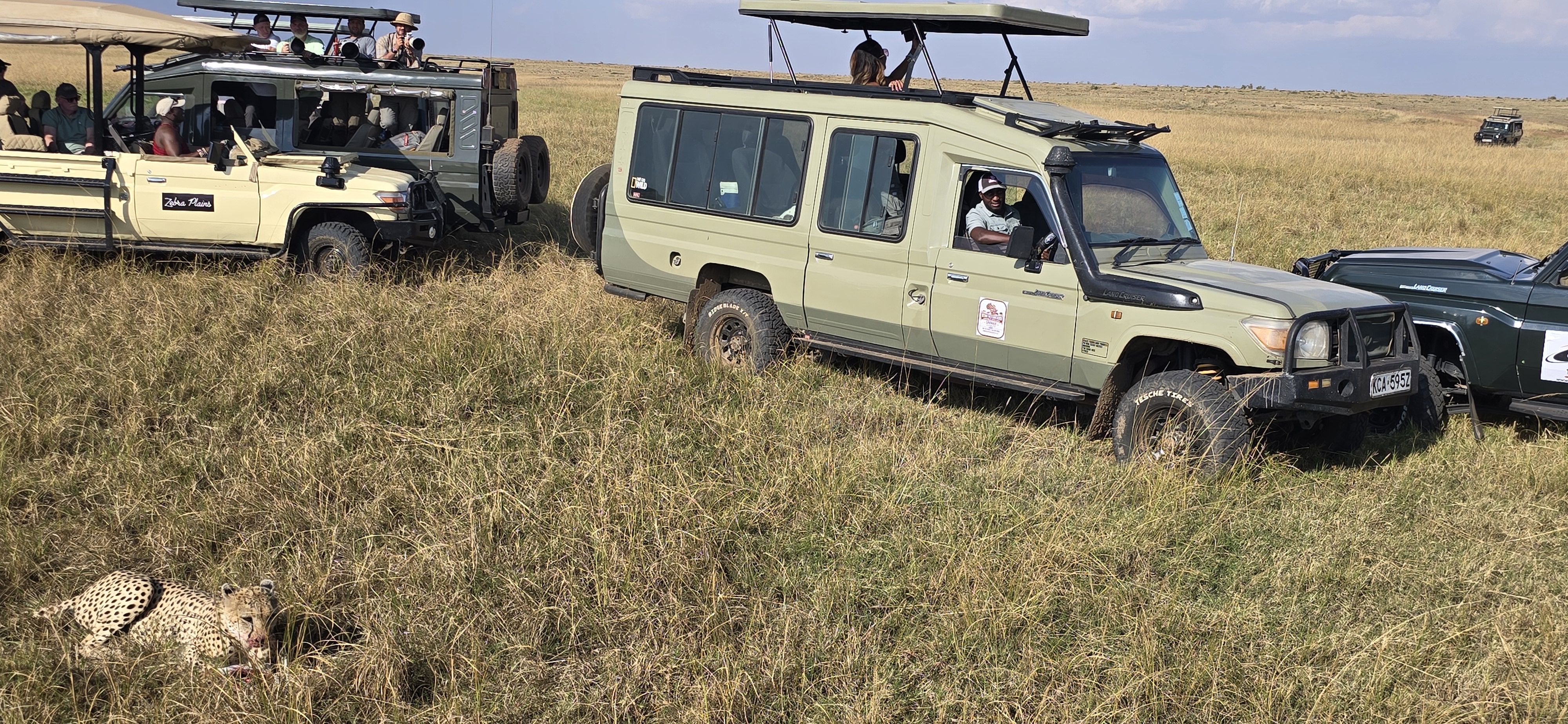
A private conservancy differs from a national park in that it borders protected land, limits the number of vehicles allowed per sighting, and typically permits off-road driving and night game drives, both of which are restricted inside most national parks and reserves. National parks like Tsavo and Amboseli are government-managed and open to any licensed operator, which means popular sightings can attract ten or more vehicles at once during peak season.
Conservancies, by contrast, operate under exclusivity agreements with a limited number of partner camps, so a lion sighting might only ever have two or three vehicles present. This comes at a cost — conservancy fees typically run higher than standard park fees — but many repeat visitors consider it worth the premium. For a deeper comparison of wildlife viewing quality between the two models, see our guide on conservancy safaris versus national reserves.
Types of Safari Experiences and Who They're Best For
Kenya offers several distinct styles of safari, and choosing the right one matters as much as choosing the right park. Below is a breakdown of the main options and who each is best suited for.
- Luxury lodge and tented camp safaris: Best for travelers prioritizing comfort, private guiding, and gourmet dining, typically inside or bordering conservancies. Expect ensuite bathrooms, plunge pools, and dedicated game drive vehicles.
- Budget camping safaris: Best for travelers on tighter budgets who don't mind shared facilities and public campsites, often using shared group vehicles across multiple travelers.
- Private conservancy safaris: Best for repeat visitors or anyone wanting off-road access, night drives, and walking safaris alongside standard game drives.
- Family safaris: Best for parents traveling with children, using family-friendly lodges with connecting rooms, shorter drive times, and kid-focused activities like junior ranger programs.
- Photography-focused safaris: Best for serious photographers, using specialized vehicles with beanbag supports, extended golden-hour game drives, and guides trained in positioning for light and angle.
- Balloon safaris: Best for a one-time bucket-list experience, offering an aerial view of the plains at sunrise followed by a champagne breakfast in the bush.
For example, a family with young children touring Amboseli would likely get more value from a mid-range lodge with a swimming pool and shorter game drives than from a remote luxury tented camp requiring long transfer times. If you're weighing budget against comfort more broadly, our mid-range versus luxury safari comparison breaks down exactly what changes at each price tier. Families specifically should also check our Kenya safari experiences for families guide, and photographers will want our guide to capturing stunning safari photos in Kenya. If a sunrise flight over the plains appeals to you, our dedicated balloon safari guide covers cost, timing, and which parks offer it.
How Much Does a Safari in Kenya Cost?
Kenya safari costs generally fall into three tiers: budget camping trips starting around $150 per day, mid-range lodge safaris around $300 to $600 per day, and luxury safaris exceeding $1,000 per day per person. What you pay for at each tier differs significantly, not just in comfort level but in exclusivity, guide quality, and included extras.
| Tier | Typical Cost Per Day (per person) | What's Usually Included |
|---|---|---|
| Budget | $150–$250 | Shared camping, group game drives, basic meals |
| Mid-range | $300–$600 | Ensuite tented camps or lodges, private vehicle, full board |
| Luxury | $1,000+ | Premium conservancy camps, private guide, all-inclusive extras |
At the same time, several factors push prices up or down within each tier. Park entry fees, conservancy fees, the number of parks visited, whether transfers are by road or light aircraft, and the season all affect the final quote. For example, flying between parks instead of driving can add several hundred dollars per person but saves significant travel time on multi-park itineraries — a trade-off covered in detail in our Nairobi to Maasai Mara road versus fly-in guide. For a complete cost breakdown across every category, see our Kenya safari cost guide for 2026 and our per-day cost breakdown.
How Do You Choose a Reliable Kenya Safari Operator?
Choosing a reliable Kenya safari operator starts with confirming their license with the Kenya Tourism Regulatory Authority, checking recent independent reviews, and asking direct questions about vehicle-to-guest ratios and conservation practices. Licensing matters because it confirms the operator meets minimum safety and vehicle maintenance standards required to legally run tours inside national parks.
Beyond licensing, look closely at group size. Smaller group sizes generally translate into better wildlife sightings, since a packed vehicle limits how long a guide can linger at a sighting before other travelers grow restless. Plus, reputable operators are transparent about what conservation fees you're paying and where that money goes, which is a strong signal of trustworthiness. For a full vetting checklist written from a Nairobi-based operator's perspective, see our guide on how to choose a Kenya safari operator, and our companion piece on questions to ask before booking a safari.
Practical Planning Tips and What's Next
Once you've chosen your parks, season, and budget, a handful of practical steps stand between you and departure. First, confirm your visa or Electronic Travel Authorization requirements well in advance, since processing times can vary. Our Kenya visa and entry requirements guide and updated Kenya ETA guide for safari travelers cover the current process step by step.
Second, check recommended vaccinations and health precautions with your doctor at least six weeks before departure, since some require multiple doses over time. Our Kenya safari vaccinations and health guide outlines what's typically recommended for safari travelers specifically.
Third, pack strategically rather than heavily. Neutral-colored clothing, layers for early-morning game drives, a good pair of binoculars, and a wide-brimmed hat matter more than most travelers expect. Our complete Kenya safari packing list covers exactly what to bring and, just as importantly, what to leave at home.
Finally, book your safari with enough lead time. Popular camps in the Maasai Mara during migration season often sell out six to twelve months in advance, so as such, it's worth reaching out to a Kenya safari tour operator early to lock in availability, even if your exact itinerary isn't finalized yet. If you'd like a starting point, browse ready-made itineraries like the 9-day Amboseli, Maasai Mara, Lake Nakuru and Ol Pejeta safari or the 8-day magical Kenya safari experience, or request a free consultation to build a custom route.
Conclusion
Kenya's best wildlife safaris aren't defined by a single park — they're defined by matching the right reserve, season, and safari style to what you actually want from the trip. Whether that's the drama of a Mara River crossing, the quiet intimacy of a Samburu walking safari, or the conservation story behind Ol Pejeta's last northern white rhinos, Kenya delivers it within a few hours' drive of Nairobi. Start by picking your priority season, shortlist two or three parks that complement each other, and reach out to a trusted operator to turn that shortlist into a real itinerary — the postcard moment is closer than it looks.










Comments (0)
Leave a Comment
No comments yet. Be the first to comment!